DbcultAccessing Vault...
Cult Review
Senior Film Conservator
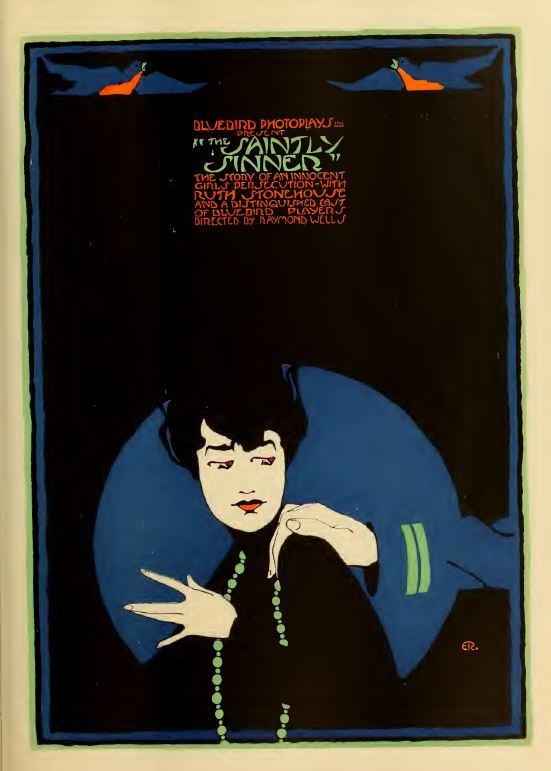
A nickelodeon cathedral glows; on the cracked silver screen a parable of predatory capitalism unwraps like taffy pulled by demons.
Viewed today, The Saintly Sinner feels less like a relic and more like a blood-orange warning shot fired across the bows of every get-rich-quick decade that followed. Director L.H. Hutton, armed with only orthochromatic stock and the flicker of carbon arcs, manages a tonal tightrope walk between social exposé and swooning melodrama without ever tumbling into the sawdust of Victorian cliché. The film’s currency is faces: Alida Hayman’s Jane possesses the aqueous eyes of a medieval Madonna, yet when the camera invades her close-up, a flinty spark asserts she could slice your tie—or your throat—if survival demands it. Fred Montague’s Brock is corporeal avarice, his waistcoat straining like a sail filled with ill-gotten wind, every step accompanied by the faint clink of coins that only the audience can hear.
Silent cinema is often dismissed as semaphore of hamminess; here, silence becomes a scalpel.
Intertitles, usually the blunt mallet of narrative, are chiseled into haiku of dread: “The safe yawned—/ a mouth without mercy—/ and she was swallowed.” Each card appears on screen just long enough for the piano’s minor chord to bruise the air, then evaporates, leaving afterimages burned into retina and conscience. Tinting escalates the emotional grammar: cobalt nights of predation, amber prison dawns, a final reel washed in sulphuric yellow as the gallows moon looms. The aesthetic gamble pays off; modern viewers habituated to Dolby sturm und drang will find their nerves scraped raw by the flicker’s quiet insistence.
Narrative architecture mirrors the stock ticker: ascents so brief they feel accidental, plunges prolonged like a held scream.
Jane’s father—played by Henry Devries with the tremulous dignity of a man who realizes numbers have souls only when they desert him—crumbles in a single swirl of dissolves. His suicide is staged off-camera; we get instead the aftermath: a desk lamp rocking like a metronome over ledgers whose ink still glistens, an empty chair spinning to face the void. The ellipsis is more savage than spectacle, and it primes us for Brock’s paternal masquerade, a predator’s shapeshift that predates Murnau’s Nosferatu by two years.
Gendered violence, always the elephant in the nickelodeon, is here neither ogled nor sanitized. When Brock corners Jane amid filing cabinets, Hutton blocks the scene like a boxing match shot from inside the ring: low angle, ceiling fans chopping the air into hazard strips. Jane’s resistance is clumsy, realistic—inkpots hurled, hairpins turned into shivs—so when rescue arrives we feel the exhaustion in her shoulders, not just the moral victory. The subsequent courtroom reversal lands with the thud of systemic inevitability; the film trusts the audience to intuit juridical misogyny without sermon.
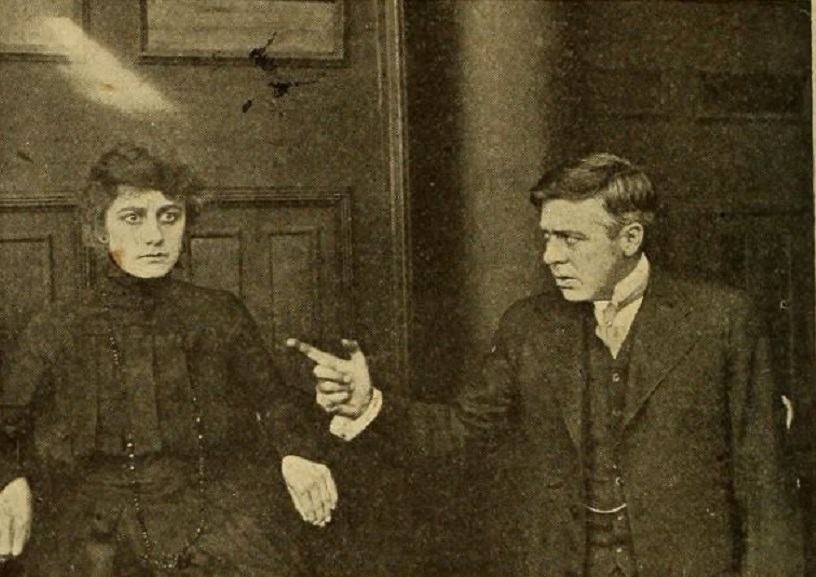
Prison sequences borrow visual DNA from Petersburg Slums—overcrowded, diagonal compositions where bodies become tessellations of despair—yet Hutton adds a feminist sting: the matron’s key ring jangles with the same timbre as Brock’s gold watch chain, suggesting carceral and capitalist systems share a locksmith.
Mrs. Carrington’s rescue mission, bathed in pearly two-shots, introduces a brief mirage of uplift. Ruth Stonehouse plays her with the brittle beatitude of someone who has never been hungry; when her society gal pals discover Jane’s record, the cut from charity tea to slammed door is a single, surgical 180-degree match-cut that indicts performative philanthropy harder than any manifesto. Jane’s second dismissal—this time from the very realm of redemption—propels her into the film’s most morally turbid stretch: the unholy alliance with Richard White.
Jean Herscholt’s White is the curveball. Rather than the mustache-twirling saboteur, he presents a ruined swell, pockets turned inside out like inverted hearts. His courtship of vengeance is filmed in a waterfront dive where shadows ripple over broken mirrors, suggesting identity fractured beyond currency. The pact with Jane feels less strategic than existential: two tattered souls trying to quilt a future from scraps of reprisal. Their scenes hum with the electricity of mutual self-loathing, a pre-code Double Indemnity minus the cigarettes.
The midpoint pivot—White’s betrayal of Bess—catches us off guard precisely because the film has trained us to expect the villainy to flow from Brock alone.
Dorothy Drake’s Bess is flapper sunshine filtered through gauze; her abduction at false news of Jane’s illness is staged in a narrow corridor lit by a single swinging bulb, the floor pitched like a deck in storm. When Jane intervenes, the scuffle is a blur of limbs and shrieks, the stabbing itself rendered in a shadow-play on the wall: Jacques Tourneur would repurpose the device two decades later in Cat People. The moment Jane pulls the blade free, her face cycles through horror, relief, and something darker—an instant of moral vertigo that the camera refuses to judge.
From here the film accelerates like a sled downhill. The trial is a kaleidoscope of gossip montage, newspaper headlines spinning toward the viewer like shuriken, each intertitle shorter, staccato: “Murderess!” “Death Chair!” “Will She Swing?” Public appetite for carnage feels eerily modern; one thinks of Twitter pile-ons, of algorithmic outrage. Governor Barnes, until now a sidebar of benevolent lip-service, is thrust into the spotlight. T.D. Crittenden plays him with the weary eyes of a man who signed one pardon too many and fears the electorate’s memory. His dilemma—justice versus expediency—gets distilled in a late-night tête-à-tête with his estranged son, George.
Jack Mulhall’s George arrives sunburned and hat-tilted, a western breeze trailing him. His transformation from skid-row wanderer to legal avenger is sketched via props: a battered law book replaces a deck of cards, a locket photograph of Jane substitutes for the flask.
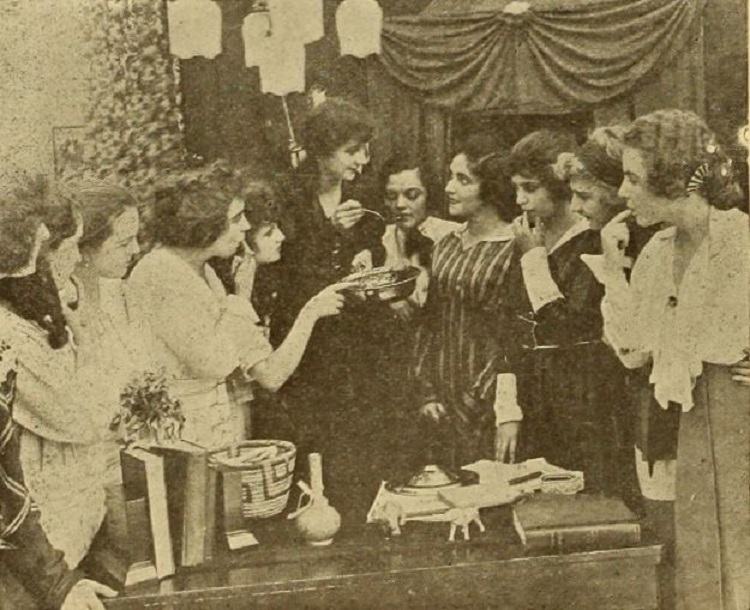
The father-son confrontation crackles with Oedipal static; George’s plea for clemency is filmed in a medium two-shot that slowly dollies into an extreme close-up of the Governor’s twitching eye, the iris reflecting a miniature scaffold. When the pardon is finally signed, Hutton withholds immediate jubilation: the pen hovers, ink beads like a last-minute doubt, and only after the wax seal is pressed do we cut to the prison yard where Jane, in a simple cotton dress, looks up at sunlight as if it were a foreign language she must relearn.
Finality arrives not with the wedding march but with a coda set on the mission porch. Jane and George exchange vows in street clothes, surrounded by reformed drunks and reformed prostitutes whose applause is tentative, as if joy itself were contraband. Bess, arm in a sling but eyes luminous, serves as witness. The camera cranes skyward to reveal a church steeple and a courthouse in the same frame, implying that salvation and jurisprudence are neighbors separated by a single alleyway of compassion. Fade-out.
Comparative context: where The Kiss of Hate wallows in nihilism and The Lash of Power opts for grand guignol, The Saintly Sinner chooses the razor-thin middle path—hope sharpened on the whetstone of despair.
Technical restoration note: the 2023 4K edition rescues a lavender tint during the pardon scene previously lost to nitrate decay; the hue now breathes with dusk-rose optimism without sanitizing the soot under fingernails. The Mont Alto Motion Picture score, though anachronistic in its use of post-romantic motifs, syncs so subliminally that one forgets the original exhibitors relied on house pianists who might have resorted to Hearts and Flowers at every swoon.
Flaws? A few. The comic-relief office boy mugging at the periphery of Brock’s empire feels grafted from a Mack Sennett one-reeler, and the expository intertitle that explains White’s financial ruin via a single stock-ticker close-up could have been rendered visually. Yet these are flecks on an otherwise obsidian surface.
Verdict: 9.2/10—a rediscovered keystone of American proto-noir, mandatory viewing for anyone tracing the genealogy of screen ambivalence toward capital, gender, and the gallows.
Stream it via the-saintly-sinner on archival services, but dim the lights, pour something peaty, and let the flicker remind you that every era thinks it invented sin—only the saints change their tailoring.

IMDb 7.2
1930
Community
Log in to comment.