DbcultAccessing Vault...
Cult Review
Senior Film Conservator
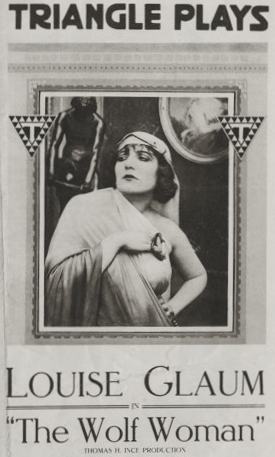
In the annals of early cinema, few characters embodied the chilling allure of destructive narcissism quite like Leila Aradella, the titular figure in the 1918 silent drama, The Wolf Woman. This cinematic artifact, penned by the prolific C. Gardner Sullivan, plunges viewers into a stark moral landscape where charm becomes a weapon and vulnerability an invitation to ruin. It's a fascinating, if unsettling, exploration of human malevolence, cloaked in the sophisticated veneer of high society, and brought to vivid, if silent, life by the captivating presence of Louise Glaum.
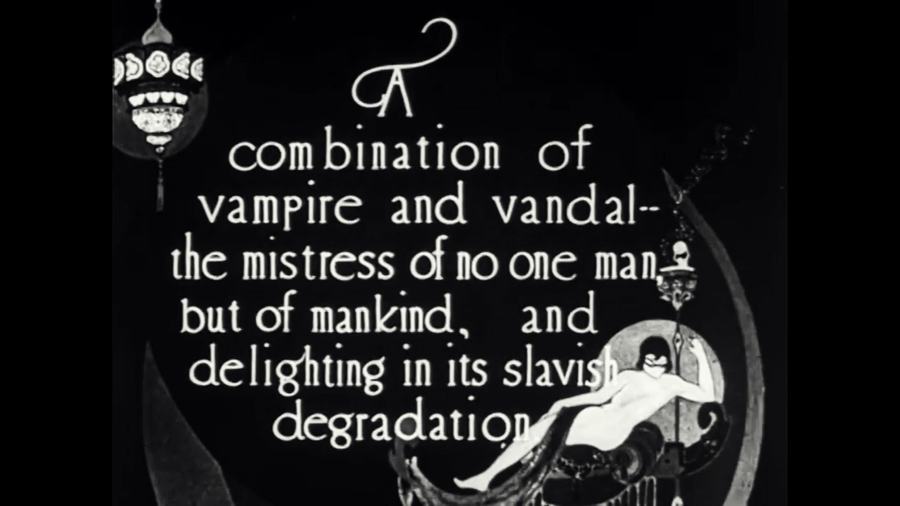
Leila Aradella is not merely a femme fatale; she is an architect of emotional and financial desolation, finding a perverse delight in the methodical dismantling of unsuspecting men. Her beauty is a lure, her wit a snare, and her cold indifference the ultimate, inescapable trap. Louise Glaum imbues Leila with a predatory grace, her expressions shifting from seductive warmth to chilling detachment with a fluidity that speaks volumes without a single uttered word. This isn't the overt villainy of a bandit or a schemer; it's a more insidious evil, born of profound self-absorption and a complete absence of empathy. Her world revolves solely around her own gratification, and the men who cross her path are merely instruments to that end, their lives collateral damage in her relentless pursuit of sensation and control. Glaum’s performance is a masterclass in silent film acting, utilizing subtle gestures, piercing gazes, and a calculated demeanor to convey a character of immense psychological complexity. She avoids caricature, presenting Leila as a woman utterly convinced of her own superiority and entitlement, making her machinations all the more terrifyingly plausible. One might draw parallels to the manipulative prowess seen in films like La Broyeuse de Coeur, though Leila's brand of destruction feels far more deliberate and personal, less about grand schemes and more about the intimate unraveling of individual souls, a true 'heartbreaker' in the most literal sense.
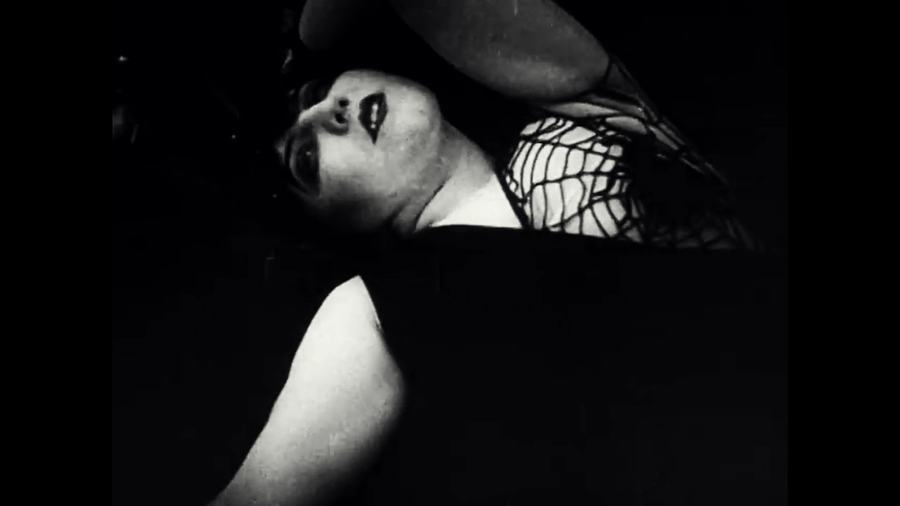
Leila's inaugural victim, John Morton (portrayed by Wyndham Standing), a lawyer of considerable talent and standing, serves as the initial testament to her destructive power. She doesn't merely take his money; she systematically erodes his moral compass, twisting his principles until his very identity is compromised. The narrative subtly illustrates how a man of intellect and integrity can be reduced to a shell by an emotional parasite. Morton’s descent is portrayed with a quiet tragedy, his once-sharp features gradually softening into a haunted despair, a silent testament to the corrosive influence of Leila's charm. The film employs visual cues, perhaps through changes in his attire or the increasing disarray of his surroundings, to underscore his moral and financial dilapidation. It’s a stark reminder that vulnerability isn't always a weakness of character, but sometimes a susceptibility to a particularly potent form of psychological predation. His ruination is comprehensive, a chilling preview of the havoc Leila is capable of wreaking, setting a grim precedent for her subsequent conquests. This initial conquest establishes Leila not just as a seductress, but as a force of societal disruption, dismantling the very pillars of respectability and professional success.
Following Morton's demise, Leila sets her sights on Rex Walden (Charles Ray), the generous, perhaps naive, son of a prominent society matron, Mrs. Walden (Gertrude Claire). Rex represents a different kind of prey: not a man of established power to be corrupted, but a kind soul to be utterly dominated. Leila’s manipulation of Rex is a masterclass in emotional enslavement. She transforms his inherent generosity into a tool for her own enrichment and control, molding him into a pathetic shadow of his former self, a complete slave to her whims. Ray’s portrayal of Rex is heartbreaking; his initial exuberance slowly gives way to a desperate, clingy devotion, a man utterly consumed by an affection that is never truly reciprocated. The film expertly uses close-ups and intertitles to convey Rex's increasing dependence and the crushing weight of Leila's indifference. His plight evokes the tragic romanticism of characters trapped in destructive relationships, a theme explored in different contexts in films such as Pesn torzhestvuyushchey lyubvi, but here, the focus is less on passion and more on cold, calculated control, a form of emotional vampirism that leaves its victim utterly drained. The psychological toll on Rex is immense, culminating in a state of utter despondency that feels both inevitable and profoundly tragic.
Witnessing her son’s rapid decline, Mrs. Walden, a figure of maternal concern and societal propriety, dispatches her elder son, Franklin (Howard Hickman), to rescue Rex from Leila’s clutches. This intervention, however, proves tragically misguided. Franklin, initially confident in his ability to dissuade Leila, swiftly succumbs to the very enchantment he sought to break. His fall is swift and almost inevitable, a testament to Leila’s almost supernatural power over men. The film masterfully portrays this domino effect, where each attempt to curb Leila’s influence only widens her sphere of control. Franklin’s capitulation seals Rex’s fate, driving him to the ultimate act of despair: suicide. The scene, though silent, resonates with the profound agony of a broken spirit, a direct consequence of Leila’s callous disregard. It underscores the destructive potential of unchecked ego and the tragic vulnerability of those who fall under its sway. The desperation of Mrs. Walden, watching her sons crumble, is palpable, a poignant representation of a mother’s helplessness against an unseen, emotional predator. Hickman's portrayal of Franklin's transition from righteous indignation to infatuated submission is subtle yet effective, highlighting the insidious nature of Leila's allure. This tragic sequence elevates the film beyond simple melodrama, touching upon the profound consequences of such psychological warfare within the confines of a family. It echoes the sense of inescapable doom found in some darker silent narratives, perhaps even hinting at the themes of pervasive evil seen in films like Black Fear, albeit in a more intimate, psychological context.
With Rex gone and Franklin ensnared, Mrs. Walden turns to Adele Harley (Marjory Temple), a young woman introduced as a beacon of "strong moral character." Adele is not a femme fatale, nor is she a damsel in distress; she is the antithesis of Leila, a force of unassuming virtue pitted against a maelstrom of vice. Her role is crucial, providing the narrative with its moral counterpoint and ultimately, its resolution. Adele’s strength lies not in seduction or manipulation, but in her unwavering integrity and genuine affection. Her presence introduces an element of purity that Leila, for all her charm, cannot corrupt or comprehend. The ensuing struggle for Franklin's affections is less a battle of wills and more a clash of fundamental essences: the superficial allure of vice against the quiet strength of virtue. Marjory Temple's performance as Adele is understated, providing a necessary calm amidst Leila’s storm. She represents the steadfast goodness that Leila, in her nihilistic pursuit of pleasure, has long forgotten or perhaps never possessed. This moral contest is reminiscent of the clear delineations between good and evil often found in earlier melodramas like As Ye Sow, though The Wolf Woman delves deeper into the psychological underpinnings of its antagonist, making Adele’s victory a profound psychological defeat for Leila rather than just a romantic one. Adele embodies the hope that virtue can indeed triumph over even the most captivating forms of malevolence, a glimmer of light in an otherwise bleak narrative.
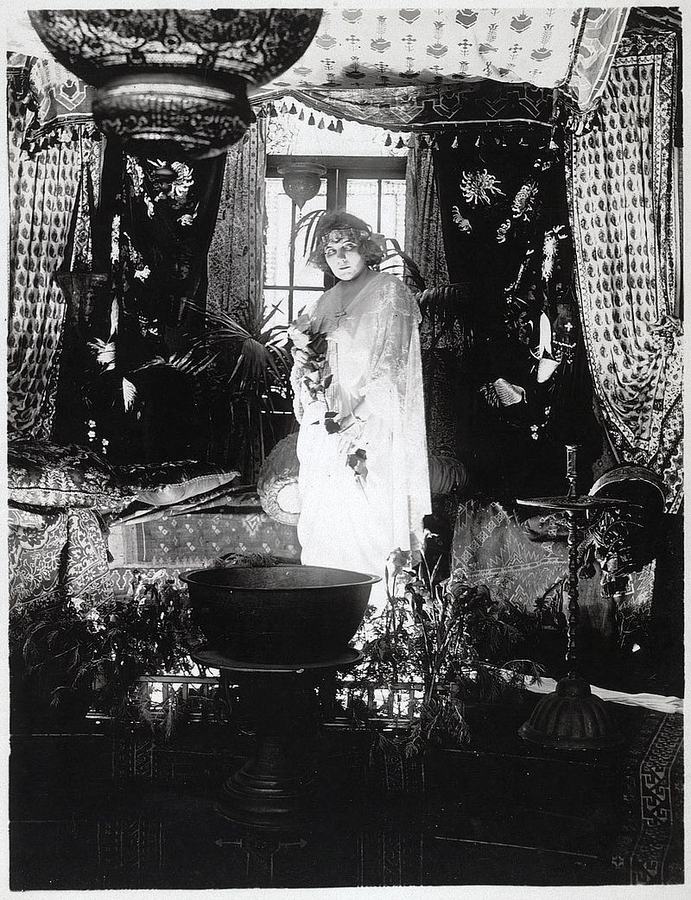
Adele’s steadfastness and eventual triumph over Leila’s influence mark the turning point. For the first time, Leila encounters a force impervious to her charms, a moral fortitude that cannot be bent or broken. This unexpected defeat shatters Leila’s carefully constructed confidence, revealing the fragile ego beneath the veneer of invincibility. In a drunken, despairing state, gazing into a mirror that once reflected her power and beauty, Leila confronts the stark reality of her failure. The mirror, a potent symbol of her vanity and self-obsession, becomes the instrument of her undoing. With a shard from its shattered surface, she brutally disfigures her own face. It’s a powerful, visceral act of self-destruction, a grotesque manifestation of her internal collapse. Permanently scarred, both physically and psychologically, Leila is left a broken and lonely woman, her reign of terror concluded not by external justice, but by her own self-inflicted judgment. This tragic end, where the villain is undone by their own nature rather than a hero's direct action, offers a compelling, almost Greek, sense of poetic justice. The visual of the shattered mirror is particularly striking, symbolizing the splintering of her identity and the destruction of the very tool she used to captivate others. It's a stark contrast to the external confrontations often seen in thrillers like The Fatal Card, emphasizing an internal reckoning that is far more devastating than any external punishment. Her final state, a disfigured recluse, is a chilling testament to the corrosive power of narcissism when its foundation of perceived perfection is finally shattered.
The Wolf Woman is more than a simple melodrama; it's a profound character study of a destructive personality and a cautionary tale about the perils of unchecked narcissism. C. Gardner Sullivan’s screenplay, even in its silent form, crafts a narrative rich with psychological depth. The film brilliantly explores themes of moral corruption, the power dynamics in relationships, and the ultimate futility of a life built on manipulation and deceit. Leila's journey from predator to disfigured recluse serves as a powerful allegory for the self-destructive nature of pure ego. The film's portrayal of female villainy is particularly noteworthy for its era, moving beyond the simple "vamp" archetype to delve into a more complex, albeit still melodramatic, depiction of a woman wielding power through psychological means. Louise Glaum's performance is central to its enduring impact; her ability to convey such a range of emotions and intentions without dialogue is a testament to her skill and the expressive potential of silent film acting. Her Leila is both repulsive and morbidly fascinating, a character who lingers in the mind long after the credits roll. The film, in its stark depiction of moral decline and the eventual self-destruction of its antagonist, offered a potent social commentary on the dangers of superficiality and the seductive power of vice. It implicitly champions traditional virtues, but does so through a dark, compelling narrative that avoids didacticism.
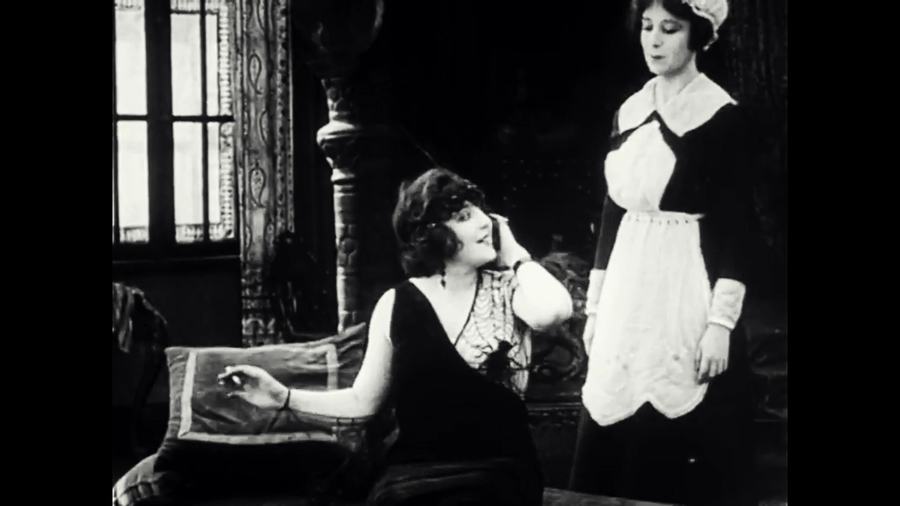
The supporting cast, including Wyndham Standing, Howard Hickman, Marjory Temple, Gertrude Claire, and Charles Ray, each contribute solid, if less flamboyant, performances that anchor Leila’s whirlwind of destruction. Ray’s portrayal of Rex Walden is particularly poignant, capturing the essence of a good man utterly lost to infatuation. The film, while certainly a product of its time in terms of dramatic conventions and pacing, transcends mere historical curiosity due to its unflinching look at human nature’s darker side. It's a testament to the power of early cinematic storytelling to craft compelling narratives that resonate with universal truths about morality and consequence. Compared to films that often focused on external threats or grand conspiracies, like The Conspiracy; or, A $4,000,000 Dowry, The Wolf Woman finds its drama in the internal machinations of its central character and the devastating ripple effects of her actions. Even in a cinematic landscape that offered diverse narratives from the philosophical explorations in Life Without Soul to the stark realism of We'll Take Her Children in Amongst Our Own, The Wolf Woman carved out a niche with its psychological intensity, offering a unique blend of high melodrama and a surprisingly nuanced character study. Its portrayal of a woman as the primary antagonist, driven by internal demons rather than external circumstances, was particularly progressive for its time, challenging conventional gender roles in villainy.
The Wolf Woman remains a compelling watch for enthusiasts of silent cinema and anyone interested in the evolution of character-driven drama. Its narrative, while melodramatic by modern standards, possesses a raw psychological edge that feels surprisingly contemporary. It serves as a potent reminder that the most dangerous predators often wear the most beautiful disguises, and that true strength often lies not in power or manipulation, but in unwavering moral conviction. Leila Aradella's tragic end is not merely a punishment; it's the inevitable implosion of a life devoid of genuine connection and built solely on the exploitation of others. The film's final image of Leila, disfigured and alone, is a haunting tableau, a powerful visual metaphor for the emptiness that lies at the heart of pure narcissism. It's a film that asks us to look beyond superficial charm and consider the true cost of unchecked ego, a message as relevant today as it was over a century ago. While some films of the era, like The Deep Purple, explored criminal underworlds, The Wolf Woman delves into a more insidious, personal form of criminality, that of the heart and mind. Its enduring power lies in its unflinching portrayal of human frailty and the moral consequences of a life lived without conscience, making it a significant, albeit often overlooked, piece of cinematic history.
IMDb —
1936
Community
Log in to comment.