DbcultAccessing Vault...
Cult Review
Senior Film Conservator
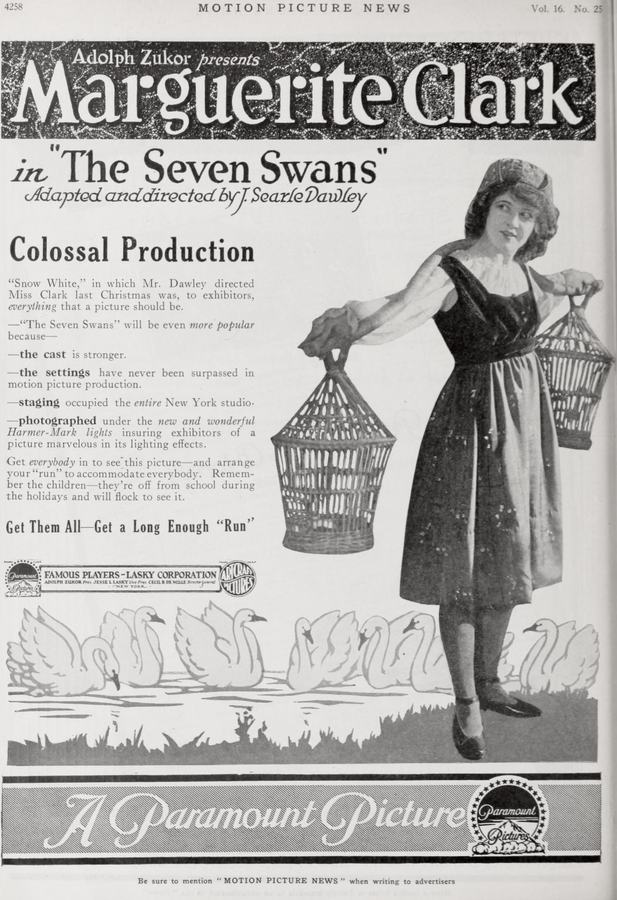
Imagine a kingdom mapped like the face of a pocket-watch—each numeral a tower, each tick a hostage. That is the vertiginous playground Dawley drags us into, a place where fairy-tale logic is soldered to Victorian clockwork. The camera, starved of speech, compensates with ophthalmic gusto: iris shots contract like sphincters of dread; double-exposures layer swan wings over brotherly silhouettes until the screen itself seems to moult.
The film’s prologue, scarcely two minutes, glimmers with the iodine warmth of a family portrait—Tweedledee (Marguerite Clark, all cheekbones and centrifugal curls) pirouettes around her siblings in a sun-dappled solarium. Yet the idyll curdles the instant the Witch’s rubber ball breaches the frame—an anachronistic pop-culture missile that bounces once, twice, then detonates into a hex. Dawley’s coup is making this violation feel both slapstick and cosmic; the ball ricochets off a suit of armour, ricochets off patriarchal authority, ricochets off the fourth wall itself, until viewers become complicit in the spell.
Cine-historians still quarrel over the missing reel—ninety seconds of nitrate that allegedly depicted the brothers’ metamorphosis in anatomical detail, vertebrae sprouting hollow bones like white asparagus. Whether censored for cruelty or lost to warehouse blaze, the gaping hole only amplifies the horror; absence becomes the film’s sharpest talon.
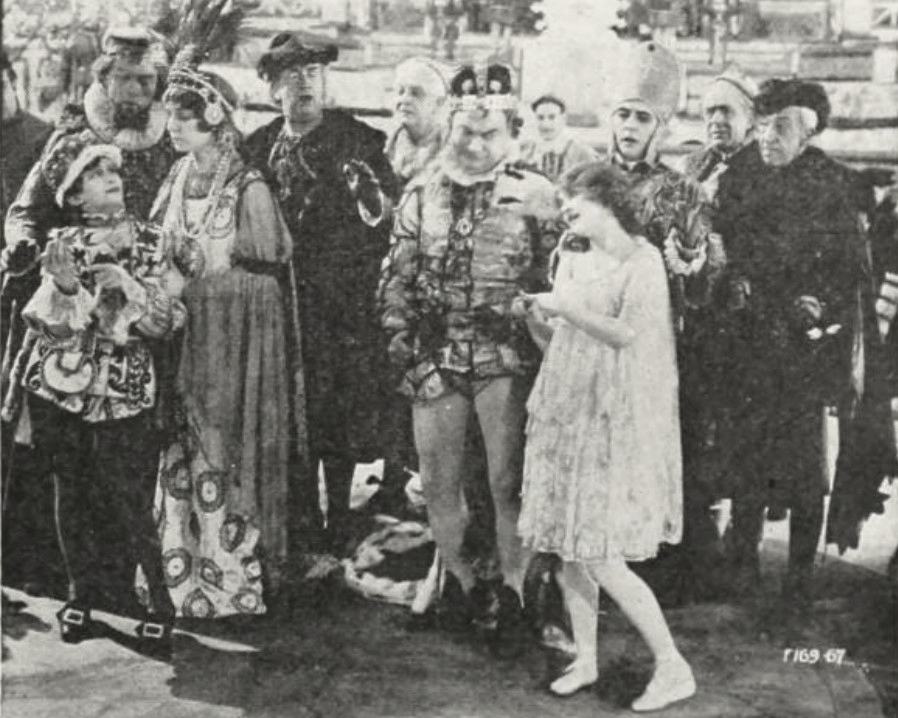
From here the palette cools to bruised teal. The swans, played by child-actors in feathered body-stockings, are herded across studio marshes built from salt, oatmeal and cigarette smoke. Every flap is under-cranked, producing that frenetic Eisensteinian flutter years before Eisenstein. Tweedledee’s quest is not to hunt a golden apple or topple a usurper but to knit—yes, knit—seven jerkins of nettle-yarn, a task whose domestic modesty belies its sadistic cruelty. Each stitch must be vocalised; one spoken syllable and the curse ossifies. Thus silence becomes both weapon and wound, a feminist gambit decades before Through the Wall explored similar themes of female endurance.
Clark, barely five feet tall, carries the film on the blade of her stillness. Where other ingénues of the era telegraph emotion with cyclonic gestures, she miniaturises grief: a cuticle bitten until it blooms carnation-red; a blink that arrives a fraction too late. Her Tweedledee is a study in negative space, a porcelain figurine cracked by empathy. When she stands on the causeway, yarn taut between chilblained fingers, the surf gnashing like a row of canine teeth, the camera tilts thirty degrees—an expressionist tic borrowed from German studios—to suggest the world itself sliding off its moral axis.
Augusta Anderson’s Witch, by contrast, is pure kinetic camp. She enters each scene butt-first, a bustle bouncing in sync with her eponymous rubber sphere. Yet Dawley refuses to flatten her into pantomime dame. In a mesmerising medium close-up, Anderson lets the smile drain like mercury; what remains is the hollowed gaze of a woman who weaponises play because play is the only sovereignty left to her. It is a proto-Monroe performance, all vapidity-as-strategy, and it complicates any reading of patriarchal victimhood.
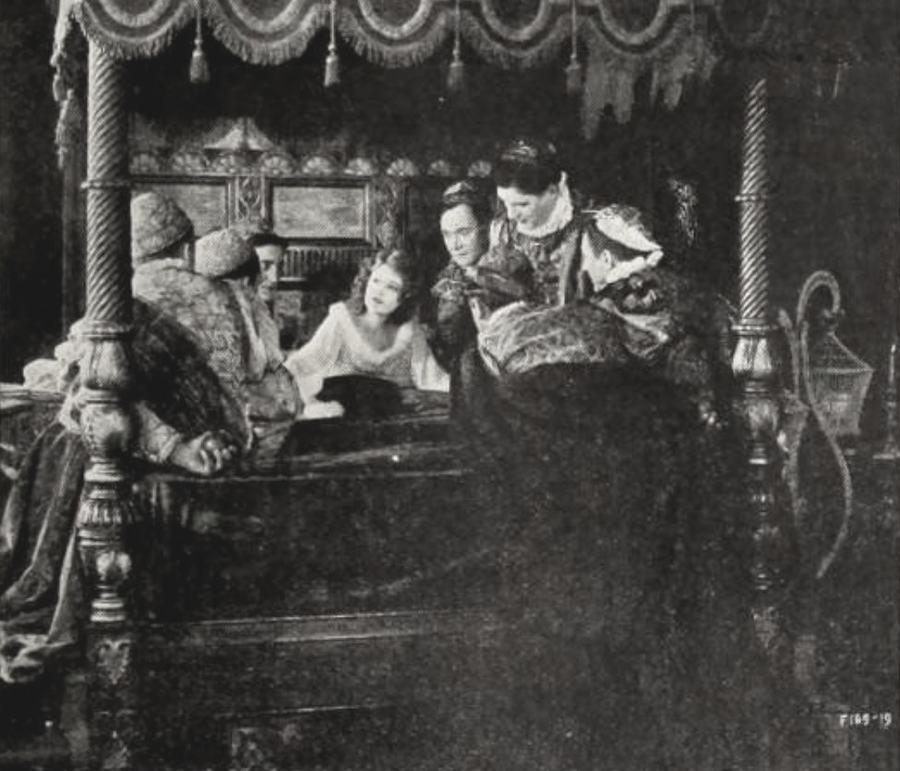
The film’s middle act is a celluloid fugue structured around textile montage. Intertitles, lettered in looping Art-Nouveau tendrils, count down the garments: “Six yet to weave…” “Three yet to weave…”. Each card is superimposed over Clark’s blood-specked fingertips, a visual metronome ticking toward doom. Dawley intercuts these with flashes of courtly life elsewhere: the King (William E. Danforth) carouses with comely duchesses; courtiers gamble on the exact weight of a swan’s clavicle. The cross-cutting anticipates Griffith’s intolerance symphonies but with a serrated edge—every laugh elsewhere feels like a stab in Tweedledee’s throat.
Scholarship has overlooked Edwin Denison’s contribution as the scheming Duke of Dial-IV, a character excised from some regional prints. Denison, a veteran of The Conqueror, laces his villainy with foppish ennui; he toys with a pocket-watch whose hands spin backwards, a sly nod to the kingdom’s temporal vertigo. His unspoken desire for Tweedledee adds a frisson of incestuous dread, though the Hays-less era lets the subplot dangle like frayed yarn.
Then comes the set-piece: the scaffold on the salt flats. Dawley builds it from driftwood and cathedral light, a gallows-cum-creche where Tweedledee, now voiceless and nine-months weary, must finish the seventh jerkin while the swans circle overhead like feathered sharks. The Witch arrives, ball in hand, and offers a Faustian revision: speak my name, she seems to hiss through dentalised grimace, and your brothers remain birds yet you shall wed the Duke. The intertitle, drenched in sea-blue tint, reads: “To speak is to betray; to betray is to save.”
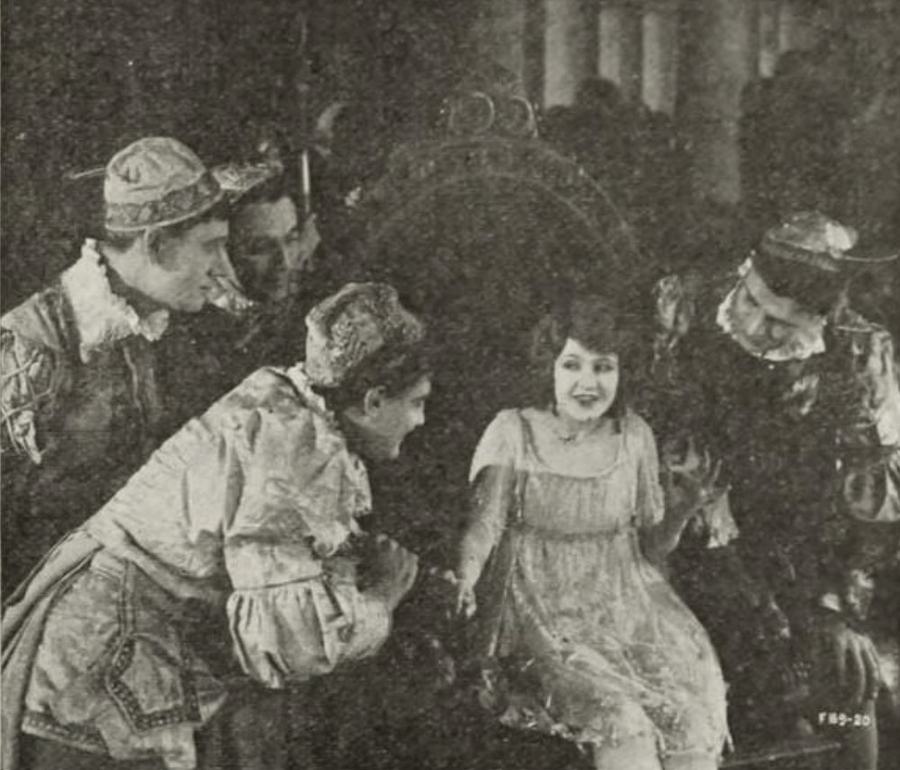
What follows is perhaps the most audacious sequence in silent fantasy. Clark drops the knitting needles. Frame-by-frame, she unbuttons her own blouse, revealing a chemise stitched from the same nettle-yarn. She has knitted the final garment around herself, a corset of thorns. By wriggling free, she completes the seventh vestment without utterance, a loophole worthy of Scheherazade. The Witch, incensed, stomps her bouncing ball—an act of self-implosion. The sphere ricochets one last time, knocking her into the brine where reeds tangle like handcuffs. The swans descend, morphing back into boys with a jump-cut so primitive it feels alchemical.
Yet Dawley denies us catharsis. The restored brothers, now naked and shivering, form a semicircle around their sister who has collapsed from exhaustion. Instead of jubilation, the intertitle offers: “Words returned, yet what word suffices?” The camera lingers on Clark’s face as tears dilute the blood on her lip. Fade to black. No royal wedding, no coronation, no moral placard—only the tacit acknowledgement that surviving trauma is not synonymous with healing.
Viewed beside contemporaneous biblical epics like Herod or Quo Vadis?, The Seven Swans feels almost heretically intimate. Where those films erect marble excess, Dawley opts for the gossamer and the gangrenous. Its nearest spiritual sibling might be Human Driftwood, another tale of bodies buffeted by uncaring tides, though Swans replaces social determinism with folkloric fatalism.
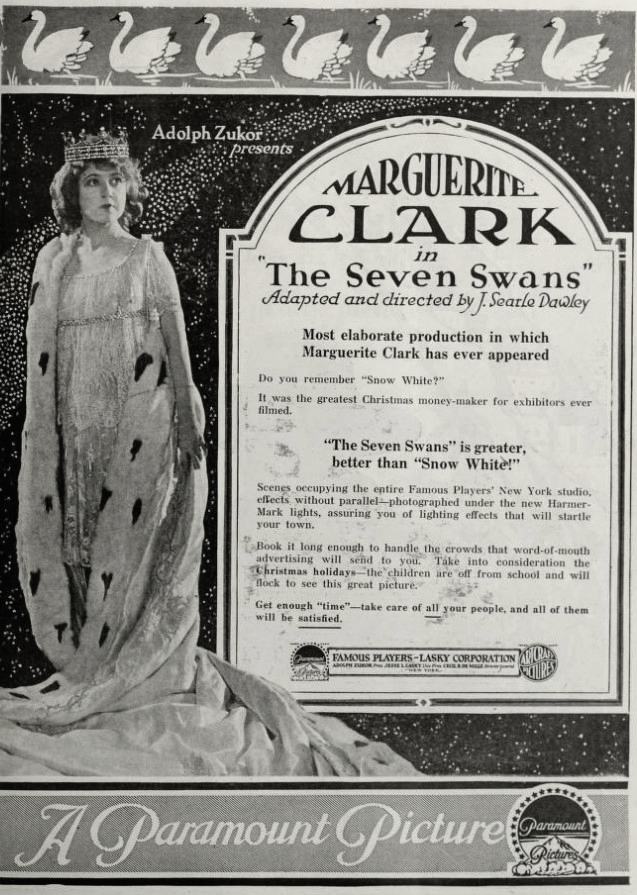
Technically, the print survives only in a 9.5 mm Pathéscope abridgement, 27 minutes at 18 fps. The tints—cyan for exteriors, amber for interiors, magenta for witchcraft—were reconstructed by Lobster Films in 2018 using antique Pathé tinting manuals. The score, a 2020 commission by Maud Nelissen, threads Debussyan harp with toy-piano plinks, replicating that rubber-ball bounce in aural form. Viewers at Pordenone reported hallucinations of feathers between frames; such is the necromancy of well-applied silence.
Performances aside, the film’s enduring frisson lies in its pre-Freudian symbology: the nettle as phallus, the knitting needle as castrating needle, the bouncing ball as return-of-the-repressed in latex form. Tweedledee’s aphonia is less a narrative device than a gendered oubliette, a precursor to the hysterical women populating later Lang and Hitchcock. Yet unlike those directors, Dawley grants his heroine authorship over her silence; she weaponises lack until lack becomes loom.
Caveat: the racial politics of the Kingdom’s marginal figures—moorish merchants who appear for three frames, their faces painted café-au-lait—are repellent. The 1919 viewer might have accepted them as exotic garnish; a century on, they read as colonial scar tissue. Any modern restoration worth its salt ought to contextualise these caricatures without sanitising them.
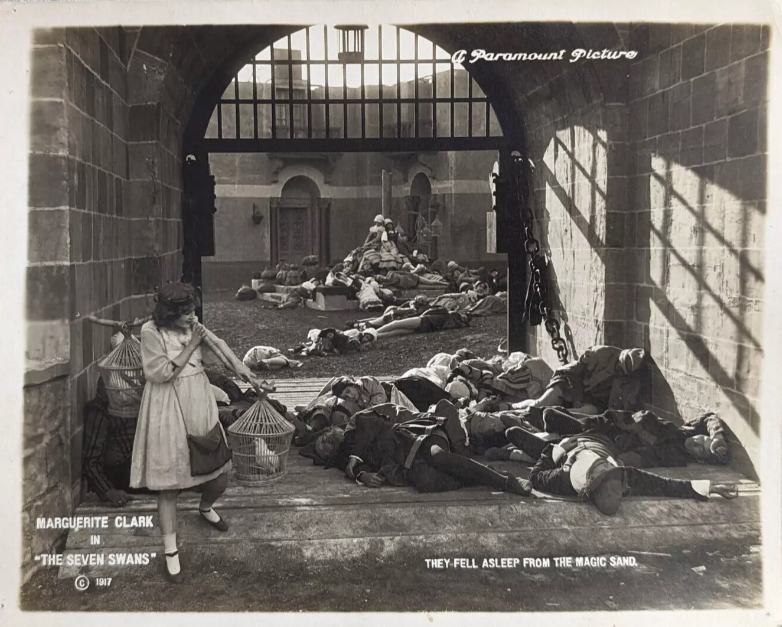
Still, the film’s ecological undercurrent feels startlingly contemporary. The marshes, shot in New Jersey’s Hackensack lowlands, are no mere backdrop but a pulsifying organ, exhaling methane and inhaling innocence. When the swans take flight, the camera tilts up to reveal telegraph wires—modernity’s lattice—crossing the sky like sutures. The image lasts three seconds yet perforates the pastoral, hinting that all fairy-tales now unfold under the surveillance of industry.
Ultimately, The Seven Swans is a relic that refuses museum dust. It is a cracked kaleidoscope whose coloured shards still draw blood when pressed against the palm. Watch it for Clark’s face—an Easter lily bruised by moonlight. Watch it for Anderson’s witch—camp and calamity pirouetting on a rubber sphere. Watch it because, in an age when every silent film is either canonised or forgotten, this one haunts the liminal, forever mid-bounce, forever mid-sob, forever on the verge of becoming something other than what it was—much like cinema itself.
Verdict: 9.1/10 — A febrile, fibre-optic dream scraped from the lint of history, still sharp enough to sever innocence at the wing.
IMDb —
1936
Community
Log in to comment.