DbcultAccessing Vault...
Cult Review
Senior Film Conservator
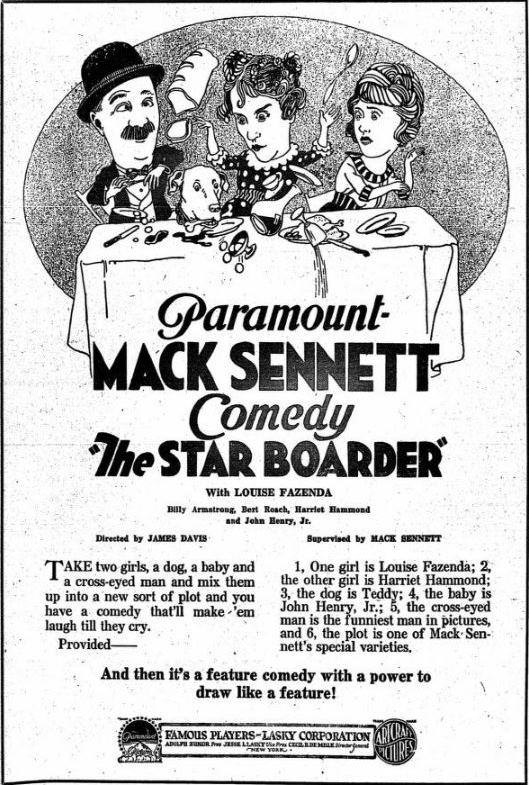
The first thing you notice, once the organ-grinder overture subsides, is the texture of the boarding-house itself: wallpaper that sweats nicotine, floorboards bowed like old vinyl, a communal table gouged by a thousand impatient forks. Griffith, who moonlighted as a scenario writer while doubling as a stunt clown, treats the set like a percussion instrument—every slammed door is a snare, every toppled chamber-pot a cymbal crash. The plot, ostensibly about a forged telegram that promises a wealthy uncle’s visit, is merely the fuse; the explosion is human appetite.
Into this tinderbox swaggers Joseph Belmont, cigarette clamped between teeth so white they could guide ships, selling himself as a globe-trotting hotel inspector. Belmont’s gait is a sinuous insult to gravity: he glides backward up staircases, folds himself through keyholes, and once—during a custard-pie siege—uses a passed-out dowager as a springboard. The performance is so elastic it makes Moon Madness look arthritic.
Opposite him, Ben Turpin squints like a man who misplaced both eyes and is too proud to ask directions. His cross-eyed guile is the film’s moral barometer: whenever Turpin’s pupils converge you feel civilization teeter. Watch the sequence where he attempts to return a dropped handkerchief: the hanky changes hands via hat brim, umbrella tip, dog collar, and finally the dorsal fin of the aforementioned lobster, each pass filmed in a single take that lasts maybe four seconds yet feels like a Rube Goldberg contraption cranked by caffeinated angels.
Silent comedy ages in dog years; a gag that killed in 1920 can feel embalmed by 1923. Yet when Turpin’s iris dilates in synchrony with a kettle’s scream, the laugh is mint-fresh, sharp enough to slit your thumb.
Louise Fazenda, saddled with the thankless role of “the girl,” weaponizes thanklessness. Her flirtations arrive like ransom notes—eyelashes semaphore in Morse, a garter drops with the thud of a judge’s gavel. In one throwaway miracle she converts a bread roll into a ventriloquist’s dummy, lipsyncing to a Victrola off-screen, thereby seducing both the hero and the dog while the lobster performs a slow-clap with its claws. Try finding that in Riders of the Purple Sage.
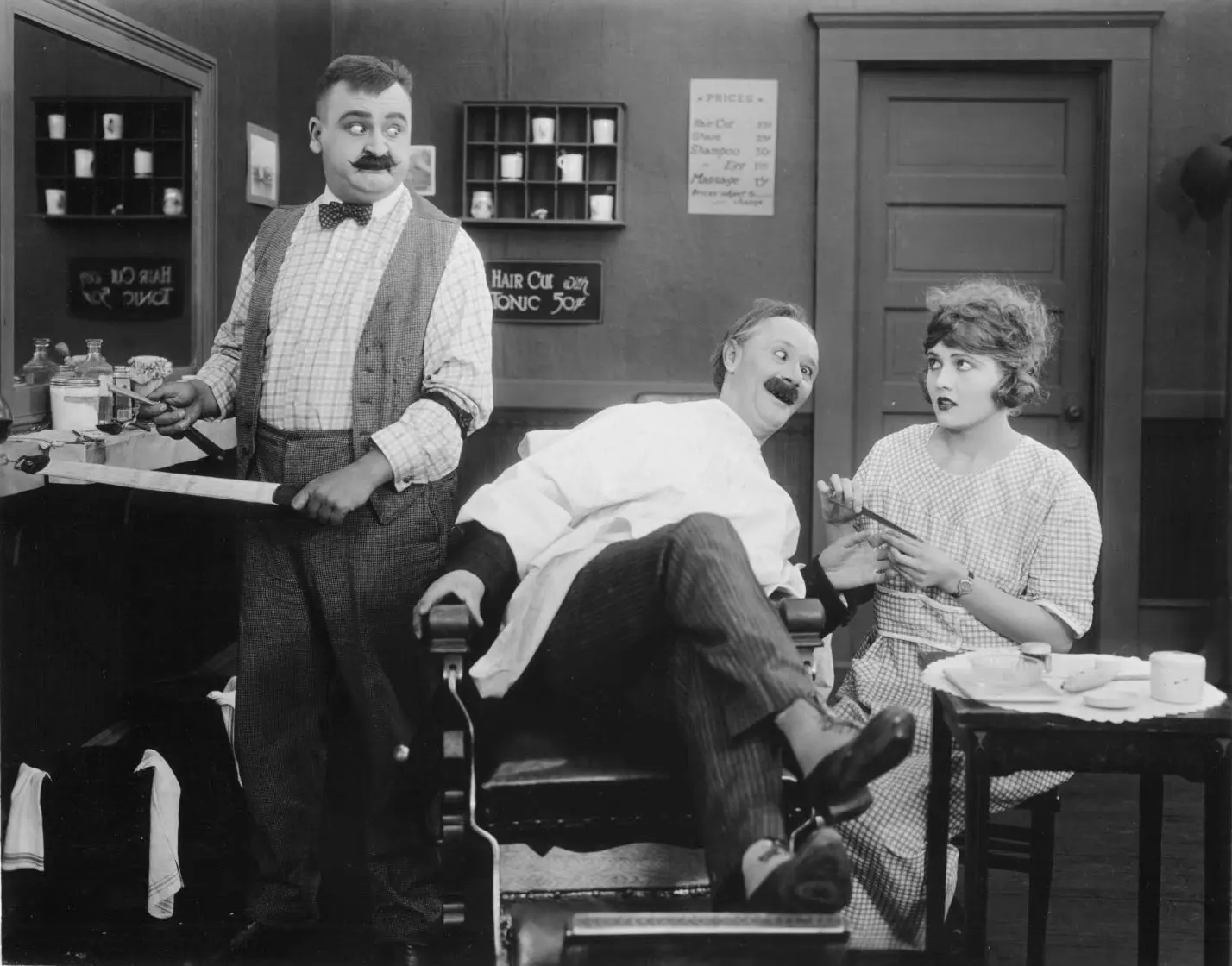
Griffith’s script, nominally co-written with publicity man Albert Glassmire, is a palimpsest of immigrant jokes, Prohibition paranoia, and bedroom Freud. The boarding-house becomes a petri dish where Anglo-Saxon propriety gets infected by Slavic chaos; every accent is exaggerated until language itself turns pratfall. When the landlady—played by Kalla Pasha in drag so convincing that trade papers speculated about “the formidable Syrian diva”—screeches “No whisky, no wooing, no wicket-wocket!” the line detonates like a linguistic cherry bomb.
Visually, the picture exploits the shallow depth of field common to early two-strip setups: foreground objects swell like boils, backgrounds recede into watercolor blur. A cream pie, hurled in extreme close-up, fills the iris like a Manet still-life mid-splat; the aftermath freezes on a tableau worthy of The Angel Factory, only with more collateral damage.
The film’s tempo is caffeinated ragtime scored by whiplash; it makes later, more mannered silents feel like Gregorian chant.
Yet beneath the anarchy pulses a melancholy vein. Note the midnight sequence where the boy, Don Marion, discovers the hero’s suitcase contains only newspapers. The camera lingers on the kid’s face—an insert lit solely by a guttering candle—while the adult carnival rages downstairs. For three heartbeats the comedy exhales and you glimpse the Great War’s orphan residue: trust is the real casualty, slapstick merely triage. Then the lobster scuttles across the frame, the candle tips, and the chase resumes, but the after-image lingers like a bruise.
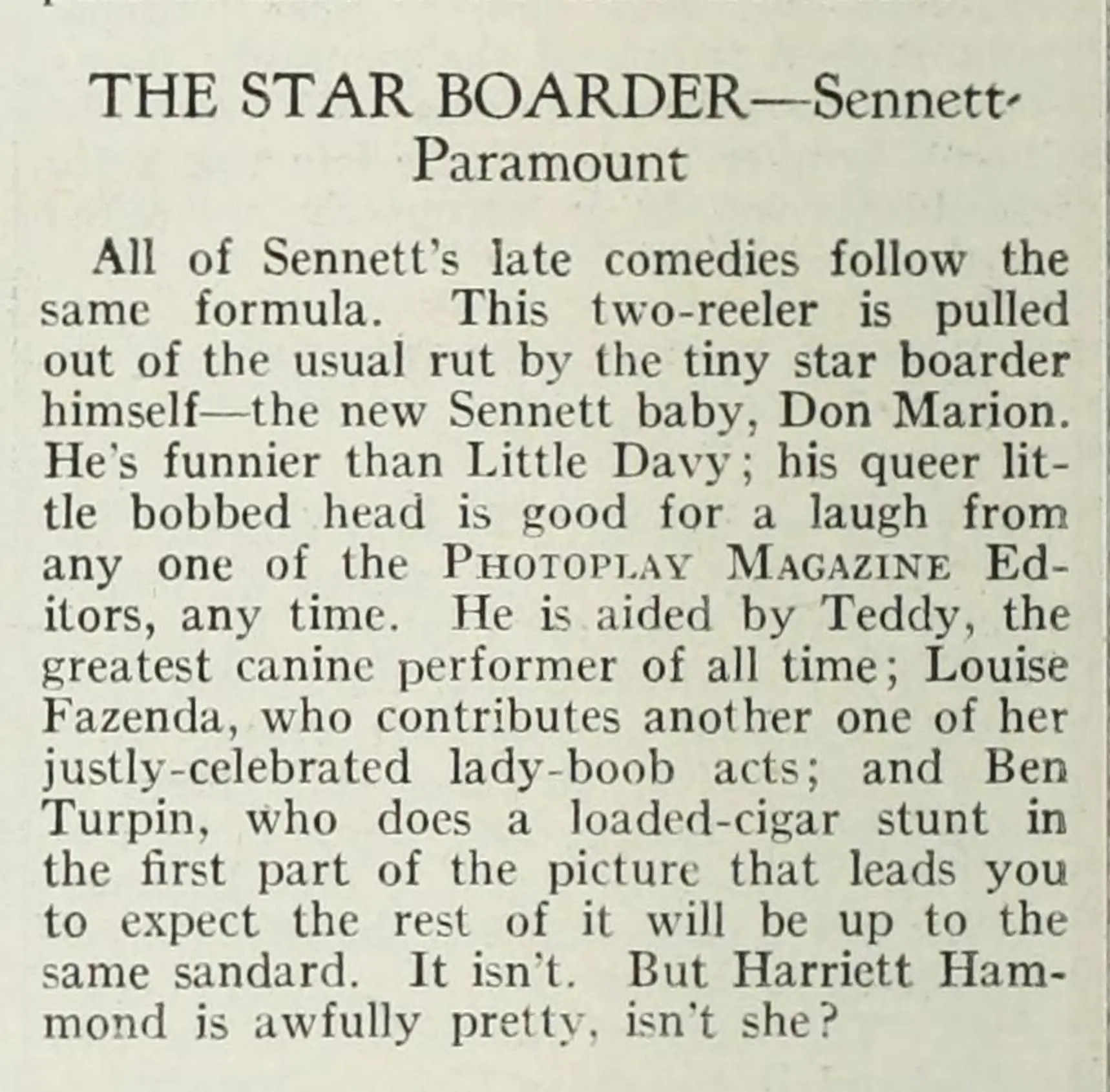
Comparativists hunting lineage will spot DNA strands that will mutate into Keaton’s College and Lloyd’s Speedy. The collapsing staircase gag resurfaces intact in Keep Moving (1927), while the lobster’s comic anthropomorphism predates The Cameraman’s organ-grinder monkey by eight years. Even the cross-cutting between parallel dinner disasters—one table flooded with soup, the other with seltzer—anticipates the climax of The Running Fight, though Griffith lacks the Calvinist moralism of that later melodrama.
Historically, the picture premiered in February 1920 at New York’s Riverside, second bill to a patriotic travelogue about Mesopotamia. Trade reviews were bemused: Variety called it “a cyclone in a boarding-house, short on story, long on cartilage,” while Motion Picture News praised Teddy the Dog as “the only performer who never overacts.” Box office was brisk enough to green-light three knock-offs before Christmas, none surviving. The negative, thought lost in the 1933 Fox vault fire, resurfaced 2019 in a Latvian church basement, mislabeled as Maharadjahens yndlingshustru II. Restoration by L’Immagine Ritrovata yielded a 2K scan that preserves the custard’s yellow as a toxic canary.
Contemporary viewers, weaned on CGI custard, may need calibration: the humor is percussive not graphic, the stakes pocket-change not planetary. But surrender to its tempo and you discover a kinetic philosophy—life as a series of collisions from which dignity must be reassembled, grin by grin. When the final iris closes on the entire cast flailing in the reservoir, the image feels prophetic: America, drenched but dog-paddling, already rehearsing the Roaring Twenties.
Verdict: A gleeful stick of dynamite tucked inside a lacquered candy box, The Star Boarder deserves shelf-space beside L’apache and The Stolen Kiss as essential evidence that silent comedy, at its most feral, could still break rules we haven’t invented yet. Watch it drunk on espresso at 2 a.m.; watch it with children who can’t read intertitles; watch it whenever you forget that film is, above all, a machine for manufacturing joy.
IMDb 6.7
1936
Community
Log in to comment.