DbcultAccessing Vault...
Cult Review
Senior Film Conservator
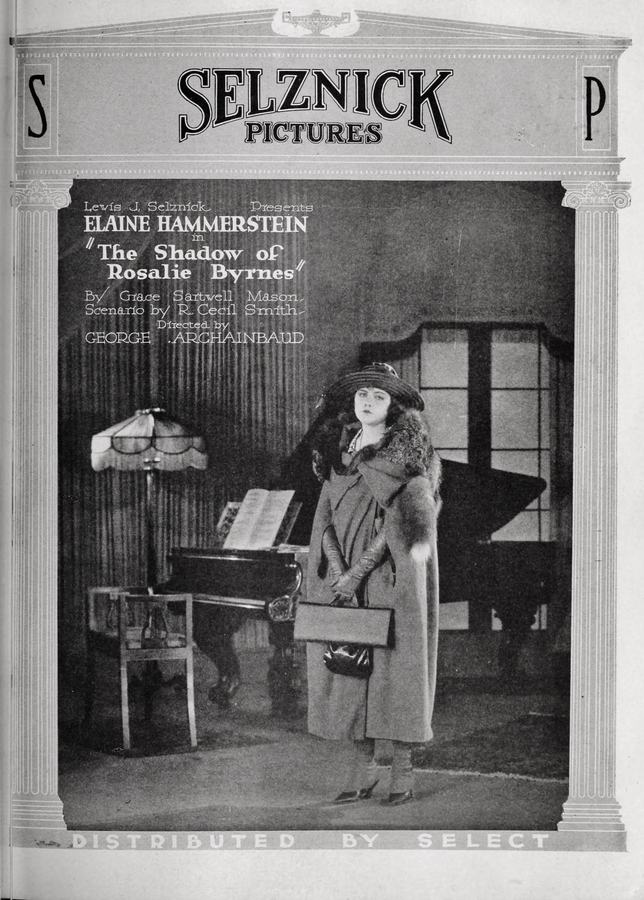
A hush settles over the nitrate, as if the celluloid itself fears to breathe. The first intertitle blooms like a bruise: “The world knew her as Rosalie Byrnes—yet mirrors remembered Leona.” From that instant, director Wilmuth Merk’s 1920 chamber-thriller The Shadow of Rosalie Byrnes refuses to let spectators languish in comfort. Instead, it drags us through a hall of mirrored identities where every reflection lies, and love letters detonate like grenades misplaced in silk glove boxes.
Merk, chiefly remembered for industrious two-reelers, here orchestrates a five-act fever dream that anticipates Hitchcock’s voyageurs of moral trespass. He opens on a Broadway after-party: confetti of ticker-tape, champagne flutes trembling like tuning forks, and Leontine Maddern—played by Elaine Hammerstein in a performance so electrically self-devouring you expect sparks to crack off her pearls—holding court while a monocled gossip columnist begs for scandal. Notice how Hammerstein’s eyelids half-mast in lazy reptilian bliss; she savours the camera’s hunger. Cut—via a whip-pan that prefigures 1960s nouvelle vague—to an East Village attic where twin Leona daubs sepia umber onto a canvas of grieving mothers. Same face, different cosmos.
The film’s visual grammar is already legible: wherever Leontine swaggers, the frame percolates with confetti, flappers, jazz-age clutter; wherever Rosalie wanders, negative space pools like spilled milk, allowing George Cowl’s chiaroscuro lighting to sculpt cheekbones into prayer books. These spatial dialectics echo through later melodramas—think The Woman in the Case (1916) or The Streets of Illusion—yet none wield duality with such surgical relish.
Enter Lt. Gerald Cromwell (Edward Langford), introduced via a travelling matte shot that superimposes troop-ships over Times Square recruiting banners. The young officer’s first dialogue card reads: “If the Kaiser won’t wait, why should I?” The line, co-scripted by Grace Sartwell Mason and R. Cecil Smith, is flippant yet foreshadows the temporal cruelties that will soon fracture his marriage. Langford—whose career flamed out too soon after a 1923 motorcycle crash—imbues Cromwell with the bashful virility of a boy who believes the world can be steered by goodwill and a clean uniform. Watch how his pupils dilate when Rosalie, at a Gramercy Park fund-raiser, misquotes Rupert Brooke; love germinates in the fault between quotation and misquotation.
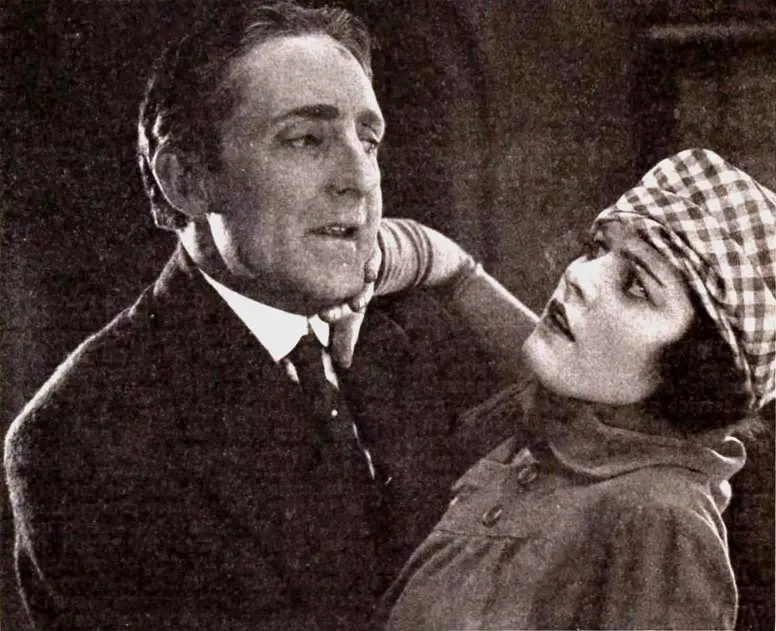
Their wedding, staged in the rear garden of a shuttered Episcopal church, is shot almost entirely in silhouettes against parchment-coloured stained glass. Merk refuses close-ups; we glimpse the couple as wavering shadows, as if the film already suspects identity’s porousness. The sequence lasts 42 seconds—yet, like the 4-minute overture of En Aftenscene, its brevity etches deeper than pages of nuptial clichés.
No sooner do rice grains settle than Gerald ships out. Cue the Cromwell dynasty—steel barons in mourning coats—convening around a mahogany sarcophagus of a boardroom table. Patriarch Ezra Cromwell dispatches a fixer to purchase Rosalie’s exit. The emissary, played by Alfred Hickman with the oleaginous grin of a man who polishes his dentures with diamond paste, locates Leontine at the Café des Artistes, assumes she is the Mrs. Cromwell, and proffers $50,000—roughly $700,000 today. Hammerstein’s pupils glitter like dimes dropped in mercury. Without a cut, she signs her sister’s name, pockets the cheque, and swans into the night toasting “to the gullibility of virtue.”
News transatlantically reaches Gerald via a censored field telegram. The accompanying letter—dictated by Leontine but masquerading as Rosalie’s hand—announces divorce on grounds of abandonment. Langford’s face fills the entire frame, mud-splattered, cigarette ember trembling; the cigarette burns down but never consumed on camera—an early pre-code flourish. His reply, later read aloud in voice-over, is a livid crescendo: “You have traded my honour for coin like Judas without the courtesy of a kiss.”
Act three detonates inside Rosalie’s apartment at 3 a.m. A thunderclap. Leontine barges in, mascara sluiced into warpaint, hair dripping as though she’s swum the Hudson. She confesses to murdering her paramour Vasco Lamar—Cuban émigré painter, opium aficionado, and backer of her forthcoming revue. Claims she left her monogrammed purse at the crime scene. Hammerstein’s tremolo shifts from panic to seduction, then to mockery of her twin’s piety. The camera dollies back until both sisters occupy opposite thirds of the frame, a gaping negative space between them—an abyss of divergent conscience.
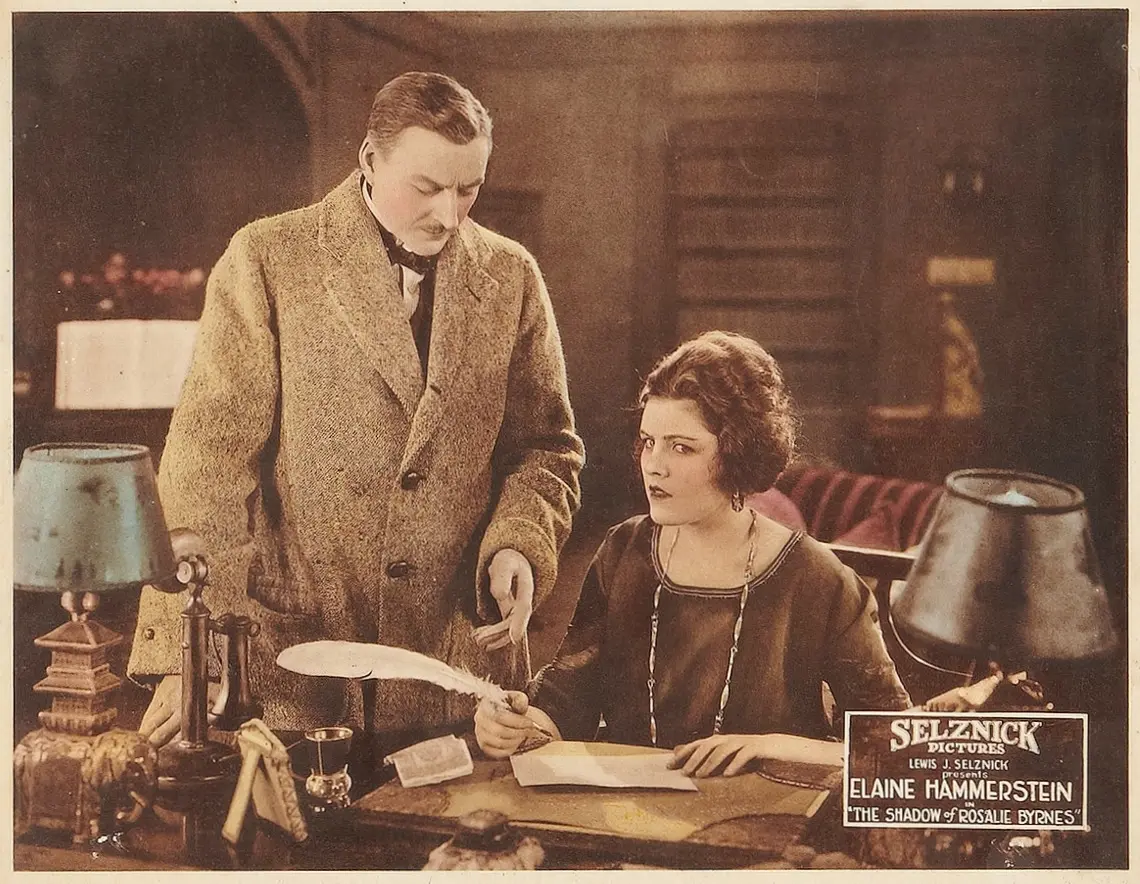
Rosalie, propelled by a moral gyroscope we still do not fully fathom, ventures into Lamar’s West 57th loft to retrieve the purse. The set design here channels German expressionism: lopsided doorframes, streetlight slicing through venetians like prison bars, and a grand canvas of Lamar’s—a Minotaur goring a starlet—leaning against the wall like an omen. She discovers not a cadaver but her husband, on leave, trench coat still reeking of cordite. Gerald recounts how Leontine, in a fit of bravado, revealed the bribery and the supposed homicide. Together they scour the studio—no corpse, no blood, merely overturned turpentine and a gramophone frozen mid-aria.
At the precise moment suspense crests, Lamar himself jaunts in—bandaged head, cigarette holder jaunty, apologizing for the “inconvenient melodrama.” He had merely been clubbed by a burglar, Leontine’s purse snatched in the scuffle; she interpreted his unconsciousness as death and fled. The lovers, absolved of guilt and liberated from the twin’s machinations, exit arm-in-arm into a snow-dusted dawn as the superimposed title reads: “Honeymoon bound for the Adriatic—where names dissolve in salt.”
Hammerstein’s bifurcated tour-de-force deserves archival canonisation. She differentiates the siblings through micro-gestures: Leontine’s left eyebrow arches when lying; Rosalie’s right hand clutches her wedding ring as though it were a talisman against despair. The camera, mercilessly intimate in close-ups, records pores, capillaries, the tremor of lacquer on the lower lip. In an era when twin roles relied on gimmicky split-screen, Merk instead employs body-doubles and over-the-shoulder cuts, granting Hammerstein freedom to oscillate between predator and penitent without optical seams.
Langford’s understated valour complements her pyrotechnics. His baritone intertitles—likely ghost-written by Mason—pulse with Edwardian cadence, yet when paired with his wounded gaze they conjure a modernity that anticipates Clift and Brando. One aches at the knowledge that audiences never witnessed his mature evolution.
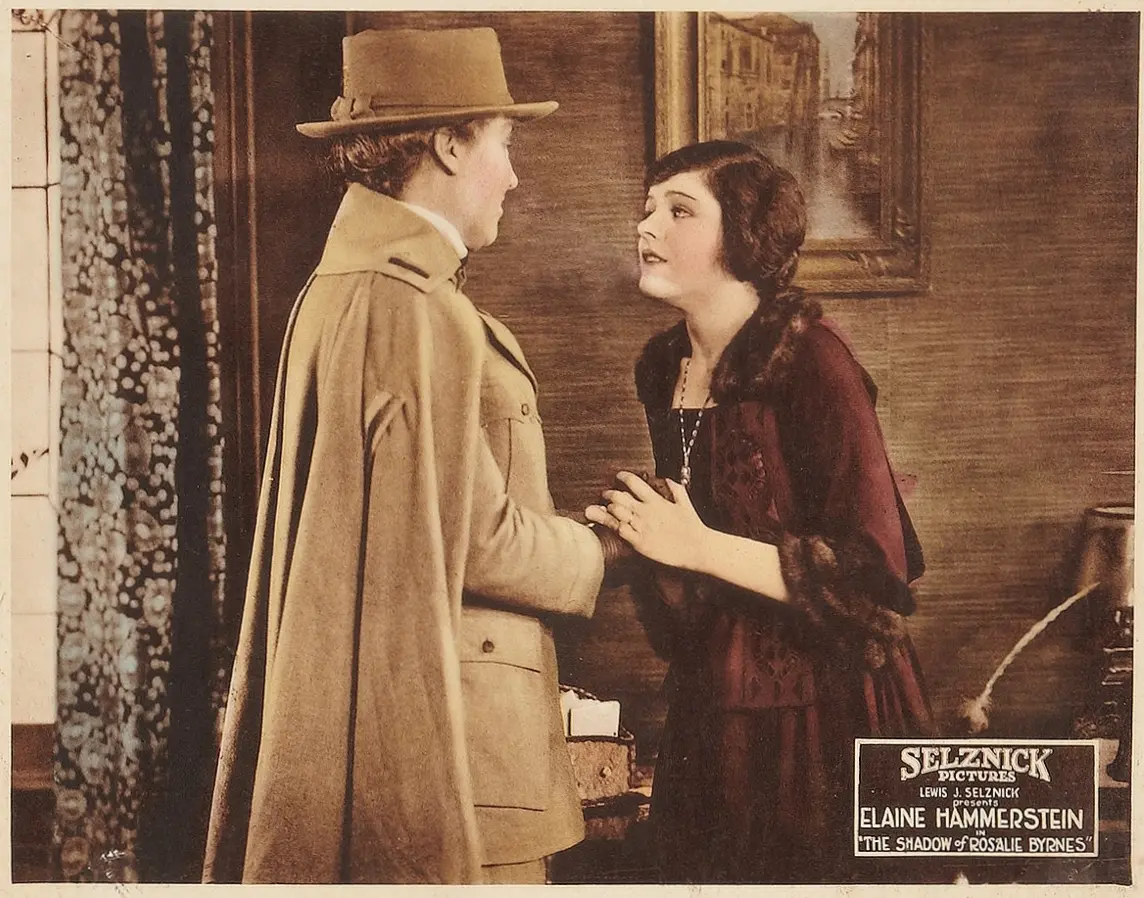
Cinematographer George Cowl—later fêmed for Heart of Gold (1923)—relishes chiaroscuro. Note the scene where Rosalie reads Gerald’s farewell telegram: a single kerosene lamp haloes the parchment while the rest of the frame sinks into Stygian black. The letter’s paper appears phosphorescent, as though words themselves radiate betrayal. Cowl’s palette—sepia, umber, bruised violet—anticipates the tinting strategies of Murnau’s Sunrise by seven years.
Composer-conductor David Velasco (billed as “synchronised score architect”) supplied a live cue-sheet calling for viola, timpani, and a hand-cranked phonograph of Saint-Saëns’ Introduction and Rondo Capriccioso. Contemporary exhibitors reported patrons weeping during the reunion scene, the violin’s pizzicato mimicking heart valves. Today, such affective engineering feels Wagnerian in ambition.
Yet the film is not unblemished. Its depiction of Lamar—a Latin lover steeped in orientalist opium haze—leans into caricature. Worth, draped in silk kimono, delivers lines like “Art without sin is merely craft,” which reeks of recycled femme-fatale tropes. And the final dissolve to honeymoon steamship feels abrupt, as though producers feared audiences would revolt should shadows linger longer than virtue required.
Still, measured against its contemporaries—say, the vaudeville pratfalls of Keystone Comedies or the sentimental pieties of Tender Memories—Rosalie Byrnes radiates an audacity that edges toward psychological noir. Its interrogation of performance, identity, and the fungibility of the female image prefigures Vertigo by nearly four decades.
Print survival is spotty. A 35mm tinted nitrate resides in the Library of Congress, albeit with reel five decomposed to vinegar. Kino Lorber’s forthcoming 2K restoration utilises a 1921 Czech distribution print to fill gaps; the colour palette has been digitally approximated to the original amber and cyan. Seek it out at a cinematheque, preferably with live accompaniment, because this shadow demands to be witnessed in communal darkness where whispers ricochet off theatre walls like Leontine’s lies.
Bottom line: The Shadow of Rosalie Byrnes is a forgotten gem that refracts twin tropes through prisms of moral disquiet. It will fascinate devotees of Meeting Theda Bara’s vamp iconography or Turning the Tables’ gender power flips. Yet its true heirs are Hitchcock, Siodmak, and anyone who believes that identity is less a fingerprint than a hall of mirrors—smoke, perfume, and treachery in every pane.
IMDb —
1919
Community
Log in to comment.