DbcultAccessing Vault...
Cult Review
Senior Film Conservator
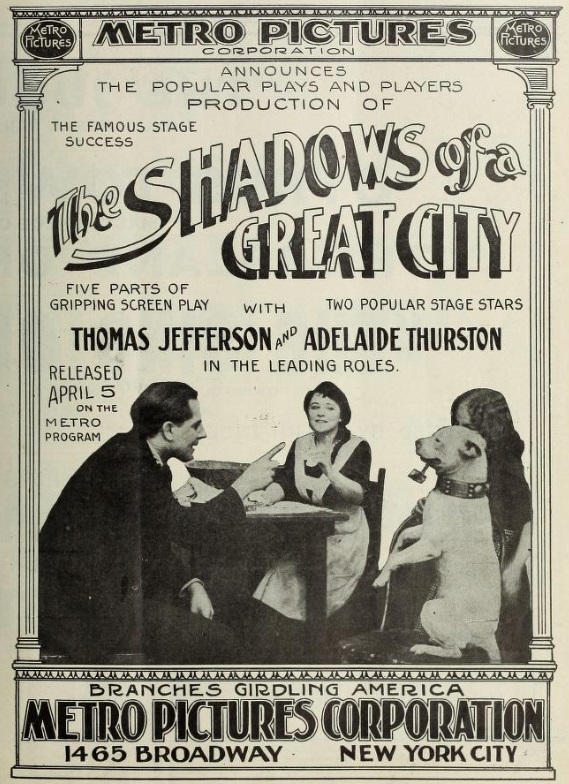
A furnace of fog, brass, and yearning—The Shadows of a Great City detonates the myth that silent cinema merely gestured at emotion. Instead it conjures a metropolis throbbing with piston hearts and carbon filament secrets, every frame inked in soot and starlight.
In the prologue, cinematographer Herbert Blaché tilts his camera upward until the city’s elevated rails resemble a cathedral of iron ribs; the sky between trusses is a bruised violet, as though twilight itself has been docked a day’s wages. Into this chiaroscuro steps our prodigal, played by Thomas Jefferson with the languid grace of a man who has never feared hunger but suddenly senses the cavity where purpose should reside. His top-hat silhouette cuts across the screen like a scalpel—an apt image, since the story that follows is less a romance than an autopsy of Gilded-Age greed.
Adelaide Thurston, as the inventor’s daughter, has eyes that flicker between defiance and devotion faster than a semaphore; her performance is a masterclass in micro-gesture. Watch the way she caresses a blueprint’s edge with the pad of her thumb—half benediction, half battlefield salute. When the industrial accident occurs (a gear-box explodes in a shower of brass shrapnel that seems to ricochet through the very celluloid), her scream is swallowed by the machinery’s death-rattle, yet the tremor in her lower lip loops louder than any talkie scream.
The narrative hinge—the father’s theft of an unpatented turbine—works as both plot motor and moral X-ray. In 1913 America, when patent law was a gladiatorial arena, the film exposes how paperwork could murder genius as efficiently as pistons. The merchant’s office is staged like a sacramental space: ledgers become hymnals, ink-pots relics, and the quill a priestly dagger that consecrates larceny under the sign of progress.
Refusing paternal hush-money, the son plummets from velvet lounges to cargo holds where men hurl 200-pound sacks as casually as gossip. Blaché’s montage here is proto-Soviet: sinews, chains, stevedore songs syncopated with intertitles that slap like brine. When the foreman taunts the fallen heir—calling him “a champagne blister on the thumb of labor”—the insult ricochets through the next reels, foreshadowing the false accusation that will brand the boy “murderer.”
The river-collision sequence is shot with a handheld plank that sways like a drunkard; the camera becomes accomplice to chaos, plunging us into black water where moonlight fractures into silver shrapnel. Viewers in 1913 reportedly gasped when the foreman resurfaced alive—yet the real jolt is ethical: how quickly society shackles the powerless on the flimsiest testimony.
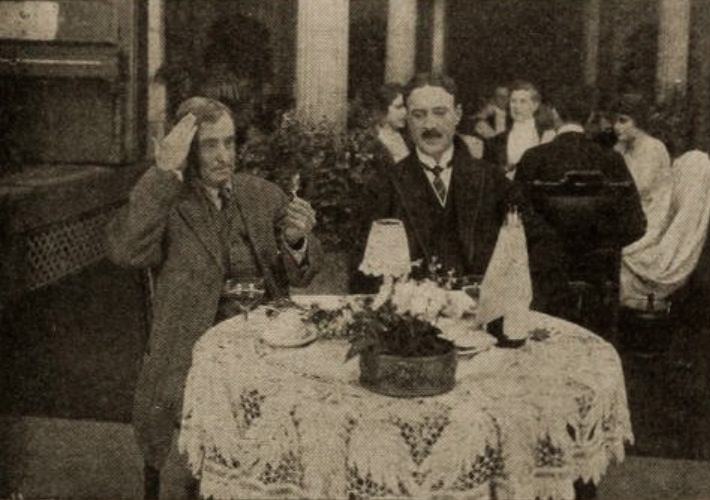
Blackwell’s Island—rendered through matte paintings that dissolve into actual quarry shots—functions as a Foucauldian panopticon in miniature. Inmates’ faces emerge from darkness like cameos carved on coal. A match-cut links the inventor’s crushed spectacles in scene one to the cracked monocle of a warden surveying his human inventory; the film quietly insists that industrial and carceral exploitation share genealogy.
Meanwhile, Thurston’s heroine transmutes grief into legislative sabotage. She haunts corridors of power with the tenacity of a process server, her modest dress a semaphore against the striped trousers of pols. An intertitle reads: “She traded her mourning veil for a typewriter ribbon.” It’s a line that should be needle-pointed onto every film-studies syllabus. When she finally corners the governor in Albany, the camera executes a 180-degree swivel: power literally pivots on its axis.
The jailbreak—accomplished via laundry cart and bribery—unfurls with slapstick velocity that belies its existential stakes. Our protagonist barrels through fog-choked alleys while whistle blares stutter across the soundtrack (orchestras in 1913 provided live accompaniment, but even silent, the image vibrates). He is both fugitive and pilgrim, racing toward the possibility that innocence might yet be a currency negotiable in daylight.
Critics often pigeonhole silent melodrama as mawkish; this climax refutes them. When the couple reunite in their candlelit garret, the film withholds orchestral bombast. Instead, a single coal stove exhales warmth; the city outside is a distant carnivorous hum. Their embrace is half-shadow on peeling wallpaper—an intimation that happiness, like cinema itself, is merely light organized by persistence of vision.
Comparative lensing: where The Mystery of Edwin Drood externalizes guilt through opium fog and Expressionist sets, Shadows internalizes it within bureaucratic parchment. Conversely, All for the Movies celebrates celluloid as utopian playground; our feature reveals celluloid as evidence in a trial against capital. Both approaches remain urgently dialogic.
Technically, the film’s tinting strategy deserves PhD dissertations. Night exteriors bathe in cobalt; interiors flicker amber like insects preserved in cognac. During the pardon telegram scene, sepia intrudes—an archival ghost suggesting history itself is annotating the narrative. Preservationists at MoMA restored a 35-mm print in 2019, discovering previously lost frames of the inventor’s schematics; those blue-prints now read as palimpsest, every erased line a scar of corporate rapine.
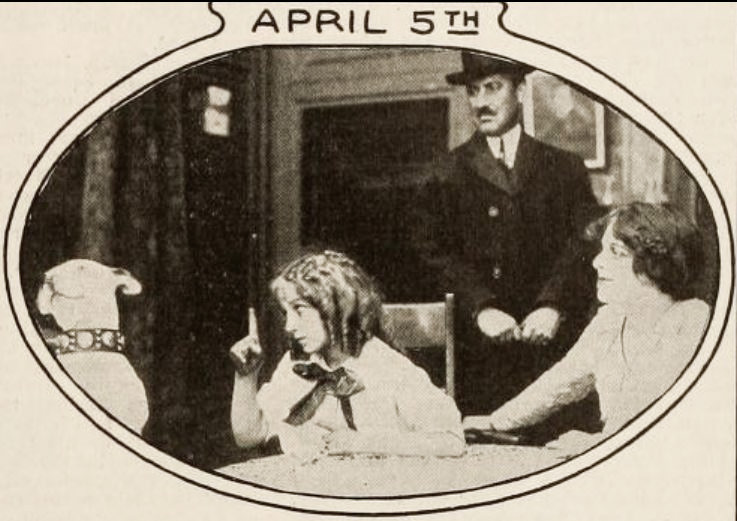
Performances: Jefferson’s body language mutates from flaneur languor to proletarian torque—note how his shoulders ascend toward his earlobes as guilt calcifies. Thurston, meanwhile, weaponizes stillness; her final close-up holds for eight seconds without a cut, eyes glistening like wet typewriter keys. The spectator is compelled to blink first.
Scripting kudos to Aaron Hoffman & Joseph Jefferson: intertitles eschew Victorian prolixity for staccato poetry. “Gold buys silence but not time” rhymes visually with shots of a pocket-watch bobbing in the East River—an imagist haiku wrought in celluloid. The lexicon of labor—“slinging tons for nickels”—predates Upton Sinclair’s muckraking cadence by a year, proving cinema could indict while it entertained.
Gender politics: the heroine’s agency pivots on access to institutional corridors rather than pistol-packin’ revenge, a nuance too often erased in retrograde critiques that flatten silent women into damsels. She is the film’s nervous system, transmitting moral electricity from private trauma to public policy.
Racial optics merit scrutiny. Blackwell’s Island population included disproportionate Black and Irish inmates; the film’s long-shots reveal this tapestry, yet narrative focus remains on the Anglo-Saxon protagonist. While progressive for 1913, contemporary viewers should note whose shadows lengthen and whose remain off-frame.
Sound anachronism thought-experiment: if one overlays the industrial clatter of Defense of Sevastopol’s cannonade, the result is a dialectic between personal and geopolitical incarceration. Both films understand that machinery can emancipate or annihilate depending on whose hand throws the switch.
Legacy: echoes reverberate through Barnaby Rudge’s riot scenes, through the bureaucratic nightmares of The House of Mystery, even through the championship bout in Tommy Burns vs. Jack Johnson where race, capital, and corporeal peril collide. Each serves as reminder that early cinema did not merely document modernity—it cross-examined it.
Final verdict: The Shadows of a Great City is a nitrate time-capsule whose moral tremors still crack plaster. To watch it is to inhale coal-dust of a century past, to feel the granite of Blackwell’s Island under your own metatarsals, to recognize that every era’s “progress” is tattooed upon somebody else’s skin. Seek the restoration, turn off your phone, let the flicker remind you that silence can be the loudest witness of all.

IMDb 5.4
1935
Community
Log in to comment.