DbcultAccessing Vault...
7.1/10
Senior Film Conservator
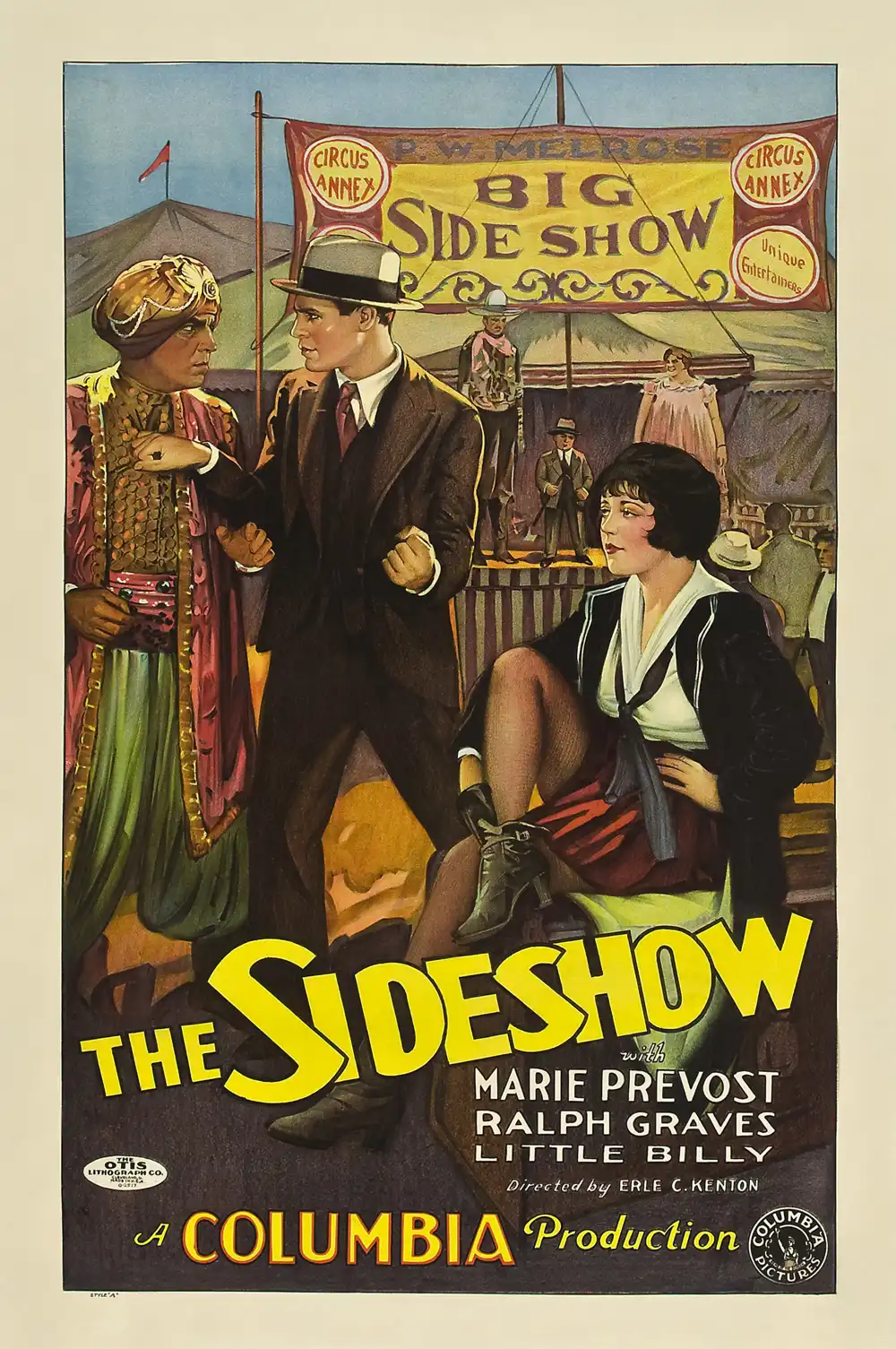
A definitive 7.1/10 rating for a film that redefined the boundaries of cult cinema. The Sideshow remains a cornerstone of transgressive art.
"The Sideshow" is a film primarily for dedicated silent cinema enthusiasts, film historians, and those specifically interested in the early cinematic portrayal of circus life and its unique performers. For a modern audience seeking a compelling narrative or polished filmmaking, it's a challenging watch. While it offers fascinating glimpses into a bygone era of entertainment and features a remarkable cast of actual sideshow performers, its melodramatic plot often feels inert, and its pacing drags significantly. If you appreciate historical curiosity over narrative drive, there's something here. Otherwise, you'll likely find its dated conventions and sluggish rhythm difficult to overcome.
The most striking element of "The Sideshow" is undoubtedly its cast, particularly the integration of performers who were genuine attractions in real-life sideshows. Schlitze, often remembered from Tod Browning's Freaks, has a notable presence here, though his role is largely observational, often seen reacting with wide-eyed curiosity in the background or during crowd scenes. It’s a quiet performance, devoid of dialogue, yet his distinctive look and mannerisms draw the eye whenever he’s on screen, lending an undeniable authenticity to the circus setting.
Alan Roscoe, as circus owner Melrose, carries much of the film's dramatic weight, though his performance often veers into broad, theatrical gestures common in the era. His infatuation with the magician's assistant, played by Janet Ford, feels genuinely awkward, less a nuanced romantic pursuit and more a series of longing glances and hesitant approaches that never quite land. Ford, as the object of his affection, delivers a reserved performance. Her character's quiet rejection of Melrose's advances isn't delivered with any grand emotional display but rather through subtle shifts in posture and a consistent, polite distance. This understated portrayal, particularly in scenes where Melrose attempts to bridge the physical and emotional gap, feels like one of the film's more grounded human moments amidst the broader melodrama.
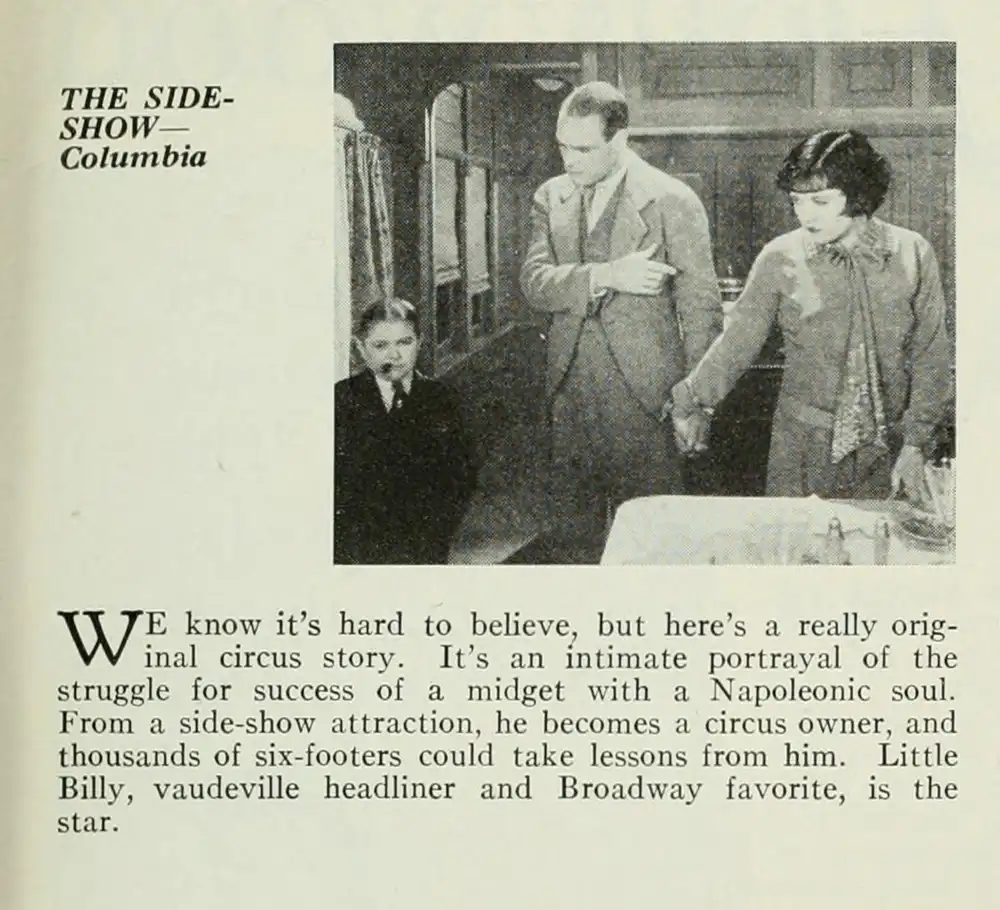
The other performers who are little people, including Paul Desmuke, Chester Morton, R.E. 'Tex' Madsen, and 'Little Billy' Rhodes, are mostly utilized as background color, adding to the authenticity of the circus environment. They are more spectacle than character, which is both a strength for historical accuracy and a weakness for character development. Their presence is a stark reminder of the film's era and how such individuals were often presented.
The film struggles considerably with pacing. The central conflict of the saboteur feels oddly secondary for long stretches, often punctuated by sudden, clumsy "accidents" that lack real tension. For instance, an early scene involving a collapsing tent pole is more baffling than suspenseful, primarily due to the quick editing and lack of clear consequence. The narrative often meanders, particularly during scenes establishing Melrose's unrequited affection, which are stretched out with prolonged reaction shots and repetitive visual cues. This makes the film feel longer than its actual runtime.
The tone is a peculiar mix. It attempts a serious melodrama regarding Melrose's business and personal woes, but it's constantly undercut by the inherent spectacle of the sideshow itself. There are moments that lean into the dramatic, followed by sudden cuts to performers simply going about their daily lives in the circus camp, creating a disjointed rhythm. The film never quite decides if it wants to be a gritty look behind the scenes or a romantic tragedy. This tonal inconsistency, rather than creating a rich tapestry, often leaves the viewer feeling adrift. One particular sequence, where the saboteur is shown meticulously planning his next move, feels like a sudden shift into a suspense thriller, only to be followed by another drawn-out scene of Melrose staring wistfully at Janet Ford.
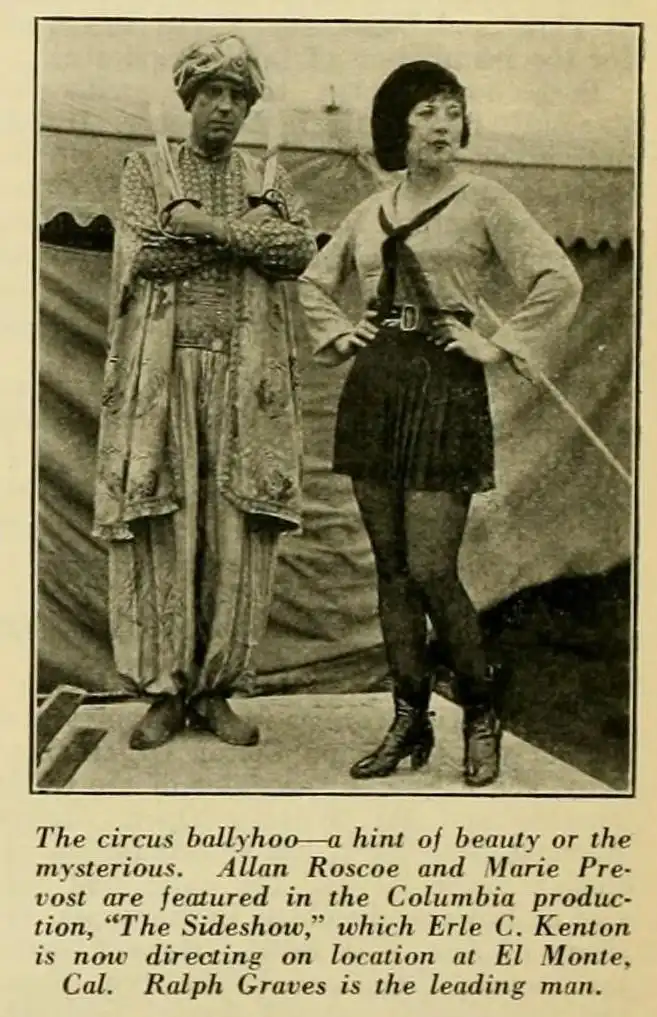
Visually, "The Sideshow" is a mixed bag. The circus setting itself is captured with a certain raw charm. The shots of the big top, the various tents, and the bustling activity of the performers preparing for a show offer genuine historical interest. The film excels in depicting the sheer scale and organized chaos of a traveling circus. There are some surprisingly effective deep-focus shots that highlight the layers of activity within the camp, showing performers in the foreground while others move about in the background, adding a sense of lived-in authenticity.
However, many of the interior scenes, particularly those involving dialogue (or intertitles), are rather flatly lit and staged. There's a noticeable lack of dynamic camera movement or inventive framing that might have elevated the melodrama. The visual language largely relies on straightforward shot-reverse-shot patterns during interactions, which contributes to the static feeling during slower moments. Costume details, however, are quite good, especially the varied outfits of the performers, which feel period-appropriate and contribute to the overall authenticity of the world. The film often seems more comfortable capturing the wide canvas of the circus than delving into intimate character moments through visual storytelling.
One specific observation that only someone who watched the film would notice: The recurrent, almost ritualistic, shots of the circus wagons being moved from one location to another. These sequences, while visually impressive for their scale, often feel less like narrative progression and more like padding, as if the director was showcasing the logistical marvel of a traveling show rather than advancing the plot. There's a particular shot of a long line of wagons snaking across a dusty road that, while picturesque, ultimately contributes to the film's overall sense of inertia.
"The Sideshow" remains a fascinating, if flawed, artifact. Its commitment to depicting a real circus environment with genuine performers gives it an undeniable historical weight and makes it worth a look for specific audiences. However, its narrative shortcomings – particularly its sluggish pace, uneven tone, and largely predictable plot – mean it struggles to hold up as a compelling piece of entertainment for a broader modern viewership. It's a film to be appreciated more for what it shows than for what it tells, a curious window into a past world, rather than a timeless cinematic achievement. Approach it as a historical document with some intriguing visual moments, and temper expectations for a gripping story.
IMDb —
1924
Community
Log in to comment.