DbcultAccessing Vault...
Cult Review
Senior Film Conservator
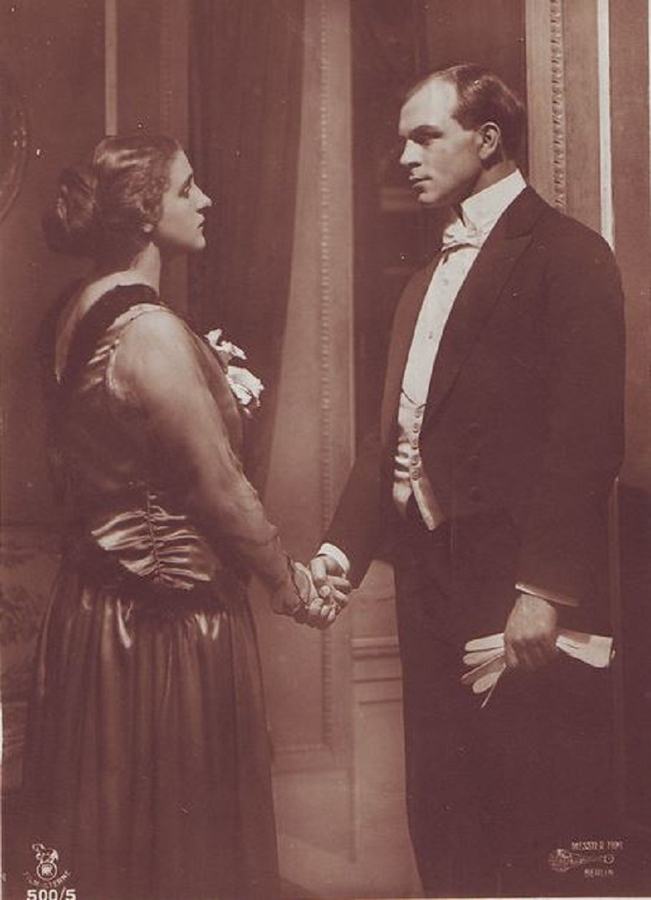
The year 1917 stands as a pivotal juncture in the evolution of German cinema, a period where the medium began to shed its stage-bound origins in favor of a more nuanced, psychological visual language. At the heart of this transformation was Christa Hartungen, a film that serves as a luminous showcase for Henny Porten, the first true star of the German screen. Directed by Rudolf Biebrach and scripted by the visionary Robert Wiene, this work transcends the typical melodrama of its era, offering instead a somber, meticulously crafted exploration of the female psyche trapped within the amber of bourgeois tradition.
To understand the impact of this film, one must first reckon with the gravity of Henny Porten. Unlike the vamps or the waifs that populated American screens, Porten embodied a specifically Teutonic ideal: the Backfisch grown into a woman of substance, radiating a wholesome yet deeply felt emotionality. In Christa Hartungen, she utilizes her expressive face to convey a labyrinth of unspoken desires. Her performance is a masterclass in restraint, a stark contrast to the histrionics often found in contemporary works like The Black Stork, which relied more on didactic signaling than internal depth.
The involvement of Robert Wiene as a writer is equally significant. Years before he would redefine cinema with The Cabinet of Dr. Caligari, Wiene was already experimenting with themes of mental fragility and the oppressive nature of authority. In this film, the authority is not a somnambulist’s master, but the weight of the Hartungen name. The script avoids the sprawling episodic nature of Mysteries of Paris, opting instead for a localized, intense focus on the domestic sphere as a site of psychological warfare.
The film’s setting—a blend of aristocratic manor and clinical sanatorium—functions as a dual metaphor for Christa’s life. The manor represents the past, a mausoleum of duty, while the sanatorium represents a sterile, controlled future. This dichotomy is handled with a visual sophistication that rivals the class-conscious narratives of The Lost Paradise. Biebrach’s direction ensures that the camera lingers on the cold surfaces of the Hartungen estate, making the viewer feel the chill of Christa’s isolation.
When Christa interacts with Dr. Berndsen, the film touches upon the burgeoning fascination with psychoanalysis and the medicalization of the female body. There is a palpable tension between the doctor’s desire to "cure" Christa and her own need to simply exist outside of a defined role. This thematic thread makes the film feel remarkably modern, echoing the struggles of female agency seen in Her Great Hour, yet with a more melancholic, European sensibility.
The ensemble cast provides a robust framework for Porten’s central performance. Theodor Loos, an actor who would later become a staple of Fritz Lang’s filmography, brings a sharp, almost unsettling energy to the screen. His presence introduces a volatility that disrupts the otherwise stately pace of the film. Similarly, Olga Engl provides a maternal anchor that is both comforting and suffocating, embodying the generational cycle that Christa so desperately wishes to break. This dynamic is far more complex than the binary morality found in Moral Courage.
Paul Hartmann’s portrayal of the romantic interest is handled with a delicate touch, avoiding the saccharine pitfalls of the era's typical leading men. The chemistry between Hartmann and Porten is built on shared silences and stolen glances, a testament to Biebrach’s ability to direct "between the lines." This subtlety is what separates Christa Hartungen from the more overt sentimentality of Let Katie Do It.
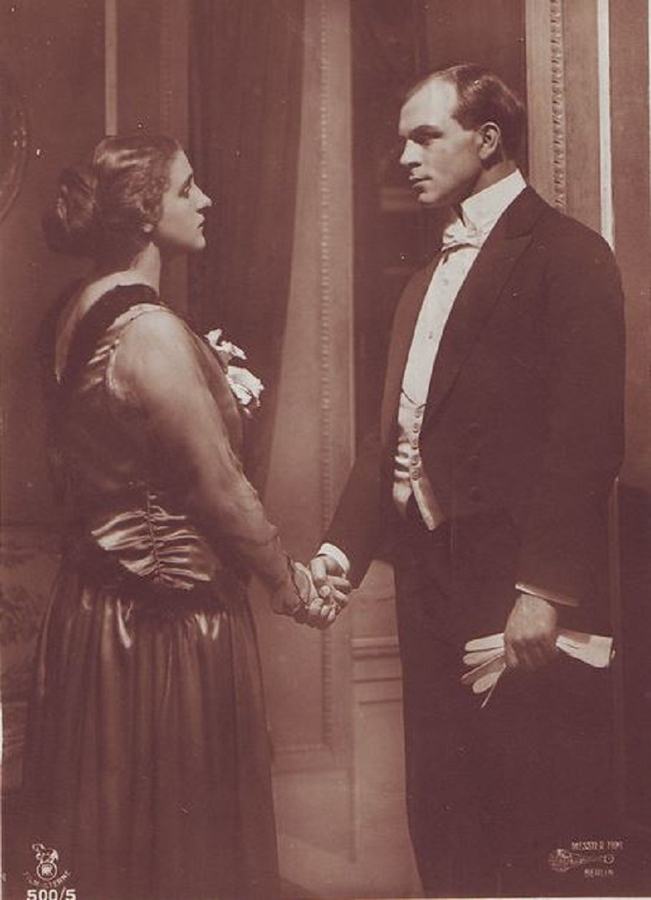
While the technical limitations of 1917 are inherent, the cinematography in Christa Hartungen displays an admirable use of natural light and depth of field. The outdoor sequences, particularly those involving the rugged landscapes surrounding the estate, offer a brief respite from the interior gloom. These moments of pastoral beauty serve as a counterpoint to Christa’s mental state, suggesting a freedom that is always just out of reach. This use of landscape as a narrative tool is reminiscent of the atmospheric work in The Love Route, though applied here to a much more intimate character study.
The editing, likely supervised or heavily influenced by Wiene’s rhythmic sensibilities, maintains a deliberate tempo. It does not rush toward its conclusion but allows the viewer to marinate in the atmosphere of longing and regret. There is a sequence involving a letter—a trope as old as the medium itself—that is transformed through careful framing and Porten’s reaction shots into a devastating emotional crescendo. It lacks the frantic energy of The Great Diamond Robbery, opting instead for a gravity that stays with the audience long after the final frame.
In the broader canon of silent cinema, Christa Hartungen often sits in the shadow of the more flamboyant Expressionist films that followed. However, to overlook it is to miss a crucial step in the development of the psychological drama. It captures a society on the brink of collapse, clinging to the formalities of the past while the tremors of modernity begin to shake the foundation. Christa herself is a herald of the "New Woman," even if she is ultimately unable to fully inhabit that role.
Comparing this film to others of its year, such as the Danish production Selskabsdamen, reveals a shared European interest in the plight of the woman in service or domestic confinement. Yet, the German approach here feels more philosophically heavy, more concerned with the existential weight of identity. It eschews the whimsical nature of The Antics of Ann or The Caprices of Kitty, favoring a somber realism that prefigures the Kammerspielfilm movement.
Ultimately, Christa Hartungen is a film about the silence that exists between people. It is about the things that cannot be said in a drawing room and the emotions that are deemed inappropriate for a woman of Christa’s standing. Henny Porten’s performance remains the film’s beating heart, a beacon of humanity in a world of rigid structures. While it may not have the allegorical sweep of Pilgrim's Progress, its intimate scale is precisely what gives it such enduring power.
For the modern viewer, the film offers a fascinating window into the pre-history of the psychological thriller. One can see the seeds of Hitchcockian obsession and the domestic dread of Douglas Sirk in these flickering silent images. It is a work of profound empathy, a cinematic poem dedicated to those who find themselves at odds with the world they were born into. In the transition from the ruggedness of The Half-Breed to the sophisticated interiority of Christa Hartungen, we see the birth of cinema as a serious art form capable of exploring the deepest recesses of the human soul.
As the credits roll—or rather, as the final intertitle fades—one is left with a sense of profound stillness. The film does not offer easy answers or happy endings. Instead, it offers a mirror. It asks us to consider our own constraints, our own sanatoriums, and the price we pay for our Hartungen names, whatever they may be. It is a essential viewing for anyone interested in the roots of German cinematic excellence and the timeless artistry of Henny Porten.
IMDb 6.8
1930
Community
Log in to comment.