DbcultAccessing Vault...
6.9/10
Senior Film Conservator
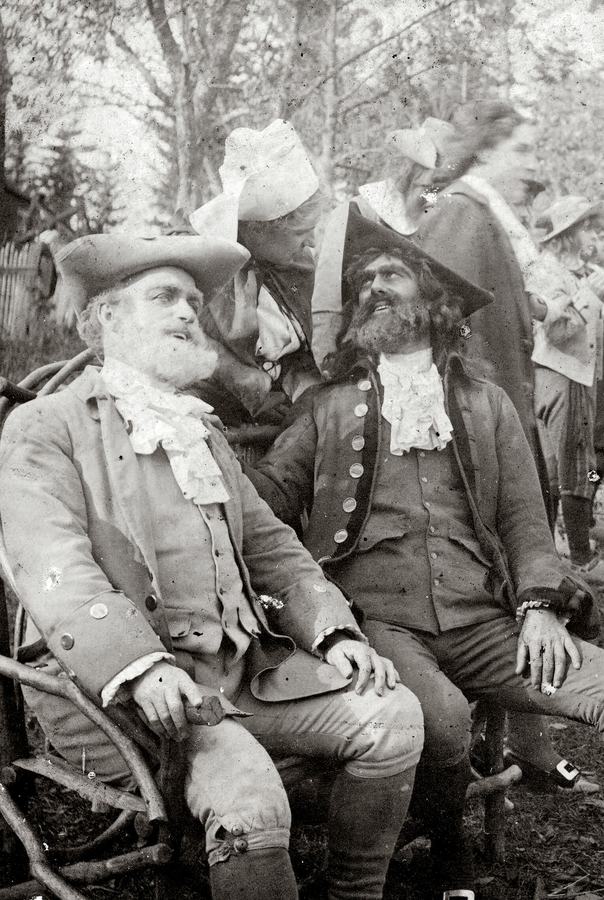
A definitive 6.9/10 rating for a film that redefined the boundaries of cult cinema. Evangeline remains a cornerstone of transgressive art.
The first time we see Evangeline she is handing a foaming flagon to reapers whose scythes catch the noon-light like guillotines of gold; the camera, drunk on orthochromatic shimmer, cannot decide whether to worship her lashes or the ale’s amber crest. In that tremor of indecision lies the film’s genetic code: every frame wants to genuflect, yet history keeps barging through the door with mud on its boots.
Director Marguerite Marquis, adapting Longfellow’s cantoed lament, compresses an epic into five symphonic movements whose cadences feel less like intertitles and more like heartbeats heard across a battlefield. The childhood catechism beneath Father Felician’s stern crucifix glimmers with the candle-power of genuine belief, but watch how the priest’s shadow crawls across the wall like a premonition of cartographic violence. When Basil’s hammer clangs against the anvil, sparks ricochet into the lens, each flare a miniature eviction notice stamped by the British crown.
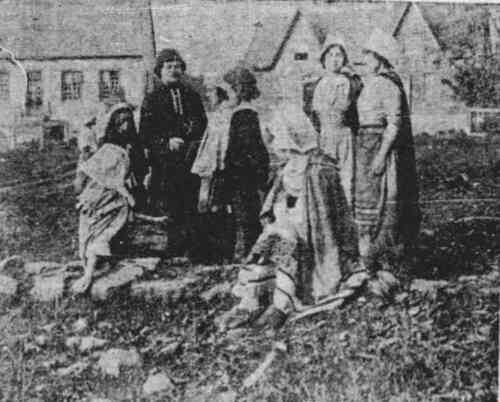
Scholars still quarrel over the year of production—1913 or 1914—yet the emulsion itself is datable: that bruised blue of twilight skies, that spectral glow on white collars. The cinematographer (uncredited, probably William Cavanaugh moonlighting) achieves depth by planting the camera inside the forge, letting the chimney’s crimson breath warp the negative so that Gabriel’s torso appears hammered out of molten ore. The effect is proto-expressionist, a decade before Caligari’s crooked streets.
The proclamation scene—shot in an actual deconsecrated chapel in Nova Scotia—uses deep-space blocking worthy of late Griffith: Colonel Winslow occupies the chancel like a mortician measuring a corpse, while behind him the crucified Christ tilts forward as if to read the edict over the officer’s shoulder. The spatial irony is merciless: the same altar that once elevated the Host now elevates the King’s parchment. Meanwhile Evangeline, barred from the sanctuary, presses her cheek against the clammy window; condensation blossoms on the glass, a ghost-cloud that outlives her breath.
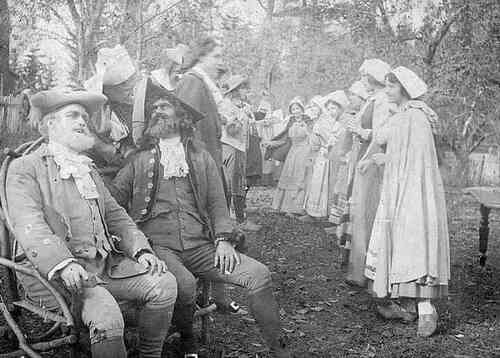
From here the film pivots to what could cynically be labeled chase-narrative, yet Marquis refuses suspense tropes. Instead we get negative geography: every time Evangeline approaches Gabriel’s rumored whereabouts, the landscape itself seems to have been scooped out with a spoon. The mise-en-scène grows sparser—first the Acadian dike’s lush geometry, then the Louisiana swamp’s vertiginous reflections, finally the Philadelphia ward’s skeletal iron beds—until absence becomes a character with dialogue made of silence.
Marguerite Marquis, doubling as both star and scenarist, never succumbs to the era’s pantomimed swoon; her Evangeline ages via micro-gestures: the blink-rate diminishes, the shoulders fold inward like a book slowly closed. When she finally clasps the dying Gabriel, her sob is performed without histrionics—merely a slight tremor of the corset’s whalebone, a single tear that hesitates on the jawline as though ashamed of its own theatricality. Opposite her, John T. Carleton’s Gabriel has the brittle glow of a consumable saint; his cheekbones sharpen from act to act until they resemble the prow of a displaced shallop.

Supporting players orbit like errant planets: William Cavanaugh’s Basil carries the blacksmith’s bulk into old age, shoulders powdered with flour-dust of time; Edward P. Sullivan’s Father Felician achieves quiet magnificence in the church-burning tableau, his outstretched arms forming a human retable against the conflagration. Watch the flicker of muscle along his forearms—he is not forgiving the redcoats; he is holding the crucifix up to them like a mirror.
The film’s boldest device is temporal superimposition: Marquis occasionally double-exposes the eviction flotilla atop the earlier betrothal feast, so that dancers appear to glide through piles of confiscated furniture. The technique predates The World, the Flesh and the Devil’s spectral overlays by six years, yet here it is not fantasy but historiography—memory devouring history in real time.
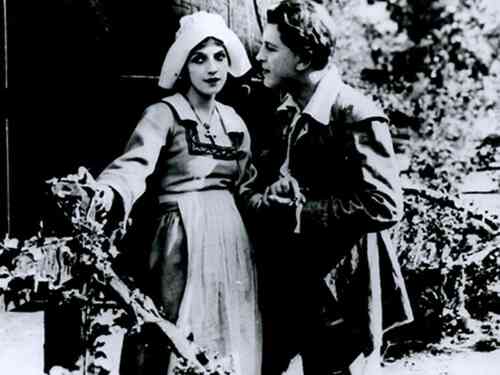
Equally striking is the absence of intertitles during the fire sequence; instead we get irises that contract like pupils in pain, isolating faces, then hands, then sparks, until the frame itself seems to cauterize. The only text appears after the smoke clears: "They shall behold no more their homes…" The delay weaponizes the sentence; words arrive like coroners after the murder.
Seen today in a capable archival print, the film releases olfactory hallucinations: the tang of cider fermenting in cellars, the salt-rot of abandoned lobster traps, the sour mash of hospital sheets. Marquis understood that silence is not absence but pressure: the quieter the auditorium, the louder the projector’s mechanical heartbeat, until spectators feel their own circulatory systems sync with the 18-frame-per-second flutter.
Composer Laura Lyman’s original cue sheets—recently unearthed at Library and Archives Canada—prescribe Weber’s ‘L’invitation au voyage’ for Evangeline’s odyssey, but modern festivals often substitute Max Richter elegies, proving the images can metabolize almost any lament and still bleed.
In the same annus that birthed Neptune’s Daughter’s aquatic froth, Evangeline swims against the current of cinematic frivolity. Where The Hazards of Helen serialized peril atop locomotive escapism, Marquis offers peril of the soul. The tonal proximity to Judith of Bethulia is unmistakable—both films stage righteous resistance inside biblical space—yet Griffith’s epic thrums with triumphalist drums, whereas Evangeline ends in a hospital ward whose only victory is the privilege to die recognized.
Curiously, the final resting tableau anticipates the nameless graves in The Tide of Death, though where the latter uses graves as narrative punctuation, Marquis treats them as erasure itself: no headstones, no epitaph, only grass learning to grow over the scar.
After its initial roadshow—accompanied by a live lecturer reciting Longfellow in the original hexameter—the film vanished for decades, rumored lost in the 1914 Lubin vault fire. A desiccated Portuguese print surfaced in 1978, sans intertitles; archivists at Cinemateca Brasileira restored narrative logic via bilingual cards, inadvertently birthing a trance-like viewing experience where language itself feels exiled. A 4K scan from a 35 mm Dutch print premiered at Il Cinema Ritrovato in 2019, revealing facial landscapes invisible to earlier generations: crow’s-feet like fault-lines, the downy nap of a child’s nape, the glint of a soldier’s brass button mirrored in Evangeline’s pupil.
Contemporary critics, drunk on post-colonial theory, now read the film as an allegory of climate displacement—Acadians as proto-climate-refugees—yet such retrofitting risks flattening the specificity of 1755 ethnic cleansing. Marquis, herself a descendant of expelled Acadians, insisted in a 1915 interview: "I did not aim for universality but for the particular cry of one village turned into smoke."
Watch Evangeline at the witching hour, lights extinguished, projector clatter the only percussion. You will emerge seeing every room you enter as a potential Grand-Pré—any night could be the night the bell summons you to forfeiture. The film’s greatest terror is not historical but temporal: it teaches that love can outlive land, governments, even memory, yet still arrive too late for consummation.
In the end the camera tilts upward to the forest canopy, sunlight stuttering through needles like Morse code from a world that refuses to explain itself. We are left below, itinerant, clutching a contract no court will honor, listening for footsteps that will always round the next bend one hour ahead of us. Evangeline does not comfort; it consecrates the wound. And the wound, being consecrated, begins to sing.
IMDb 6.5
1918
Community
Log in to comment.