DbcultAccessing Vault...
5.5/10
Senior Film Conservator
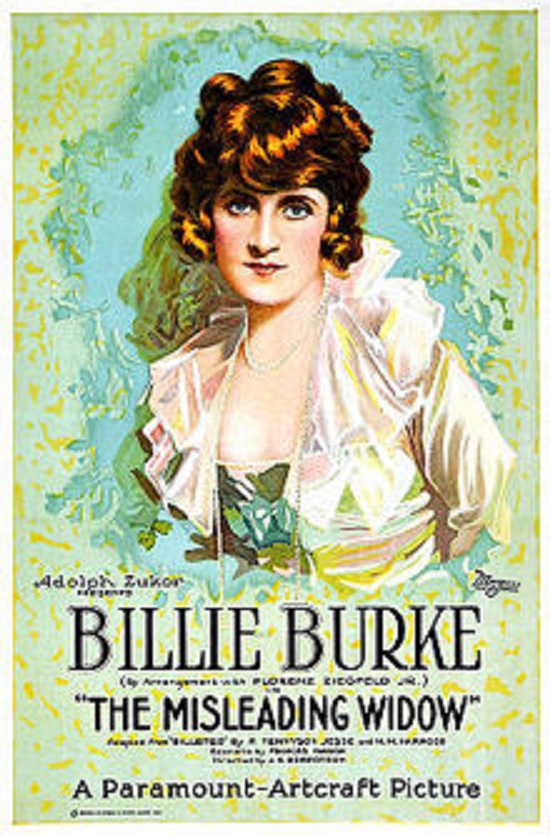
A definitive 5.5/10 rating for a film that redefined the boundaries of cult cinema. The Misleading Widow remains a cornerstone of transgressive art.
Picture a postcard village pickled in Presbyterian virtue, then imagine a woman brandishing champagne in one hand and unpaid bills in the other; that collision is the film’s heartbeat. Betty Taradine’s mansion—half mausoleum, half cabaret—hosts Colonel Preedy, a hero whose medals clink louder than his conscience. A single forged telegram detonates the narrative, proving that in 1920 a sentence can weigh more than artillery. From there the tale pirouettes through moonlit assignations, wardrobe conspiracies, and a bedroom circus where three would-be lovers and one moralizing spinster negotiate geometry, theology, and oxygen supply.
Madelyn Clare’s Betty oscillates between hothouse orchid and cornered fox; her eyes telegraph solvency panic without a single intertitle. Fred Hearn, doubling as both the dutiful aide and the prodigal husband, lets his shoulders do the talking—military starch dissolving into marital jelly. James Crane’s Colonel Preedy exudes the brittle vanity of a man who knows heroism is a currency that devalues once peace breaks out. Billie Burke, radiant even in flickers, gifts Penelope Moon a flapper intellect: every tilt of the head suggests a mind counting syllables in Horace while her heart tallies other calculations. Meanwhile Mrs. Priestly Morrison and Dorothy Waters, as the Liptrott siblings, inject Puritan caricature with such precise acidity you can almost smell the camphor.
F. Tennyson Jesse and H.M. Harwood arrived with West-End wit; Frances Marion distilled it into the idiom of celluloid, trimming verbal frills until gesture could carry the weight. The resultant concoction feels like champagne left overnight—still effervescent but with a coppery tang of risk. Compare it to An International Marriage, where matrimony is diplomacy; here it is roulette. Or stack it beside The Duplicity of Hargraves: both hinge on concealed identity, yet Hargraves moralizes while Widow revels in amoral fireworks.
Shot through with low-key lighting that anticipates noir by two decades, interiors resemble Dutch still-lifes gone dissolute: silver ewers catching guttering candlelight, Persian rugs drowning under discarded masquerade cloaks. The camera, often stationary, frames doorways like proscenium arches, inviting us to savor stagecraft within cinematic space. In contrast, All 'Fur' Her frolics in open daylight; Widow cackles in chiaroscuro.
Betty’s profligacy is coded masculine—cigars, fast carriages, imported liqueurs—while her punishment is uniquely feminine: reputational death by a thousand receipts. The film slyly notes that a woman’s credit rating is tethered to her husband’s pulse. When she forges that pulse into print, she’s not merely scamming an insurer; she’s rewriting the social contract with a fountain pen dipped in gall. Modern viewers will catch a proto-Big Short vibe: collateralized life events, bundled and traded on the bourse of gossip.
Contemporary exhibitors would have accompanied this reel with a pastiche of Mendelssohn and ragtime. Watching it now, one hears spectral piano runs that crest each time Betty’s eyelids flutter. The absence of talkie verbiage magnifies micro-gestures: the Colonel’s Adam’s-apple bobbing like a metronome, Peter’s fingers drumming Morse code on a campaign hat. Silence, paradoxically, amplifies the erotic charge—a lesson lost on A Bunch of Keys, which drowns its innuendo in orchestral syrup.
bedroom farce is the cinema’s answer to quantum theory: particles (lovers) exist in multiple states until observation (clergyman) collapses them. The film’s pièce-de-résistance is a four-tier vertical stack: spinster atop counterpane, Colonel inside armoire, husband beneath box-spring, conscience hovering somewhere above the chandelier. No door slams without reallocating erotic capital. Compare the geometry to Hobbs in a Hurry, where space is horizontal prairie; here it is Möbius strip.
Reverend Liptrott arrives clutching a Bible like a life-insurance brochure, determined to convert prodigal Betty into a chapel pew. Yet his very presence accelerates the debauchery he seeks to cauterize. The film delights in this inverse evangelism: each prayer uttered spawns a fresh scandal, every biblical citation mutates into double-entendre. It’s a motif that will resurface decades later in The Sign of the Poppy, but here it retains the tangy unpredictability of early cinema.
Colonel Preedy’s uniform is immaculate; his psyche is trench-mud. The war has left him famous yet superfluous, a living monument in search of souvenir hunters. His courtship of Penelope reads less like romance and more like requisition—he wants innocence as one might covet a Victory Bond. The film, released two years after Armistice, recognizes that heroes age fastest at home, a truth later marched through Allies' Official War Review, No. 25 but stripped of documentary solemnity.
When Peter finally lifts the mask of anonymity, the moment lands not with trumpets but with a shared cigarette—an exhale of years of resentment. Betty doesn’t so much apologize as recalibrate; she offers him the remaining fragments of her fortune, as if love were an insolvency proceeding. Peter accepts by burning the IOU of her past sins in the candle-flame. It is the most economical transaction in film history: nothing exchanged, everything gained.
Today’s genre offerings—bingeable, algorithmic—seldom hinge on moral peril; they prefer meet-cute hashtags. The Misleading Widow dared to lace amour with arsenic, to suggest that solvency and solvency-in-love are interchangeable. Its DNA reappears in the screwballs of the ’30s yet minus the wartime existential grit. Even What Love Can Do, for all its pre-Code friskiness, flinches from the abyss of bankruptcy that Widow tap-dances beside.
No complete 35 mm negative is known; what circulates is a 9.5 mm Pathé baby-face print, water-marked but watchable. The intertitles—French on the left, English on the right—lend the affair a cosmopolitan perfume. Digitized by a Brussels archive in 2014, it hides on torrent gardens under the title La Veuve Trompeuse. If you crave a Blu-ray, petition every boutique label; this jewel deserves Criterion-level cosseting, not the vinegar-scented anonymity of a data bunker.
Serve brut champagne for the first reel; switch to black coffee when the bedroom traffic jam begins. The caffeine sharpens your ability to track who is hiding where, while the bubbles earlier remind you that effervescence is temporary, debts are not.
Performances: 9/10—faces that could launch a thousand intertitles.
Screenplay: 8.5/10—tight as a snare drum, loose enough for jazz.
Visuals: 8/10—chiaroscuro that prefigures noir.
Historical Resonance: 10/10—a Rosetta Stone for post-war gender anxiety.
Overall: 8.8/10—a mischievous landmark demanding rediscovery.
Rent, pirate, pray—whatever it takes—just see The Misleading Widow before it slips back into the attic of amnesia.
IMDb 7.5
1931
Community
Log in to comment.