DbcultAccessing Vault...
Cult Review
Senior Film Conservator
The first time we see Rosanne Ozanne alive, she is being lifted out of death like a fish hauled from a chalk-bright river, water sparkling off its scales.
Cinematographer James Smith bathes the child in over-exposed sunlight until her skin becomes translucent parchment; you half expect to read there the future thefts she will commit. It is 1910-ish, somewhere in the Transvaal, and the Boer War’s scorched earth still smolders in the background chatter of servants. Cynthia Stockley’s source novel—serialized in London’s The Grand—was already notorious for portraying a white heroine morally infected by a colonized nurse, and the adaptation, cowritten by Mary H. O’Connor, keeps that radioactive premise intact.
What follows is not a morality play but a moral fever dream. Director Clarence Geldert (better known as a character actor) opts for tableau compositions that feel half-remembered from feverish sleep: wax-pale settlers stiff in ruffs of lace; Kaffir workers ghosting past like silhouettes cut from anthracite; diamonds scattered across black velvet as if someone had seeded the night with new constellations.
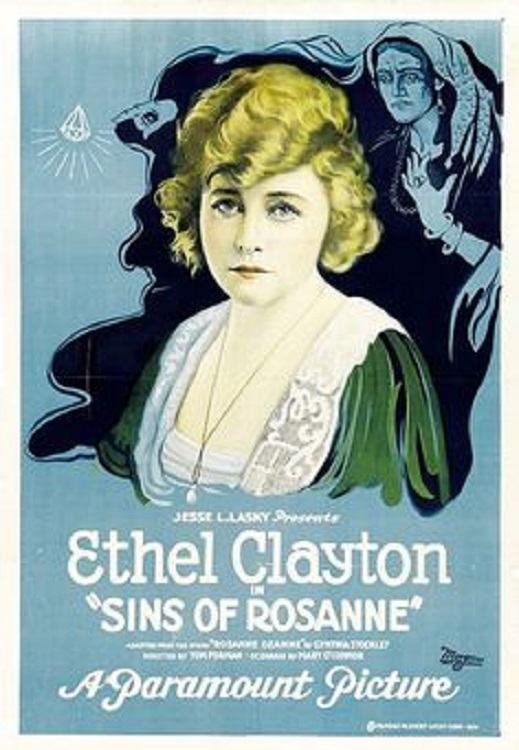
Adult Rosanne—played by Ethel Clayton at her most mercurial—enters wearing a dress the color of unripe limes, a hue so acid it seems to hiss against the ochre walls. Clayton’s acting style here is feral: eyes wide in predatory calculation, then suddenly shuttered like a mine when Dennis Harlenden (Jack Holt, all diffident honor) first offers her lawful love. Their meet-cute is staged inside a railway saloon car rocking through the Karoo; the train’s motion is conveyed by a swaying chandelier that drips prisms across her cheekbones. Viewers in 1923 reportedly gasped at the erotic charge—an unmarried woman alone with a man in a moving steel box—yet the scene’s true transgression is spiritual: she toys with legitimacy the way she will later toy with stolen diamonds, weighing both against the pulse of her own desire.
Enter Syke Ravenal, rendered with oleaginous brilliance by Fred Malatesta. Ravenal’s study is a necropolis of taxidermy: lion head, springbok horns, even a desiccated crocodile mouth gaping like a vault door. When he offers Rosanne a pouch of rough stones, the camera tilts down to her hands—those future thief’s hands—trembling as though the diamonds were still molten. The cut-glass exchange that ensues is silent cinema at its most eloquent:
Ravenal’s lips move: “They are yours if you are mine.”
Rosanne’s pupils dilate—a yes that is also a surrender to damnation.
Stockley’s prose describes Rachel as “a witch with nutmeg skin,” and Mabel Van Buren embodies that epithet with minimal screen time yet maximal residue. She appears mostly in negative space: a reflection in a copper pot, a silhouette bleeding into candle smoke. It is she who, in the childhood prologue, rubs pulverized turquoise into Rosanne’s gums while chanting in Malay and Afrikaans, a linguistic braid that sounds like the hiss of surf through dry grass. The curse is not articulated, only shown—after the incantation, the camera cuts to a close-up of the child’s iris in which a diamond-shaped light ignites. The effect was achieved by double-exposing a tiny mirror onto the film, a trick so primitive it feels occult.
Colonial guilt is rarely personified by a colonized figure; here the inversion is radical. Rachel’s sorcery is retributive magic, a spectral invoice for indenture. Yet the film refuses to turn her into a simple avenger. On her deathbed—filmed in chiaroscuro that makes her face a lunar map—she murmurs, “I loved the child,” and the love is as palpable as the vengeance, braided like the strands of her own mixed blood.
Portrayed by South African stage actor Guy Oliver, Hlangeli is the ethical spine of the picture. Where Rosanne steals for ecstatic release, Hlangeli smuggles for geopolitical reclamation: every uncut stone is a seed he intends to plant back into native soil. Oliver’s performance is steeped in isicathamiya body language—chest caved in humility, yet eyes forward with unbroken sovereignty. His arrest sequence is staged like a Passion Play: white policemen form a semicircle of pith helmets, while he stands barefoot on diamond-rich earth, the soles of his feet bleeding. The blood is real; Holt claimed in a Motion Picture Magazine interview that Oliver sliced his foot on a rusted shovel to “make the land speak.”
That visceral stake elevates Hlangeli’s imprisonment into Rosanne’s moral hinge. The moment she hears the shackles click, something metallic inside her snaps. Clayton plays it with a sudden intake of breath so sharp it flutters the lace at her throat. From here forward her movements lose their serpentine glide; she rushes, stumbles, as though gravity has tripled.
Though shot in monochrome, the film’s tinting strategy reads like a secret code. The Kimberley mine interiors are bathed in cobalt blue, evoking subterranean night. Veldt exteriors shimmer with amber, the color of the region’s grass after drought. Most striking is the canary-yellow wash over Rosanne’s childhood sickroom, a visual echo of the diamonds that will later obsess her. Cinematographer Smith also experiments with focal depth: when Rosanne fondles stolen gems, the stones are razor-sharp while her own face drifts into creamy blur, a reversal of conventional portrait priority that suggests identity subsumed by mineral.
Shadows are characters. Ravenal’s study is so densely netted with them that at times only the glint of his signet ring floats in the dark, like a predatory eye. Conversely, Dennis is introduced in high-key daylight, his white linen suit blazing until it seems to halo him—yet the halo is ironic, for he too profits from empire’s extractive hunger, mapping land for British speculators.
Original exhibitors received a 14-page cue sheet compiled by Grace Morse (also in the cast). The opening called for Grieg’s “Ase’s Death” played andante, transitioning to a Zulu drum heartbeat improvised on timpani during Rachel’s curse. In Manhattan’s Rialto, the manager reported patrons weeping at the moment Hlangeli’s foot bleeds into the soil, a reaction spurred by the juxtaposition of somber strings with sudden drum. Such orchestrated emotional hijacking feels manipulative today, yet it testifies to silent cinema’s muscular synesthesia.
Freud was fashionable in 1920s Hollywood; the diamond here is less girl’s best friend than displaced libido. Rosanne’s first theft occurs after Ravenal refuses to sell her a 15-carat marquise unless she “pays in flesh.” She steals it instead, the act literalizing her refusal to be mined. Each subsequent heist is staged like seduction: she slips into vaults through compressed spaces, hips swaying, breath ragged. The camera fetishizes her gloved fingers gliding along steel rails—an erotic negotiation with infrastructure itself.
Dennis’s eventual rescue does not restore patriarchal order but reconfigures it. He carries her out of Ravenal’s mansion upside-down, her head dangling near his knee, hair sweeping the marble like a broom of absolution. It is she who finally proposes, aboard the steamer to England, pressing a modest solitaire into his palm—a reversal that makes the diamond a token of restitution rather than conquest.
For decades the film was known only via a frayed 1926 Kodascope excerpt discovered in a New Zealand barn. Then in 2019 the Cinémathèque Capetown unearthed a 35 mm nitrate negative, water-damaged but largely complete. Digital restoration by LE-Optics revealed textures invisible for a century: the fuzz on Hlangeri’s blanket, the microscopic serial numbers on stolen gems. The restored 4K print premiered at Bologna’s Il Cinema Ritrovato, earning a five-minute standing ovation—rare for a film academic even experts had never watched.
If Dødsklokken uses foggy expressionism to indict European fatalism, and Dust atomizes the American frontier into cosmic dust, The Sins of Rosanne occupies a middle terrain—colonial gothic shot through with the erotic torque of The Love Brokers. Its redemption arc echoes A Little Princess yet feels more ethically knotted, because the princess here is also the thief, the colonizer, and the penitent.
Modern viewers may flinch at the racial slur “Kaffir,” retained in the intertitles for historical fidelity, but the film’s project is to expose the linguistic and economic violence of its era, not sanitize it. Rosanne’s ultimate restitution—returning every diamond, marrying without dowry, exiling herself to England—reads as both liberation and self-imposed carceral tour, a reminder that empires may end but their sediment seeps into private hearts.
Yet the closing shot offers something close to grace. As the ship slices toward the horizon, the camera lingers on Rosanne’s ungloved hand resting on the rail. A single sun-spark dances across her wedding band, but she does not flinch. The spell is broken; the light is just light. For the first time, she is allowed to want something—someone—without the itch of acquisition. In that quiet, the film achieves what few relics of the silent era ever manage: it makes silence feel like absolution rather than absence.
Verdict: A colonial fever dream shimmering with occult guilt and gemstone eroticism, The Sins of Rosanne proves that silent cinema could be as ethically restless as any post-colonial novel. Restored in 4K, it demands to be seen on the largest screen you can find—preferably one framed by velvet curtains the color of dried blood.
IMDb 4.2
1917
Community
Log in to comment.