DbcultAccessing Vault...
4.6/10
Senior Film Conservator
A definitive 4.6/10 rating for a film that redefined the boundaries of cult cinema. Walter Finds a Father remains a cornerstone of transgressive art.
Walter Finds a Father: A Gilded Cage Shattered by a Ragged Shadow
Walter Finds a Father is not merely a film; it’s a visceral, unflinching dissection of privilege and the ghosts that cling to it. From its first frame—a stark, smoky construction site where dust and disillusionment coexist—the narrative pulses with a raw energy that lingers long after the credits roll. Director Walter Forde, who also penned the screenplay, crafts a world where wealth is both armor and vulnerability, and where the search for familial truth becomes a battleground of ideologies.
The story hinges on a premise both simple and profound: a self-made tycoon, Lyell Johnstone, grapples with the absence of a son lost to the margins of society. His daughter, a character as complex as the film itself, stumbles upon Walter—a ragged laborer with a birthmark that mirrors her family’s ancestral sigil. Her decision to bring him home is less a rescue than a provocation, a deliberate collision of worlds that the film explores with surgical precision.
Marjorte Russell’s portrayal of the daughter is a masterclass in understated intensity. She carries the weight of her father’s empire and her own unresolved grief with a quiet ferocity that crackles beneath her composed exterior. In one harrowing scene, she confronts Walter in a dimly lit study, her voice trembling as she demands answers. Russell’s performance is a tapestry of contradictions—strength and fragility, curiosity and revulsion—rendering her character both relatable and enigmatic.
Walter Forde, as the titular character, is a revelation. His portrayal of Walter is a study in stillness and motion: eyes that dart with untamed intelligence, a gait that betrays both hunger and defiance. Forde’s chemistry with Russell is electric, their exchanges crackling with unspoken histories. When Walter is thrust into the opulent chaos of the tycoon’s estate, Forde captures the disorientation of a man who is simultaneously alienated and enthralled by his surroundings. His performance is a testament to the film’s central thesis—that identity is not inherent but a performance shaped by circumstance.
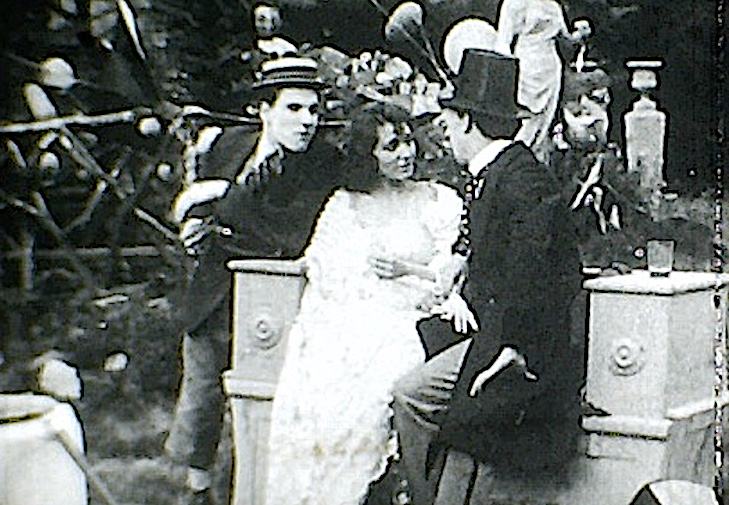
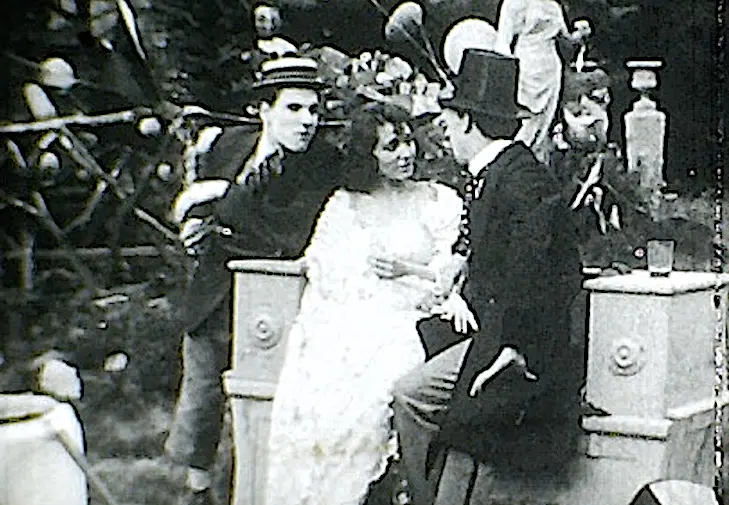
The film’s most audacious sequence—a dynamite duel between Walter and an excitable Frenchman, played with manic brilliance by Billy le Fre—transcends mere spectacle. It becomes a metaphor for the explosive fragility of the family’s secrets. Le Fre’s character, a charlatan with a veneer of sophistication, embodies the absurdity of old-world entitlement. The duel’s choreography, a blend of slapstick and existential dread, is a standout moment that recalls the anarchic genius of Monkey Business while forging its own path into the absurd.
Lyell Johnstone’s performance as the father is a slow-burn unraveling. He begins as a man of cold efficiency, his every gesture calculated to assert control. Yet as Walter’s presence destabilizes his household, Johnstone’s portrayal reveals the tremors of a soul grappling with obsolescence. In a haunting monologue delivered to a mirror—a motif that recurs throughout the film—he confronts the reality that his empire, like his bloodline, may be a house of cards. The scene is a masterstroke of minimalist acting, relying on micro-expressions to convey a lifetime of regret.
Cinematographer Walter Forde deserves particular praise for the film’s visual language. The contrast between the stark, industrial aesthetic of Walter’s world and the gilded, sterile interiors of the tycoon’s estate is stark and symbolic. In one sequence, Walter is filmed in tight close-ups, his face a study in exhaustion, while the tycoon’s world is rendered in wide shots that emphasize spatial alienation. The color palette shifts subtly as Walter’s journey progresses—from the sepia-toned realism of his early scenes to the lurid golds and reds of the climactic confrontation.
The score, a haunting blend of ambient noise and dissonant strings, mirrors the film’s emotional turbulence. It swells in moments of tension, such as when Walter and the Frenchman face off in a corridor lined with portraits of the tycoon’s ancestors—each a silent judge of the chaos unfolding below. The music’s irregular rhythms reflect the fractured identity at the film’s core, a theme that resonates with the works of The Gilded Dream and Carmen, yet Walter Finds a Father carves its own niche with a more cerebral tone.
The film’s dialogue is sparse but deliberate, often laced with subtext that Forde’s direction teases out with surgical precision. In a standout exchange, Walter asks the tycoon’s daughter, “Do you think wealth can buy back the time you’ve wasted?” Her response—“I think it can buy more of it”—is a searing encapsulation of the film’s exploration of time as both currency and thief. These moments echo the philosophical undertones of Unknown Love and Scarlet Days, yet Walter Finds a Father avoids their sentimentality by grounding its themes in raw, unfiltered emotion.
The film’s pacing is its greatest strength and occasional weakness. At 98 minutes, it races toward its climax with a feverish urgency, leaving little room for breath. Yet this relentless momentum is fitting for a story about a man who has spent a lifetime running—from his past, from his family, from himself. The final act, in which Walter and the tycoon confront each other in a storm-wracked library, is a masterclass in tension. The rain outside mirrors the chaos within, and Forde’s decision to frame the scene in a single, unbroken take is both a technical marvel and an emotional punch.
Walter Finds a Father is not without its flaws. The subplot involving the tycoon’s business rival—a thinly drawn antagonist who serves as a mouthpiece for capitalist critique—feels like an afterthought compared to the film’s central drama. Additionally, the Frenchman’s arc, while entertaining, lacks the depth afforded to the main characters. These quibbles, however, are minor in the context of a film that dares to ask uncomfortable questions about legacy and belonging.
In its ambition and execution, Walter Finds a Father recalls the socially conscious narratives of The Gilded Dream and the familial tensions in Captain Courtesy. Yet it distinguishes itself through its unflinching focus on the human cost of wealth and the performative nature of identity. Like the birthmark that links Walter to his lost family, the film leaves an indelible mark—a reminder that the search for belonging is as fraught as it is essential.
For cinephiles craving a blend of classic melodrama and modernist experimentation, this film is a revelation. It is a work that demands to be seen in a darkened theater, where the interplay of shadows and light on Walter’s face becomes a silent narrative in itself. In a landscape saturated with predictable fare, Walter Finds a Father is a breath of unfiltered, electrifying air.
IMDb 5.9
1925
Community
Log in to comment.