DbcultAccessing Vault...
Cult Review
Senior Film Conservator
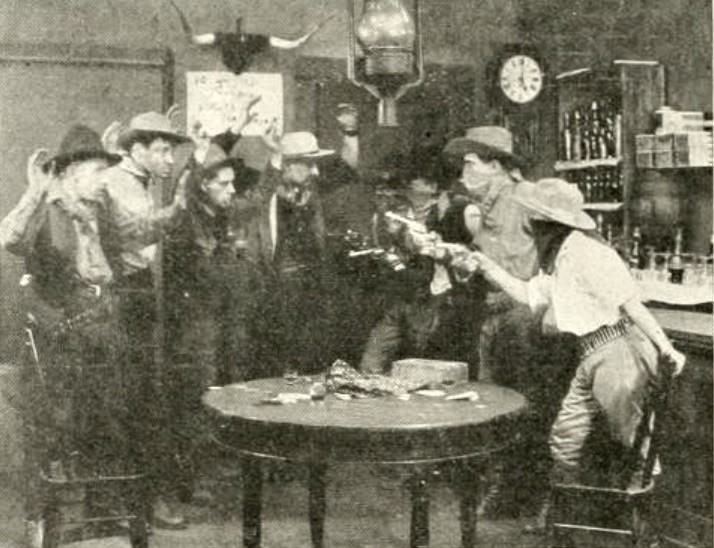
In the annals of early cinema, where flickering shadows often spoke volumes more than any spoken word, certain narratives emerge with a startling audacity, challenging the conventions of their era and, remarkably, resonating with contemporary sensibilities. William Anthony McGuire’s The Sky Hunters, a silent film from a bygone age, is precisely such a revelation. It’s not merely a crime drama or a romantic entanglement; it’s a profound exploration of identity, agency, and the very construction of self, all wrapped in the thrilling guise of a mountain outlaw saga. For those accustomed to the more straightforward morality plays of the 1910s, this film presents a narrative complexity that truly sets it apart, demanding a closer look at its daring premise and the performances that brought it to life.
At the heart of this compelling tale lies Konkawa, portrayed with an astonishing blend of ruggedness and nascent vulnerability by Edna Mayo. Her character’s genesis is born from a draconian patriarchal decree: Walt Benton, the formidable patriarch of the eponymous Sky Hunters, a clandestine network of moonshiners and thieves, harbors an unwavering desire for a male heir. His ambition isn't merely to father a son, but to perpetuate the 'Benton reign,' a dynastic aspiration rooted in control and legacy. When fate delivers a daughter, his response is not acceptance, but a radical re-engineering of her very being. He raises her as a boy, a deliberate and cruel erasure of her inherent femininity, forcing her into a pre-ordained role designed to fulfill his own unyielding will. This isn't just cross-dressing for convenience; it’s a profound psychological imposition, a denial of self that shapes Konkawa’s entire existence for fifteen years. The mountains, often symbols of freedom, here become a cage, albeit one she has been taught to master. This forced identity, a heavy cloak of masculinity, becomes her entire world, dictating her actions, her demeanor, and her understanding of her place within the ruthless hierarchy of the Sky Hunters. The film, even in its silent language, manages to convey the suffocating weight of this expectation, setting the stage for a dramatic unraveling.
The meticulously constructed facade of Konkawa begins to crack with the infiltration of Steve Jackson, a Secret Service agent whose mission is to dismantle the Sky Hunters. Bryant Washburn, in the role of Jackson, embodies the urban sophistication and the moral compass that stands in stark contrast to Konkawa's wild, untamed world. Their initial encounter is charged with suspicion, escalating into a physical struggle in the murky confines of a darkened room. It is in this moment of raw, unvarnished contact that the truth is revealed. Jackson's realization that he wrestles not with a man, but a woman, is a pivotal turning point. His subsequent actions—turning her cheek to his, a laugh, and a kiss—are not merely romantic gestures, but acts of profound recognition. They are a mirror held up to Konkawa, reflecting a femininity she has been taught to suppress, to deny. This moment is the true genesis of her internal revolution. The film brilliantly portrays this 'awakening,' not as a sudden, magical transformation, but as a gradual softening, a release from the rigid confines of her imposed identity. Jackson’s stories of city women, their grace, their freedom, their very existence, fill her mind, painting a vivid picture of a world she never knew she was part of. Her bitterness, a shield forged over years of self-denial, begins to melt away, replaced by a nascent tenderness, a burgeoning awareness of her true self. This emotional shift is not just about romance; it's about self-discovery, a reclamation of a stolen identity. It’s a powerful narrative thread that echoes the journey of characters in other films grappling with societal expectations or personal constraints, though perhaps with a unique gender-bending twist not often seen in such early works. One might draw a very loose thematic parallel to films like The Better Woman, which also explored women finding their strength, albeit through different societal challenges.
Konkawa’s decision to allow Steve Jackson to escape, driven by her newly awakened feelings, has immediate and far-reaching consequences for the Sky Hunters. His presence, even as a transient disruptor, has exposed the vulnerability of their operations. The leaders, gripped by fear of an impending, larger official assault, react with a desperate, scorched-earth policy, systematically destroying their hidden haunts. This act of self-sabotage underscores the fragility of their criminal enterprise, built on secrecy and isolation. For Konkawa, this destruction, though painful in its own right, inadvertently paves the way for her ultimate liberation. The very foundations of her father’s legacy, the structure she was meant to uphold, crumble before her eyes, weakening the hold of her oath. Meanwhile, Jackson, unaware of the profound impact he has had, and believing his mission to be a failure, wires Washington with a plan for a renewed offensive. His departure by train that night, however, is intercepted by the vengeful remnants of the Sky Hunters, who, armed and seething, bind and gag him at the side of the road. This dramatic turn of events sets the stage for a climactic showdown, intertwining personal destiny with the fate of the outlaw band. The ruthlessness of the Sky Hunters in this scene, their desperate attempt at retribution, offers a stark reminder of the dangerous world Konkawa inhabited, and the moral ambiguity that often permeates such narratives. It could be seen as a precursor to the gritty realism found in later crime narratives, even if presented through the lens of silent film melodrama.
The film’s most poignant and psychologically rich segment unfolds as Konkawa experiences her “first woman’s battle.” This internal struggle is a masterclass in silent film emotional conveyance, relying heavily on Edna Mayo’s expressive performance. On one side, the burgeoning, undeniable love for Steve Jackson; on the other, the deeply ingrained, almost sacred, respect for her oath to her deceased father. This isn't a simple choice between two lovers, but a profound conflict between a past dictated by another's will and a future defined by her own burgeoning self-awareness. The weight of tradition, of loyalty to a patriarchal lineage, clashes violently with the irresistible pull of personal desire and authentic identity. It’s a universal theme, presented here with a specific and compelling gendered lens. The narrative wisely resolves this tension by revealing the Sky Hunters' hopeless disbandment, effectively nullifying the very empire Konkawa was sworn to perpetuate. This external factor provides the logical justification for her ultimate decision, allowing her to embrace her love without entirely betraying her principles. The scene at the railway track, where she liberates Steve, is therefore not merely a rescue; it is an act of self-emancipation. It signifies her definitive break from the past, a symbolic shedding of the masculine persona and the burdens that came with it. This moment, powerful in its quiet resolve, solidifies Konkawa’s transformation from a puppet of destiny to an agent of her own fate. This narrative arc of a character breaking free from oppressive bonds for love and self-realization is a timeless one, perhaps echoing elements found in films like The Love Tyrant, where personal desires often clash with external pressures, though The Sky Hunters offers a uniquely profound twist on gender identity.
The film concludes with an image that is both simple and profoundly resonant: Konkawa, now attired in feminine clothing, in a home she shares with Steve Jackson in Washington. This final tableau is more than just a happy ending; it represents a complete metamorphosis. The wild mountain girl, forced into a man's role, has not only found love but has found herself. Her journey is one from enforced identity to authentic selfhood, from the rugged, lawless mountains to the ordered, civilized world, from a life of deception to one of truth. The feminine attire is not merely a costume; it is an outward manifestation of an inner peace and acceptance. This resolution, while seemingly conventional for a romantic drama, carries an extra layer of triumph given the extraordinary circumstances of Konkawa's upbringing. It suggests a future where she can finally live as the woman she always was, unburdened by the shadow of her father's will or the demands of the Sky Hunters. The move to Washington symbolizes her integration into a new society, a new life, leaving behind the remnants of her past. It’s a powerful statement on the transformative power of love and self-discovery, solidifying The Sky Hunters as a surprisingly progressive film for its time, tackling themes of gender identity and personal freedom with a sensitivity that belies its early origins.
Edna Mayo’s portrayal of Konkawa is undoubtedly the lynchpin of The Sky Hunters. Her ability to convey both the hardened exterior of a man raised in a brutal world and the gradual emergence of a tender, feminine spirit speaks volumes about her talent as a silent film actress. Without dialogue, the burden of expression falls entirely on facial nuances, body language, and the subtle shifts in her gaze. Mayo navigates this complex duality with remarkable grace, making Konkawa’s internal struggles palpable to the audience. Bryant Washburn, as Steve Jackson, provides an excellent counterpoint, embodying the charming yet determined agent whose presence sparks Konkawa’s transformation. His character is not simply a romantic interest but a catalyst for profound change, and Washburn carries this role with a compelling blend of heroism and empathy. John Cossar, as Walt Benton, though his screen time is limited, casts a long, imposing shadow over the narrative, his patriarchal ambition driving the entire plot. William Anthony McGuire’s screenplay, despite the technical limitations of the era, is remarkably well-structured, building suspense and developing characters with a keen understanding of dramatic pacing. The narrative avoids simplistic resolutions, instead opting for a journey of personal reckoning that feels earned and impactful. The direction, characteristic of the period, likely relied on clear staging and expressive close-ups to convey emotion, ensuring that the audience remained invested in Konkawa’s extraordinary plight. The film's ability to tackle such complex themes of gender and identity within the popular genre of crime drama is a testament to the creative ambition of its makers. It’s a testament to the fact that silent cinema, often underestimated, was capable of profound storytelling and nuanced character development, often utilizing visual metaphors and symbolic actions to convey depth that later sound films sometimes struggled to replicate with dialogue alone.
The Sky Hunters, when viewed through the lens of early 20th-century cinema, stands out for its progressive themes. In an era where female characters were often relegated to damsels in distress or moral paragons, Konkawa’s journey is remarkably subversive. Her forced masculinity, followed by her conscious embrace of femininity, challenges rigid gender roles and societal expectations in a way that feels surprisingly modern. It’s a testament to the power of narrative to explore complex human experiences, even before the advent of synchronized sound. The film’s exploration of the criminal underworld, while a common trope in silent films, is elevated by the unique personal drama at its core. Unlike straightforward action fare like Attack on the Gold Escort, The Sky Hunters prioritizes character development and psychological transformation over mere thrills. The mountains, often a setting for adventure and escapism, here become a crucible for Konkawa’s identity crisis, a place where the old world of her father’s reign clashes with the new world of her awakened self. The film, though perhaps not as widely known as some of its contemporaries, deserves recognition for its audacious storytelling and its insightful commentary on identity. It reminds us that even in the earliest days of filmmaking, creators were grappling with profound questions about what it means to be human, to be a woman, and to forge one’s own path against overwhelming odds. The enduring power of The Sky Hunters lies not just in its thrilling plot, but in its timeless depiction of an individual’s struggle for self-definition, making it a compelling watch for anyone interested in the evolution of cinematic storytelling and the enduring power of human spirit against societal impositions. It’s a narrative that, despite its age, continues to resonate with contemporary discussions about gender fluidity and personal authenticity, proving that a truly great story transcends the era of its creation.
IMDb —
1920
Community
Log in to comment.