DbcultAccessing Vault...
4/10
Senior Film Conservator
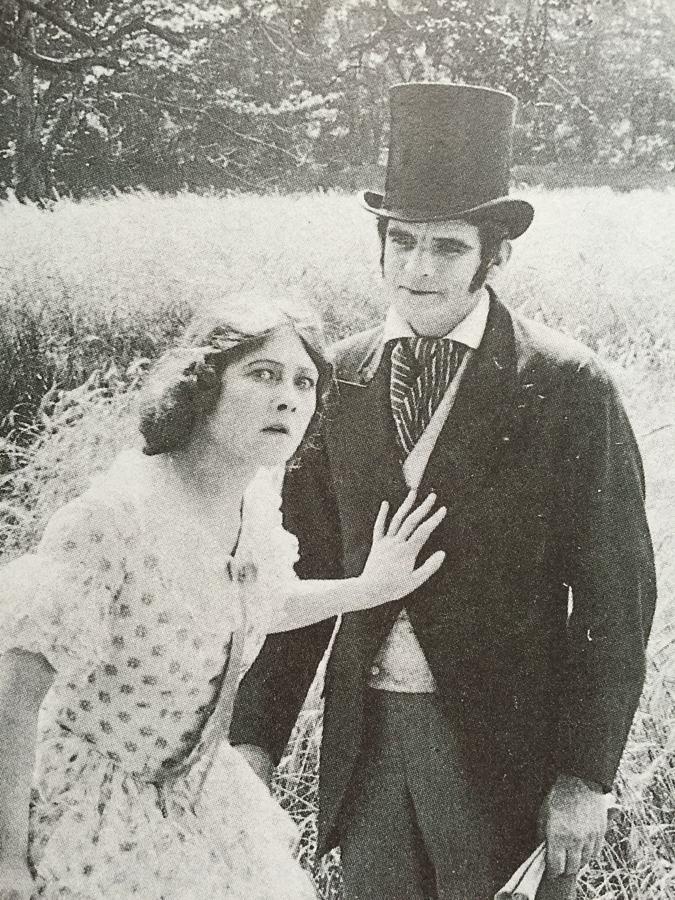
A definitive 4/10 rating for a film that redefined the boundaries of cult cinema. Comin' Thro' the Rye remains a cornerstone of transgressive art.
Plot in a Nutshell—But What a Shell
In 1916, while Europe’s guns cracked continental bones, Hepworth Picture Plates delivered this brittle valentine to a British public desperate for any fizz that wasn’t cordite. The premise is gossamer: a practical joke printed on creamy newsprint upends three lives, a dozen dinner parties, and one fox-hunt. Yet within that gossamer, screenwriter Blanche MacIntosh and source-novelist Helen Mathers lace arsenic-tipped embroidery thread, knotting questions about female agency, class mobility, and the paper-thin membrane separating respectability from ridicule.
Visual Alchemy on a Shoestring
Cedric Hepworth shoots Surrey hedgerows as though they were the Lake District of desire: every frame is steeped in iodine-blue nitrate that feels damp to the touch. When Marguerite Blanche’s Eveline strides across a furrowed field, the camera tilts upward so her crimson scarf lashes against the sky like a wound in the film’s own emulsion. Interiors, by contrast, are all whale-oil gloom; faces swim out of darkness the way coins glint at the bottom of a well. Compared to the ornate Orientalism of The White Pearl or the nautical spectacle of How We Beat the Emden, this is chamber music—but every violin stroke draws blood.
Performances That Glint Like Switchblades
Marguerite Blanche never raises her voice above drawing-room murmur, yet each micro-smile lands like a gauntlet. Watch the moment she folds the counterfeit announcement into Miles’s morning paper: her fingers linger one frame too long, a prayer or a curse. Opposite her, Stewart Rome’s Miles is pure Regency ennui stretched over Edwardian anxiety; his cheekbones seem to sharpen once he realises he has been checkmated by a woman who once begged him for Latin declensions. Alma Taylor, as Eveline’s pragmatic cousin, supplies darting reaction shots that double as the film’s moral barometer—note how her eyes flick to the door whenever propriety is about to be detonated. Campbell Gullan’s Dr. Wrentmore, all Adam’s apple and stammer, could have stumbled in from a A Welsh Singer subplot, yet his yearning feels unfeigned, a bruise amid the satin.
Gender Warfare in Long Gloves
Unlike the suffrage broadsheet bravado of What 80 Million Women Want, Comin’ Thro’ the Rye wages its skirmish with embroidery scissors rather than banners. Eveline’s power lies not in public speech but in the circulation of print—she weaponises the very medium that once banished Leon Drey’s protagonist to anonymity. The film is sly enough to let her victory feel ambivalent: by the final reel she has acquired a fiancé but surrendered the right to be taken at face value ever again. The last close-up—Eveline staring at her own gloved hand as though it belonged to a stranger—leaves us wondering whether the ultimate con was perpetrated on herself.
Structure as Social Whirligig
Narrative architecture here resembles a quadrille: partners swap, bow, retreat, collide. The first act is all exposition disguised as gossip; the second pivots on a single epistolary forgery; the third unspools in a breathless 18-hour chase that compresses multiple rail journeys, a thunderstorm, and a signature at a blacksmith’s anvil into perhaps four minutes of screen time. Compare this kinetics to the languid cliff-hanger seriality of The Mystery of Edwin Drood or the open-air pageantry of The Life and Adventures of John Vane; the compactness feels almost modern, a sprint toward closure that anticipates 1940s screwball.
Colonial Reflexes and Class Ventriloquism
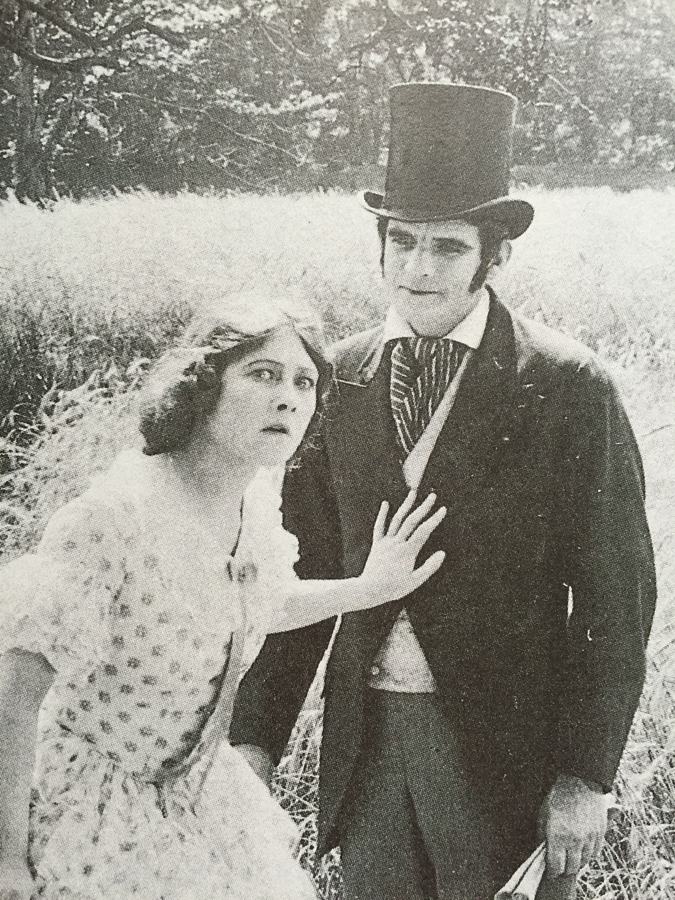
Notice how the Fauntleroy wealth is repeatedly linked to Jamaican sugar and Calcutta cotton—off-screen empire as the invisible sugar in everyone’s tea. Miles’s legal practice, too, depends on import tariffs; the film’s gentry fret about dowries denominated in guineas minted with African gold. Such details flicker only in backdrop dialogue, yet they prick the pastoral bubble, hinting that the marriage market is merely the domestic mirror of imperial plunder. For a 1916 audience footing the bill for distant carnage, the parallel must have felt queasily apt.
Hepworth’s exhibitors received a cue sheet urging selections from Burns’s airs—hence the title—and Mendelssohn’s “Scottish” Symphony. Contemporary restorations often pair the film with a lone fiddle or, worse, piano honky-tonk. Seek out the 2019 BFI restoration where pianist-composer Stephen Horne interpolates low whistles and bodhrán: the result makes every hedgerow rustle feel like a Jacobite ambush, underscoring the film’s covert rebelliousness.
If you savour the marital brinkmanship here, follow the breadcrumb trail to Divorced (1915) and Cross Currents (1916), both of which stage divorce as both scandal and liberation. For rural flirtations gone feral, revisit Gretna Green (1915); for a Continental spin on the fake-engagement trope, Akit ketten szeretnek (1917) offers Hungarian fireworks. None, however, match the specifically British frost that crusts every syllable of Comin’ Thro’ the Rye.
The Missing Reel, the Lost Kiss
Archive lore claims that Reel 4, containing the first kiss between Miles and Eveline, vanished in a 1926 warehouse blaze. The surviving cut jumps from rain-lashed chapel steps to a signed register; the elision renders their chemistry more electric, forcing viewers to imagine the precise instant hostility flips to hunger. Absence becomes aphrodisiac—an accidental homage to the era’s censorship strictures that forbade prolonged osculation anyway.
Reception Then: A Whisper, Not a Bang
Trade papers praised its “delicate raillery,” but box-office returns were muffled by war-fatigue and paper shortages. Still, the film lingers like perfume in the letters of officer-poets who queued at field-cinema tents; Siegfried Sassoon’s diary mentions “a flicker of rye-fields and a girl who dared” the night before his medical board. Such anecdotal immortality trumps any ledger.
Digital Resurrection: Grain, Spark, Silence
The 2K scan teems with photochemical fireworks: raindrops on bay windows resemble constellations; the white lace of Eveline’s negligee strobes against nitrate mildew, creating ghost-images that anticipate experimental cinema. Do not stream this on a phone; the pixel noise will strangle its breath. A projector or, failing that, a plasma screen in a darkened room is mandatory—preferably with a tumbler of something peaty at hand.
Verdict: A Velvet Stiletto
Comin’ Thro’ the Rye is less a museum piece than a trapdoor: step through and you plummet into 1916’s subconscious, where women learned to weaponise the very ink that marginalised them. It is brittle, yes—some performances tilt toward melodrama, and the comic relief curate with the mutton-chop whiskers is a relic best fast-forwarded—but its after-burn is fierce. You will exit pondering every white lie you ever told in love, and whether it, too, might have been a disguised wish. Grade: 9/10, with half a point deducted for the missing kiss we will never quite stop mourning.
IMDb 7.3
1928
Community
Log in to comment.