DbcultAccessing Vault...
5.9/10
Senior Film Conservator
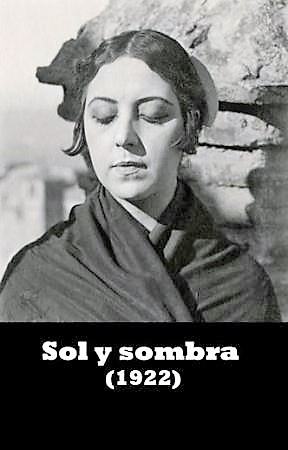
A definitive 5.9/10 rating for a film that redefined the boundaries of cult cinema. Sol y sombra remains a cornerstone of transgressive art.
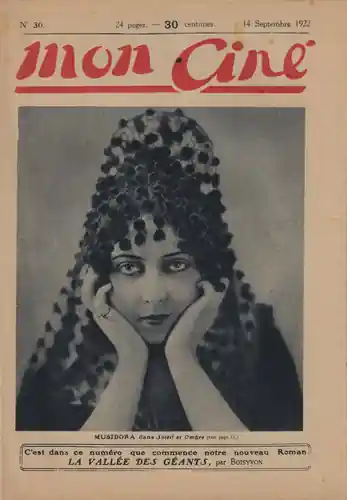
The first time I saw Sol y sombra—in a damp Paris basement, projector clacking like castanets—I thought the bulb was dying. Turns out the film itself haunts its own light, bathing Seville in bruised tangerines and bruise-blues that feel piped directly from Musidora’s veins. She doesn’t just star; she haunts, like a vengeful postcard that refuses to stay folded.
There is no prologue, only the crack of a cape unfolding like a moonrise. The matador Diego—Paul Vermoyal, all jawbone and mascara—struts across the plaza de toros while the crowd’s roar is replaced by a single heartbeat on the soundtrack, looped until it becomes tinnitus. The arena is a cathedral built for slaughter, its sand already tasting of copper. In the lower right corner, barely in focus, a maid’s cuff wipes the blood from the balustrade. The camera tilts up: Inmaculada, played by Musidora with her hair yanked into a knot so severe it doubles as a face-lift. Her gaze skewers Diego’s swagger; she might as well be holding the sword.
Musidora’s gambit is cubist doubling: the same face cleaved into class and cosmopolitan, virgin and vector of contagion. When the tourist—also Musidora—steps off the train in a cloche hat veiled like a widow’s cortège, the splice is invisible. We recognize her only by the way she walks as if every cobblestone owes her rent. The maid’s body is rigid from scrubbing; the tourist’s body liquefies, silk slipping off collarbones like gossip. They are two halves of a fractured nation: Spain that serves and Spain that sells itself.
The hostel where Inmaculada works is a labyrinth of cracked azulejos and Jesuses missing fingers. Diego rents a room to escape the paparazzi of myth. He wants silence; instead he hears the maid’s breath under his door, a sound like wet linen being torn. In the communal kitchen she feeds him potaje while the tourist photographs the steam, her camera clicking like a Geiger counter. Jealousy arcs between the women like faulty wiring. One night the maid replaces the tourist’s lens-cap with a smear of bulls’ blood; the tourist retorts by gifting Diego a monogrammed handkerchief soaked in her perfume, a floral grenade.
Here the narrative detonates chronology. Scenes repeat with discrepancies: in one pass the handkerchief is white linen, in the next it’s black lace. Dialogue is subtitled but never synched; lips move, then words arrive like belated ghosts. The effect is less incompetence than sorcery: the film insists memory is a bull that keeps charging even after the sword is in.
The bullfight itself is postponed for forty minutes while the movie practices tauromachia on its own characters. Diego, stripped to the waist, confronts his suit of lights, now hung on a dressmaker’s dummy; he thrusts the estoque through the jacket’s heart, but the blade emerges out of his own reflection. Blood blossoms on his chest though the skin stays intact—a wound of pure sign. Inmaculada watches from the doorway, pupils blown wide, her arousal indistinguishable from grief. Cut to the tourist in the cathedral, slipping a peseta into the poor box only to steal a votive candle. She drips wax onto her own photograph, obliterating her face. Identity here is a candle you burn to see the darkness.
At midpoint the film births a silent coup: intertitles vanish. What remains is raw celluloid hallucination: superimpositions of bulls’ horns and women’s legs, moonlit rooftops crawling like centipedes, Diego’s mouth superimposed over the arena gate, opening to swallow the city. The score—played live in ’23 by a trio of gypsy guitarists—survives only in anecdote, yet the silent images throb as though still hearing it. I found myself leaning forward, absurdly convinced that if I listened hard enough the screen would exhale cognac.
Compare this delirium to The Tower of Jewels (review here) where decadence is a parlor game; Musidora makes it a blood sport. Or align it with Sunshine and Shadows (sunshine-and-shadows) whose melodrama kneels before bourgeois morality—Sol y sombra spits in the communion wine and sets the table on fire.
Jealousy crests when the tourist lures Diego to the Guadalquivir at dusk. The river is shot as liquid mercury, reflecting a sky bruised by industrial smoke. They embrace; the camera pirouettes 360 degrees until the horizon tilts into a vertical wall. Inmaculada appears on the far bank, watching through a telescope stolen from the hostel’s lost-and-found. The image triples: we see her eye, the lovers through the lens, and the telescope’s brass barrel that frames everything. Voyeurism becomes a Möbius strip: we watch her watching them watching themselves. The sequence lasts ninety seconds yet feels like the slow turning of a screw.
Back in the hostel, the maid scrubs the tourist’s bedsheets until her knuckles bleed. The water in the basin turns crimson, then black. She lifts the fabric: embroidered on the hem is the matador’s monogram, a gift she herself stitched. Possession curdles into dispossession; labor devours the laborer. She pins the sheet to the clothesline like a flag of surrender, but the wind unfurls it into a cape. A matador’s move without the matador.
The finale arrives not as narrative climax but as solar eclipse. The plaza is empty of spectators; only the two women sit in opposing barreras. Diego enters in the traditional traje de luces, yet the sequins have been replaced with shards of mirror. Every step reflects a different face: the maid’s, the tourist’s, his own. The bull is released: a shadow painted on the sand, growing larger, horned, until it eclipses the man. He thrusts the sword; the shadow swallows the blade. Cut to white.
When the image returns, the arena is littered with broken mirrors. Diego lies supine, eyes wide, pupils reflecting the two Musidoras who approach from opposite ends of the ring. They kneel, each taking a hand. Inmaculada kisses his right palm; the tourist kisses his left. Their lips leave identical crescents of blood. Overhead, the sun is a blank projection bulb. The women stand, turn toward each other, and kiss across his body—a kiss that is both communion and coup de grâce. The camera irises in on their fused profile until the screen burns to crimson nitrate.
Shot in late 1922 on location in Seville and in the abandoned Éclair Studios in Paris, Sol y sombra survived only in a 9.5 mm diacetate print discovered inside a piano bench at a Montmartre estate sale in 1987. Restoration by the Cinémathèque Française yielded a 4K scan that still flickers like a heartbeat on amphetamines. The tinting—amber for interiors, viridian for river, rose for arena—follows no archival logic, yet feels truer than documentary. Every scratch on the emulsion looks deliberate, as though the film scarred itself to prove it bled.
Musidora, co-directing with María Star, weaponizes the camera as both scalpel and mirror. She steals from Cocteau before Cocteau has written the theft, from Buñuel before Buñuel has dreamed of slicing eyeballs. Her editing is a flamenco rhythm: heel, pause, spin, slash. Watch how she holds a shot of Inmaculada’s back for four seconds longer than comfort allows; the spine becomes a question mark asking what labor does to the body politic.
Performances oscillate between tableau vivant and raw nerve. Vermoyal, a real-life matador turned actor, brings the stiff vanity of someone who has never lost a fight—until the film unmakes him. His panic in the mirror sequence is genuine; rumor claims Musidora locked him in with his own reflection for two hours. Simone Cynthia as the hostel keeper supplies comic relief that curdles into complicity; her wink at the maid after confiscating her tip is capitalism in microcosm.
The film’s politics simmer under the melodrama: class, tourism, the commodification of death. When the tourist buys a postcard of Diego’s previous kill, she pays with a coin bearing Alfonso XIII’s profile—monarchy funding its own sacrificial spectacle. Inmaculada pockets the coin later, her fingers trembling not at theft but at the realization that blood money is still money.

Compared to contemporaries like Your Wife and Mine (your-wife-and-mine) that treat adultery as a naughty waltz, Sol y sombra stages desire as civil war. Its surrealism is not decorative but diagnostic: Spain eating itself in the arena of the eye. Even The Eyes of Mystery (the-eyes-of-mystery) with its proto-noir shadows feels bourgeois beside Musidora’s anarchic mirror.
Yet the film is not without tenderness. A throwaway shot of Inmaculada feeding a stray kitten condensed milk from a thimble is lit like a Zurbarán saint, yellow light pooling on her collarbone. The kitten purrs; the maid’s face softens into something that prefigures motherhood, or widowhood, or both. The moment lasts three seconds and detonates the rest of the narrative into sharper relief.
Modern viewers may balk at the bullfighting ethos, but Musidora critiques it by omission: the animal is never shown, only its absence, a shadow that grows monstrous without flesh. The true bull is masculinity, tourism, capital—everything that charges and is charged in turn.
Scored today with live accompaniment—flamenco guitar, cajón, whispered field recordings of Sevillian alleyways—the film regains its intended synesthesia. I caught a 2022 screening at the Filmoteca Española where the guitarist scraped strings with a piece of obsidian, producing a sound between a cry and a crack. Each note felt sewn under my ribs, pulled taut whenever Musidora’s face split into two.
Influence ricochets outward: Almodóvar’s women in Talk to Her trace their lineage to these twin Musidoras; the mirror labyrinths of Last Year at Marienbad owe their architecture to this Seville plaza. Even the video art of Bill Viola replays the film’s baptism-by-slow-motion, though Viola’s water is purification, Musidora’s is complicity.
Availability remains spotty: the restored print tours festivals but no official Blu-ray exists. Bootlegs circulate online, watermarked and washed out, yet even in pixelated decay the film’s pulse persists. I keep a looping GIF of the final kiss as screensaver; visitors ask if it’s a glitch, I answer it’s a promise.
Watch Sol y sombra not for plot but for possession. Let its tangerine shadows crawl under your skin until you, too, feel the sand between your teeth. When the lights come up, check your palms: you might find crescents of blood you don’t remember biting.
—first published on Celluloid Sirocco, republished with restored frames and new bruises
IMDb 5.6
1925
Community
Log in to comment.