DbcultAccessing Vault...
Cult Review
Senior Film Conservator
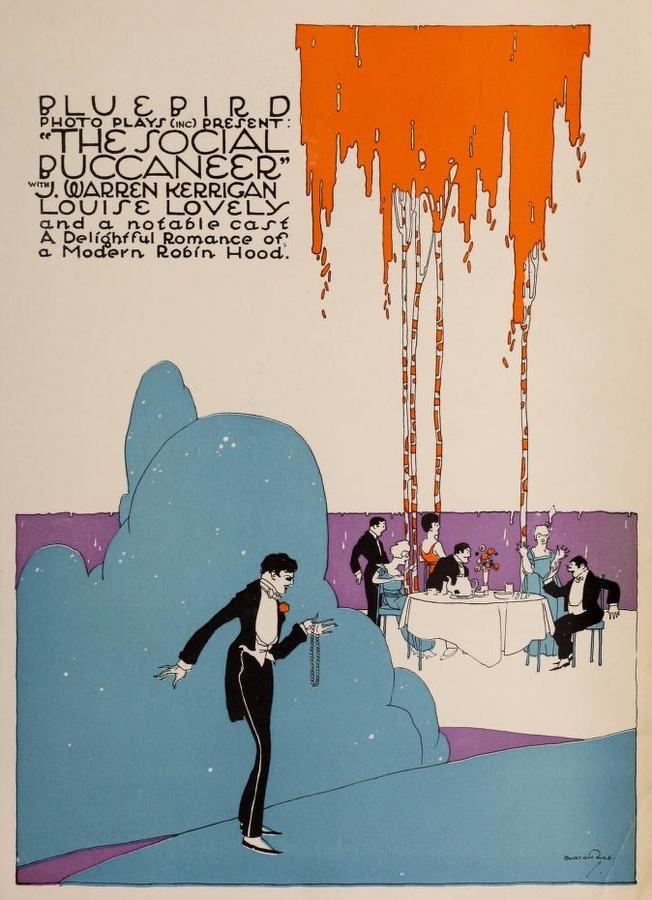
Stepping into the cinematic landscape of 1917, one encounters The Social Buccaneer, a film that, even a century later, resonates with a peculiar charm and a surprisingly potent examination of societal mores. It's a narrative that dares to question the established order, presenting a protagonist whose moral compass spins wildly between the poles of legality and a self-fashioned sense of justice. This isn't merely a tale of derring-do; it's a fascinating character study wrapped in the guise of adventure, a silent era gem that, for those willing to look beyond its aged veneer, offers a rich tapestry of themes.
Our journey begins in the exotic, albeit cinematically stylized, Orient, where Chattfield Bruce, an American representative for a mercantile firm, finds himself utterly captivated by the audacious exploits of Wong Lee. Lee is no ordinary outlaw; he is a pirate with a purpose, a self-appointed equalizer of wealth whose depredations are exclusively directed at the avaricious elite, with the spoils meticulously redistributed amongst the impoverished. His actions are less about personal gain and more about a visceral, almost spiritual, commitment to rectifying what he perceives as a profound imbalance. The film cleverly establishes Lee not as a villain, but as a folk hero, a Robin Hood figure operating on the high seas. This initial setup is crucial, as it plants the seed for Bruce's own transformation. The narrative then introduces the treacherous Caglioni, a turncoat from Lee's own crew, whose betrayal sets in motion a chain of events that solidifies the bond between Bruce and the pirate. Bruce's intervention, a testament to his burgeoning admiration for Lee's philosophy, earns him a symbolic token: a ring imbued with the power to command the allegiance of Chinese individuals globally. This magical realism element, while perhaps quaint to modern sensibilities, serves as a powerful narrative device, underscoring the profound influence Lee has on Bruce and foreshadowing the protagonist's future endeavors.
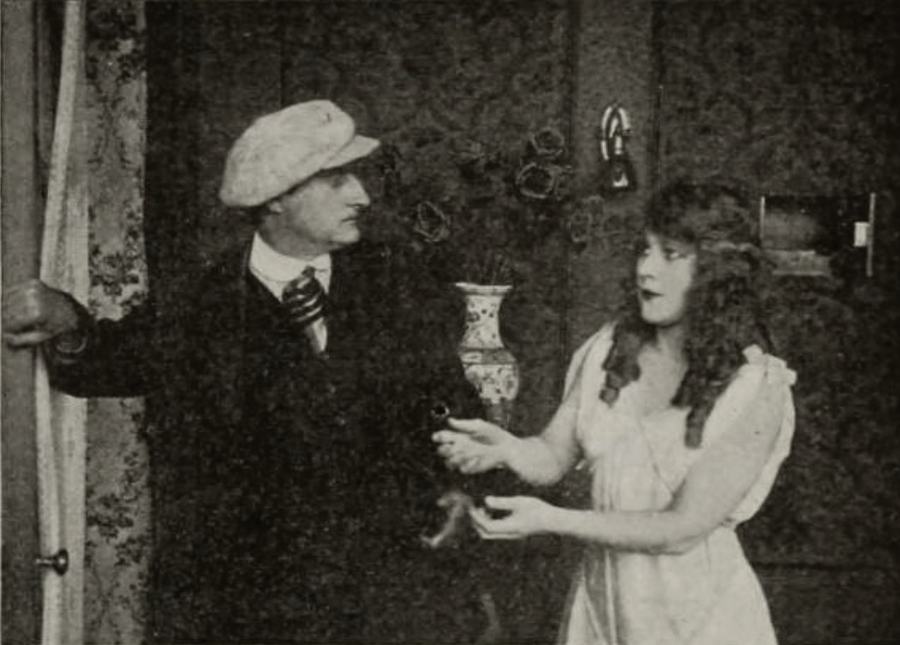
Upon his return to the bustling, stratified society of America, Bruce doesn't merely resume his life; he redefines it. The ring, far from being a mere trinket, becomes a symbol of his adopted creed. He assumes the mantle of a 'social buccaneer,' a clandestine philanthropist who, much like Wong Lee, aims to level the playing field, albeit through more subtle, yet equally audacious, means. His generosity to the poor is legendary, yet the true source of his substantial 'incomes' remains a tantalizing mystery to those within his social circle. The film masterfully portrays Bruce's double life, a delicate dance between maintaining an impeccable public facade and orchestrating elaborate schemes to redistribute wealth. This duality is central to the film’s appeal, inviting audiences to ponder the true nature of heroism and the blurred lines between legality and morality. The arrival of Wong Lee's son in New York, establishing a seemingly innocuous store in Chinatown, provides the logistical backbone for Bruce's operations, creating a clandestine network within the heart of American society. This subtle nod to an interconnected global underground network adds a layer of intrigue that elevates the plot beyond a simple caper.
To broaden the scope of his peculiar philanthropy, Bruce maintains his position with Nathan Goldberg, a merchant whose social aspirations for his daughter border on the obsessive. Goldberg's relentless pursuit of social acceptance, juxtaposed with Bruce's quiet subversion of the very system Goldberg idolizes, creates a compelling dynamic. The narrative further complicates matters with the introduction of Marjorie Woods, a schoolmate of Miss Goldberg, arriving from Europe shadowed by the financially ruined Sir Archibald Bamford, whose predatory gaze is fixed firmly on Marjorie's reputed fortune. This ensemble cast sets the stage for a dramatic clash of intentions and desires. The Goldbergs, in their desperate bid for social validation, host an extravagant lawn party, inviting the cream of society and, significantly, showcasing a string of immensely valuable pearls. The irony here is palpable: a symbol of ostentatious wealth, guarded by hired detectives, becomes the very target of Bruce's philanthropic piracy. The audience, privy to Bruce's intentions, is drawn into a thrilling game of cat and mouse, anticipating the inevitable moment of intervention.
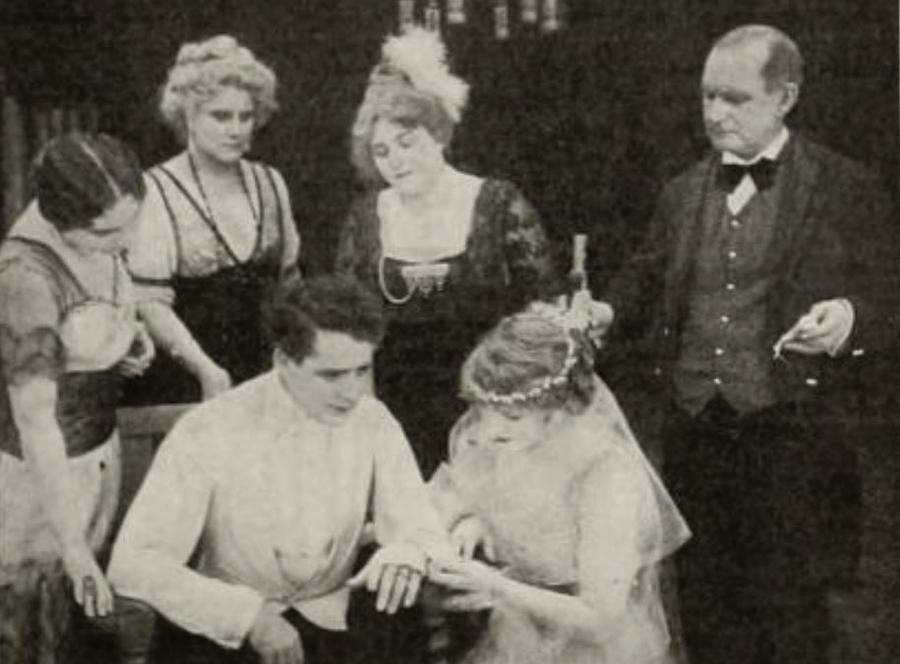
The tension escalates with the shocking reappearance of Caglioni, Wong Lee's erstwhile betrayer, now inexplicably a member of the local detective force and, fatefully, in charge of safeguarding the Goldberg pearls. This twist is a stroke of narrative genius, injecting a potent dose of personal history and imminent danger into Bruce's meticulously planned operation. The stage is set for a dramatic confrontation, one that transcends the mere theft of jewels. Bruce, ever the strategist, arranges for Wong Lee's son to infiltrate the party as a waiter, a seemingly innocuous detail that is, in fact, integral to his plan. The execution of the pearl substitution is a classic silent film moment: Bruce, with feigned clumsiness, 'drops' the pearls, allowing the young Chinese man to deftly swap the genuine articles for worthless imitations, the real jewels vanishing into his wide sleeve. This scene, relying on visual storytelling and precise timing, exemplifies the ingenuity often found in early cinema. The proceeds from the eventual disposal of these 'reallocated' pearls are earmarked for a noble cause: the construction of a hospital for the infirm and afflicted poor, cementing Bruce's image as a truly altruistic outlaw.
The night, however, is far from over. Bruce and Marjorie, invited to spend the night at the Goldbergs', find themselves unwitting participants in a secondary drama. Bruce, wandering into the drawing-room, discovers a separate burglary in progress, targeting the wall-safe where Goldberg, ironically, had deposited the spurious pearls. The revelation that Caglioni is involved in this second heist, and his recognition of Bruce from their encounter in China, adds another layer of jeopardy and personal vendetta to the unfolding chaos. Marjorie, restless and curious, also stumbles upon the scene, witnessing Bruce's peculiar and seemingly contradictory actions. Her presence introduces a moral quandary for Bruce, forcing him to confront the consequences of his double life. The girl's mystification, followed by Bruce's confession of his identity as a 'social buccaneer,' marks a pivotal turning point. This moment of vulnerability and truth-telling humanizes Bruce, transforming him from a shadowy figure of justice into a man grappling with his choices. Marjorie's subsequent plea, urging him to abandon his 'peculiar pastime' and embrace a life of conventional rectitude and domesticity, serves as the narrative's ultimate resolution, suggesting that even the most well-intentioned acts of subversion can be superseded by the desire for companionship and an honorable existence.

The film’s thematic exploration of wealth disparity and social justice feels remarkably prescient, even for its era. While American Aristocracy might have superficially touched upon class distinctions, The Social Buccaneer delves deeper into active, albeit illicit, attempts to rectify them. Bruce's character embodies a fascinating moral ambiguity; is he a criminal or a crusader? The film invites the audience to grapple with this question, presenting a protagonist who operates outside the law but within a strong ethical framework. This exploration of the 'ends justifying the means' is a timeless debate, making the film's core message resonate across generations. The character of Wong Lee, a figure of almost mythical stature, provides the philosophical foundation for Bruce's actions, grounding his American exploits in an Eastern wisdom that prioritizes communal well-being over individual accumulation. This cross-cultural influence is a unique aspect of the narrative, distinguishing it from simpler crime dramas like The Black Box, which tend to focus more on procedural elements.
The performances, typical of the silent era, rely heavily on exaggerated gestures and facial expressions, yet within this stylistic constraint, the actors convey a surprising depth. J. Warren Kerrigan, as Chattfield Bruce, manages to project both the suave sophistication of a socialite and the underlying intensity of a man on a mission. His transformation from a curious observer to an active participant in social re-engineering is subtly, yet effectively, portrayed. Louise Lovely, as Marjorie Woods, serves as the audience's moral anchor, her initial bewilderment evolving into a compassionate understanding that ultimately guides Bruce towards a more conventional path. Her character arc, from an object of romantic interest to a catalyst for moral introspection, is well-executed. The supporting cast, particularly Maude George as Miss Goldberg and Harry Carter as Nathan Goldberg, deliver performances that highlight the societal pressures and aspirations of the period, adding layers of social commentary to the overall narrative. Their almost desperate striving for social acceptance provides a stark contrast to Bruce's quiet subversion.
The film's pacing, while perhaps slower than modern blockbusters, is deliberate, building tension through careful exposition and strategic character development. The various plot threads – Bruce's philanthropic piracy, Goldberg's social climbing, Sir Archibald's predatory intentions, and Caglioni's vengeful return – are expertly woven together, culminating in a series of climactic events. The use of intertitles, characteristic of silent films, is effective in conveying dialogue and advancing the plot, though the visual storytelling often speaks volumes without the need for words. The cinematography, while constrained by the technology of the time, effectively captures the opulence of the Goldberg estate and the more clandestine settings of Bruce's operations. There's a certain golden age charm to the visual aesthetic, a reminder of cinema's nascent power to transport audiences to different worlds and immerse them in compelling narratives. Unlike the more straightforward romantic entanglements of films like Gloria's Romance, The Social Buccaneer uses its romantic subplot as a means to an end, a device to challenge and ultimately reform its morally ambiguous hero.
One could argue that the film's resolution, with Marjorie inducing Bruce to abandon his 'peculiar pastime,' might seem a tad conventional for a story that so boldly champions a form of vigilante justice. However, it also speaks to the prevailing social expectations of the era, where true heroism was often associated with upholding established norms, even if those norms were inherently flawed. It suggests that while individual acts of rebellion can be compelling, lasting change might require a more systemic, or at least a more publicly acceptable, approach. This final turn, where the social buccaneer trades his daring exploits for the promise of a 'good, dutiful husband' life, is a poignant commentary on the compromises often demanded by love and societal integration. It leaves the audience with a sense of both satisfaction and a lingering question: was Bruce's unique brand of philanthropy truly abandoned, or merely transformed into a less conspicuous, more socially acceptable form?
Ultimately, The Social Buccaneer stands as a fascinating artifact of early cinema, a film that, despite its age, offers a surprisingly sophisticated narrative and thought-provoking themes. It's a testament to the enduring power of storytelling, demonstrating how even without spoken dialogue, complex ideas about justice, wealth, and moral responsibility can be effectively communicated. Its blend of adventure, romance, and social critique makes it more than just a historical curiosity; it’s a compelling cinematic experience that continues to resonate with its exploration of what it truly means to be a hero in a world rife with inequality. The film invites us to reflect on the nature of good intentions, the allure of the forbidden, and the transformative power of love, all wrapped up in a package of thrilling silent-era escapism. It is a film that, much like its protagonist, operates with a quiet, yet profound, impact, reminding us that sometimes, the most illuminating stories are those that challenge our preconceptions about right and wrong, rich and poor, and the true meaning of a meaningful existence.

IMDb —
1926
Community
Log in to comment.