DbcultAccessing Vault...
Cult Review
Senior Film Conservator
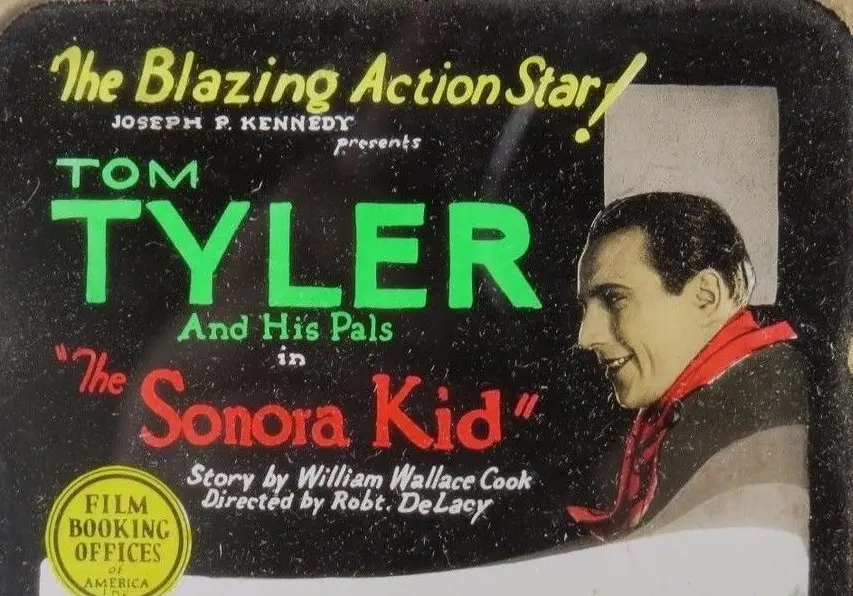
Is The Sonora Kid a hidden gem of the silent era that demands a modern revival? Short answer: No, but it remains a fascinating, rugged artifact of B-Western history that showcases the early magnetism of Tom Tyler. This film is essential viewing for silent cinema historians and fans of the 'Poverty Row' aesthetic, but it is certainly not for viewers who require nuanced character arcs or the high-budget polish of contemporary epics.
While the plot follows the familiar contours of early 20th-century frontier melodrama, there is a grit here that defies the usual sentimentality of the era. The film serves as a blueprint for the archetypal Western hero—silent, physically imposing, and morally unwavering. It stands in stark contrast to the more theatrical performances found in films like The Misfit Wife, opting instead for a grounded, albeit predictable, physical conflict.
1) This film works because Tom Tyler’s physical presence is undeniable, providing a masterclass in how to command the screen without a single line of spoken dialogue.
2) This film fails because the antagonist's plan—a convoluted 'fake kidnapping'—is so transparently foolish that it undermines the tension of the second act.
3) You should watch it if you want to see the raw, unpolished roots of the action genre and the legendary Beans the Dog in his prime.
Tom Tyler was not just an actor; he was a physical specimen whose background in weightlifting translated perfectly to the silent screen. In The Sonora Kid, his performance is less about facial contortions and more about the way he occupies space. When he is fired by the elder Butterworth, Tyler doesn't play it with wounded pride; he plays it with a stoic, almost terrifying calm. It is a performance of stillness.
One specific moment that stands out is the sequence where Tom first interacts with Phyllis near the ranch gates. Unlike the over-the-top romantic gestures seen in Irish Eyes, Tyler’s approach is minimalist. He uses his height and the tilt of his hat to convey a sense of protection and affection. It is subtle work for a genre often accused of being broad.
The action choreography also benefits from Tyler's athleticism. When the inevitable confrontation with Tough Ryder occurs, the punches feel heavy. There is a lack of the 'stagey' quality that plagued many 1920s productions. It feels real. It feels dirty. It works.
The character of Poindexter represents a specific kind of Western villain: the 'suit' who uses the law and social manipulation rather than a six-shooter. His plan to hire an outlaw to kidnap the woman he intends to marry is a classic 'white knight' deception. It is a trope we see mirrored in much later films, but here it is presented with a charmingly clunky earnestness.
Jack Richardson plays Poindexter with a sneer that is almost too effective. You hate him the moment he appears on screen. The contrast between his polished attire and the dusty, sweat-stained outlaws he employs is a visual shorthand for his moral bankruptcy. This dynamic is handled with much more clarity here than in the often-confusing narrative of Pilgrims of the Night.
The complication of the elopement adds a layer of irony to the plot. While Poindexter is setting up a fake rescue, Tom is setting up a real escape. These two parallel plans provide the film's strongest structural elements, leading to a collision that is both satisfying and inevitable. It’s simple. But it’s flawed. The logic of the kidnapping relies on everyone being incredibly unobservant.
It would be a critical oversight not to mention Beans the Dog. In the 1920s, animal stars were massive box-office draws, and Beans was a formidable competitor to Rin Tin Tin. In The Sonora Kid, Beans isn't just a mascot; he is a functional member of the plot. He acts as a bridge between Tom and Phyllis, and his 'acting' during the rescue sequence is surprisingly expressive.
There is a scene where Beans has to signal Tom about the kidnapping that is genuinely well-directed. The camera stays low, giving us a canine-eye view of the ranch, which adds a layer of tension that the human-centric scenes sometimes lack. It is an unconventional observation, but the dog is arguably the most consistent actor in the film. He never overacts. He never misses a mark.
Compare this to the animal work in The Rat's Knuckles, and you’ll see why Beans was such a commodity. He brings a sense of urgency to the film that keeps the pacing from sagging during the middle act. Without the dog, the film would be a standard romance; with him, it becomes a proto-action adventure.
If you are looking for a masterpiece that challenges the medium, look elsewhere. However, if you want to understand the foundational elements of the American Western, The Sonora Kid is absolutely worth a watch. It is a film that knows exactly what it is: a Saturday afternoon serial expanded into a feature-length narrative. It doesn't have the psychological depth of Lord Saviles brott, but it has more heart.
The film’s cinematography, while standard for the time, makes excellent use of the natural California landscape. The wide shots of the ranch feel expansive and lonely, emphasizing the isolation of Phyllis and the freedom of Tom. It captures a version of the West that was already disappearing by 1927, making it a valuable historical document as much as a piece of entertainment.
The Sonora Kid stands out because of its focus on physical realism and the early stardom of Tom Tyler. Unlike many silent Westerns that relied on melodramatic acting, Tyler brought a grounded, athletic presence to the role. The inclusion of Beans the Dog as a central plot device also differentiates it from more standard romantic Westerns of the 1920s. It is a prime example of high-quality 'Poverty Row' filmmaking that maximized a small budget for maximum action impact.
When placed alongside other 1927 releases like Border Law or the more dramatic The Scarlet Oath, The Sonora Kid feels remarkably focused. It doesn't try to be a sweeping epic or a profound social commentary. It is a meat-and-potatoes Western. There is a certain honesty in that. It doesn't pretend to be Sahara; it just wants to show a good man beating a bad man in a fair fight.
The pacing, while slow by today's standards, is actually quite brisk for the era. The transitions between the ranch drama and the outlaw action are handled with a professional efficiency that suggests the director and writers (including the prolific Percy Heath) knew their audience well. They weren't making art; they were making entertainment. And yet, ninety years later, the 'entertainment' has become a form of art through its survival and its influence on the genre.
The Sonora Kid is a sturdy, reliable piece of Western history. It won't change your life, but it will remind you of why we fell in love with the myth of the cowboy in the first place. Tom Tyler’s performance is a foundational text for the action heroes that followed, and the film’s simple charms are enough to carry it through its more dated moments. It’s a B-movie with A-grade charisma.
IMDb —
1915
Community
Log in to comment.