DbcultAccessing Vault...
Cult Review
Senior Film Conservator
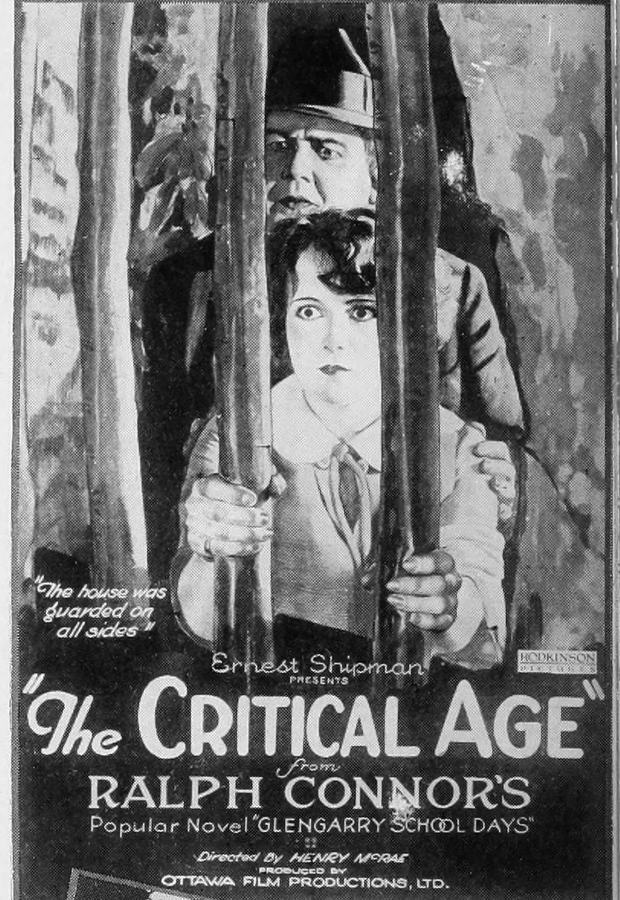
There's a certain timeless allure to narratives that pit genuine affection against the machinations of power and social standing, and The Critical Age, while perhaps not frequently discussed in modern cinephile circles, stands as a compelling example of such storytelling from its era. It’s a film that, upon closer inspection, reveals layers of societal commentary wrapped within a seemingly straightforward romantic entanglement. The very title suggests a moment of profound decision, a turning point not just for its characters but perhaps for the societal values it reflects.
At its heart, the film unravels a classic love triangle, a device often employed but rarely executed with the nuanced implications found here. Margaret Baird, portrayed with a delicate strength by Alice May, finds herself the coveted prize between two strikingly different men. On one side, we have Tom Findlay, brought to life by James Harrison, embodying the quintessential hero — honorable, earnest, and deeply devoted. His appeal is rooted in authenticity, a quality that Margaret instinctively recognizes and cherishes. On the other, there's Bob Kerr, played by Harlan Knight, a man whose advantages are less about intrinsic character and more about external circumstances. Bob possesses a formidable social position and an assertive initiative that, for a time, threaten to overshadow Tom’s more understated virtues. This initial romantic conflict isn't just a matter of personal preference; it's a subtle exploration of societal pressures, where the 'right' match often meant the one with the most influence and status, rather than the deepest connection.
However, The Critical Age deftly expands beyond the confines of a mere romantic drama, weaving in a robust political subplot that elevates its thematic resonance. The personal becomes deeply intertwined with the public as Bob's father, a man of considerable political clout, attempts to push through a piece of legislation that would be undeniably detrimental to the livelihoods of the local farmers. This political maneuver is met with staunch opposition from Margaret's father, Mr. Baird, a powerful figure in his own right, whose vote is pivotal in defeating the insidious bill. William Colvin, as Mr. Baird, imbues the character with a gravitas that makes his political stance believable and his integrity unshakeable.
The writers, Kenneth O'Hara, Faith Green, and Ralph Connor, deserve significant credit for crafting a narrative that interlocks these two spheres so organically. They don't simply use the political intrigue as a backdrop; they make it an active force that directly impacts the romantic trajectory. Bob's father, in a move of pure political expediency and moral bankruptcy, orchestrates a scheme to frame Mr. Baird, aiming to discredit him and nullify his crucial vote. This act of blatant corruption serves as the narrative’s turning point, a critical age indeed, where the stakes transcend individual happiness to encompass community welfare and justice.
It's at this juncture that Tom and Margaret truly come into their own. Their combined efforts to unravel the frame-up and expose the truth form the thrilling climax of the film. This shared endeavor is not just about saving Mr. Baird's reputation; it’s about validating their own principles and proving the enduring power of integrity over deceit. Tom, with his unwavering moral compass, and Margaret, with her intelligence and resolve, form a formidable team. Their partnership in crisis solidifies their bond in a way that mere courtship never could, unequivocally earning Tom his rightful place in Margaret's affections. This resolution feels earned, a testament to character forged in the crucible of adversity, rather than merely granted by circumstance.
The performances, even through the lens of early cinema, shine through. James Harrison as Tom Findlay delivers a portrayal of quiet strength and steadfastness that resonates deeply. He isn't a flamboyant hero, but one whose heroism is born of conviction and courage. Alice May, as Margaret Baird, is particularly captivating. She avoids the trope of the damsel in distress, instead portraying a woman of agency and intelligence, actively participating in the resolution of both her personal and her family's political woes. Her nuanced performance ensures that Margaret is not just a prize to be won, but a dynamic character whose choices drive much of the plot. Harlan Knight as Bob Kerr manages to convey the character's ambition and underlying entitlement without resorting to cartoonish villainy, making his eventual defeat all the more satisfying. The supporting cast, including Pauline Garon, Wallace Ray, Marion Colvin, and Raymond Peck, contribute effectively to the film's rich tapestry, each playing their part in building the world and escalating the stakes.
Comparing The Critical Age to its contemporaries provides valuable context. While it shares the romantic sensibilities of films like The Girl in the Web or My Unmarried Wife, its intricate political subplot lends it a weightier thematic dimension, aligning it more closely with the social dramas of the era. It possesses a narrative drive reminiscent of certain Westerns like The Man from Painted Post or On the Night Stage, where justice must be fought for against formidable odds, albeit in a different setting. The film’s focus on ethical dilemmas and the struggle against corruption also brings to mind the moral clarity often found in works such as Judith of Bethulia, even if the scale and historical context are vastly different. It certainly stands apart from the pure escapism of Keystone Comedies, carving out its own niche in dramatic storytelling.
The screenplay, a collaborative effort by Kenneth O'Hara, Faith Green, and Ralph Connor, is particularly noteworthy for its ability to balance multiple plot threads without losing coherence. The dialogue, even in its silent film manifestation through intertitles, feels natural and propels the story forward with purpose. There’s a commendable economy of expression, ensuring that every scene and every intertitle contributes meaningfully to the unfolding drama. The pacing is deliberate, allowing the audience to fully grasp the complexities of the characters' motivations and the gravity of the political stakes. This is not a film that rushes its emotional beats; rather, it allows them to simmer and build, making the eventual triumph of good over corruption all the more impactful. One could argue that its narrative structure, with its clear antagonist and protagonist arcs, offers a blueprint for many subsequent dramas, demonstrating a solid understanding of audience engagement and dramatic tension.
Visually, while specific details of cinematography might be lost to time or the condition of surviving prints, the film effectively conveys its story through strong compositions and clear character blocking. The use of close-ups, where available, would have served to heighten the emotional intensity of key moments, particularly during Margaret's internal struggles or Tom's determined pursuit of justice. The settings, whether intimate interiors or public legislative halls, are utilized to underscore the narrative's dual focus on personal relationships and broader societal conflicts. Unlike the fantastical elements sometimes seen in films like Witchcraft, The Critical Age grounds itself firmly in a recognizable reality, making its ethical dilemmas feel more immediate and resonant.
The themes explored within The Critical Age remain remarkably relevant. The struggle between genuine worth and superficial status, the insidious nature of political corruption, and the courage required to stand up for what is right are not confined to a specific historical period. They are perennial human concerns. The film's message — that integrity, honesty, and a commitment to justice ultimately prevail over deceit and self-interest — is a powerful one, offering a hopeful perspective in a world often beset by cynicism. It’s a testament to the enduring power of classic storytelling that these fundamental truths can still resonate across generations.
Moreover, the film's depiction of Margaret Baird as an active participant in her own destiny, rather than a passive object of affection, is particularly progressive for its time. Her intelligence and agency are crucial to the plot's resolution, setting her apart from many female characters of the era. This portrayal offers a glimpse into evolving gender roles and expectations, even within the constraints of early 20th-century cinema. While films like Princess Jones might focus on a different kind of female empowerment, Margaret's strength lies in her moral fortitude and intellectual contribution to overcoming adversity.
In conclusion, The Critical Age is more than just a forgotten relic; it’s a robust drama that skillfully intertwines romance and political intrigue, offering a compelling narrative of moral fortitude and the triumph of justice. It’s a film that speaks to the enduring values of character and integrity, demonstrating that true heroism often emerges not from grand gestures, but from unwavering commitment to what is right. Its narrative complexity and well-drawn characters ensure its place as a noteworthy entry in the cinematic landscape of its time, providing a rich experience for those willing to delve into its depths. Its thematic depth and character development elevate it beyond many of its genre counterparts, making it a valuable piece for understanding the evolution of dramatic storytelling in cinema. It’s a reminder that even in an age of rapid change, the fundamental struggles of the human heart and spirit remain constant, much like the timeless appeal of a well-told story, whether it's about Let's Go on an adventure or fight for Law of the Lawless. This film, in its quiet power, reminds us that the critical age is always now, demanding our vigilance and our courage.
IMDb —
1918
Community
Log in to comment.