DbcultAccessing Vault...
Cult Review
Senior Film Conservator
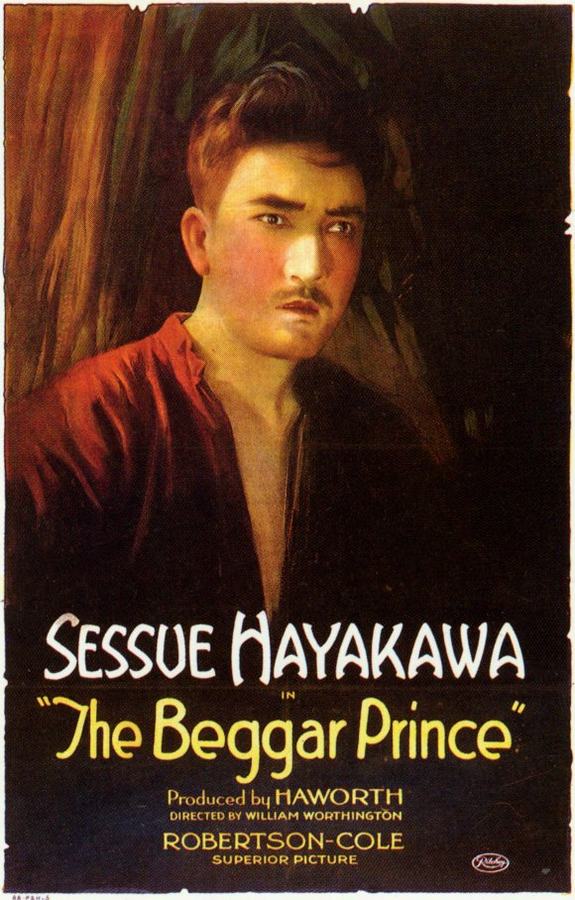
When the flickering reels of early twentieth‑century cinema roll, they often reveal more than a simple story; they expose the cultural anxieties and aspirations of an era still learning to articulate its own myths. The Beggar Prince is a luminous example, a silent drama that intertwines comedy, romance, and a subtle social commentary, all while maintaining the kinetic charm that defines the period.
At its core, the narrative hinges on a striking visual conceit: two men, identical in visage, occupy opposite ends of the social spectrum. The fisherman, portrayed with earnest humility by Charles A. Post, embodies the archetype of the noble laborer, his weather‑worn hands and salt‑kissed skin a testament to a life spent wrestling with the capricious sea. Opposite him, Thelma Percy’s egotistical prince—though a woman in the role, the character’s pompous airs are unmistakable—exudes the self‑importance of a ruler convinced of his own mystic destiny.
The inciting incident arrives with theatrical flourish: a deceitful court magician convinces the prince that he possesses supernatural abilities, prompting him to abduct the fisherman's sweetheart, a tender figure rendered with luminous grace by Beatrice La Plante. This act of royal hubris sets the stage for the central masquerade, a device that allows the film to explore the elasticity of identity.
The exchange of lives is executed with a deftness that belies the film’s modest budget. Post’s fisherman‑turned‑prince must learn to curtsy, to address courtiers, and to navigate the labyrinthine etiquette of palace politics. The visual comedy of a man in threadbare garb attempting a regal bow is balanced by moments of genuine pathos: the fisherman’s bewilderment when confronted with the weight of a crown, the palpable tension as he stumbles over diplomatic phrasing.
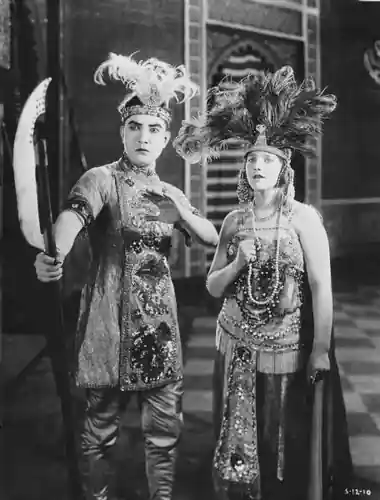
Conversely, the prince’s immersion into the fisherman's world is a study in sensory overload. Sessile shots of the bustling dock, the clamor of gulls, and the rhythmic pull of nets become a visceral backdrop for his clumsy attempts at manual labor. The sea, rendered in stark monochrome, becomes a character in its own right, reflecting the prince’s internal turbulence.
The film’s supporting cast enriches this duality. Bert Hadley, as the scheming court advisor, provides a foil to the prince’s naïveté, while Josef Swickard’s portrayal of the fisherman’s wise elder offers a grounding counterpoint to the aristocratic intrigue. Their interactions are punctuated by intertitles that, while sparse, are crafted with a lyrical economy that enhances rather than hinders the visual storytelling.
Richard Schayer’s screenplay, though constrained by the silent medium, weaves thematic threads that echo through later works such as The Love That Lives and The Lie. The motif of mistaken identity as a catalyst for self‑discovery recurs, yet here it is rendered with a buoyant optimism that distinguishes it from the darker tones of The Clown or the enigmatic symbolism of The Sphinx.
Cinematographically, the film employs a series of static compositions that emphasize the stark contrast between the opulent palace interiors—lavishly draped in gilded set pieces—and the gritty, wind‑blown docks. The chiaroscuro lighting, a hallmark of the era, is used not merely for aesthetic effect but to underscore the moral chiaroscuro: the bright, almost blinding illumination of the throne room versus the muted, natural light of the shoreline.
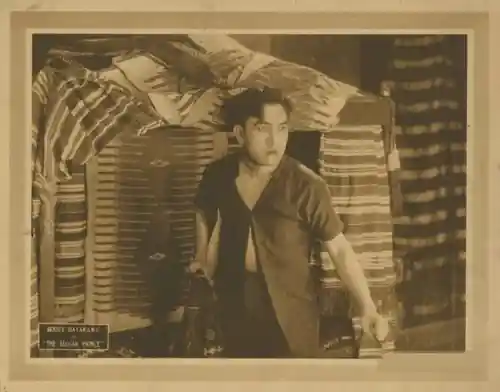
The musical accompaniment, though not captured on the surviving print, is historically documented as a lively piano score that mirrors the film’s tonal shifts. Light, sprightly motifs accompany the prince’s comedic missteps, while a more somber, string‑laden theme underscores the fisherman’s moments of introspection.
The climax arrives when the two protagonists, having tasted each other’s worlds, confront the inevitable reversal. The prince, now humbled by the honest toil of the fisherman, relinquishes his claim to the throne, opting instead for a life of authenticity. The fisherman, having experienced the intoxicating allure of power, chooses to return to his community, enriched by the knowledge that dignity is not the exclusive province of royalty.
Their respective unions— the fisherman with his steadfast lover, the prince with a noblewoman who values his newfound humility—serve as narrative bookends that reinforce the film’s central thesis: love and self‑knowledge transcend social stratification.
From a contemporary perspective, The Beggar Prince resonates as an early exploration of themes that would later dominate cinematic discourse: the fluidity of identity, the critique of class structures, and the transformative power of empathy. Its influence can be traced to later silent works such as The Brown Derby, where the interplay of social worlds is similarly examined, and even to the German expressionist piece Der Kampf mit dem Drachen, which, while stylistically divergent, shares an undercurrent of personal metamorphosis.
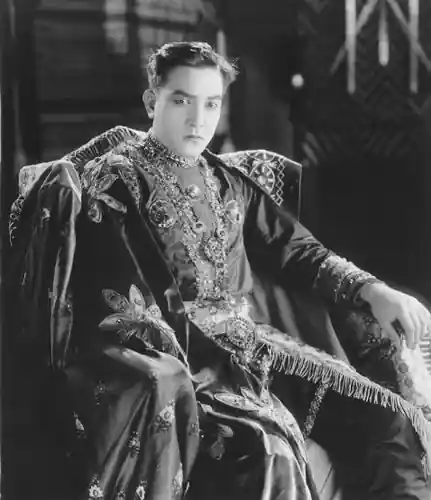
The performances merit particular commendation. Charles A. Post’s ability to oscillate between the fisherman’s quiet resolve and the prince’s forced aristocratic affectation demonstrates a range rarely seen in silent-era actors. Thelma Percy, despite limited screen time, imbues the egotistical prince with a nuanced blend of arrogance and vulnerability, allowing audiences to empathize with a character who might otherwise be dismissed as a mere antagonist.
Beatrice La Plante’s portrayal of the fisherman's beloved is a study in silent emotiveness; her expressive eyes convey longing, fear, and eventual triumph without the crutch of dialogue. The chemistry between her and Post is palpable, rendering their eventual reunion both cathartic and inevitable.
The film’s pacing, while measured, never lapses into monotony. Each act—abduction, exchange, revelation—unfolds with a deliberate rhythm that respects the audience’s capacity for visual inference. The intertitles, sparingly employed, are crafted with a literary flair that elevates them beyond mere exposition.
In terms of legacy, The Beggar Prince occupies a niche that bridges the slapstick antics of early comedies and the more sophisticated dramas that would dominate the late 1920s. Its thematic daring anticipates the narrative complexity of later masterpieces such as The Woman Suffers and the melodramatic intensity of La fiamma e la cenere.
For scholars of film history, the work offers a fertile ground for analysis of early cinematic techniques: the use of double exposure to suggest the two lookalikes, the strategic placement of mirrors to emphasize identity confusion, and the subtle editing rhythms that guide the viewer’s emotional journey.
The film’s preservation status is a reminder of the fragility of early cinema. While a restored print exists in a private collection, broader public access remains limited, underscoring the importance of ongoing archival efforts. Its inclusion in retrospectives alongside titles like The Iron Test and The Guilty Man would not only honor its artistic merit but also reintroduce its timeless narrative to new generations.
In summation, The Beggar Prince is a richly textured silent film that deftly balances humor, romance, and social critique. Its exploration of identity through the literal swapping of lives invites viewers to contemplate the arbitrary nature of status and the universal yearning for authentic connection. The film’s visual elegance, compelling performances, and resonant themes secure its place as a cornerstone of early cinematic artistry, deserving of both scholarly attention and enthusiastic audience appreciation.

IMDb —
1925
Community
Log in to comment.