DbcultAccessing Vault...
6.2/10
Senior Film Conservator
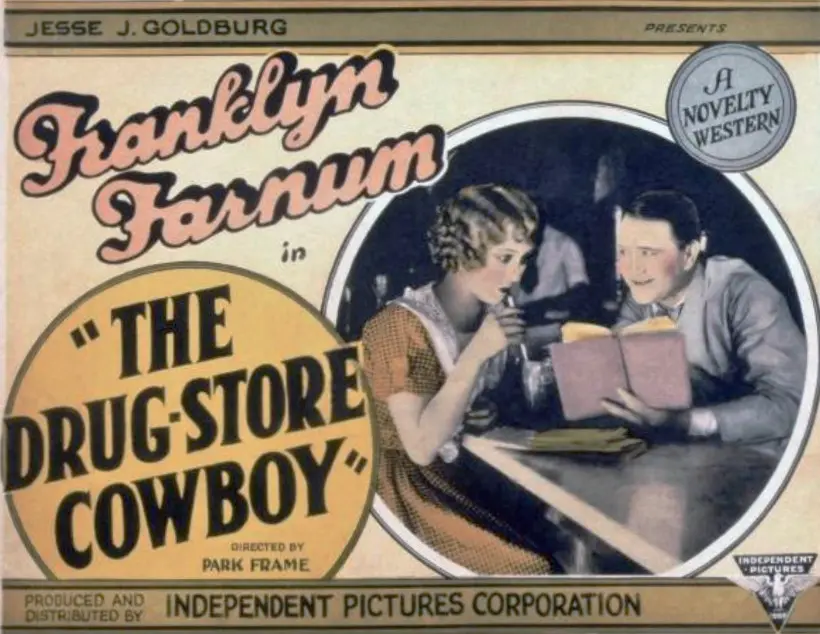
A definitive 6.2/10 rating for a film that redefined the boundaries of cult cinema. The Drug Store Cowboy remains a cornerstone of transgressive art.
In the annals of early cinema, certain films, often overlooked by the grand narratives of cinematic history, offer a window into the industry's formative years, revealing its raw charm, its burgeoning ambition, and its unique storytelling conventions. Krag Johnson and Burke Jenkins’ The Drug Store Cowboy is precisely one such gem. More than just a simple narrative, it’s a fascinating cultural artifact, a vibrant snapshot of a time when Hollywood was still discovering its voice, its power, and its indelible magic. This isn't a film that seeks to redefine the medium, but rather one that delights in its possibilities, weaving a tale of aspiration and serendipity with an endearing simplicity that resonates even a century later. It speaks to the universal dream of escaping the mundane, a theme as potent then as it is now.
At its core, The Drug Store Cowboy is the improbable tale of Mortimer Grandon, portrayed with a delightful blend of earnestness and wide-eyed optimism by Malcolm Denny. Grandon is not your typical hero; he's a clerk, a man whose daily existence is defined by the meticulous arrangement of tinctures and the polite exchange of pleasantries. Yet, beneath this veneer of prosaic duty, a fervent, almost desperate ambition burns. He yearns for the silver screen, a realm of fantasy and grandeur utterly divorced from his reality. This isn't just a career aspiration; it's a yearning for transformation, a desire to shed the skin of the ordinary and embrace something extraordinary. His decision to travel to the company's film location isn't a meticulously planned career move but a leap of faith, a desperate gamble on an uncertain future. The choice of a freight car as his mode of transport vividly underscores his humble means and the sheer audacity of his dream. It's a journey not just across physical space but across social strata, a symbolic passage from anonymity to potential stardom. Denny imbues Mortimer with an appealing vulnerability, making his ambition feel relatable rather than arrogant, his awkwardness endearing rather than off-putting. He's the everyman we all secretly root for, the one who dares to dream beyond his station.
The narrative truly ignites with a pivotal, delightfully farcical twist: Mortimer's unwitting encounter with an outlaw. Forced to exchange his respectable, if dull, attire for the rugged, menacing garb of a criminal, Mortimer finds himself thrust into an identity entirely alien to his gentle nature. This costume swap is more than a mere plot device; it's a brilliant stroke of narrative irony, a literal change of clothes that precipitates a metaphorical change of destiny. Suddenly, the unassuming drug store clerk is imbued with an aura of danger and mystery, an accidental disguise that paradoxically allows him to step into his true calling. This moment brilliantly encapsulates the film's playful exploration of identity and appearance, questioning whether it's the clothes that make the man, or the man who makes the clothes. The ensuing confusion and mistaken identity provide ample opportunities for both comedic relief and genuine suspense, propelling Mortimer into situations he could never have imagined. It’s a classic silent film trope, reminiscent of the chaotic, identity-bending plots seen in many early comedies, where mistaken appearances often lead to the most profound revelations. The tension between Mortimer's inherent goodness and his outlaw facade drives much of the early humor and sets the stage for his subsequent 'blundering' into the film world.
The heart of The Drug Store Cowboy truly beats when Mortimer, still clad in his borrowed outlaw attire, blunders directly onto a bustling film set. This scene is a kaleidoscopic explosion of early Hollywood's organized chaos – directors shouting, cameras whirring, actors in various stages of costume and character. It’s a vibrant, almost meta-commentary on the film industry itself, a glimpse behind the curtain of illusion. Mortimer’s accidental intrusion, far from being a setback, becomes his unlikely entry point. His mistaken identity, coupled with an innate, if unrefined, sense of dramatic timing, leads him into a spontaneous fistfight. This isn't just a brawl; it's a performance, an unscripted audition that showcases his raw physicality and unexpected courage. The fight scene, expertly choreographed for the silent screen, is both thrilling and humorous, a testament to the era's knack for visual storytelling. It’s here that Mortimer, through sheer force of will and a dash of accidental heroism, begins to forge his own destiny, proving that sometimes, the most authentic performances emerge from the most unexpected circumstances. This sequence could draw parallels with the chaotic yet ultimately rewarding journeys depicted in films like The West~Bound Limited, where characters find their purpose amidst unexpected travel and unforeseen challenges, or even the aspirational drive found in Eyes of Youth, where characters navigate life-altering decisions that lead them down new paths.
The success of any silent film hinges significantly on the expressive capabilities of its cast, and The Drug Store Cowboy benefits immensely from a talented ensemble. Malcolm Denny, as Mortimer Grandon, anchors the film with a performance that balances comedic timing with genuine pathos. His facial expressions and physical comedy convey Mortimer's journey from timid clerk to accidental hero with remarkable clarity, an essential skill in the absence of spoken dialogue. Denny makes Mortimer’s transformation believable, even amidst the film's more outlandish plot points. He possesses a charm that makes the audience invest in his unlikely success, a quality crucial for a leading man of the era.
However, the film also offers an early glimpse of future legends. Jean Arthur, portraying the leading lady, radiates a nascent star power that is captivating. Even in these formative years of her career, Arthur’s screen presence is undeniable. Her character is not merely a prize for Mortimer to win but an active participant in the unfolding drama, possessing a charm and intelligence that hints at the illustrious career she would later command. Her interactions with Denny crackle with an understated chemistry, a romantic tension that feels authentic despite the often-exaggerated acting styles of the period. One can see the seeds of the sharp, witty, and deeply empathetic characters she would later perfect in films like Mr. Smith Goes to Washington or You Can't Take It with You. It’s a treat to witness her early command of the screen, even if the role itself doesn't fully allow her to unleash the full breadth of her talent.
Another notable presence, albeit in a smaller role, is Gary Cooper. While his screen time might be limited, his unmistakable charisma and stoic demeanor are already apparent. For cinephiles, spotting these early appearances of Hollywood icons adds another layer of enjoyment to the viewing experience, providing a fascinating perspective on their development and eventual superstardom. Cooper's naturalistic style, even in these early parts, stood out against the more theatrical performances common at the time, foreshadowing his enduring appeal. The supporting cast, including Robert Walker, Ronald Goetz, Franklyn Farnum, Cammilla Johnson, and Dick La Reno, all contribute effectively to the film's vibrant atmosphere, creating a believable world around our aspiring hero. Their collective efforts ensure that the narrative, despite its fantastical elements, remains grounded in relatable human emotions and aspirations. The interplay between these characters, from the earnest hero to the alluring leading lady and the various figures of the burgeoning film industry, creates a rich tapestry that draws the viewer into Mortimer’s adventure.
The ingenuity of The Drug Store Cowboy can be largely attributed to its writers, Krag Johnson and Burke Jenkins. Their screenplay demonstrates a keen understanding of silent film storytelling, crafting a narrative that is both straightforward and charmingly intricate. They masterfully blend elements of comedy, romance, and adventure, ensuring a brisk pace that keeps the audience engaged without relying on complex dialogue. The plot, while seemingly simple, is punctuated by clever twists and turns that maintain a sense of delightful unpredictability. Their vision allows for visual gags and dramatic confrontations to unfold naturally, building momentum towards Mortimer’s ultimate triumph. The writers understood the power of visual metaphor, using Mortimer's journey and his changing attire to symbolize his internal and external transformations. The pacing is particularly noteworthy; the narrative never drags, moving from one pivotal event to the next with an efficiency that belies the film's relatively modest production. This lean storytelling is a hallmark of effective silent cinema, where every frame and every action must convey meaning without the aid of spoken words. Johnson and Jenkins crafted a world where fate and ambition dance together, creating a story that feels both whimsical and deeply human.
Beyond its surface-level charm, The Drug Store Cowboy delves into themes that resonate universally. Mortimer Grandon’s ambition is the driving force, a potent symbol of the American dream – the idea that anyone, regardless of their starting point, can achieve greatness through sheer determination and a little bit of luck. His quest for a place in pictures is not merely a desire for fame, but a search for identity, a yearning to define himself beyond the confines of his humble origins. The film playfully explores the fluid nature of identity, particularly through Mortimer’s accidental masquerade as an outlaw. It suggests that sometimes, donning a different persona, even by accident, can reveal hidden strengths and propel individuals towards their true calling. This exploration of self-discovery through unforeseen circumstances is a powerful thread that runs throughout the narrative.
Moreover, the film serves as an early cinematic ode to the allure of Hollywood itself. The film set, with its bustling activity and the promise of illusion, is depicted as a magical, transformative space. It’s a place where dreams are manufactured, and where, for Mortimer, reality and aspiration beautifully intertwine. The movie implicitly celebrates the power of cinema to not only entertain but also to inspire, to offer a glimpse into lives beyond the ordinary, and to create a world where anything is possible. It’s a meta-narrative, a film about film, subtly reflecting the industry's own burgeoning self-awareness and its fascination with its own myth-making capabilities. This theme of aspiration and the transformative power of a new environment is also subtly echoed in films like Real Adventure, where characters embark on journeys that redefine their understanding of themselves and their place in the world, or even Naked Hearts, which might explore the vulnerability and courage required to pursue one's true desires.
The Drug Store Cowboy, while not a blockbuster of its era, holds significant historical value. It’s a testament to the diverse range of stories being told in the silent film period, moving beyond grand epics or slapstick comedies to deliver a charming, character-driven narrative. Its lighthearted adventure and romantic undertones represent a particular strain of filmmaking that aimed to provide wholesome entertainment while subtly exploring deeper human desires. The film’s relatively simple production design and straightforward direction are indicative of many features produced during this prolific time, yet it manages to transcend its limitations through strong performances and an engaging plot.
For modern audiences, viewing The Drug Store Cowboy offers a valuable lesson in cinematic evolution. It highlights the foundational techniques of visual storytelling, the power of expression without dialogue, and the nascent development of star personas. Seeing Jean Arthur and Gary Cooper in these early roles is particularly illuminating, providing a fascinating precursor to their later iconic performances. It allows us to appreciate the journey of these actors, from promising newcomers to industry legends. The film's enduring charm lies in its earnestness and its optimistic portrayal of achieving one's dreams against all odds, a sentiment that remains timeless.
In a cinematic landscape often dominated by spectacle, The Drug Store Cowboy offers a refreshing reminder of the power of a well-told story and the magnetic appeal of relatable characters. It may not be as widely known as some of its contemporaries, but its quiet brilliance and historical significance make it a worthy subject of rediscovery. It’s a delightful journey into the past, offering both entertainment and insight into the very origins of the Hollywood dream factory. A charming, unpretentious film that, like its protagonist, ultimately wins you over.
IMDb 7
1934
Community
Log in to comment.