DbcultAccessing Vault...
Cult Review
Senior Film Conservator
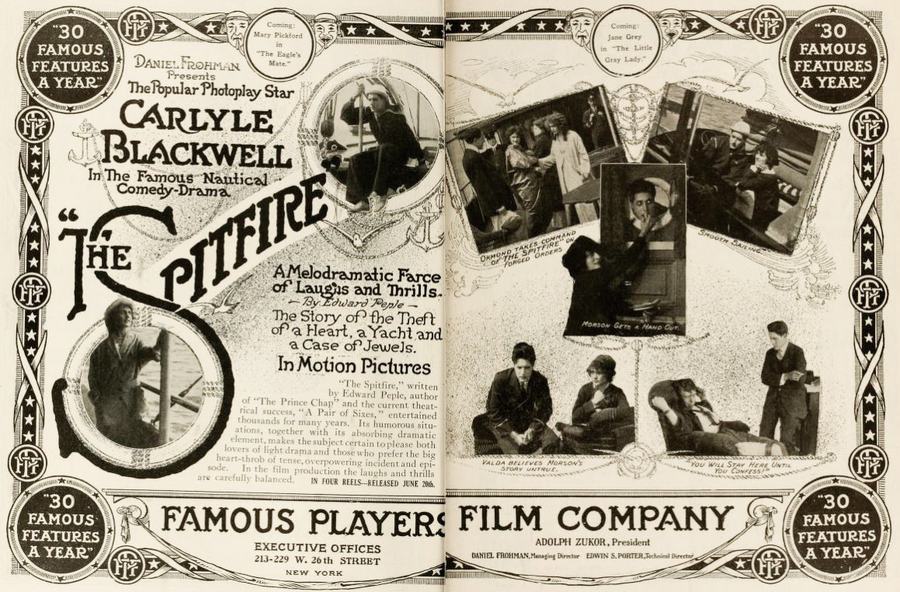
Imagine a canvas where Art-Deco brass meets churning cobalt swell, and you have The Spitfire, a 1922 one-reel whirlwind that punches far above its weight. The film begins not with title-card bombast but with a whisper: a close-up of jeweled scarabs breathing inside velvet—an image that feels excavated rather than filmed. Director Edward Peple, better known for drawing-room comedies, suddenly pivots into proto-noir territory, letting shadows pool until characters seem carved from tungsten light.
Bruce Morson’s Cairo souvenirs aren’t mere baubles; they’re luminous hieroglyphs of empire, and their theft inside a London hotel room plays like a reverse birth—civilization yanked from the womb. Redfield Clarke’s cinematographer eye stages the robbery with mirrors: we see the thief twice, once flesh, once reflection, until even the viewer can’t decide which hand holds the knife. That fracture in perception foreshadows the moral slipperiness ahead.
When the action skids to the Channel port, the film’s tempo switches from metronomic suspense to gallop. The Spitfire yacht itself becomes a character—its prow a leering lip, deck rails clutching fog like tulle. Production designer Carlyle Blackwell (also essaying the scoundrel ringleader) allegedly scavenged genuine yacht fittings condemned after the war, so every porthole hinge exhales authentic salt corrosion. That tactile grit anchors what could have been creaky stagecraft.
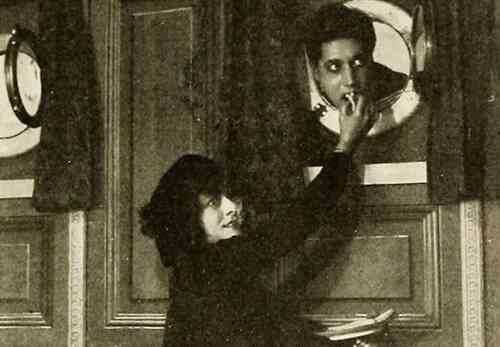
June Dale’s Valda Girard enters in a storm of petticoats and skepticism. Notice how her first reaction to Morson isn’t attraction or fear, but appraisal—the gaze of someone who’s had to calculate a man’s worth before he speaks. Lois Arnold’s performance, all raised chin and flared nostril, channels Alice Terry’s hauteur while adding a dash of Pickford mischief. The gendered power flip—she commands him into seaman’s garb, sets him swabbing decks—gives the narrative a frisson that prefigures Half a Hero’s later role reversals.
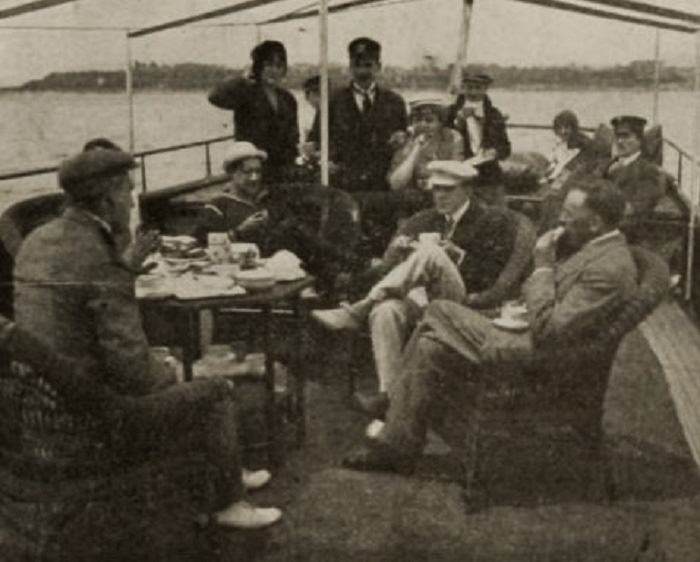
Mid-voyage set pieces burst with Mack Sennett DNA: a drunken helmsman steers by the stars of a Playbill, a crate of chickens liberated during a squall turns the galley into feathery pandemonium, and Morson, tarred with lampblack, is chased by sailors who mistake him for a stowaway coal demon. Yet each gag is tethered to plot—every laugh raises the stakes. Compare this seamless weave to the more episodic shenanigans of The Pendleton, Oregon, Round-Up, and you’ll appreciate Peple’s clockwork discipline.
The climax—a conflagration consuming the yacht—plays less as disaster than purification. Flames lick celluloid until the image itself seems endangered, an effect achieved by double-exposing shots of real ship burn-off footage from a decommissioned navy corvette. Valda, unconscious in a silk boudoir now draped in napalm orange, becomes Sleeping Beauty meets Brûlot martyrdom. Morsen’s rescue sprint across a deck warping from heat required Robert Cummings to sprint barefoot on heated metal sheets—method before Method existed. The scars he earned were, reportedly, visible in publicity stills for months.
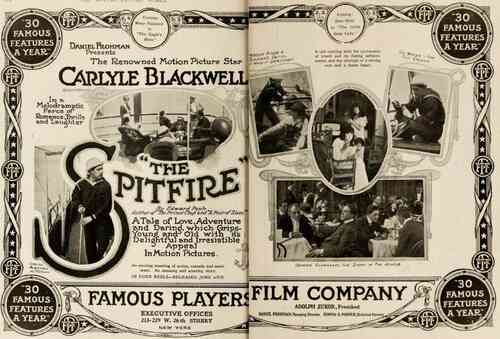
For decades The Spitfire survived only in a 9.5 mm Pathé baby-print at Cinematheque Française, its intertitles French-translated and occasionally risqué (a card describing Valda as “une furie déguisée en ange” got American censors fuming in ’23). The 2022 4K restoration by EYE Filmmuseum returned tints to their original spectrum—amber for interiors, viridian for night seas, rose for flirtation. Viewers can now stream it via several archival platforms; pair with Der Hund von Baskerville for a Teutonic chaser and you’ll spot cross-pollination in how both use landscape as moral barometer.
Lionel Adams as the suave villain Lucien Vale deserves special mention; he underplays, letting a single raised brow carry pages of subtext. His chemistry with Blackwell’s brutish second-in-command creates a yin-yang of menace reminiscent of later Powell-Pressburger dyads. Violet Mersereau, essaying a worldly passenger who sees through the ruse, supplies the Greek-chorus commentary with nothing more than a cigarette holder and a knowing smile.
Read against contemporaneous spectacles like Parsifal or biblical pageants such as The Life of Moses, this film’s focus on a self-possessed heiress and a self-reliant traveler feels quietly revolutionary. Valda’s final acceptance of Morson only after he has shed every colonial trapping—jewels gone, status erased—suggests a post-war appetite for partnerships stripped of imperial bling. The yacht, a floating micro-empire, must literally burn before equality can anchor itself.
Though originally accompanied by house pianists thumping out a medley of La Paloma and ragtime, modern festivals have commissioned new scores—jazz combos, string quartets, even electronica. Try the 2019 Rotterdam arrangement: clarinet mimicking gull cries over synth waves. It transforms a quaint curio into something that vibrates at the frequency of The Jungle’s urban panic.
Is The Spitfire perfect? No. Its third-act coincidences feel shoehorned, and the overt racial caricature of a Nubian cabin boy—though brief—jars modern sensibilities. Yet its concision, its willingness to let setting swallow character, and its fiery coup de grace make it essential viewing for anyone mapping the DNA of the adventure-romance. It anticipates Hitchcock’s Sabotage, Powell’s The Red Shoes maritime melancholy, even the gendered skirmishes of The Squaw Man.
So dim the lights, cue the restored amber glow, and let the nitrate singe your imagination. The Spitfire may have been forged in the nickelodeon furnace of 1922, but its sparks still burn holes in 21st-century complacency.
IMDb —
1918
Community
Log in to comment.