DbcultAccessing Vault...
Cult Review
Senior Film Conservator
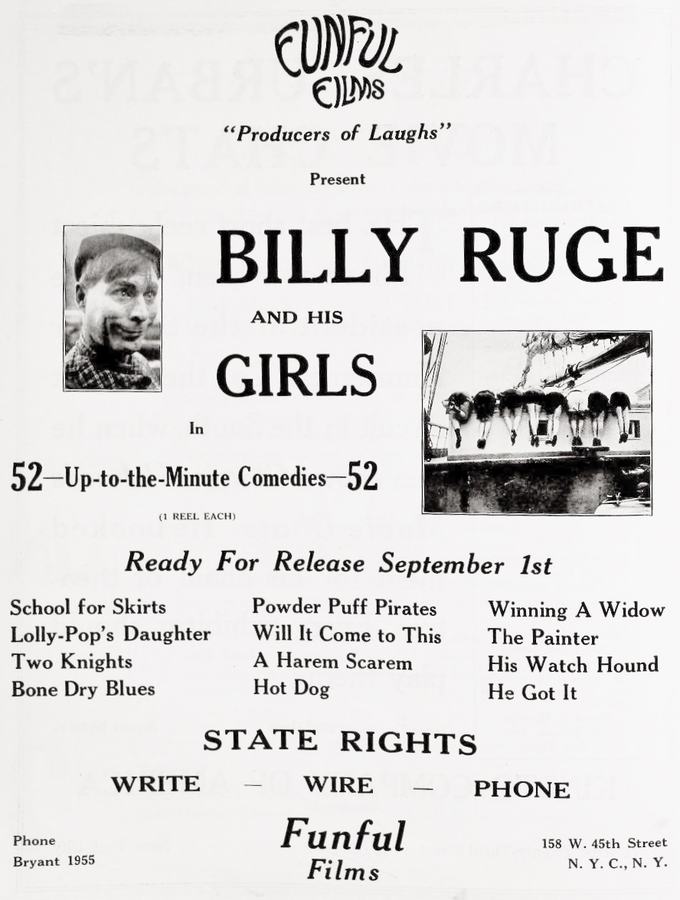
The flickering magic of early cinema often gifted us with narratives that, despite their brevity and lack of spoken dialogue, resonated with a profound, almost universal human experience. Such is the case with Bone Dry Blues, a delightful, if somewhat melancholic, romp starring the inimitable Billy Ruge. This isn't just a film; it's a vivid snapshot of an era, a comedic ballet of desperation and hope, choreographed with remarkable precision by writer Tom Bret. In an age where spectacle often overshadowed narrative nuance, Bone Dry Blues distinguishes itself by weaving a surprisingly intricate tapestry of human foibles and aspirations against a backdrop that feels both specific and universally relatable. It’s a testament to the power of visual storytelling, where a mere gesture or an exaggerated facial expression can convey volumes that pages of dialogue might struggle to articulate.
At its core, Bone Dry Blues presents us with Pipkin, a character who embodies the very essence of perpetual misfortune, a silent-era Sisyphus forever pushing his boulder of thirst uphill. Billy Ruge, known for his acrobatic physicality and expressive countenance, is perfectly cast in this role. His Pipkin is not merely parched; he is existentially dry, a man whose very soul seems to crave succor in a world intent on denying him even the simplest refreshment. The film's central conceit, a town under the grip of an almost surreal 'dry spell,' whether imposed by nature's caprice or some bizarre municipal ordinance, serves as a brilliant metaphorical stage for Pipkin's struggles. It amplifies his personal 'blues' into a communal lament, making his individual quest for a drink a microcosm of broader human yearning. Ruge’s performance transcends mere slapstick; he imbues Pipkin with a genuine pathos, a weary resilience that makes his every pratfall and dashed hope surprisingly poignant. You laugh at his predicaments, yes, but you also feel a pang of empathy for this perpetually thwarted soul. It’s a nuanced comedic portrayal, far beyond what one might expect from a short film of this vintage. The expressive power of Ruge's face, a canvas for every flicker of hope and subsequent crash of despair, is nothing short of masterful. His wide, pleading eyes, his slumped shoulders, the way he gingerly tests the air for any hint of moisture – these are not just gags; they are brushstrokes in the portrait of a man utterly at the mercy of his circumstances.
Tom Bret, credited as the writer, demonstrates an astute understanding of silent comedy's mechanics. The screenplay, or perhaps more accurately, the scenario, for Bone Dry Blues is a meticulously constructed edifice of escalating misfortune and ingenious sight gags. Bret doesn't just string together a series of jokes; he builds a narrative arc, however compressed, that allows Pipkin's character to evolve, even amidst the chaos. The pacing is relentless, each comedic beat flowing seamlessly into the next, ensuring that the audience is never given a moment to fully recover from one guffaw before being plunged into another. The film's humor stems not just from physical comedy but from situational irony, from the exquisite frustration of a man surrounded by the *idea* of liquid, yet unable to partake. Consider the recurring motif of the soda fountain girl; she represents not just a potential romantic interest but a cruel symbol of tantalizing, unattainable refreshment. This particular dynamic, a protagonist's longing for something just out of reach, can be seen echoed in other silent shorts where everyday struggles are elevated to comedic epic proportions, much like the relentless pursuit of a simple meal or a moment of peace in a film like Just Dropped In, though Bone Dry Blues injects a unique, almost existential, thirst into the equation.
Bret's genius lies in his ability to craft visual gags that are both universally understandable and uniquely tailored to Pipkin's predicament. The mistaken identity sequence involving a water salesman, for example, is a masterclass in comedic misdirection. Pipkin, desperate for any source of hydration, latches onto the salesman with an almost manic intensity, leading to a series of misunderstandings that escalate into full-blown pandemonium. It's a classic comedic trope, but executed with a freshness and vitality that keeps it from feeling stale. The film's climax, a veritable aquatic ballet of chaos involving a rogue fire hydrant, is a testament to the kinetic energy that silent films could achieve. It’s not just water; it’s a sudden, overwhelming deluge of fortune, a chaotic blessing that finally, and ironically, resolves Pipkin’s 'bone dry blues.' The sheer inventiveness of how Bret orchestrates this final, triumphant, and utterly messy resolution speaks volumes about his understanding of comedic timing and narrative payoff. One might draw parallels to the intricate, almost Rube Goldberg-esque comedic setups seen in films like The Week-End, where domestic chaos spirals into grand, public spectacle, but Bone Dry Blues maintains a singular focus on Pipkin's personal struggle, making its eventual deluge all the more satisfyingly disruptive.
Billy Ruge's performance in Bone Dry Blues is a compelling argument for the enduring power of physical comedy. He doesn't just act; he embodies Pipkin with every fiber of his being. His movements are precise, yet fluid, his reactions exaggerated, yet entirely believable within the film's heightened reality. The way he shuffles, head down, shoulders slumped in the opening scenes, perfectly conveys his perpetual state of despondency. Contrast this with his sudden bursts of desperate energy when he spies a potential source of water – a leaky pipe, a puddle, even a mirage – and you witness the full range of his comedic prowess. Ruge's ability to communicate complex emotions and intentions without a single spoken word is truly remarkable. His longing glances at the soda fountain girl, a mixture of adoration and profound thirst, speak volumes about his dual desires. It’s a performance that stands shoulder to shoulder with other great physical comedians of the era, who could turn a simple walk into a comedic monologue. One might even see echoes of the lovelorn, striving everyman, though perhaps less overtly romanticized, found in films featuring similar archetypes, such as certain characters in The Beggar Maid, where personal desires often drive a character's journey through societal obstacles, though the tone here is decidedly more farcical.
What sets Ruge apart is his capacity to infuse even the most outlandish slapstick with a degree of human vulnerability. When he slips, he doesn't just fall; he crumples with a sigh that feels almost audible. When he's doused with water, his initial shock gives way to a moment of pure, unadulterated relief, even if it's quickly followed by further comedic complications. This isn't just a series of falls and spills; it's a carefully orchestrated dance of physical expression that elevates the comedy beyond mere spectacle. His interactions with other characters, particularly his attempts to charm the soda fountain girl, are a masterclass in silent flirtation, conveyed through shy glances, exaggerated gestures of politeness, and the inevitable, charmingly clumsy mishaps that accompany his advances. This blend of earnest effort and inevitable failure is a hallmark of Ruge's enduring appeal, making Pipkin a character we root for, even as we laugh at his expense. The film, in its concise runtime, manages to build a mini-world where every character interaction, no matter how brief, contributes to the overall comedic tapestry. It’s a testament to the collaborative nature of silent filmmaking, where every element, from performance to set design, had to speak for itself.
Beyond the performances and the gags, Bone Dry Blues offers a fascinating glimpse into the nascent cinematic language of the early 20th century. The cinematography, though perhaps rudimentary by today's standards, is remarkably effective in conveying the film's themes. The wide shots establish the parched landscape, emphasizing Pipkin's isolation and the vastness of his challenge. Close-ups on Ruge's expressive face draw the audience into his emotional journey, allowing us to intimately share his hopes and disappointments. The editing, crisp and dynamic, ensures that the film never drags, maintaining a brisk pace that is essential for effective silent comedy. Intertitles are used sparingly but effectively, providing crucial exposition or punchlines without interrupting the visual flow. This economy of storytelling is a hallmark of the era, where every frame and every title card had to count. The film's thematic depth, while presented through a comedic lens, is surprisingly robust. It explores themes of perseverance in the face of adversity, the elusive nature of desire, and the often-absurd ways in which fate intervenes in human affairs. Pipkin's relentless pursuit of water can be seen as a metaphor for any human quest – for love, for success, for happiness – against seemingly insurmountable odds. It's a reminder that even in the most dire circumstances, the human spirit, however comically, finds a way to endure and even triumph.
What makes Bone Dry Blues resonate even today is its universal appeal. The struggle against a seemingly unyielding environment, the desperate longing for something just out of reach, the comedic relief found in shared human vulnerability – these are timeless elements of storytelling. While the specific context of a 'dry spell' might have been a comment on local conditions or even a veiled reference to Prohibition-era anxieties, the underlying emotional truth remains potent. The film’s ability to evoke both laughter and a gentle sense of empathy is its greatest strength. It’s a testament to the artistry of Billy Ruge and Tom Bret that they were able to craft such a rich and engaging narrative within the constraints of a silent short. When considering other films of the period that tackled themes of societal struggle or personal adversity, such as East Lynne or The Night Hawk, one notes that while their dramatic weight is undeniable, Bone Dry Blues manages to explore similar depths of human experience through the more accessible, and often more enduring, medium of comedy. It manages to capture the zeitgeist of a certain kind of urban or small-town struggle, but with a lighter, more hopeful touch.
In the grand tapestry of silent cinema, Bone Dry Blues might be a relatively small thread, but it’s a vibrant and essential one. It showcases the foundational elements that would define comedic filmmaking for decades to come: the relatable underdog, the escalating stakes, the ingenious visual gags, and the satisfying, if chaotic, resolution. Billy Ruge's performance, in particular, serves as a powerful reminder of the physical artistry required to captivate an audience without spoken dialogue. He is a master of non-verbal communication, able to convey despair, hope, frustration, and fleeting joy with remarkable clarity and comedic timing. The film serves as a valuable artifact for understanding the evolution of cinematic storytelling, particularly in the realm of comedy. It demonstrates how early filmmakers, with limited technology and nascent conventions, were able to craft narratives that were both entertaining and emotionally resonant. The simple premise allows for complex character work and ingenious plotting, proving that sometimes, less is indeed more. It’s a film that, despite its age, feels remarkably fresh and engaging, a testament to the timeless appeal of well-executed physical comedy and a compelling human story. Considering other contemporary shorts like My Partner, which often explored dramatic relationships, Bone Dry Blues stands out for its unwavering commitment to humor as a vehicle for exploring life's difficulties. It invites viewers to laugh at the absurdities of existence, and in doing so, perhaps even find a measure of solace in their own 'blues.' Its unpretentious charm and genuine wit ensure its place as a minor, but significant, classic of the silent era.
The conclusion of Bone Dry Blues, a cacophonous, soaking spectacle, offers a cathartic release not just for Pipkin, but for the audience as well. It's a resolution that defies expectation while simultaneously delivering on the comedic promise established throughout the film. The chaos of the final scenes is not merely arbitrary; it is the logical, albeit exaggerated, culmination of Pipkin's relentless, often futile, efforts. His final, drenched, bewildered, yet ultimately relieved expression encapsulates the film's spirit: life is messy, often unfair, but occasionally, and wonderfully, it provides an unexpected deluge of relief, even if it leaves you a soaking, sputtering mess. This film, though a product of its time, speaks to an enduring truth about the human condition: our resilience in the face of adversity, our capacity for hope, and our ability to find humor even in the most parched of circumstances. It's a vibrant, laugh-out-loud reminder of why silent comedies continue to captivate and charm audiences across generations, proving that a well-told story, a charismatic performer, and a dash of ingenious writing are truly all you need to create cinematic magic. Bone Dry Blues isn't just a film about thirst; it's about the universal human quest for satisfaction, and the wonderfully chaotic journey we often take to find it.
IMDb —
1917
Community
Log in to comment.