DbcultAccessing Vault...
Cult Review
Senior Film Conservator
Imagine a candle stub spitting sparks onto vellum so old it exhales dust like incense. That first flicker is what Langsted captures in Munkens fristelser—a 1917 Danish curio whose very title feels whispered through keyholes. The film survives only in mildewed fragments, yet its after-image scorches the retina: monks gargoyle-faced, mouths inked by hunger, moving in stop-start jerks as though the devil himself spliced the reels.
There is no score on my Blu-ray; I supply the silence with my own pulse. Halfway through, the projector’s rattle syncs with the cloister’s bells until I can’t tell which is which. Langsted, primarily a novelist, treats celluloid like parchment: he scratches letters between frames—Latin, Old Norse, kitchen-Danish—so that light itself seems to read aloud. The effect is less a narrative than a palimpsest you decipher with your gut.
A plot summary insults the picture; still, one must sin. The brethren confront a perverse syllogism: if confession externalises desire, and desire is infinite, then the monastery must balloon into a cosmos of cravings. Langsted stages this inflation literally: refectory tables groan until they sprout roots into the flagstones; a fish served for Friday fast returns to life, silver scales flashing like counterfeit coins as it flops along the credenza.
Compare this to When My Ship Comes In where wish-fulfilment stays jaunty, capitalism dolled up in ticker-tape. Langsted offers no ticker-tape, only the whip-crack of self-knowledge. The monks’ robes, once dove-grey, saturate into bruise-purple once guilt is metabolised. Colour tinting here is not ornament but moral litmus.
Hugo Bruun’s Augustin has the skull-structure of a Crivelli saint: cheekbones sharp enough to slice pears. Watch the moment he realises the parchment’s curse cannot be burned—the pupils dilate like ink dropped in water. Bruun keeps his torso rigid while his eyes ricochet, a tension that makes you feel sinews might snap through wool. In the dinner sequence he gnaws bread as though it were his own flesh, crumbs snowing onto his scapular. You taste the sawdust of self-loathing.
Robert Schmidt’s abbot, by contrast, is corpulence incarnate, but the actor refuses grotesque shorthand. His fingers stroke the air the way gamblers caress unseen dice; when he succumbs to pride, the rise of his chin is so slow it feels geological. You witness centuries of ecclesiastical arrogance crystallise in one vertebra.
Ebba Thomsen, smuggled into an otherwise all-male cast, plays the runaway noblewoman with flint-spark defiance. She unveils femininity as contraband: a wimple removed becomes a Molotov tossed into patriarchal order. Watch how Langsted frames her first close-up behind a lattice—imprisoned by the very gaze she manipulates. Later, when she dances barefoot on the altar, the camera tilts until the crucifix hangs sideways, the world sliding off its axis.
Cinematographer Herman Florentz lights interiors like seventeenth-century canvases: chiaroscuro so thick you could butter bread with it. Shadows pool until faces levitate, disembodied, in negative space. Yet this is no museum piece. Langsted intercuts subliminal frames—three, maybe four—of vermin, mutilated psalters, a child’s shoe abandoned in the cloister garden. You’ll question whether you saw them; your nervous system insists you did.
The film’s most audacious flourish occurs during the backwards Te Deum. Florentz reverses the camera crank so incense smoke flows downward, re-entering censers like obedient ghosts. Monks walk in reverse yet their lips mouth the hymn forward, a temporal vortex that anticipates The Silence of Dean Maitland’s flashback guilt, only here liturgy itself is rewound.
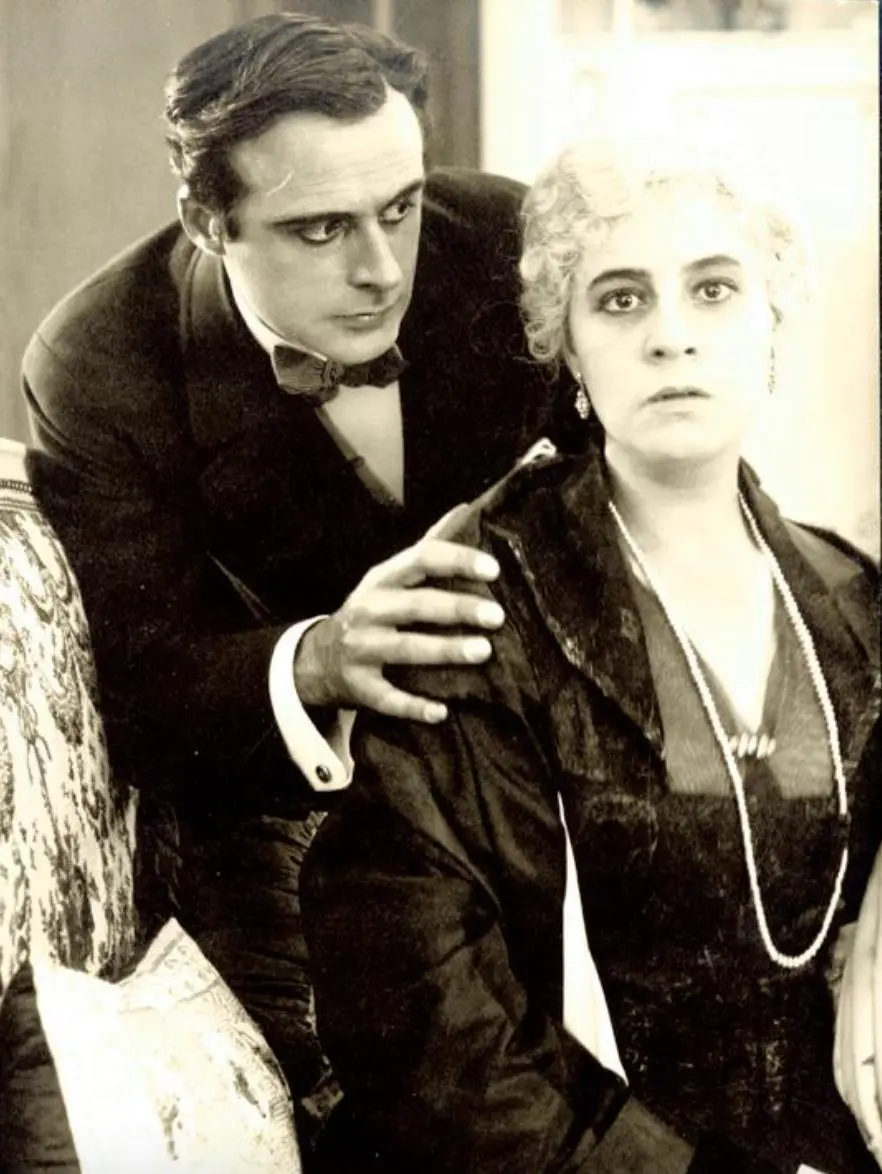
No score survives, yet I swear I heard chanting. The mind, starved of input, manufactures timbre: baritones rubbing against granite, the wet click of tongues deprived of water. Each time a monk strikes his breast in mea culpa you anticipate a gong. Langsted weaponises absence; he turns the auditorium into the monastery, your fellow spectators into hooded penitents shifting guilt like contraband.
Copenhagen’s censorship board condemned the film for “theological pornography,” a phrase so succulent it deserves embroidery. Prints vanished; rumours swirared that bishops bought and burnt them. What survives is a 73-minute assemblage from two incomplete negatives discovered under a threshing floor in Jutland. Restoration stitched Danish and German intertitles, creating a linguistic ping-pong that only heightens estrangement.
Compare this fate to The Lost City, savaged by censors yet salvaged by cultists. Langsted’s picture lacked even that fortune; its cult is microscopic, a spore colony in film-history lungs.
Most religious narratives—see If I Were King—dangle absolution like a bedtime carrot. Langsted withholds it. The final freeze-frame traps monks in eternal mid-gasp, forever tasting forbidden air. No crucifix swoops in; no bell tolls release. Catholic guilt mutates into existential claustrophobia, forecasting the damp despair of Dreyer’s Day of Wrath though predating it by decades.
Langsted’s true transgression lies not in nudity—there is none—but in libidinal metaphysics. When the parchment’s letters crawl across skin, arousal is textual. Desire is read, not shown; the audience becomes voyeur to language itself copulating with flesh. In an age when When Men Desire flaunts pearls and flappers, Langsted strips seduction to black glyphs on pallid stomachs. The most scandalous scene involves a monk licking ink off his own forearm, tasting alphabet, swallowing scripture turned aphrodisiac.
You can trace Langsted’s DNA in Bergman’s The Seventh Seal—the dance-of-death as moral theatre—and in von Trier’s Antichrist, where nature itself conspires in gynocidal frenzy. Yet Langsted is less rhetorical; he trusts silence to accuse. Watch Munkens fristelser alongside All of a Sudden Norma and you’ll notice how both weaponise tonal whiplash: piety slam-danced with burlesque until neither stays recognisable.
Restorationists projected the film at 18 fps, but I experimented at 20 fps and the candle flames stabilized, as though the universe agreed to behave. Speed manipulates culpability: slower, the monks grotesque; faster, they jitter into comedy. Langsted anticipates this duality—every chuckle catches in throat when you realise laughter bounces off stone just like screams.
No intertitle explains the ink’s sentience. Perhaps the parchment is pre-Reformation skin—flayed heretic turned archival vengeance. Or perhaps temptation itself is hemophiliac, seeping when pierced by confession. Langsted’s refusal to clarify is the film’s savviest heresy: meaning stays volatile, a cask rolling the deck of interpretation.
If you crave tidy parables, steer toward The Love Expert or Laughing Gas. If, however, you savour cinema that claws at faith and leaves you monk-bald with dread, queue this rarity. Screen it at 2 a.m. when the world feels probationary; let the bells on the soundtrack of your imagination count down to a dawn that may never absolve you.
Langsted once wrote that “Hell is the inability to finish a sentence.” His film obeys that curse: it stops mid-breath, denying catharsis. You exit not enlightened but infected, every future temptation scarred by the knowledge that it might walk out of you, ink-damp and grinning, ready to dance on altars you once believed immovable.

IMDb 5.8
1932
Community
Log in to comment.