DbcultAccessing Vault...
5.3/10
Senior Film Conservator
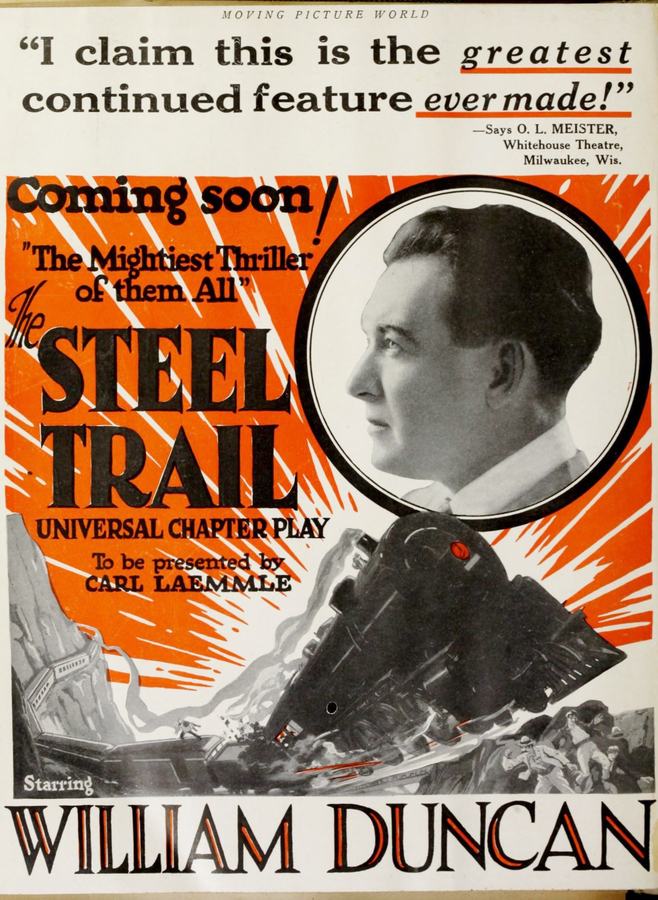
A definitive 5.3/10 rating for a film that redefined the boundaries of cult cinema. The Steel Trail remains a cornerstone of transgressive art.
There's an undeniable allure to the silent era Western, a genre that, even without the benefit of spoken dialogue, managed to capture the vastness, the struggle, and the inherent drama of America's frontier. The Steel Trail, a compelling cinematic offering from 1920, stands as a testament to this enduring power, delivering a narrative steeped in industrial ambition, community resilience, and the relentless machinations of corporate greed. It’s a film that speaks volumes through its sweeping vistas, its kinetic action sequences, and the expressive physicality of its performers, particularly its stoic lead, William Duncan.
At its core, The Steel Trail plunges us into the heart of a burgeoning Western valley, where a collective of ranchers, weary of their isolation and the logistical challenges it presents, decide to take destiny into their own hands. Their vision? A railroad, a lifeline of steel and steam, designed to connect their agricultural endeavors to the wider world, promising prosperity and progress. This isn't merely a business venture; it's a monumental act of faith, a collective gamble on the future. The sheer audacity of their undertaking is palpable, a reflection of the pioneering spirit that defined the era. However, the path to progress is rarely smooth, especially when pitted against entrenched interests.
Their noble aspirations quickly collide with the ruthless ambition of a rival railroad owner, a shadowy figure of immense power and questionable ethics. This antagonist, through his cadre of unscrupulous henchmen, orchestrates a campaign of systematic sabotage and destruction. Every timber laid, every rail spiked, every embankment painstakingly carved from the earth is met with wanton vandalism, explosions, and calculated delays. The ranchers find themselves in a desperate struggle, not just against the unforgiving landscape, but against a human enemy determined to crush their dreams underfoot. The film masterfully conveys the mounting frustration and despair, the visible toll these attacks take on the community, painting a stark picture of early industrial warfare.
Enter Bruce Boyd, portrayed with a compelling blend of quiet determination and formidable capability by William Duncan. Boyd is not just a construction engineer; he is a beacon of hope, a man whose reputation for problem-solving precedes him. Hired by the beleaguered ranchers, he arrives with a limited timeframe and an even more constrained budget, the weight of an entire community's future resting squarely on his shoulders. Duncan’s performance here is a masterclass in silent film acting. He communicates Boyd’s intelligence, his strategic thinking, and his unwavering resolve not through dialogue, but through subtle facial expressions, purposeful movements, and an aura of quiet authority. It’s a performance that anchors the film, providing a focal point for the audience’s investment in the outcome.
The narrative, meticulously crafted by writers Paul M. Bryan, Karl R. Coolidge, and George H. Plympton, transforms the construction of a railroad into a thrilling race against time, a battle of wits and brawn. It’s a classic Western trope – the underdog fighting against overwhelming odds – but here, it’s infused with the very real stakes of economic survival and community spirit. The plot avoids excessive melodrama, opting instead for a gritty, realistic portrayal of frontier challenges, making the eventual triumphs all the more satisfying. The interplay between the physical demands of railroad building and the psychological warfare waged by the antagonist creates a dynamic tension that keeps the audience enthralled.
Beyond Duncan, the ensemble cast contributes significantly to the film’s texture. While detailed character arcs for every player might be limited by the silent film format, the collective portrayal of the ranchers by actors like Albert J. Smith and Ralph McCullough, alongside the more sinister turns by Harry Woods and Harry Carter as the henchmen, effectively builds the world. Edith Johnson and Janet Ford likely provide the essential feminine perspective, often representing the hopes and fears tied to the community’s success, their reactions serving as emotional barometers for the audience. Catherine Doucet and Mabel Randall also contribute to this tapestry, ensuring a rich, populated world, even if their roles are more supporting in nature. The sheer number of characters involved speaks to the communal nature of the struggle depicted.
Visually, The Steel Trail would have been a spectacle in its time. The challenges of filming on location, capturing the raw power of steam engines, and staging elaborate sabotage sequences without modern special effects are immense. The cinematography, though perhaps uncredited in the surviving prints, must have been key to conveying the scale of the project and the beauty of the Western landscape. The silent film era relied heavily on the visual narrative, and a story like this, with its inherent dramatic potential for action and grand vistas, would have been a prime candidate for impressive camerawork and meticulous set design (or, in this case, location scouting). Imagine the sheer effort required to simulate explosions or train derailments in the early 1920s; it speaks to the ingenuity of the filmmakers.
The film resonates with themes that are as relevant today as they were a century ago. It explores the relentless march of industrialization, the tension between traditional ways of life (ranching) and modern progress (railroads), and the often-brutal competition inherent in capitalistic expansion. It’s a story about community, about individuals banding together to achieve a common goal against external threats. This sense of collective endeavor, of shared hardship and eventual triumph, is a powerful undercurrent that elevates the film beyond a simple action-adventure. The very act of building, of creating something tangible and lasting, becomes a metaphor for hope and perseverance. This echoes similar struggles seen in other frontier narratives, where the land itself is both a resource and a formidable adversary, much like in Hell's Crater, though the specifics of their respective conflicts diverge.
One cannot discuss The Steel Trail without acknowledging the broader context of the silent Western. This genre was a foundational pillar of early American cinema, shaping national identity and myth-making. Films like this one, with their clear-cut heroes and villains, their depiction of rugged individualism tempered by community spirit, helped define the archetype of the American hero. William Duncan, as Bruce Boyd, embodies this archetype perfectly – a man of action, integrity, and quiet strength. His physical presence and ability to convey complex emotions without uttering a single word were paramount to his success in this era, much like other leading men of the time who could captivate audiences through sheer charisma and physicality, creating a direct lineage to later iconic figures in cinema.
The pacing of silent films often surprises modern viewers, but The Steel Trail likely maintained a brisk tempo, driven by its action-oriented plot. The intertitles, crucial conduits of information and dialogue in silent cinema, would have been deployed judiciously, advancing the plot and highlighting key emotional beats without bogging down the visual flow. The effectiveness of a silent film often hinged on the clarity of its visual storytelling, ensuring that even complex narrative turns were easily understood by a diverse audience. This is where the skill of the director (uncredited in the provided details but undoubtedly critical) and the writers truly shines, translating intricate plot points into universally legible images.
The specific challenges faced by Boyd – limited time and money – add layers of urgency and realism to the story. It’s not just about building a railroad; it’s about doing so under immense pressure, with every decision carrying significant consequences. This element of ticking-clock tension is a powerful narrative device, compelling the audience to root even harder for the protagonist. In a similar vein of determined pursuit against external pressures, one might draw a thematic parallel to the relentless drive seen in a film like The Matrimaniac, albeit in a wildly different genre, where the protagonist's singular focus propels the entire plot forward. Here, Boyd's focus is on construction and survival.
The portrayal of the villainous rival railroad owner and his henchmen, particularly Harry Woods and Harry Carter, would have relied on classic silent film tropes for villainy: sneering expressions, aggressive posturing, and perhaps exaggerated gestures to convey their malevolence. These characters are not just obstacles; they are personifications of unchecked ambition and moral decay, providing a clear ethical counterpoint to the ranchers' honest endeavors. The clashes between Boyd and these antagonists, whether direct confrontations or strategic maneuvers, form the backbone of the film’s dramatic tension, culminating in what would undoubtedly be a thrilling climax where good triumphs over evil, a satisfying resolution for audiences of the era.
It’s also important to consider the historical context of 1920. America was undergoing significant transformation, with industrial expansion still a dominant force, but also with growing social awareness. Films like The Steel Trail, while seemingly simple Westerns, often reflected deeper anxieties and aspirations of the time. The idea of progress, of taming the wild, and of economic opportunity were powerful narratives. The struggle for a railroad was more than just a local dispute; it was a microcosm of the nation's ongoing development and the inevitable conflicts that arose from it. The film, in its own way, contributes to the grand narrative of American exceptionalism and the pioneering spirit, much like other films of grand ambition such as The Light of Victory might have portrayed a different kind of national struggle.
The legacy of The Steel Trail, like many silent films, lies in its contribution to the evolution of cinematic language. It’s a testament to how stories could be told with immense power and emotional resonance without spoken words. The emphasis on visual storytelling, on the actor's physical presence, and on the careful staging of action sequences paved the way for future generations of filmmakers. For enthusiasts of early cinema, uncovering films like this is akin to archaeology – piecing together the fragments of a bygone era to understand the foundations upon which modern filmmaking was built. It reminds us that storytelling, at its heart, transcends technological limitations.
Ultimately, The Steel Trail is more than just a historical curiosity; it’s a vibrant piece of cinematic history that still holds power. It's a story of human endeavor, of the relentless pursuit of progress, and of the unyielding spirit required to overcome adversity. William Duncan’s performance alone makes it a worthwhile watch for those interested in the craft of silent acting. For those who appreciate the foundational elements of the Western genre, the clash of wills, the stark beauty of the frontier, and the dramatic tension of a community fighting for its future, this film offers a rich and rewarding experience. It reminds us that even without sound, the clang of steel, the roar of a locomotive, and the determined stride of a hero can echo across a century, carrying a powerful message of perseverance.
In an age of increasingly complex narratives and technological marvels, there’s a refreshing purity to The Steel Trail. It strips away the superfluous, focusing on the essential elements of conflict, character, and resolution. It invites the audience to engage their imagination, to fill in the silent spaces with their own emotional responses, making the viewing experience uniquely personal. This engagement is a hallmark of truly great silent cinema, distinguishing it from mere historical artifacts. It stands as a robust example of how effective storytelling can be, even with the technological constraints of its time, delivering a potent and memorable cinematic journey through the heart of the American West.
The film’s focus on infrastructure development as a source of conflict is particularly insightful, foreshadowing many real-world struggles over resources and progress throughout the 20th century. It’s not simply a tale of cowboys and outlaws, but a more nuanced exploration of economic development and the moral compromises it often entails. The writers, Paul M. Bryan, Karl R. Coolidge, and George H. Plympton, deserve credit for crafting a story that, while adhering to genre conventions, also touched upon deeper societal dynamics. Their work here provides a template for many subsequent Westerns that explored the theme of building and expansion, rather than just exploration or conflict with indigenous populations. It's a film that, despite its age, offers a surprisingly sophisticated look at the forces shaping a nation.
Ultimately, The Steel Trail serves as a vital historical document and a compelling piece of entertainment. It offers a window into the filmmaking techniques and narrative priorities of the early 20th century, while simultaneously delivering a timeless story of human courage and corporate intrigue. Its place within the pantheon of silent Westerns is well-deserved, providing both a thrilling adventure and a thoughtful commentary on the relentless march of progress across the American frontier. For anyone seeking to understand the roots of cinematic storytelling, or simply to enjoy a classic tale of grit and determination, this film remains an essential viewing experience, a true gem from the silent era, echoing the enduring spirit of the West.
IMDb 5.7
1925
Community
Log in to comment.