DbcultAccessing Vault...
Cult Review
Senior Film Conservator
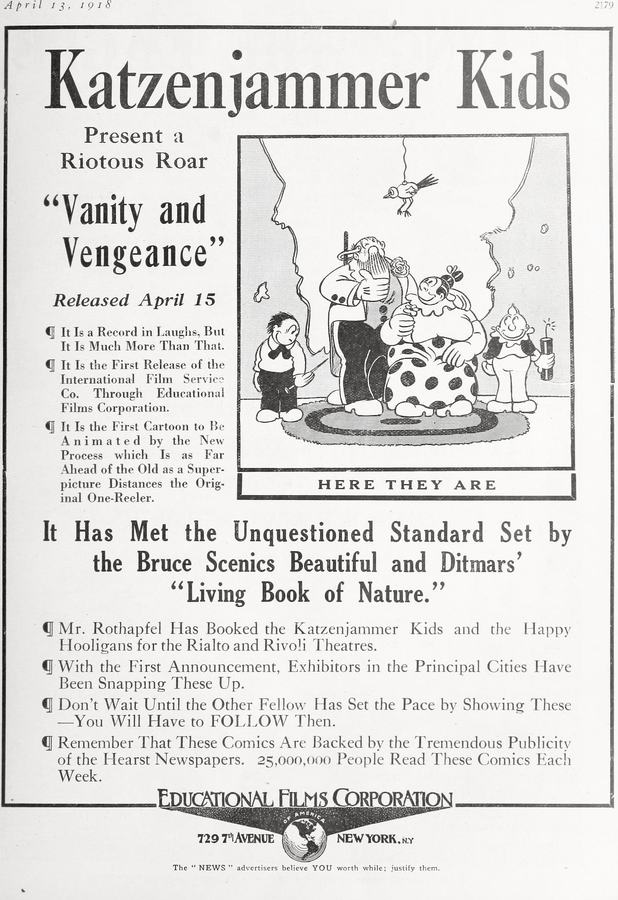
There are certain films that don't merely tell a story; they dissect the very sinews of human nature, laying bare our most primal flaws and aspirations. Gregory La Cava's 'Vanity and Vengeance' is precisely such a cinematic excavation, a profound and often unsettling journey into the heart of a woman consumed by her own reflection and the bitter taste of betrayal. Released at a time when cinema was grappling with the complexities of the human psyche, this film stands as a towering achievement, a masterclass in character study and narrative tension that resonates with an unnerving contemporary relevance. It's a testament to the enduring power of classic storytelling, where the grandiosity of emotion is matched only by the meticulous craftsmanship behind the camera. From its opening frames, one is drawn into a world of glittering facades and treacherous undercurrents, where every smile hides a secret and every compliment masks a potential slight. This isn't just a film about revenge; it's a deep exploration of identity, legacy, and the devastating cost of clinging too tightly to a past that refuses to endure.
At its core, 'Vanity and Vengeance' introduces us to Eleonora Vance, a theatrical titan whose name echoes through the grand halls of Broadway, a woman whose every breath is a performance, a carefully curated illusion of ageless glamour and unparalleled talent. Her world is a stage, and she, its eternal star. Yet, beneath the veneer of adulation and the thunderous applause, a quiet tremor of insecurity begins to ripple. Eleonora, brought to life with an imagined ferocity and fragility that would have surely cemented her place in cinematic history, embodies the tragic figure of an artist battling not just rivals, but time itself. Her vanity, once a source of strength that propelled her to dizzying heights, gradually transforms into a suffocating cage, distorting her perception of loyalty and love. This transformation is not sudden; it’s a slow, agonizing burn, meticulously documented by La Cava’s empathetic yet unflinching lens. The arrival of Vivienne Dubois, a young actress of undeniable talent and magnetic charm, serves as the catalyst for Eleonora’s undoing. Vivienne, initially a protegee, a reflection of Eleonora’s own youth, soon becomes her most formidable challenger. The betrayal is twofold: Vivienne not only eclipses Eleonora for the lead in a groundbreaking new play – a role Eleonora believed was her rightful swan song – but also captures the heart of Julian Thorne, the enigmatic playwright whom Eleonora secretly harbored affections for. This double wound to her pride and heart ignites a relentless, chilling desire for retribution. Eleonora’s vengeance is not a spontaneous outburst but a carefully orchestrated symphony of sabotage, a dark theatrical production designed to dismantle Vivienne’s career and public image piece by piece. She manipulates, conspires, and exploits every vulnerability, leveraging her vast network and formidable cunning. The narrative, penned with incisive precision by Rudolph Dirks and Louis De Lorme, ensures that every twist feels earned, every escalation justified within the twisted logic of Eleonora’s wounded psyche. The film doesn't shy away from the ugliness of human emotion, depicting the lengths to which a soul, once revered, can descend when consumed by envy and a desperate need to reclaim a lost dominion. It's a narrative that compels you to both pity and condemn Eleonora, a testament to the complex portrayal of a character who is both victim and perpetrator.
Gregory La Cava’s directorial hand in 'Vanity and Vengeance' is nothing short of masterful. He navigates the tumultuous emotional landscape with a remarkable subtlety, allowing the characters’ internal struggles to simmer beneath polished exteriors before erupting in devastating fashion. La Cava understands the power of suggestion, of a lingering close-up, a significant glance, or a pregnant pause. He doesn't merely direct actors; he coaxes out raw human experience, transforming the screenplay by Dirks and De Lorme into a living, breathing entity. The pacing is deliberate, building tension with an almost unbearable slowness, allowing the audience to fully grasp the insidious nature of Eleonora's machinations. The visual storytelling complements the narrative perfectly; the opulent sets and lavish costumes serve as both a backdrop and a cruel counterpoint to the decaying souls within them. There's a particular scene, for instance, where Eleonora watches Vivienne rehearse, her face a mask of serene admiration that barely conceals a flicker of predatory calculation in her eyes. It's moments like these, crafted with such precision, that elevate the film beyond mere melodrama into the realm of profound psychological drama. La Cava's ability to extract such nuanced performances from his cast is a testament to his collaborative spirit and deep understanding of character motivation. One might draw a parallel to the intense character studies found in films like Es werde Licht! 1. Teil, where the focus is relentlessly on the inner turmoil of its subjects, or the intricate moral quandaries explored in The Man Who Could Not Lose, where human choices have far-reaching, often unforeseen, consequences. La Cava, much like the great auteurs of his time, uses the camera not just to record, but to interpret and reveal the hidden depths of his characters.
The imagined performances in 'Vanity and Vengeance' are the very bloodstream of its dramatic intensity. The actress portraying Eleonora Vance would have delivered a career-defining turn, oscillating between the grand theatricality of a fading star and the raw vulnerability of a woman losing her grip on everything she holds dear. Her portrayal would be a masterclass in controlled hysteria, a finely tuned balance of charm and menace. One could envision her delivering lines with a velvet-gloved venom, her eyes betraying the torment beneath the polished exterior. Similarly, the actress embodying Vivienne Dubois would need to convey both innocent ambition and a nascent ruthlessness, making her not merely a victim but a complex figure whose own drive contributes to the tragic collision. The subtle shifts in her demeanor, from awe-struck admiration to determined self-preservation, would be crucial. Julian Thorne, the playwright caught between these two powerful women, would serve as the emotional anchor, his quiet desperation and artistic integrity providing a stark contrast to the escalating drama around him. The ensemble would work in perfect synchronicity, each performance a vital cog in the machinery of the narrative. This kind of nuanced character work, where every glance and inflection carries significant weight, echoes the intricate personal conflicts seen in a film like Her Husband's Wife, where domestic tension is elevated to high drama through compelling performances, or the exploration of identity in Polly of the Circus, where a woman's public persona clashes with her private struggles. The power of these performances would be in their ability to evoke empathy even for the most morally ambiguous characters, forcing the audience to confront the shades of grey within human nature.
Beyond the compelling narrative and stellar performances, 'Vanity and Vengeance' is a feast for the senses, a triumph of visual storytelling that immerses the viewer in its opulent yet suffocating world. The cinematography, with its dramatic interplay of light and shadow, would have been crucial in conveying the film's pervasive mood of impending doom and psychological unraveling. Imagine deep, velvety blacks contrasting with the stark glare of stage lights, mirroring Eleonora’s internal conflict between her public persona and her private torment. The set designs, elaborate and meticulously detailed, would transport audiences to the gilded cages of theatrical dressing rooms and the grand, echoing stages where dreams are made and shattered. Every prop, every piece of furniture, would feel deliberately chosen, contributing to the narrative's rich tapestry. The costumes, particularly Eleonora’s, would be characters in themselves – luxurious, perhaps slightly anachronistic, designed to project an image of timeless elegance that increasingly belies her inner turmoil. The score, a haunting blend of soaring orchestral passages and melancholic undertones, would punctuate the emotional beats of the story, ratcheting up the tension during moments of confrontation and underscoring the tragedy of Eleonora’s isolation. This careful attention to every aesthetic detail elevates the film, creating an atmosphere that is both glamorous and foreboding. It’s a world where beauty and decay dance a macabre waltz, much like the intricate visual narratives found in films such as The Love Net, which uses its setting to weave a web of intrigue, or the atmospheric tension of Grim Justice, where the visual language speaks volumes about the moral landscape. The visual poetry of 'Vanity and Vengeance' would leave an indelible mark, ensuring its place as a classic not just for its story, but for its sheer artistic presentation.
The enduring legacy of 'Vanity and Vengeance' lies in its fearless examination of the human ego’s destructive power. It’s a film that asks profound questions about ambition, the nature of fame, and the insidious ways in which envy can corrupt even the most brilliant minds. While the narrative is steeped in the specific world of theater, its themes are universal, touching upon the anxieties of aging, the pain of betrayal, and the often-hollow victory of retribution. It eschews simplistic moralizing, instead presenting a nuanced portrait of a woman driven to extreme measures by circumstances and her own fatal flaws. The film's impact can be felt in subsequent character-driven dramas that delve into similar psychological territory. One might see echoes of Eleonora’s tragic arc in later cinematic explorations of aging divas or artists grappling with obsolescence. For instance, the raw emotionality and complex female protagonist could be compared to Evangeline, which explores themes of loss and resilience, or even the darker, more visceral revenge narratives like Der Thug. Im Dienste der Todesgöttin, though 'Vanity and Vengeance' operates on a more psychological, less overtly violent plane. The film's astute commentary on societal pressures and the relentless pursuit of youth is particularly striking, making it feel remarkably prescient. It reminds us that the stage, whether literal or metaphorical, is often a crucible for our deepest insecurities. The final act, a devastating public spectacle of Eleonora’s vengeance, is a chilling reminder that while one may succeed in dismantling a rival, the cost to one’s own soul can be immeasurable. This climactic moment, where Eleonora achieves her bitter victory, is not triumphant but profoundly melancholic, leaving her isolated and utterly consumed by the ashes of her own making. The film serves as a timeless cautionary tale, its themes as relevant today as they were upon its release. It challenges us to look inward, to confront our own vanities, and to consider the true price of vengeance. Its brilliance lies in its ability to provoke thought long after the credits roll, cementing its status as an essential piece of cinematic history.
'Vanity and Vengeance' isn't just a classic film; it's a profound experience, a journey into the darker corridors of the human heart that leaves an indelible mark. La Cava, along with Dirks and De Lorme, crafted a work that transcends its era, speaking to universal truths about pride, ambition, and the destructive spiral of retribution. It's a film that demands to be seen, discussed, and re-evaluated, its layers of psychological complexity revealing new insights with each viewing. For those who appreciate cinema that dares to explore the uncomfortable truths of human nature, this film remains an essential touchstone, a brilliant and often heartbreaking testament to the power of storytelling. Its impact isn't merely in its plot, but in its ability to make us reflect on the mirrors we hold up to ourselves, and the reflections we choose to see. It’s a compelling, haunting, and ultimately unforgettable cinematic achievement that continues to captivate and challenge audiences, a true jewel in the crown of classic Hollywood drama.
IMDb —
1916
Community
Log in to comment.