DbcultAccessing Vault...
Cult Review
Senior Film Conservator
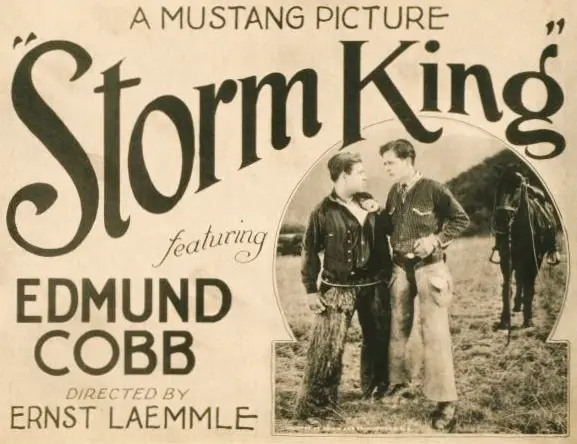
Should you dust off 'The Storm King' for a viewing in the 21st century? Short answer: yes, but with significant caveats. This early silent Western, a relic from a bygone cinematic era, offers a fascinating glimpse into the nascent stages of genre filmmaking, particularly for those with a deep appreciation for film history and the art of silent storytelling. It is a film for the patient, the curious, and the cinephiles who understand that a film's value isn't solely determined by its contemporary entertainment quotient.
This picture is absolutely for silent film enthusiasts, Western aficionados interested in the genre's origins, and anyone seeking to understand the foundational elements of narrative cinema before sound. It is decidedly NOT for those accustomed to rapid-fire pacing, complex character arcs, or high-fidelity visuals. If your cinematic diet consists exclusively of blockbusters and modern dramas, 'The Storm King' will likely feel like an arduous journey rather than a rewarding one.
To engage with a film like 'The Storm King' is to embark on a journey through time, back to an era when cinema was still finding its voice, literally and figuratively. Released when the Western genre was a burgeoning cultural phenomenon, this picture, starring the prolific Edmund Cobb, represents a specific moment in the evolution of popular entertainment. It’s a snapshot of what audiences found compelling: clear-cut heroes, dastardly villains, and the raw, untamed power of nature embodied by majestic horses.
The plot, a straightforward tale of a hero thwarting a villain's scheme to steal a valuable stallion named 'Storm King' and a drove of horses, is archetypal. It’s a narrative blueprint that would be endlessly replicated and refined over the coming decades. Yet, in its simplicity, there’s a certain purity. The stakes are clear, the motivations unambiguous, and the visual storytelling, while sometimes rudimentary, is direct. This directness, often mistaken for a lack of sophistication by modern viewers, was a strength in an age where universal accessibility, even across language barriers, was paramount.
This film works because of its unpretentious commitment to classic Western tropes, delivering a clear moral compass and the thrilling spectacle of horses in motion, which was groundbreaking for its time.
This film fails because its pacing can feel glacial to a contemporary audience, and its character development is largely sketched in broad strokes, relying heavily on archetypes rather than nuanced performances.
You should watch it if you are a dedicated student of early cinema, a Western history buff, or someone who cherishes the raw, unfiltered charm of films from the silent era.
Edmund Cobb, a name that might not resonate with mainstream audiences today, was a workhorse (pun intended) of early Hollywood. His career spanned decades, often in supporting roles or as a reliable lead in B-Westerns and serials. In 'The Storm King,' Cobb embodies the stoic, virtuous Western hero with an earnestness that is both charming and, at times, a little stiff. His performance relies heavily on physical presence and exaggerated facial expressions, a common necessity in silent cinema, where emotions had to be telegraphed without dialogue.
Cobb’s hero isn't a figure of complex internal struggle, but rather a force of moral clarity. When he sets his jaw, you know justice will be served. When his eyes narrow, trouble is brewing. This straightforward approach to characterization, while lacking the psychological depth we expect from modern acting, served the narrative purpose perfectly. He is the audience's anchor, a steadfast point in a world of galloping horses and shadowy villains. His portrayal, while perhaps not as iconic as a William S. Hart or a Tom Mix, is nonetheless a testament to the enduring appeal of the everyman hero in early genre cinema.
Comparing Cobb's performance to contemporaries, one might find it less flamboyant than some, yet more grounded than others. He wasn't aiming for the theatricality of a Lon Chaney in The Golem, nor the comedic timing of a Buster Keaton. Instead, Cobb carved out a niche as the quintessential, dependable good guy. His strength lies in his authenticity within the established parameters of the silent Western hero. He is believable as a man of the plains, even if his emotional range feels constrained by today's standards.
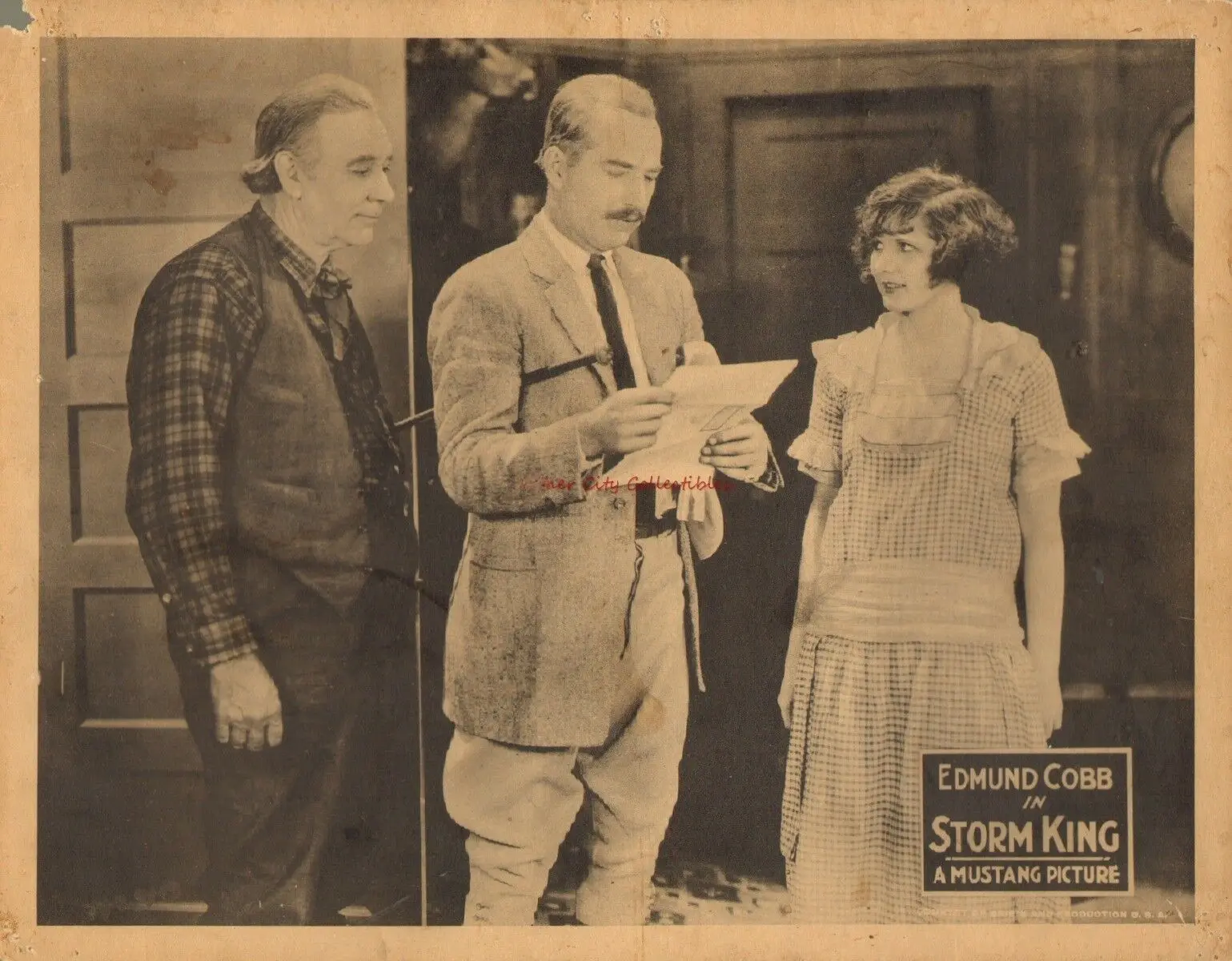
The directorial choices in 'The Storm King' are typical of the era: functional, focused on clarity, and often prioritizing action over artistic flourish. The film's strength truly lies in its ability to capture the raw energy of the horses. There are sequences, particularly those involving the 'drove' and the titular stallion, that pulse with an undeniable vitality. These moments are where the film truly comes alive, showcasing the power and grace of these animals in a way that remains captivating.
The cinematography, while not groundbreaking by any stretch, effectively uses the natural landscape as a backdrop. Wide shots of galloping horses across open plains are a recurring motif, emphasizing the vastness of the West and the freedom associated with these creatures. The camera work is largely static, adhering to the conventions of the time, but it serves its purpose in framing the action clearly. Close-ups are used sparingly, often to highlight a character's reaction or a crucial plot detail conveyed through intertitles.
One particular sequence, where the villain attempts to corner 'Storm King,' stands out. The frantic energy of the horse, the dusty ground kicked up, the determined pursuit of the hero – these elements coalesce into a genuinely exciting moment. It's a reminder that even without spoken words, the visual language of cinema could convey intensity and drama. This scene, more than any other, showcases the film's ambition to be more than just a simple horse opera; it aims for epic, albeit on a micro-budget scale.
The pacing of 'The Storm King' will undoubtedly be a challenge for many modern viewers. Silent films operate on a different rhythm, one that allows scenes to linger, expressions to be held, and plot points to unfold with a deliberate slowness. What might feel like an eternity today was, for audiences of the 1920s, a perfectly acceptable narrative progression. The film takes its time establishing the villain's nefarious intentions and the hero's eventual resolve.
The tone is earnest and moralistic, characteristic of many early Westerns. There's a clear distinction between good and evil, with little room for moral ambiguity. The villain is unambiguously bad, driven by greed, while the hero is unequivocally good, driven by honor. This stark contrast might feel simplistic to a contemporary audience accustomed to anti-heroes and complex ethical dilemmas, but it was a fundamental component of the genre's appeal – a reassuring narrative of right triumphing over wrong.
However, this deliberate pacing also allows moments of genuine suspense to build. The quiet before the storm, the slow realization of the villain's plan, the hero's determined pursuit – these elements are given space to breathe. While it might test the patience of some, it offers a unique opportunity to appreciate a different kind of cinematic storytelling, one where visual cues and intertitles carry the entire weight of the narrative. It's a rhythm that demands engagement on its own terms, not on the terms of a modern blockbuster.
It’s crucial to remember that a silent film like 'The Storm King' was never meant to be watched in absolute silence. It would have been accompanied by a live musical score, often improvised by a pianist or organist, sometimes even a small orchestra. This live music was an integral part of the experience, dictating the emotional arc, emphasizing dramatic moments, and providing crucial context. Without this score, the film can feel stark, almost incomplete.
When viewing 'The Storm King' today, the presence (or absence) of a thoughtfully constructed score can profoundly impact the experience. A well-chosen, contemporary score can breathe new life into these old reels, guiding the viewer through the narrative with emotional resonance. Conversely, a poorly executed or missing score can render the film flat, diminishing its intended impact. The musical accompaniment, though external to the film print itself, was as much a part of the original artistic vision as the cinematography or performances. It’s an element that often gets overlooked in modern re-evaluations.
This reliance on external musical interpretation is an unconventional aspect of silent cinema that is often surprising to new viewers. It means that every screening was a unique event, subtly different based on the musician's interpretation. This ephemeral quality is something we've largely lost in the fixed, sound-synced films of today. It adds another layer of historical intrigue to films like Mania. Die Geschichte einer Zigarettenarbeiterin or The Dancer of the Nile.
'The Storm King' is a film that exists more as a historical artifact than a piece of timeless entertainment. It works. But it’s flawed. Its true value lies not in its ability to compete with modern blockbusters, but in its capacity to transport us to a different time, to show us the very roots of a genre that would define American cinema for decades. For those willing to adjust their expectations and embrace the unique rhythm of the silent era, it offers a genuinely rewarding, if somewhat academic, experience. It's a testament to the enduring appeal of simple stories well told, even when 'well told' means something entirely different than it does today. While it won't be everyone's cup of tea, its place in cinematic history is undeniable, and for that alone, it warrants attention. It serves as a stark reminder of how far cinema has come, and how much of its core appeal remains unchanged.
IMDb —
1921
Community
Log in to comment.