DbcultAccessing Vault...
6.3/10
Senior Film Conservator
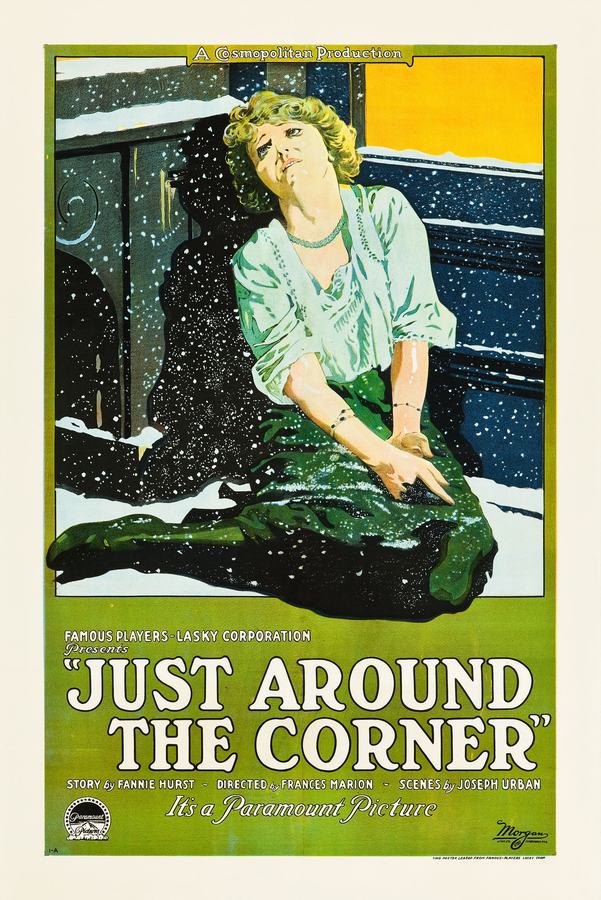
A definitive 6.3/10 rating for a film that redefined the boundaries of cult cinema. Just Around the Corner remains a cornerstone of transgressive art.
Step back in time to the tumultuous, vibrant tapestry of New York's Lower East Side, circa 1921, a crucible of immigrant dreams, grinding poverty, and burgeoning aspirations. This is the world that birthed Just Around the Corner, a silent film whose narrative threads weave a poignant tale of maternal devotion colliding with the inexorable pull of youthful independence and urban temptation. Directed with a keen eye for human drama, this cinematic gem, penned by the illustrious Frances Marion and Fannie Hurst, offers far more than a simple melodrama; it is a vivid sociological portrait, brimming with authentic characterizations and a raw emotional core that resonates even a century later. The film plunges us into the humble abode of the Birdsong family, anchored by the indomitable widow Ma Birdsong, portrayed with heart-wrenching conviction by Rosa Rosanova. Her life, a relentless struggle against the tide of destitution, is entirely consecrated to her two teenage children, Jimmy and Essie. In an era where familial bonds were often the only bulwark against societal harshness, Ma Birdsong embodies the archetypal protective matriarch, her every breath a prayer, her every action a sacrifice for her offspring.
The precarious balance of their existence, however, is soon threatened by the irresistible allure of the outside world, particularly for Essie, played with a captivating blend of naiveté and burgeoning self-awareness by Peggy Parr. Essie, chafing under the restrictive confines of their tenement dwelling and her mother's well-meaning but stifling protectiveness, yearns for a taste of the independence that city life promises. Her spirit, vibrant and restless, propels her towards a decision that will irrevocably alter the family's trajectory: she secures a job as a theater usher, a seemingly innocuous step into the glittering, yet morally ambiguous, public sphere. This act of defiance, undertaken against Ma Birdsong's fervent admonitions, serves as the narrative’s inciting incident, setting in motion a chain of events that exposes the fragile Essie to the perilous undercurrents of urban existence. The theater, a microcosm of the city itself, becomes both a beacon of opportunity and a potential den of iniquity, a place where dreams and dangers dance in uneasy tandem. Essie's burgeoning self-determination, while admirable, blinds her to the subtle machinations of those who prey on innocence, a theme explored with stark realism in films like The Moral Code, which similarly dissected the ethical dilemmas faced by individuals navigating a complex societal landscape.
It is within this new, intoxicating environment that Essie encounters Joe Ullman, portrayed by Fred Thomson, a young man whose suave demeanor and superficial charm conceal a distinctly dubious character. Ullman represents the seductive face of urban corruption, a figure whose questionable morals pose an existential threat to Essie's innocence and, by extension, to the very fabric of the Birdsong family. His intentions, veiled initially by a veneer of sophistication, are gradually revealed to be predatory, echoing the insidious dangers faced by protagonists in other silent dramas like The Panther Woman, where female agency is often tested against male opportunism and societal pressures. The film meticulously charts Essie's gradual entanglement with Ullman, a relationship fraught with peril that underscores the vulnerabilities of young women venturing into the unsupervised public domain of the early 20th century. Ma Birdsong's initial anxieties, dismissed by Essie as old-fashioned strictness, are chillingly validated as Ullman's true nature begins to surface. This narrative arc masterfully highlights the generational chasm between a mother's hard-won wisdom and a daughter's youthful idealism, a timeless conflict that resonates deeply.
The film's strength lies not just in its dramatic tension, but in its nuanced exploration of broader societal themes. It is a commentary on class disparities, the precariousness of working-class life, and the relentless struggle for dignity amidst squalor. The Lower East Side itself becomes a character, its crowded streets, bustling markets, and dimly lit theaters forming a vivid backdrop against which human dramas unfold. The cinematography, though characteristic of its era, effectively conveys the atmosphere of the time, immersing the viewer in a world that feels both distant and eerily familiar. The struggle of the Birdsong family can be seen as a metaphorical battle against the oppressive 'wall' of poverty and circumstance, much like the thematic undercurrents in Beyond the Wall, where characters grapple with literal or figurative confinement. The stark contrast between the Birdsongs' meager existence and the superficial glamour of the theater world serves to amplify the danger Essie faces, making her journey of self-discovery a perilous tightrope walk between hope and despair.
The performances in Just Around the Corner are uniformly compelling, a testament to the power of silent acting to convey profound emotion without a single spoken word. Rosa Rosanova's portrayal of Ma Birdsong is nothing short of magnificent. Her every gesture, every facial expression, radiates a profound, almost primal, maternal love and a weary resilience born of relentless hardship. She is the rock, the unwavering moral compass, her silent pleas and desperate attempts to shield her children forming the emotional core of the film. Her performance evokes a similar sense of tenacious female spirit found in characters from films like Rowdy Ann, albeit in a dramatically different context, showcasing the diverse strengths of women in early cinema. Peggy Parr, as Essie, beautifully captures the delicate balance of youthful exuberance and vulnerability. Her transformation from an innocent, somewhat sheltered girl to one confronted by the harsh realities of the world is handled with remarkable sensitivity, allowing the audience to empathize with her yearning for freedom even as they fear for her safety.
William Nally, as Jimmy, Essie’s brother, provides a grounding presence, representing the more conventional path of honest labor and familial loyalty, a stark contrast to Essie's more adventurous, and dangerous, trajectory. His quiet strength and concern for his sister add another layer of emotional depth to the family dynamic. Fred Thomson, as the enigmatic Joe Ullman, is suitably charming and menacing, embodying the very essence of the 'questionable morals' described in the plot synopsis. His ability to project both allure and underlying deceit without dialogue is a testament to his skill as a silent film actor. Supporting roles by Margaret Seddon, Lewis Sargent, Eddie Phillips, and Sigrid Holmquist further flesh out the vibrant tapestry of the Lower East Side community, each contributing to the film's rich sense of place and character. The ensemble's collective ability to communicate complex emotions and motivations through gesture, posture, and expression is a powerful reminder of the artistry inherent in silent cinema, a craft that demanded a unique blend of physical prowess and emotional authenticity.
The narrative prowess behind Just Around the Corner cannot be overstated, thanks to the collaborative genius of writers Frances Marion and Fannie Hurst. Marion, one of the most prolific and respected screenwriters of the silent era, was renowned for her ability to craft compelling, character-driven stories with strong emotional resonance. Her partnership with Hurst, a celebrated novelist known for her poignant portrayals of working-class life and social issues, infused the film with a literary depth and a keen understanding of human psychology that elevates it beyond mere entertainment. Their combined talents ensured that the plot, while dramatic, remained grounded in a believable reality, exploring themes that were deeply relevant to contemporary audiences. Hurst's influence, particularly in depicting the struggles of women and families in urban environments, is palpable, lending an authenticity to Ma Birdsong's plight and Essie's aspirations. This focus on realistic social commentary and nuanced female characters is a hallmark of their work and sets Just Around the Corner apart from many of its contemporaries. One could draw parallels to the incisive social commentary found in Just a Wife, where the writers similarly delved into the complexities of domestic and societal expectations.
The screenplay meticulously builds tension, creating a palpable sense of dread as Essie's innocence is increasingly jeopardized. The writers deftly avoid simplistic moralizing, instead presenting a nuanced view of the challenges faced by young women seeking independence in a rapidly changing world. They understand that the allure of the city, with its promise of excitement and opportunity, is as potent as its dangers. This complex interplay of hope and hazard is a recurring motif in their storytelling, reflecting the societal shifts of the early 20th century. The narrative structure, while adhering to the conventions of silent film melodrama, is remarkably sophisticated, allowing for character development and thematic exploration that feels both organic and impactful. The ability of Marion and Hurst to imbue their characters with such vivid interior lives, conveyed solely through visual storytelling, is a testament to their exceptional craftsmanship. Their work here is a masterclass in adapting literary sensibilities to the unique demands of the silent screen, crafting a story that is both deeply personal and broadly resonant.
Just Around the Corner serves as a fascinating historical document, offering a rare glimpse into the social dynamics and moral anxieties of a bygone era. The film's depiction of the Lower East Side is particularly compelling, transporting viewers to a bustling, vibrant, yet often harsh, urban landscape. From the crowded tenement interiors to the lively street scenes and the opulent theater, every frame is imbued with a sense of place and time. This attention to detail, characteristic of films that sought to capture the realism of urban life, makes it a valuable artifact for understanding early 20th-century American society. The challenges faced by Ma Birdsong and her children – poverty, social mobility, generational conflict, and the dangers of urban anonymity – are themes that, despite the passage of a century, remain surprisingly relevant. The film's exploration of these universal human experiences ensures its enduring appeal, transcending its silent film origins.
Comparing it to other films of the period, one can see how Just Around the Corner fits into a broader cinematic conversation about the changing face of America. While Skyfire might have explored the grandiosity of aviation and California Scrap Book offered travelogue perspectives, this film grounded itself firmly in the social realities of the working class. It shares a thematic kinship with films like Daybreak, which also tackled themes of social struggle and personal awakening, or even Beatrice Fairfax Episode 12: Curiosity in its depiction of urban intrigue and moral dilemmas. The film's legacy lies not just in its dramatic impact, but in its ability to encapsulate the anxieties and hopes of an entire generation. It reminds us that while the technologies and social norms may evolve, the fundamental human struggles – for love, security, and a better life – remain constant. This enduring resonance is a testament to the powerful storytelling of Marion and Hurst, and the heartfelt performances of its cast. It’s a film that quietly asserts its place in the pantheon of silent cinema, not with grand gestures, but with an honest portrayal of life’s everyday heroism and heartbreak.
Ultimately, Just Around the Corner is more than just a historical curiosity; it is a profoundly moving and deeply human story. It's a testament to the enduring power of a mother's love, the intoxicating pull of independence, and the ever-present dangers lurking in the shadows of urban opportunity. The film, with its masterful blend of social realism and compelling melodrama, stands as a significant work in early American cinema, offering rich insights into the societal fabric of its time. It’s a compelling reminder that the challenges of navigating a complex world, balancing personal aspirations with familial duties, and discerning true character amidst superficial charm, are universal struggles that transcend the boundaries of time and medium. If you seek a silent film that offers both a gripping narrative and a window into a pivotal historical moment, then Just Around the Corner is an absolute must-watch. Its emotional truth and artistic integrity ensure its place as a timeless classic, inviting contemporary audiences to reflect on the enduring echoes of its themes in our own lives.
IMDb 6.5
1933
Community
Log in to comment.