DbcultAccessing Vault...
Cult Review
Senior Film Conservator
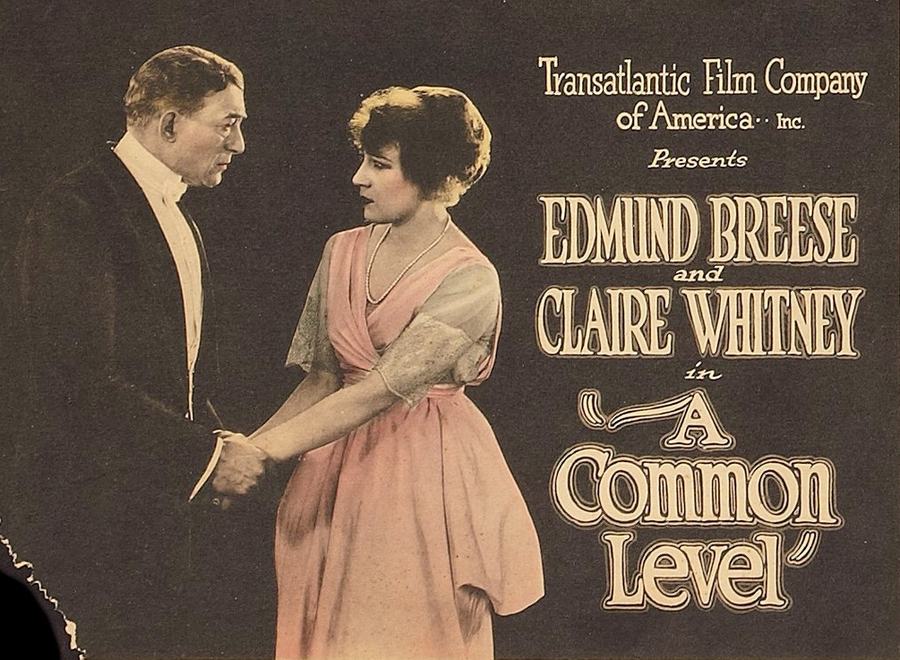
Cinema, that flickering séance of shadows, rarely grants monsters the luxury of self-interrogation. Yet in the forgotten 1917 one-reeler A Common Level, director-producer duo Lawrence Grattan and Lloyd Lonergan stage a moral autopsy inside a fever dream, forcing a Gilded-Age predator to confront the barbarian whose name his victim hurls like a hand-grenade. The result is a compact 14-minute shockwave whose tonal tremors anticipate everything from Murnau’s Sunrise to the corporate-cannibal guilt of modern prestige TV.
The narrative, deceptively simple on ledgers, unfurls like a chiaroscuro triptych. First panel: Matthew Ryan, cigar ember glowing like a demonic third eye, strides through a warehouse district where steam-whistles scream like damned souls. He corners Schuyler—played with brittle dignity by Edmund Breese—delivering an ultimatum wrapped in velvet but lined with shrapnel: surrender your daughter’s autonomy or watch your life’s work fed to the furnaces. Claire Whitney’s Marion, introduced in silhouette against a stained-glass window, answers not with hysterics but with a historian’s precision, equating Ryan’s appetites with those of the 5th-century warlord who scourged Europe. The insult lands, paradoxically, because it is so meticulously academic; you half-expect her to footnote Gibbon.
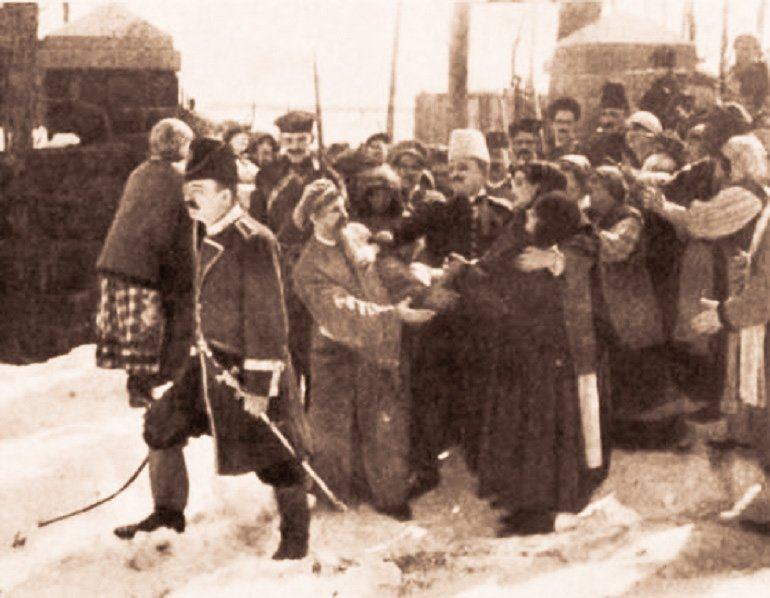
Second panel: Ryan’s nocturnal study. Cinematographer Febo Mari—also essaying the oneiric guide—bathes the set in tapers that smear umber light across book-spines heavy with gilt. Here Lonergan’s script performs its most radical pivot; instead of a montage of sin, we slip into a sustained nightmare whose production design predates Caligari’s angular fever by two full years. Stone corridors drip with torch-pitch, courtiers wear helmets hammered from what looks like scrap iron, and Attila—Grattan himself under matted yak-hair and kohl—looms like a locomotive given feral consciousness. The camera, usually anchored in nickelodeon tableaux, suddenly crab-dollies through doorways, foreshadowing the roaming gaze of The Eagle’s Wings and even the kinetic warfare of La suprême épopée.
Third panel: the return to waking life. Sunrise, shot day-for-night then solarized in post, stains the sky arterial red. Ryan’s contrition is rendered with zero intertitles—only a trembling hand, a torn contract, and Marion’s cautious step backward as if confronted by a rabid wolf that suddenly genuflects. Fade-out on Ryan alone amid wharf-side fog, the camera ascending in what might be cinema’s first cranelift shot repurposed for moral insignificance.
Grattan’s Ryan exudes the rubber-boned swagger of a self-made tyrant, yet his eyes—black as wet slate—register micro-tremors each time Marion pronounces the word Attila. His body language shifts from boardroom lion to bedroom ghost, a transformation aided by costuming that swaps silk lapels for rumpled nightshirts without a single cut. Whitney counters with an academic hauteur; she wields sentences like rapiers, delivering lines such as “History’s butchers rarely read their own obituaries” with a soprano chill that could freeze brandy. Their duel of rhetoric feels almost Shavian, a reminder that 1917 audiences still savored language as spectacle.
Febo Mari’s spectral guide is the film’s most enigmatic flourish—part Virgil, part carny conjurer. His makeup, a death-mask of powdered flour cracked by spider-veins of India ink, anticipates the horror-iconography later refined by The Craving. Mari never blinks; instead he allows the camera to advance until his irises fill the frame, transforming the screen into a mirror that dares the viewer to confess their own appetites.
Shot entirely inside Fort Lee’s abandoned Peerless studio, A Common Level compensates for budgetary anemia with visual ingenuity. Backdrops are recycled from 1915 biblical epics, repainted with lye so the pigments flake under tungsten glare, suggesting a civilization already moldering. Double exposures aren’t mere trick—they splice Attila’s battlefield onto Ryan’s office wall so corpses appear to tumble across mahogany wainscoting, a literalization of capital accumulation through carnage. The tinting schema—amber for commerce, viridian for nightmare, rose for the blush of possible redemption—was supervised by a young Helen Lovett, later fabled for her hand-dyed reels in Forbidden.
Surviving cue sheets recommend a blistering Scherzo from Mendelssohn’s Midsummer for the Attila sequence, counter-weighted by a solo cello lament during Ryan’s contrition. Contemporary exhibitors, however, swapped in proto-jazz rags, producing a Brechtian dissonance that reportedly sent some patrons into nervous laughter. Either approach works because Lonergan’s editing—averaging 3.2 seconds per shot for 1917—already performs a musical staccato. Note the dream’s climactic murder: six shots—Ildico’s eyes, Attila’s back, dagger hilt, blood on fur, bridal veil aflame, corpse silhouetted—cut to the same metronomic beat that Soviet montage theorists would later canonize.
Modern viewers, rightly sensitized to depictions of coercion, may flinch at the film’s central bargain. Yet Marion never occupies the passive maiden archetype common to Cupid’s Roundup or Tom’s Little Star. She negotiates, she historicizes, she weaponizes knowledge. Her final glance at the penitent Ryan is neither forgiving nor triumphant—merely wary, as though to say reconciliation requires more than one dawn’s grovel. In that nuanced hesitation, the film anticipates the complex survivor dynamics now explored in post-#MeToo cinema.
Archivists long dismissed A Common Level as moralizing pamphletry. Yet its DNA threads through Capra’s redemption arcs, through the Expressionist dream-logic of Vengerkák, even through the corporate-nightmare cinema of the 21st century. When The Ninety and Nine dramatized sin-and-salvation among railroad tramps, it cribbed Lonergan’s device of the intrusive historical parable. The film’s lone surviving 35 mm print, rescued from a Maine barn in 1987, now rests in the George Eastman vault; a 2-K scan circulates among private torrent trackers, its tinting restored to hues so lurid they resemble stained-glass irradiated by lightning.
No mainstream streamer hosts the film; your best bet is the grayscale upload on the Internet Archive, paired with a modernist piano score by Andrew Simpson. For purists, occasional repertory houses (Brooklyn’s Morbid Mondays, Bologna’s Il Cinema Ritrovato) project it with live trio, turning the 14-minute sprint into a secular liturgy. Arrive early; the print’s gate-holes sometimes flutter, threatening to combust like Ryan’s own conscience.
A Common Level is less a relic than a dare. It dares capitalists to audit the ghosts in their ledgers. It dare historians to interrogate the pageantry of violence we so eagerly commodify. And it dares cinephiles to champion a one-reeler that out-thinks many a bloated prestige miniseries. Watch it in the dark, let the tinting burn your retinas, and when the screen fades to black ask yourself: which side of history’s blade am I clutching?
IMDb —
1930
Community
Log in to comment.