DbcultAccessing Vault...
6.4/10
Senior Film Conservator
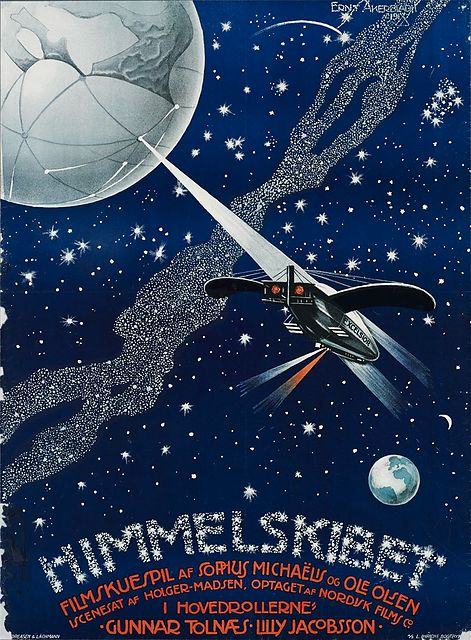
A definitive 6.4/10 rating for a film that redefined the boundaries of cult cinema. A Trip to Mars remains a cornerstone of transgressive art.
Stepping back into the flickering glow of the early 20th century, we encounter a cinematic marvel that dares to dream beyond the terrestrial confines of its time: A Trip to Mars (1918), known in its Danish homeland as Himmelskibet. This isn't merely a quaint relic of silent cinema; it is a profoundly prescient, startlingly ambitious work that posits a vision of extraterrestrial life far removed from the monstrous invaders or primitive savages so often conjured by nascent science fiction. Instead, writers Sophus Michaëlis and Ole Olsen, under the visionary direction of Holger-Madsen, invite us on an odyssey that challenges foundational human assumptions about conflict, sustenance, and the very nature of civilization itself. Imagine, if you will, the audacity of such a concept, crafted amidst the brutal realities of the First World War, offering not escapism, but a poignant, hopeful counter-narrative.
At a time when the world was reeling from the horrors of global conflict, this film emerges as an astonishing cinematic olive branch, extending a hand of hope and an urgent plea for peace. It’s a fascinating counterpoint to the prevailing narratives of conflict that dominated the global consciousness. The very act of conceiving a journey to another planet, let alone one populated by beings of superior moral fiber, was a testament to a boundless imagination. The film’s protagonist, Professor Planetaros (played with earnest intensity by Nicolai Neiiendam), embodies humanity’s restless curiosity, yet it is his journey that ultimately humbles our species, forcing a confrontation with our own belligerent tendencies. Neiiendam, with his expressive eyes and measured gestures, perfectly conveys the intellectual fervor and eventual moral awakening of his character. His performance, typical of the era's dramatic flair, nonetheless feels grounded in a genuine human quest for understanding.
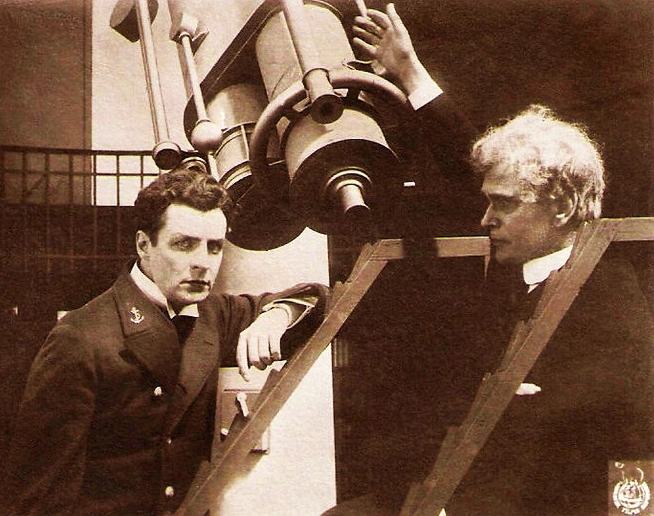
The narrative unfolds with a keen sense of wonder. Humanity, represented by a diverse crew of scientists and adventurers, constructs a magnificent spaceship, the 'Excelsior.' The launch sequence, while rudimentary by today's standards, must have been utterly breathtaking for audiences in 1918. The special effects, though simple, possess a charm and ingenuity that speaks to the pioneering spirit of early cinema. The journey itself is fraught with the expected perils of interstellar travel, yet it serves primarily as a bridge, a transitional phase preparing both the characters and the audience for the profound encounter awaiting them on the red planet. This preparatory phase, expertly paced, builds a palpable sense of anticipation.
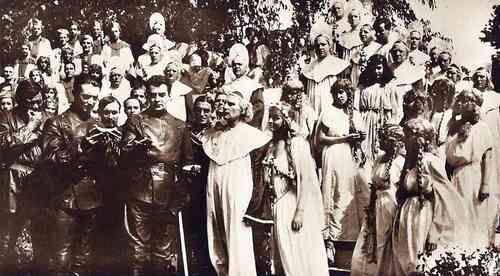
Upon their arrival, the Earthlings are met not with hostility, but with an almost ethereal welcome. The Martians are depicted as beautiful, serene beings, adorned in flowing robes, exuding an aura of wisdom and compassion. They are vegetarians, their society thriving without the need for animal exploitation, a concept that would have been revolutionary, even radical, for its time. More strikingly, they are pacifists, having long ago abandoned the destructive cycles of war and aggression that plague humanity. This is where A Trip to Mars truly distinguishes itself from its genre contemporaries and even many films that followed decades later. It’s not just about exploring a new world; it’s about exploring a new way of being. The film doesn't shy away from presenting this utopian vision directly, contrasting it sharply with the implicit violence and societal imperfections of Earth.
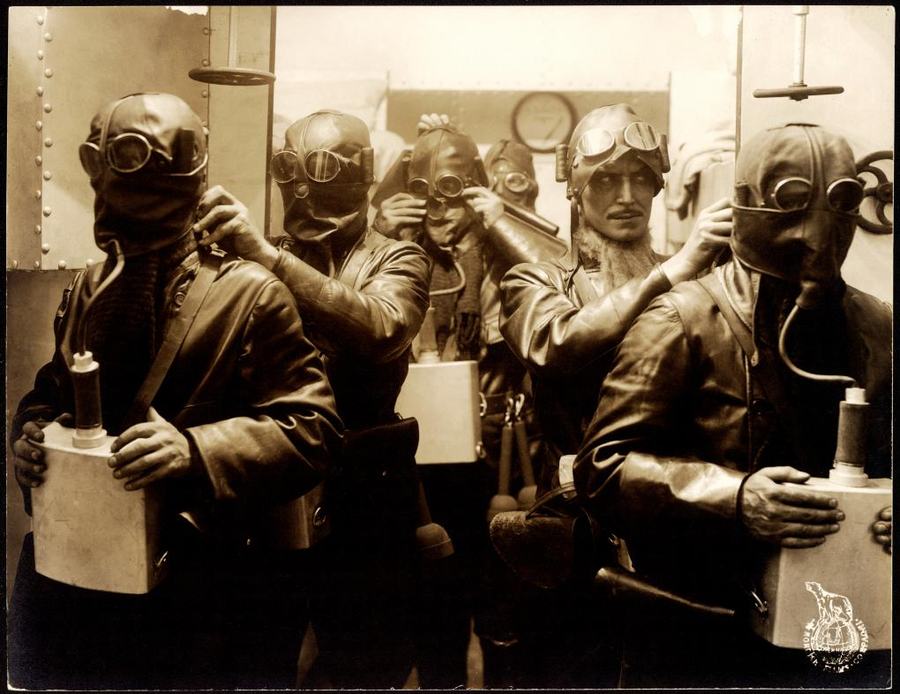
The ensemble cast, including Alfred Osmund, Gunnar Tolnæs, Alf Blütecher, Nils Asther, and Zanny Petersen, each contribute to the film's rich tapestry. While individual performances are often broad, as was the style, they collectively convey the wonder, fear, and eventual enlightenment of the human crew. The Martian characters, notably portrayed by Frederik Jacobsen and Lilly Jacobson, manage to imbue their roles with a quiet dignity and an almost otherworldly grace, making their peaceful philosophy feel genuinely attainable, rather than merely a fantastical construct. Their interactions with the Earthlings are handled with a delicate touch, emphasizing understanding and gentle guidance over judgment.
The core of the film's enduring power lies in its thematic depth. It's an earnest plea for humanity to reconsider its destructive path. The Martians, through their very existence, highlight the folly of war, the barbarity of meat consumption, and the spiritual poverty that often accompanies material ambition. This is not merely a scientific expedition; it is a moral pilgrimage. The Earthlings, confronted with this superior ethical framework, are compelled to examine their own societal structures and personal choices. The transformation of Professor Planetaros, from an eager explorer to a humbled advocate for peace, forms the emotional backbone of the narrative. This transformation is not sudden, but a gradual dawning of understanding, beautifully articulated through Neiiendam's nuanced portrayal.

In an era where films often served as straightforward entertainment or propaganda, A Trip to Mars dared to be philosophical. It's a cinematic sermon, delivered with visual poetry rather than didactic speeches. The ideas of vegetarianism and pacifism, particularly in the context of the early 20th century, were not mainstream, yet the film presents them not as fringe ideologies but as the foundational pillars of an advanced civilization. This progressive stance makes the film remarkably modern, even today. One might draw parallels, in its earnest social commentary, to later works like Salt of the Earth, though the latter focuses on terrestrial class struggle rather than interstellar utopia. Both, however, share a commitment to challenging prevailing societal norms through their narratives.
Holger-Madsen's direction is commendable for its ambition and execution. The scale of the production, especially for a silent film of its time, is impressive. The spaceship interiors, the Martian landscapes, and the costuming of the Martians all contribute to a believable, immersive world. While the technology depicted is quaint by contemporary standards, the underlying visual language conveys a sense of wonder and possibility. The film's pacing, a crucial element in silent cinema, maintains engagement throughout, balancing moments of spectacle with periods of quiet reflection. The use of intertitles is effective, providing necessary exposition without hindering the visual storytelling. Actors like Svend Kornbeck, Philip Bech, Birger von Cotta-Schønberg, and Albert Paul, though perhaps in smaller roles, contribute to the authenticity of the expedition, each embodying distinct facets of the human reaction to the unknown.
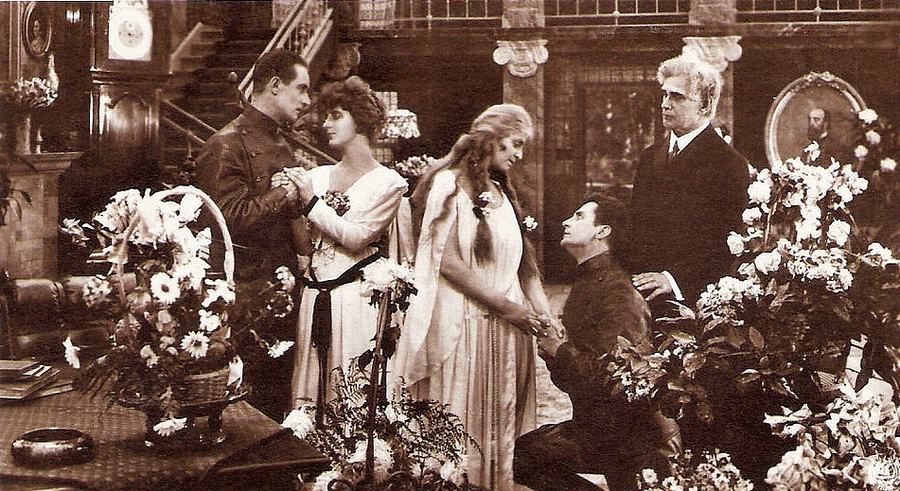
The screenplay by Sophus Michaëlis and Ole Olsen is the true star here. They crafted a story that is not only entertaining but also deeply thought-provoking. They didn't just imagine a trip to Mars; they imagined a reason for that trip, and a profound consequence of it. The philosophical underpinnings are woven seamlessly into the adventure narrative, making the moral lessons feel organic rather than forced. This intricate balance is a testament to their skill as storytellers. The film could have easily devolved into a simple spectacle, but it chose a higher path, demonstrating that science fiction could be a powerful vehicle for social critique and philosophical inquiry. This approach stands in contrast to more straightforward adventure tales of the era, such as The Outlaw's Revenge, which prioritized action over introspection.
While perhaps not as widely known as some of its German expressionist or American contemporaries, A Trip to Mars holds a significant place in the annals of science fiction cinema. It predates iconic works like Fritz Lang's Metropolis by nearly a decade, yet shares a similar ambition in its world-building and its willingness to tackle grand societal themes. Its depiction of space travel, while fantastical, set a precedent for future cinematic explorations of the cosmos. More importantly, its message of peace, understanding, and ethical living remains remarkably relevant, perhaps even more so in our increasingly fractured world. The film serves as a powerful reminder that the true measure of a civilization lies not in its technological prowess, but in its capacity for compassion and harmony.
The film's influence, though subtle, can be traced through later works that explore utopian societies or contact with advanced alien civilizations. Its optimistic outlook stands in stark contrast to many dystopian visions that would come to dominate sci-fi. It dares to believe in the possibility of a better way, not just for Martians, but for humanity itself. It’s a call to introspection, a challenge to abandon our destructive habits and embrace a more enlightened existence. The notion of a morally superior alien race, while a common trope now, was presented here with a genuine sense of awe and a profound desire for human enlightenment. This film doesn't just entertain; it inspires, it provokes, and it lingers in the mind long after the final fade to black.
In conclusion, A Trip to Mars is far more than a historical curiosity. It is a vibrant, intelligent, and deeply humanitarian piece of filmmaking that deserves wider recognition. It challenges its audience to look inward, to question the very foundations of human society, and to consider the profound implications of genuine peace and ethical living. For anyone interested in the origins of science fiction, the power of silent cinema, or simply a compelling story with a timeless message, this film is an absolute must-see. Its daring vision, its optimistic spirit, and its eloquent plea for a better world make it an enduring masterpiece that continues to resonate with remarkable clarity, urging us, even today, to reach not just for the stars, but for a higher moral plane. It stands as a testament to the fact that cinema, even in its earliest forms, possessed the capacity to transcend mere spectacle and engage with the most profound questions of human existence. It's a journey well worth taking, even a century later.
IMDb 4.1
1934
Community
Log in to comment.