DbcultAccessing Vault...
Cult Review
Senior Film Conservator
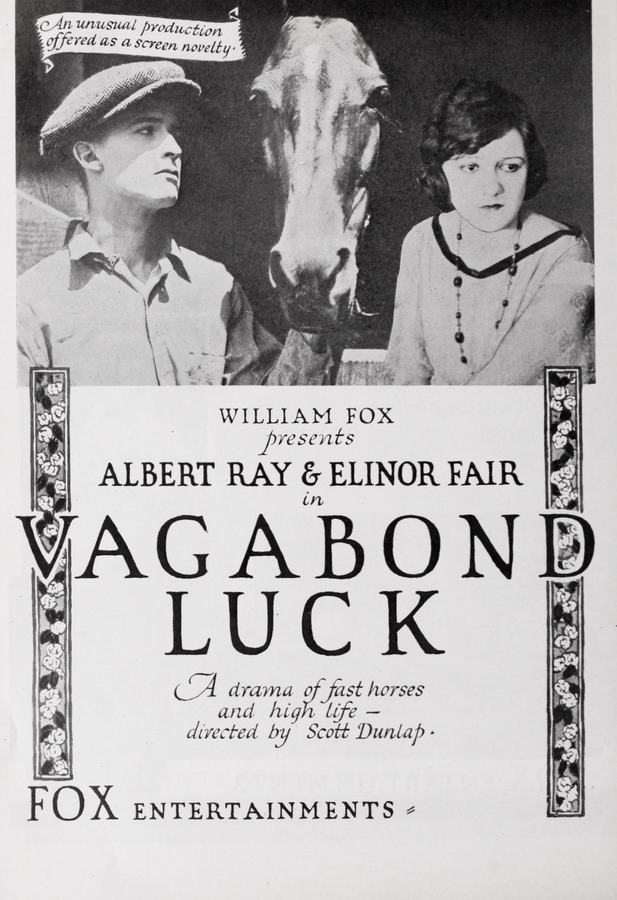
The cinematic landscape of 1919 was a crucible of experimentation, where the language of visual storytelling was still shedding its theatrical skin to embrace the kinetic possibilities of the medium. Vagabond Luck, directed by the prolific Scott R. Dunlap, stands as a quintessential artifact of this era, merging the visceral excitement of the racetrack with the moral gravity of a Victorian melodrama. It is a film that understands the semiotics of the horse—not merely as an animal, but as a vessel for human aspiration and a barometer of social standing.
At the heart of the narrative is Albert Ray’s Jimmie Driscoll. Ray, who would later transition into a directorial career of his own, imbues Jimmie with a quiet, simmering dignity. The opening sequence, where he is terminated by Jim Richardson for the 'crime' of his own physical growth, serves as a searing critique of the commodification of the athlete. In the silent era, physicality was everything, and Ray’s slumped shoulders convey a world of rejection that dialogue would only dilute. This theme of being 'outgrown' or 'outmoded' resonates deeply throughout the film, mirroring the plight of the Bell family themselves.
Unlike the more swashbuckling protagonists found in The Fighting Grin, Jimmie is a figure of technical expertise and specialized knowledge. His value is not in his brawn, but in his intimate understanding of the equine psyche. This distinction is crucial; it elevates the film from a standard sports story into a study of the 'expert' operating within a corrupt system. When Jimmie discovers that Vagabond is a 'mudder,' it isn't a stroke of luck—it is the result of a keen, observational eye that his detractors lack.
Elinor Fair’s portrayal of Joy Bell provides the film's emotional anchor. Fair, who was Ray’s real-life spouse at the time, shares a palpable chemistry with her co-star that transcends the era's often-stilted romantic tropes. Joy represents the 'genteel poor,' a recurring figure in early American cinema, struggling to maintain a facade of aristocratic stability while the floorboards of her inheritance literally rot beneath her. The death of Judge Bell is not just a personal loss but a systemic collapse of the old-world order that once governed the racing circuit.
The introduction of her brother Harry, played with a frantic, jittery energy by Jack Rollens, introduces a darker element of gambling addiction and familial betrayal. Harry’s desperation is the engine of the plot’s second act. His willingness to mortgage the family home on the advice of Spike Bradley (Al Fremont) highlights the predatory nature of the bookmaking underworld. This tension between the 'sport of kings' and the 'business of crooks' is a thematic thread also explored in The Half Million Bribe, where the integrity of the game is constantly besieged by external greed.
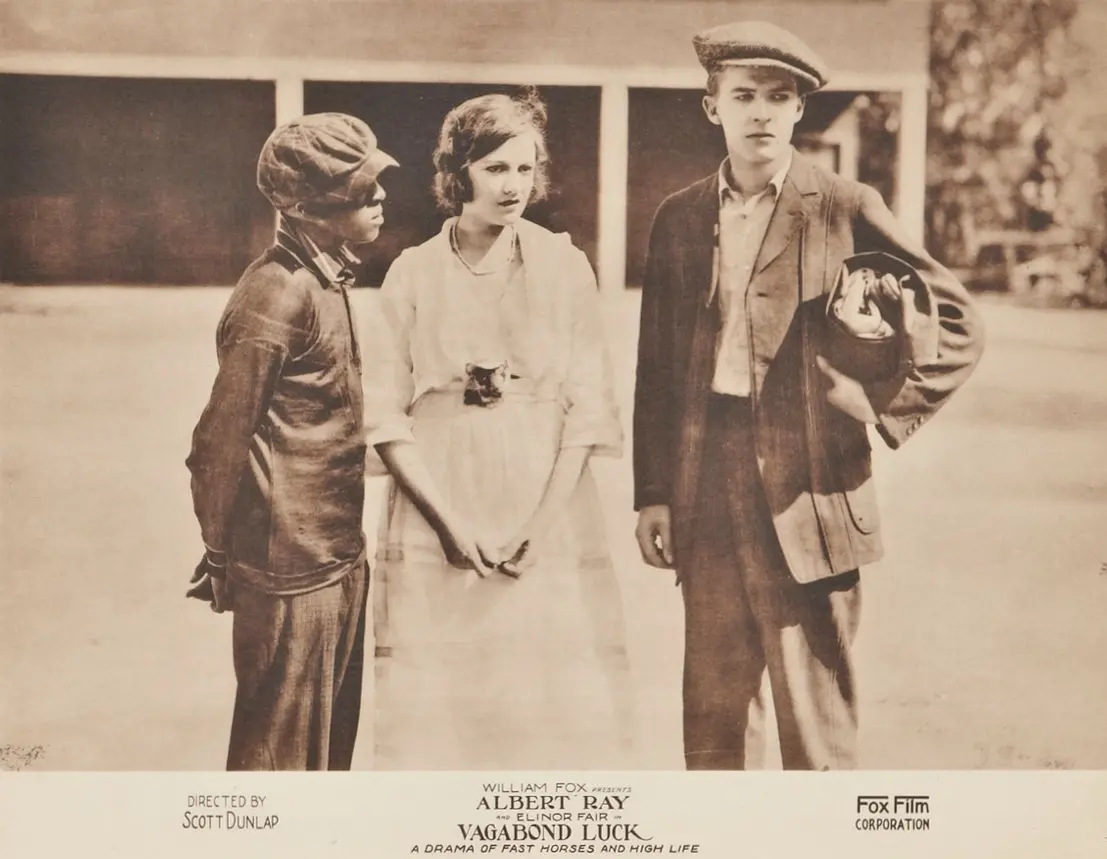
Scott R. Dunlap’s direction is remarkably sophisticated for 1919. He utilizes deep focus and wide-angle shots to capture the sheer scale of the racing events, creating a sense of immersion that was rare for the period. The cinematography captures the dust of the dry track with such clarity that the audience can almost feel the grit in their teeth. This visual dryness serves as a brilliant stylistic contrast to the rain-soaked finale. The transition from the parched, unforgiving earth of the early races to the torrential downpour of the climax is not just a plot point; it is a tonal shift from despair to baptismal renewal.
In comparison to the more theatrical staging of At Piney Ridge, Vagabond Luck feels decidedly modern. Dunlap avoids the static camera, opting instead for dynamic angles that emphasize the speed of the horses. The editing during the final race is particularly noteworthy, utilizing cross-cutting between the thundering hooves, the anxious faces in the crowd, and the villainous Spike Bradley’s growing realization of his impending defeat. It is a masterclass in building suspense through purely visual means.
The concept of the 'mudder'—a horse that performs best on wet or heavy tracks—serves as the film's central metaphor. Vagabond is the horse that everyone has written off, much like Jimmie himself. The world sees an aging, slow animal; Jimmie sees a specialized powerhouse waiting for the right conditions. This narrative device allows the film to explore the idea of latent genius and the importance of environment in determining success. It suggests that failure is often not a lack of talent, but a lack of the proper 'grounding.'
This theme of hidden identity and specialized destiny is a staple of silent serials and dramas, reminiscent of the layered revelations in The New Mission of Judex. However, where *Judex* relies on pulp mystery, Vagabond Luck grounds its revelations in the tangible, earthy reality of the stables. The scene where Jimmie and Joy pray for rain is perhaps the film's most iconic moment. It blends a sincere, almost agrarian spirituality with the high-stakes tension of the gamble. When the rain finally falls, it is treated as a divine intervention, a literal washing away of the corruption that Spike Bradley represents.
Al Fremont’s Spike Bradley is a villain of the old school—mustache-twirling in spirit, if not in literal action. He represents the parasitic element of the racing world, the man who profits from the failure of others. His threat to Jimmie before the final race adds a layer of physical peril to the psychological stakes. While many films of the era, such as The Innocence of Ruth, focused on moral purity versus urban vice, *Vagabond Luck* frames the conflict as a battle between those who love the sport and those who exploit it. Bradley isn't just an enemy to Jimmie; he is an enemy to the integrity of the horse itself.
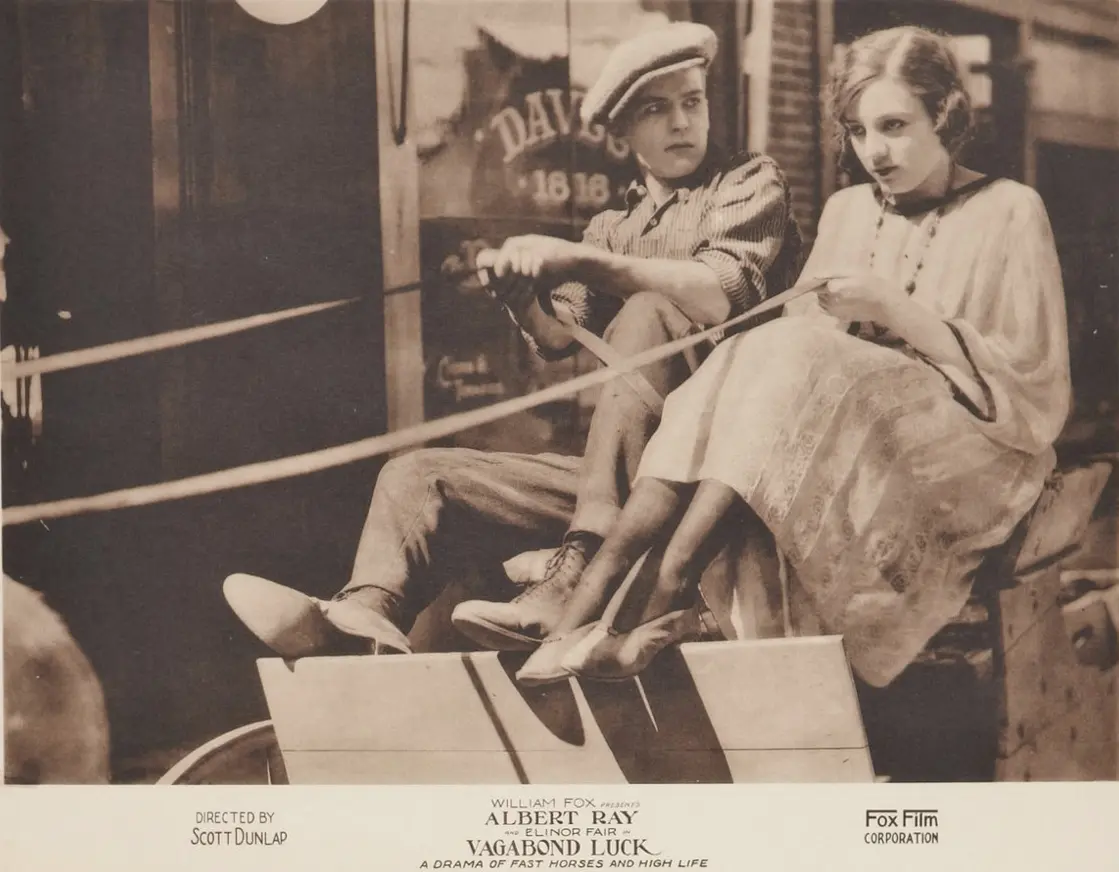
The resolution of this conflict is satisfyingly cinematic. Jimmie’s victory on Vagabond is not just a financial win for Harry or a romantic win for Joy; it is a professional vindication for Jimmie. By winning on the 'unwinnable' horse, he proves that his value as a jockey transcends his weight. He has outsmarted the system that tried to discard him. The film concludes with a sense of restored equilibrium that feels earned, avoiding the saccharine sentimentality that often plagued contemporary features like Mother o' Mine.
To watch Vagabond Luck today is to witness a pivotal moment in the evolution of the American sports film. While it shares some DNA with the character-driven dramas of the time, such as The Fortunate Youth, its focus on the technicalities of the 'mudder' gives it a unique, almost procedural flavor. The writers—Charles Tenney Jackson, Scott R. Dunlap, and Joseph Anthony Roach—crafted a script that respects the intelligence of its audience, trusting them to follow the nuances of the turf.
The cast, featuring stalwarts like John Cossar and Johnny Reese, provides a solid foundation for the leads to shine. The film’s pacing is brisk, avoiding the narrative bloat that would later characterize some of the epic-length silents. It is a lean, muscular piece of filmmaking that mirrors the physique of a prime racehorse. Even the supporting performances, like William Ryno's contribution, add layers of authenticity to the backstretch atmosphere.
In the grander scheme of Dunlap's career, Vagabond Luck serves as a bridge between the simplistic morality plays of the 1910s and the more complex character studies of the 1920s. It lacks the operatic scale of a Romeo and Juliet (1916), but it gains something more valuable in its place: a gritty, lived-in realism. The stables feel damp, the betting slips feel crumpled, and the stakes feel real. It is a film that honors the 'vagabonds' of the world—those who are overlooked, underestimated, and ultimately, triumphant when the conditions are finally right.
Ultimately, the film’s enduring appeal lies in its celebration of the underdog. Whether it is the jockey who is 'too heavy' or the horse that is 'too old,' Vagabond Luck posits that there is a season for every talent. It just takes a little bit of rain and a lot of heart to see it through. It remains a vital piece of silent cinema, a reminder of a time when the flickers on the screen were as unpredictable and exciting as a longshot coming down the home stretch in a thunderstorm.
IMDb 5.9
1936
Community
Log in to comment.