DbcultAccessing Vault...
7.1/10
Senior Film Conservator
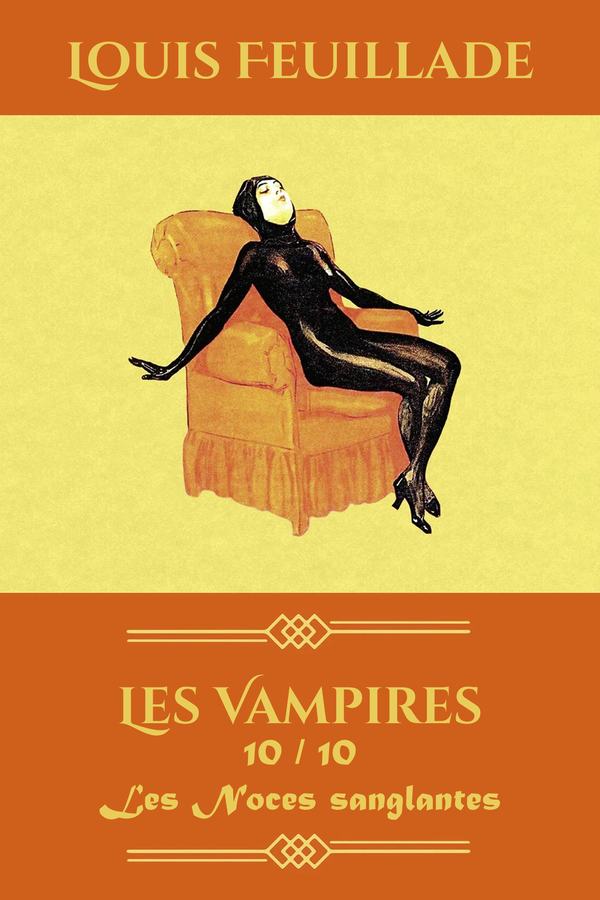
A definitive 7.1/10 rating for a film that redefined the boundaries of cult cinema. The Vampires: The Terrible Wedding remains a cornerstone of transgressive art.
The culmination of a cinematic epoch, 'The Terrible Wedding' (Les Noces sanglantes) serves as both a violent exorcism of the criminal underworld and a foundational text for the modern thriller. Louis Feuillade, the architect of early French suspense, concludes his magnum opus with a fervor that prefigures the surrealist fascination with the mundane turned macabre.
By the time we reach this final installment, the struggle between Philip Guérande and the Vampires has transcended mere detective fiction. It has become a topographical war for the soul of Paris. Feuillade’s genius lies in his ability to infuse the ordinary—a suburban villa, a bicycle, a bottle of wine—with a sense of impending doom. In 'The Terrible Wedding', the domestic sphere is no longer a fortress. The intrusion of the hypnotized widow into Philip’s home is a masterful subversion of the 'safe' space. Unlike the more overt gothic horrors of the era, the threat here is psychological and systemic. The Vampires are not supernatural entities but a pervasive social rot that mimics the structures of the society they seek to destroy.
This thematic preoccupation with the fragility of the social contract is mirrored in other contemporary works like The Foundling, though Feuillade operates with a much darker palette. Where other directors might focus on individual redemption, Feuillade is interested in the total annihilation of the threat. The use of hypnosis as a tool for criminal entry reflects a contemporary anxiety about the loss of agency, a theme that would later be explored with even more visual panache in Judex.
One cannot discuss 'The Vampires' without paying homage to Musidora. Her portrayal of Irma Vep—an anagram for 'Vampire'—remains one of the most potent images in film history. Clad in her iconic black silk bodysuit, she is the progenitor of the 'femme fatale', yet she possesses a kinetic energy that transcends gendered tropes. In this final chapter, her 'wedding' to Venenos is a chilling inversion of the traditional happy ending. It is a union of shadows, celebrated in a cellar, far from the prying eyes of the law.
The contrast between Jane (Philip’s wife) and Irma is stark. Jane represents the fragile Victorian ideal, while Irma is the modern, dangerous, and utterly liberated woman. The final confrontation in the cellar, where Jane is forced to take up arms to defend herself, represents a pivotal moment in the evolution of the female protagonist. It is a moment of survival that strips away the veneer of the 'damsel in distress', a shift we also see nascently in Armstrong's Wife.
Feuillade was a pioneer of the 'chase' sequence, and 'The Terrible Wedding' features one of the most inventive examples of early action choreography. The punctured oil tank providing a trail for Mazamette is a stroke of narrative brilliance. It grounds the high-stakes drama in a physical, tactile reality. The image of Mazamette pedaling furiously through the outskirts of Paris, following the black droplets of oil, creates a rhythmic tension that modern editors still strive to emulate.
This sequence highlights the film's unique relationship with technology. The automobile, the bicycle, the telephone, and the revolver are all characters in their own right. This is a world where the speed of information and transportation dictates the outcome of life and death. In comparison to the more theatrical staging of Children of the Stage; or, When Love Speaks, Feuillade’s work feels bracingly modern, almost documentary-like in its capture of the Parisian exterior.
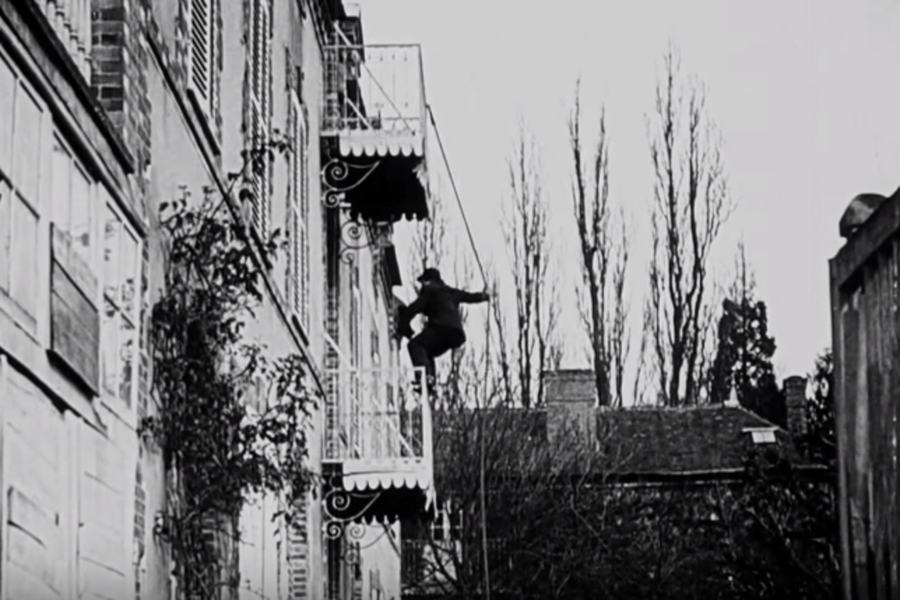
The final raid is a sequence of relentless momentum. The police, led by the bourgeois hero Philip and the proletarian comic relief Mazamette, descend upon the Vampires like a cleansing tide. The choice of a suburban cellar for the Vampires' final stand is significant. It suggests that the rot is hidden just beneath the surface of respectability. The 'Terrible Wedding' itself is interrupted, suggesting that the perversion of social institutions cannot be allowed to reach completion.
The death of Irma Vep is handled with a surprising lack of sentimentality. She is shot, she falls, and the threat is ended. There is no grand monologue, no melodramatic lingering. Her demise signifies the end of an era of chaos. While films like Mysteries of the Grand Hotel toyed with the tropes of the criminal elite, Feuillade’s conclusion is a definitive statement on the necessity of state-sanctioned violence to preserve the peace. It is a theme that resonates with the wartime context of 1916, where the 'enemy within' was a constant source of national anxiety.
Reflecting on 'The Vampires' as a whole, and 'The Terrible Wedding' as its punctuation mark, one sees the DNA of Hitchcock, Lang, and even the French New Wave. The serial’s influence on the concept of 'cinematic time' cannot be overstated. By unfolding its narrative over months, Feuillade created a shared cultural experience that modern television series have only recently recaptured.
When we look at other international productions of the era, such as Dan Morgan or the Australian Bushranger's Ransom, we see a preoccupation with outlaws and the frontier. Feuillade, however, finds his frontier in the city streets and the bourgeois drawing room. His criminals are not rugged individualists but a corporate entity, a shadow government. This makes 'The Vampires' feel much more relevant to our contemporary world of cyber-crime and deep-state conspiracies than the more localized conflicts of The Governor's Ghost or Down with Weapons.
As the screen fades to black on the happy union of Mazamette and Augustine, there is a sense of profound relief. The 'terrible' wedding has been replaced by a legitimate one. The world has been put right. Yet, the image of Irma Vep lingers. Like the ghost in Der letzte Tag, the influence of the Vampires remains a part of the cinematic subconscious.
Feuillade’s mastery of pacing, his use of the location as a narrative agent, and his ability to blend comedy with visceral horror make 'The Terrible Wedding' a landmark achievement. It is a film that demands to be watched not just as a historical curiosity, but as a living, breathing piece of art that continues to challenge our perceptions of genre and narrative structure. Whether compared to the moral weight of Pilgrim's Progress or the romantic entanglements of Akit ketten szeretnek, 'The Vampires' stands alone as a monument to the power of serialized storytelling.
Critic's Rating: 5/5 Stars
A definitive end to the greatest serial ever made. Musidora is eternal.
IMDb —
1915
Community
Log in to comment.