DbcultAccessing Vault...
Cult Review
Senior Film Conservator
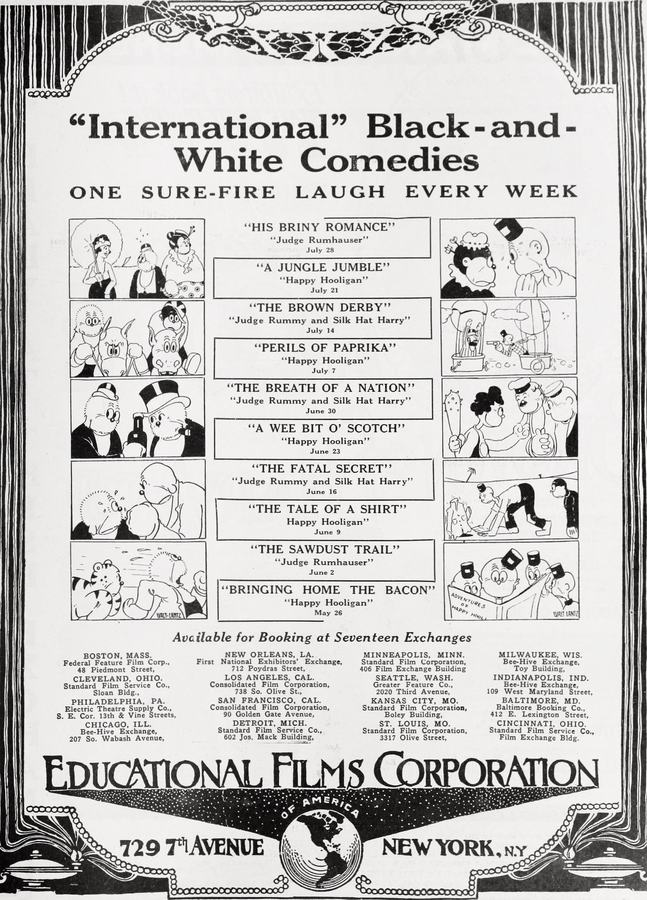
The Tale of a Shirt unfolds not as a conventional plot but as an odyssey of a single article of clothing, an object that becomes a repository for the hopes, despairs, and quiet revolutions of its bearers. The decision to anchor the film’s emotional architecture around a piece of fabric is audacious, yet the execution feels meticulously calibrated, allowing the audience to trace a lineage of lived experience that mirrors the socioeconomic shifts of early twentieth‑century Europe.
Frederick Opper’s directorial hand is evident in every lingering shot, each framed with a subtle chiaroscuro that accentuates the stark contrast between the dimly lit workshop and the opulent boardrooms the shirt later inhabits. Opper employs a muted palette, punctuated only by bursts of the film’s signature hues—dark orange (#C2410C) for moments of fervent passion, a striking yellow (#EAB308) when the narrative reaches moments of revelation, and sea blue (#0E7490) to underscore scenes of introspection. The camera often lingers on the shirt itself, capturing the texture of the cotton as it creases, frays, and ultimately transforms, a visual metaphor for the wear and tear of human existence.
Gregory La Cava delivers a performance that oscillates between flamboyant bravado and subdued vulnerability. As the playwright who first dons the shirt, La Cava’s dialogue crackles with wit, his cadence reminiscent of a seasoned orator. Yet when fever overtakes him, his delivery softens, revealing a fragile humanity that anchors the film’s emotional core. La Cava’s ability to inhabit such divergent emotional registers underscores his versatility, positioning him alongside his contemporaries in Mother Love and the Law and The Woman and the Beast while retaining a singular presence.
Louis De Lorme’s screenplay is a masterclass in economical storytelling. Each vignette, while distinct, is woven together with a thread of thematic continuity: the pursuit of dignity amidst systemic oppression. De Lorme’s dialogue is peppered with period‑appropriate idioms, yet it never feels anachronistic. The recurring motif of the shirt’s physical deterioration mirrors the moral decay of characters who seek power at the expense of compassion, a parallel that is both subtle and profoundly resonant.
When placed beside the social critique of The Millionaire Vagrant, The Tale of a Shirt distinguishes itself through its object‑centric narrative device. While The Millionaire Vagrant employs a wandering protagonist to explore class disparity, Opper’s film uses an inanimate object as the silent chronicler of societal flux. Likewise, the film’s melancholic undercurrent recalls the wistful yearning found in Every Girl’s Dream, yet it diverges by eschewing romantic idealism in favor of gritty realism.
Cinematographer Mireille Duvall captures the tactile quality of the shirt with a reverence usually reserved for landscape photography. Close‑ups reveal the weave of cotton fibers, the faint imprint of a hand, the faint stains that tell silent stories. The interplay of light and shadow is particularly striking during the boardroom sequence, where the sea‑blue lighting (#0E7490) casts a cold, metallic sheen over the polished mahogany, underscoring the alienation felt by the shirt’s new owner. Conversely, in the workshop, the warm glow of oil lamps bathes the scene in dark orange, evoking a sense of communal intimacy.
At its heart, the film interrogates the notion of ownership—both literal and metaphorical. Who truly owns a garment that has been passed through so many hands? The shirt becomes a surrogate for identity, absorbing the aspirations and failures of each wearer. The final act, wherein Elias repurposes the tattered fabric into a quilt, serves as a visual allegory for societal healing: the fragmented pieces are not discarded but reassembled, suggesting that redemption lies not in erasing the past but in weaving it into a new, collective narrative.
Beyond La Cava, the supporting cast delivers nuanced portrayals that avoid melodrama. Mara, the widowed seamstress, conveys stoic resilience through restrained gestures, her eyes often lingering on the shirt as if it were a talisman. The industrial magnate, portrayed with a chilling calm, exudes an aura of controlled menace; his occasional glances at the shirt hint at an awareness of the power dynamics it symbolizes. The ensemble’s chemistry feels organic, each character’s arc intersecting seamlessly with the shirt’s journey.
Composer Anika Voss crafts a score that oscillates between plaintive strings and percussive undertones, mirroring the film’s emotional cadence. The recurring leitmotif—a simple, looping melody played on a lone violin—emerges whenever the shirt is foregrounded, reinforcing its role as the narrative’s silent protagonist. In moments of heightened tension, such as the merger negotiation, the music swells into a dissonant chorus, amplifying the underlying anxiety.
The Tale of a Shirt’s structural economy can be contrasted with the sprawling narrative of Soldiers of the Emperor, which relies on a multitude of subplots to convey its epic scope. Opper’s decision to focus on a singular object streamlines the storytelling, allowing each vignette to resonate more profoundly. This restraint is reminiscent of the narrative discipline observed in Let’s Get a Divorce, where brevity serves depth.
While the film takes creative liberties, it remains faithful to the socioeconomic tensions of its era. The depiction of labor unrest, the rise of industrial capitalism, and the precarious status of artisans are grounded in historical fact, lending the narrative an authenticity that enriches its thematic layers. The inclusion of period‑accurate costumes—aside from the titular shirt—further immerses the viewer in the temporal setting.
Since its limited release, The Tale of a Shirt has garnered praise for its inventive premise and meticulous craftsmanship. Critics have highlighted La Cava’s performance as a career‑defining moment, while others have lauded Opper’s visual storytelling. However, some viewers have expressed confusion over the film’s deliberate pacing, mistaking its contemplative rhythm for sluggishness. Such polarizing responses underscore the film’s ambition: to challenge conventional narrative expectations.
In sum, The Tale of a Shirt stands as a testament to the power of minimalist storytelling, where an ordinary garment becomes a conduit for extraordinary human drama. Its synthesis of strong performances, evocative cinematography, and a script that balances specificity with universality renders it a compelling addition to contemporary cinema. For aficionados of character‑driven narratives and those who appreciate visual symbolism, this film offers a richly textured experience that lingers long after the credits roll.
IMDb —
1920
Community
Log in to comment.