DbcultAccessing Vault...
Cult Review
Senior Film Conservator
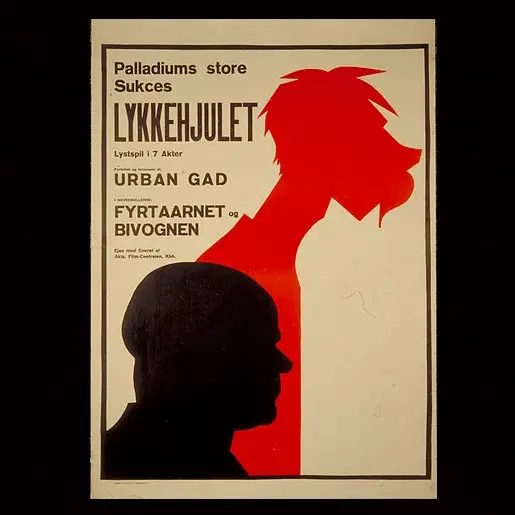
Is Lykkehjulet a mandatory watch for the modern cinephile? Short answer: No, unless you are a dedicated historian of Nordic silent cinema or an enthusiast of Urban Gad’s minimalist framing. This film is for those who appreciate the slow-burn visual language of the 1910s and the atmospheric weight of early Danish drama; it is decidedly not for anyone seeking a fast-paced narrative or the layered psychological complexity of contemporary cinema.
The film exists in a space between a postcard and a prayer. It is quiet, deliberate, and at times, frustratingly stationary. But for the viewer willing to sit with its stillness, there is a reward in its purity. It captures a moment in time when cinema was still figuring out how to translate the internal struggle of an artist onto the screen without the benefit of sound or color.
Lykkehjulet is a niche experience that prioritizes mood over momentum. If you are looking for a gripping plot, you will be disappointed. However, if you are studying the evolution of visual storytelling, Gad’s use of natural light and landscape is revolutionary for 1917. It is a film that requires patience—a commodity in short supply today.
1) This film works because Urban Gad treats the winter landscape as a psychological extension of the protagonist’s mind.
2) This film fails because the central romance between Erik and Ethel lacks the dramatic friction necessary to sustain its runtime.
3) You should watch it if you want to see the foundational techniques of Nordic noir and atmospheric drama before they were codified.
Urban Gad, best known for his collaborations with the legendary Asta Nielsen, brings a sophisticated eye to Lykkehjulet. In 1917, most films were still struggling with the transition from stage-like setups to cinematic environments. Gad breaks this mold by taking his camera out into the snow. The 'shiny surface of ice' isn't just a plot point; it’s a textural choice that defines the film's aesthetic. The way the light hits the snow creates a high-contrast environment that makes the characters look like ink blots on a white canvas.
Consider the scene where Erik Elmer first encounters Ethel Birk. It isn't a grand, melodramatic moment. Instead, Gad uses a wide shot that emphasizes the vastness of the winter landscape. The characters are small, almost insignificant, against the backdrop of nature. This visual choice underscores the theme of the 'Wheel of Fortune' (the literal translation of the title). They are subject to the whims of the world, small cogs in a larger machine. This is a far cry from the studio-bound dramas like Discontented Husbands, which rely heavily on interior artifice.
The cinematography by the uncredited cameraman (likely a Nordisk Film regular) is remarkably crisp for the era. There is a specific shot of the ice where the reflection of the sun almost blinds the viewer. It’s a sensory experience that was rare for 1917. Gad understands that to show an artist seeking inspiration, you have to show the world through that artist’s eyes. Everything is a potential sculpture. Everything is a potential frame.
The acting in Lykkehjulet is a fascinating study in the transition from theatrical pantomime to film acting. Erling Cohn, as the sculptor Erik Elmer, carries the weight of the 'tortured artist' trope with varying degrees of success. At times, his gestures are a bit too broad—clutching his head in the studio to signal 'creative block'—but once he gets into the elements, his performance settles. He becomes more reactive, more human.
The real star here, however, is Lili Lani as Ethel Birk. Lani has a naturalism that was ahead of its time. While other actresses of the era were still relying on the 'Delsarte' method of exaggerated poses, Lani uses her eyes. In her first meeting with Cohn, there is a subtle curiosity in her gaze that feels modern. She doesn't just play a 'muse'; she plays a person who is equally intrigued by this strange man wandering the ice. Her screen presence is what prevents the film from becoming a dry academic exercise.
The supporting cast is a 'who's who' of early Danish cinema, including the great Carl Schenstrøm. Long before he became half of the famous Pat & Patachon duo, Schenstrøm was a versatile character actor. His presence here adds a layer of professionalism to the production. The ensemble, including veterans like Petrine Sonne and Mathilde Nielsen, provides a grounded, domestic contrast to the romanticized ideals of the lead couple. They represent the 'real world' that Erik is trying to escape, and their performances are delightfully lived-in.
Let’s be honest: the plot of Lykkehjulet is paper-thin. It’s essentially a series of vignettes tied together by a very simple romantic arc. Compared to the complex mystery of The Carter Case or the high-seas adventure of The Isle of Lost Ships, Lykkehjulet feels almost experimental in its lack of incident. This is where the film will lose most modern viewers. It doesn't follow the 'Save the Cat' beats of modern screenwriting. It meanders. It breathes. It stops to look at the trees.
But is that a flaw? I would argue that in the context of 1917, this was a bold choice. Gad is more interested in the 'internal' journey than the 'external' one. The pacing reflects the slow, agonizing process of artistic creation. The film moves at the speed of a chisel hitting stone. It’s a mood piece. If you go into it expecting a thrill ride like Danger Within, you will be bored to tears. But if you approach it like a gallery opening, it works.
The script, co-written by Gad and A.V. Olsen, treats dialogue (via intertitles) sparingly. They trust the visuals to tell the story. This is a sign of a director who understands the medium. Many films from this period, like A Girl at Bay, were bogged down by excessive text. Gad keeps it lean. He lets the ice speak for itself.
If you are asking if Lykkehjulet is 'entertaining' in the 21st-century sense, the answer is a resounding no. It is slow, the stakes are low, and the resolution is predictable. However, if you are asking if it is 'valuable,' the answer is yes. It is a vital link in the chain of European cinema. It shows the early seeds of the 'Nordic style'—that specific blend of nature, melancholy, and stoicism that would later be perfected by Carl Theodor Dreyer and Ingmar Bergman.
Watching it today is like looking at the blueprints of a great cathedral. You can see where the ideas started. You can see Gad experimenting with depth of field and location shooting in ways that would influence directors for decades. It’s a historical document that still happens to have a soul. It’s flawed. It’s dated. But it’s beautiful.
Lykkehjulet is a cinematic artifact that demands a specific kind of attention. It is not a movie you put on while scrolling through your phone; it is a movie you watch to understand where the art form came from. Urban Gad proves that even in 1917, the camera was capable of capturing something as ephemeral as an artist's block. While it lacks the punch of films like Hypocrites or the visual poetry of Kino Pravda No. 16, it remains a quiet, dignified example of early Danish excellence. It’s a cold film with a warm heart. It’s a minor work from a major director, but even Gad’s minor works are worth a glance for those who care about the silver screen's heritage. The wheel of fortune may not spin very fast here, but it spins with purpose.
IMDb —
1930
Community
Log in to comment.