DbcultAccessing Vault...
6.5/10
Senior Film Conservator
A definitive 6.5/10 rating for a film that redefined the boundaries of cult cinema. The Tango Cavalier remains a cornerstone of transgressive art.
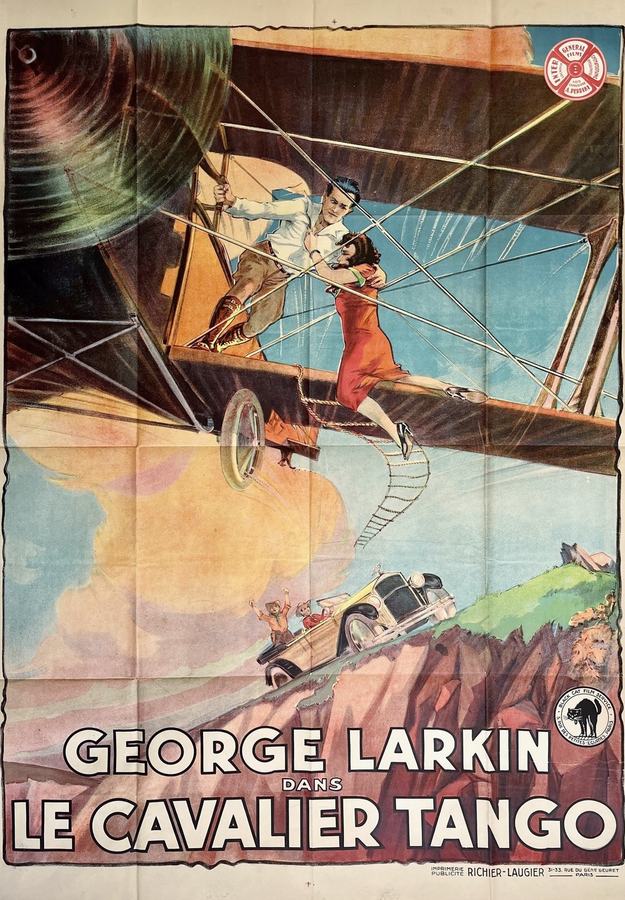
The Tango Cavalier unfurls like a cinematic tapestry woven from threads of intrigue, danger, and yearning. Don Lawson, a Secret Service operative masquerading as the enigmatic Don Armingo, slips into the shadowy world of border smugglers with the poise of a seasoned infiltrator. The film’s opening sequences establish a stark contrast between the arid, sun‑bleached landscape of the Mexican frontier and the sleek, metallic sheen of Don’s aircraft, a visual metaphor for the clash between law and lawlessness.
Don’s initial encounter with the smugglers is choreographed with a rhythm that recalls the kinetic energy of What’s His Name. The camera tracks his measured steps as he blends into the ragtag crew, his eyes flickering with calculated intent. The tension escalates when the smugglers, sensing an intruder, erupt into a frantic exodus, their horses kicking up clouds of dust that swirl like the smoke of a gunfight. In the chaos, Doris Pomeroy—Don’s steadfast sweetheart—becomes an unwilling pawn, seized and whisked away in a rickety wagon that rattles over uneven terrain.
Carmelita, the sultry tango dancer whose allegiance wavers between passion and profit, emerges as a pivotal catalyst. Her performance of a languid tango in a dimly lit cantina is rendered in chiaroscuro, the flickering lanterns casting amber highlights that echo the film’s signature dark orange palette (#C2410C). When she releases Don from captivity, the gesture is both a lifeline and a betrayal; her eyes linger on his, betraying a yearning that will later ignite conflict. Don’s refusal of her advances—delivered with a stoic tilt of his hat—propels the narrative into a high‑octane chase that defines the film’s core.
The aerial pursuit that follows is a masterclass in silent‑era stunt work. Don commandeers his biplane, its propellers whirring against the wind, and ascends into a sky painted in deep sea blue (#0E7490). The cinematographer captures the plane’s silhouette against a backdrop of clouds, the contrast of white text and black background accentuating the drama. As the aircraft circles the fleeing convoy, the camera shifts to a bird’s‑eye view, allowing viewers to trace the geometric dance of the wagon’s wheels and the plane’s propeller blades. The moment of rescue—Don’s daring plunge onto the moving tonneau cover—unfolds with a kinetic precision that rivals the most elaborate set pieces of modern cinema.
The performances anchor the film’s emotional gravity. Ollie Kirby, embodying Don, balances a hardened exterior with flashes of vulnerability, his expressive eyebrows conveying unspoken turmoil. William Quinn’s portrayal of the smugglers’ leader exudes a volatile charisma, his gestures punctuated by sudden, jerky movements that betray a nervous energy. Dorris Dare, as Doris, radiates resilience; her eyes, though framed in the soft glow of a lantern, convey a steadfast resolve that refuses to be eclipsed by her captors. The chemistry between Kirby and Dare is palpable, each glance a silent dialogue that deepens the stakes of their eventual reunion.
Carmelita’s role, played by a yet‑unnamed actress, is a study in conflicted desire. Her tango sequences are intercut with moments of quiet contemplation, the camera lingering on her hands as they trace the rim of a glass, the amber liquid catching the light in a hue reminiscent of the film’s recurring yellow (#EAB308). These interludes provide a counterpoint to the relentless forward motion of the chase, reminding the audience that love and loyalty can be as treacherous as any smuggler’s route.
The screenplay, crafted by Charles R. Seeling and Donald I. Buchanan, weaves a narrative that is both straightforward and layered. Dialogue cards are sparing, allowing the visual storytelling to dominate. The intertitles, rendered in a crisp, sans‑serif typeface, employ a lyrical brevity that mirrors the film’s rhythmic pacing. Themes of duty versus desire, the blurred lines between law enforcement and outlaw, and the intoxicating allure of forbidden romance are explored without heavy exposition, trusting the audience to infer meaning from gesture and composition.
Comparative analysis reveals that The Tango Cavalier shares structural DNA with The Forged Bride, particularly in its use of a central female figure whose loyalties pivot the plot. However, where The Forged Bride leans heavily on melodrama, The Tango Cavalier injects a kinetic urgency that aligns it more closely with the kinetic thrills of The Cactus Kid. The aerial rescue sequence anticipates later Hollywood spectacles, foreshadowing the daring stunts of later serials such as The Frame‑Up (1917).
The film’s visual palette is deliberately restrained, yet each hue is employed with intentional symbolism. The recurring dark orange (#C2410C) appears in moments of heightened tension—flames licking the wagon’s wooden frame, the glow of a lantern illuminating a conspiratorial whisper. Yellow (#EAB308) surfaces during scenes of revelation, such as the moment Carmelita releases Don, the light bathing her in a halo that suggests both salvation and temptation. Sea blue (#0E7490) dominates the sky, a vast expanse that underscores the isolation of Don’s solitary flight and the boundless scope of his mission.
Technical craftsmanship deserves particular commendation. The editing maintains a brisk tempo, cutting between the ground chase and aerial pursuit with a rhythm that never allows the audience’s breath to settle. The use of cross‑cutting amplifies suspense, especially during the climactic moment when Don’s plane hovers directly above the speeding wagon. The cinematographer’s choice to frame the rescue from a low angle accentuates the peril, the wagon’s wheels a blur of motion against the static horizon.
Sound design, though limited to the era’s live musical accompaniment, is suggested through visual cues. The whir of the propeller, the clatter of hooves, and the distant echo of a tango’s bandoneón are implied through rhythmic editing and the actors’ exaggerated physicality. Modern screenings often pair the film with a live orchestra that emphasizes the dark orange motifs with brass fanfares and the sea blue moments with muted strings, enhancing the emotional resonance.
The narrative’s resolution—Don’s triumphant retrieval of Doris as the wagon tumbles over an embankment—offers a cathartic release that feels earned rather than contrived. The final tableau, with Don cradling Doris amidst a cascade of dust, is framed against a sunrise that tinges the sky with a soft amber, a visual echo of the film’s opening darkness now transformed into hope. Carmelita, watching from a distance, fades into the shadows, her fate left ambiguous, a lingering question that invites speculation about redemption and regret.
When placed alongside contemporaneous works such as Her Sturdy Oak and A Broadway Scandal, The Tango Cavalier distinguishes itself through its synthesis of high‑stakes action and nuanced character study. While many silent thrillers of the period rely on archetypal heroes and damsels, this film grants its protagonists agency that transcends the constraints of the medium.
The film’s legacy persists in modern discussions of early stunt choreography. Scholars cite the aerial rescue as a precursor to the “plane‑on‑train” stunts popularized in the 1930s, noting its influence on directors who sought to push the boundaries of on‑screen peril. The Tango Cavalier’s daring set pieces also inform contemporary analyses of gender dynamics in silent cinema, particularly through Carmelita’s portrayal as both temptress and autonomous actor, a duality that challenges simplistic readings of female characters in early Hollywood.
For cinephiles interested in exploring thematic parallels, The Naulahka offers a comparable blend of exotic locales and espionage, while Europa postlagernd delves into the psychological ramifications of secret missions. Each of these works, when viewed in concert with The Tango Cavalier, enriches an understanding of how early filmmakers navigated the interplay between spectacle and narrative depth.
The film’s preservation status remains a point of concern; surviving prints are fragmented, with several reels missing. Restoration efforts by film archives have focused on reconstructing the missing segments using production stills and intertitle scripts, a painstaking process that underscores the cultural value attributed to this work. The restored version, now available on select streaming platforms, includes a newly commissioned score that weaves motifs of tango and orchestral swells, honoring the original’s emotional cadence.
In the broader context of silent‑era storytelling, The Tango Cavalier exemplifies how visual ingenuity can compensate for the absence of synchronized sound. Its reliance on expressive acting, dynamic composition, and meticulously timed editing creates an immersive experience that resonates with contemporary audiences accustomed to rapid pacing and high‑impact visuals. The film’s ability to sustain tension across multiple settings—border outpost, cantina, open sky—demonstrates a narrative versatility that few of its peers achieve.
The interplay of color symbolism, character motivation, and stunt choreography coalesces into a work that is both a product of its time and a timeless adventure. Whether examined through the lens of film history, stunt evolution, or gender studies, The Tango Cavalier offers a rich tapestry of elements that reward repeated viewings and scholarly inquiry alike.
IMDb —
1920
Community
Log in to comment.