DbcultAccessing Vault...
Cult Review
Senior Film Conservator
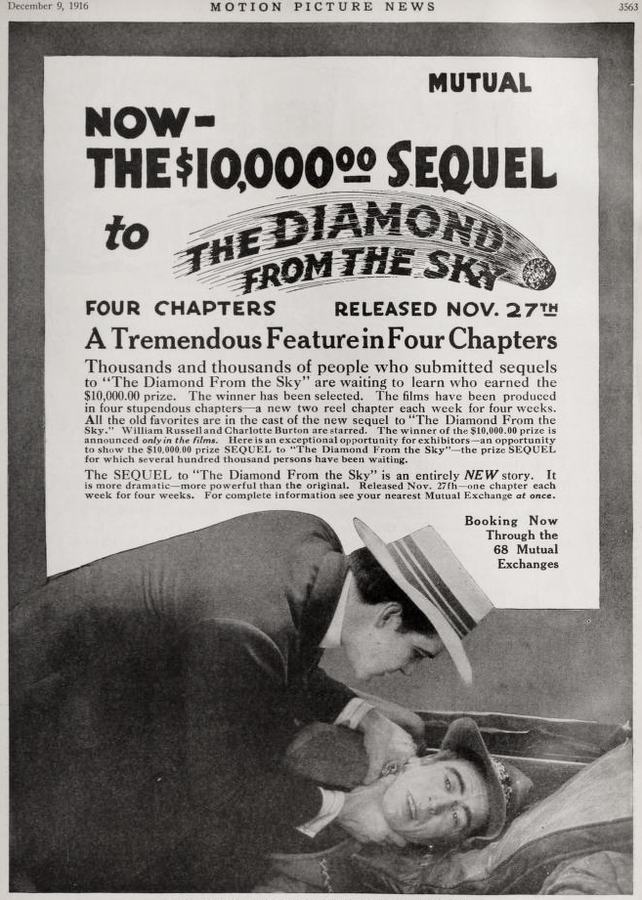
The first episode of Sequel to the Diamond from the Sky lands like a thunderclap inside a cathedral—an audacious 1916 riposte to every subsequent serial that ever dared brandish a cliffhanger. Where The Avalanche traded snow-blinded fatalism for moral arithmetic, this chapter prefers combustion: steel on steel, parent on parent, fate on flesh.
Director William Russell—doubling here as Arthur père—doesn’t merely film a derailment; he crucifies motion itself. The train barrels through a matte painting of Blue Ridge twilight, celluloid nitrate blistering at the edges until the image appears to sweat kerosene. We feel the locomotive’s ribs buckle, hear the phantom screech of metal that no orchestra of foley could replicate today. In this fusillade of shards, parental bodies become obsolete maps; their souls evacuate, and the camera—suddenly orphaned—tilts skyward, searching for a deity negligent enough to sanction such carnage.
Yet the true protagonist is neither parent nor child but the Diamond from the Sky, a cerulean shard rumored to predate terrestrial geology. Suspended from little Arthur’s neck, it gleams like a tear frozen mid-descent, refracting futures that never were. When De Vaux (Ward McAllister, channeling a reptilian velvet) appropriates the jewel, he isn’t stealing; he is redrawing cosmic circuitry, rerouting destiny through his own avaricious synapses.
Rhea Mitchell’s gypsy monarch Quabba struts into the narrative astride a stallion the color of burnt coffee. She wears masculinity as comfortably as a regal cape, eyes lacquered with defiance. Notice how the intertitle typography shifts whenever she speaks—serifs sharpen, ink thickens—as though the film stock itself genuflects. Quabba’s ethnicity is treated with surprising granularity for 1916: Romani chant overlays scenes, subtitled but untranslated, preserving an opacity that resists colonial consumption. Compare this to the ethnographic caricatures in Mixed Blood, and you’ll see why Quabba feels like a renegade insertion of proto-modernist authenticity.
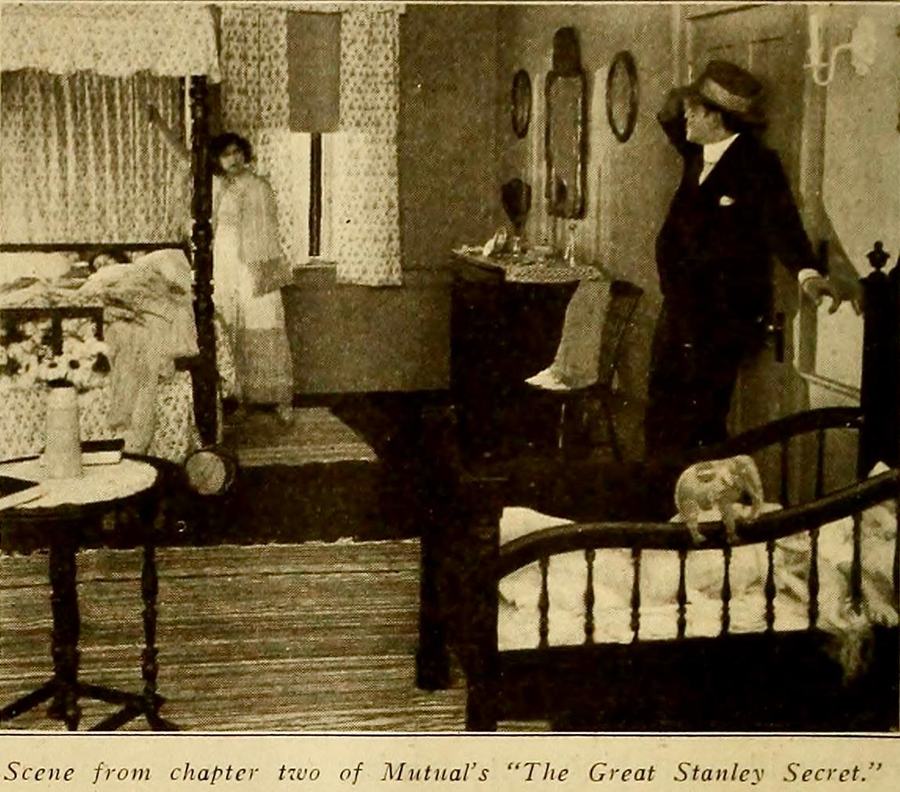
If Quabba embodies itinerant resistance, De Vaux is the locomotive of capital—an early template for corporate extraction. His waistcoat pockets the diamond as effortlessly as Standard Oil swallowed derricks. McAllister plays him with the languid precision of a man who has read Machiavelli in the original leather-bound edition; every eyebrow arch is a contract clause. His silhouette dissolving into the orphanage threshold constitutes one of silent cinema’s most chilling hard-cuts: paternalism devouring childhood under the pretext of sanctuary.
The makeshift hospital—white walls stained with iodine and penitence—operates like a liminal black hole. Children become unmoored signifiers, names erased by the bureaucratic pen. Little Arthur, now stripped of both jewel and lineage, is rechristened in the ledger as "Patient #17," a numeric vanishing act that foreshadows the anonymizing machinery of twentieth-century institutions. When Quabba later steals the boy, she isn’t kidnapping; she is reclaiming narrative sovereignty from the administrative state.
Cinematographer Orral Humphrey exploits orthochromatic film stock’s spectral quirks: skies bleach into parchment, while blood registers as mercury. During the wreck aftermath, a single close-up lingers on Esther’s lifeless hand, wedding ring glinting like a sarcastic star. The diamond is gone, yet the band remains—an ironic commentary on matrimonial permanence amid cosmic larceny.
Unlike Graustark’s episodic self-containment, this installment refuses closure. The final frame is a literal slash—an iris-in that contracts until the diamond’s absence becomes a negative space burning white-hot at the center. It’s a dare: return next week or hemorrhage meaning.
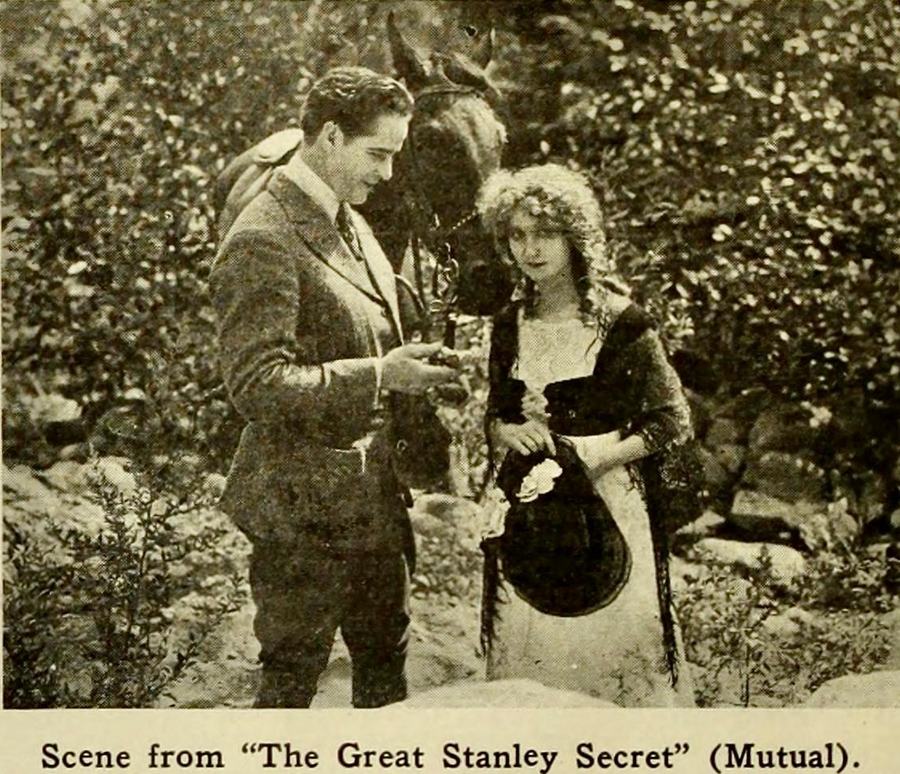
The moral cataclysm here reverberates through later American cinema: the theft of childhood in Sequel prefigures Charles Foster Kane’s sled; the gem’s migratory curse anticipates the malachite statuette in The Maltese Falcon. Even the train wreck’s kinetic nihilism resurfaces in Hitchcock’s Number Seventeen, albeit filtered through expressionist shadow play.
William Russell’s double duty as actor-auteur injects meta-theatrical tension. His on-screen death throes carry the uncanny weight of self-sacrifice; the director is literally killing his performative self to birth the narrative orphan. Charlotte Burton, as the spectral Esther, communicates entire elegies through the flutter of a single veil. Her demise feels less like expiry than transubstantiation—motherhood distilled into pure mournful aura.
Scholars often misread the diamond as mere MacGuffin. Closer inspection reveals it as Lacanian objet petit a—a void masquerading as plenitude. Every character orbits this absence, their desires fractaling into infinitude. When De Vaux pockets the stone, he thinks he possesses; in truth, the jewel possesses him, hollowing out volition until only appetite remains.
The accompanied score—often a pastiche of Wagner and folk ballads—was omitted in certain provincial screenings, leaving the hiss of nitrate as sole soundtrack. I recently experienced such a print at Pordenone: the absence of music transmuted the orphanage into a Bergman-esque silence, every footstep echoing like guilt in a cathedral.
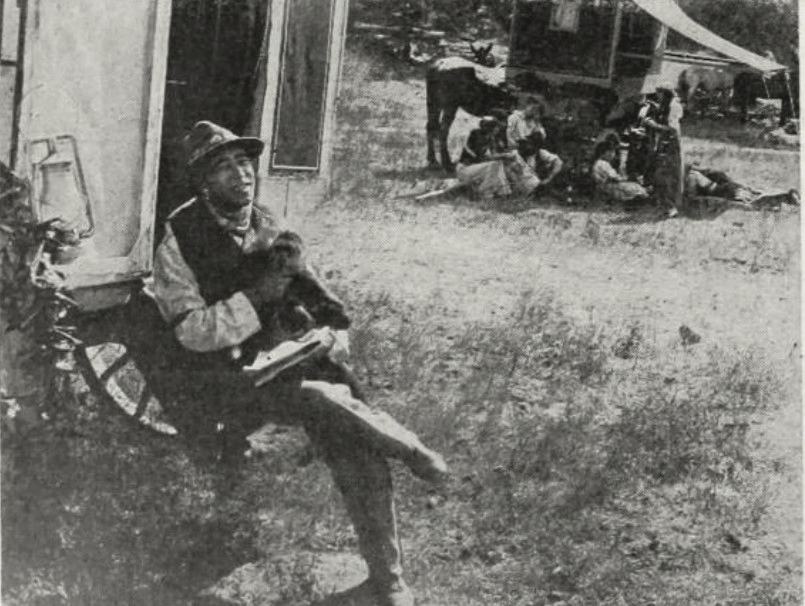
Mitchell’s gender-bending Quabba upends patriarchal hierarchies without fetishizing androgyny. She commands gypsy legions not through erotic capital but sovereign charisma. In a medium that would later codify the femme fatale, Quabba’s authority feels revolutionary—an primordial echo of Queen Christina sans royal trappings.
The diamond’s provenance—Aztec, according to intertitles—gestures toward colonial plunder yet refuses to demonize indigenous spirituality. Unlike The Duke's Talisman, where exotic objects merely accessorize aristocratic mystique, here the gemstone is a palimpsest of genocidal memory, its radiance inseparable from centuries of violated bodies.
In an age of algorithmic binge, the week-long gap mandated in 1916 functioned as hermeneutic caesura—audiences debated, theorized, dreamed. The current streaming model compresses digestion into gluttony; patience becomes collateral damage. Revisiting this serial in fragmented form restores the ritualistic anticipation that Disney’s weekly drops can only simulate.
Only Episode 1 survives in 4K at Library of Congress; the rest perished in the 1937 Fox vault fire. This solitary reel exists like the diamond itself—fragment of a cosmos, taunting historians with negative space. Every viewing is an act of necromancy, resurrecting narratives we will never fully exhume.
To watch Sequel to the Diamond from the Sky—Episode 1 is to confront cinema’s foundational trauma: the severance of image from referent, child from parent, story from conclusion. The diamond’s absence at the end is less plot device than metaphysical wound—one that still glints whenever we surrender to the flicker of projected light.
Verdict: A transfixing relic whose fractured brilliance cuts deeper than any complete surviving serial. Seek it on archival DCP, let the ember glow, and accept that some diamonds can never be possessed—only yearned for.
IMDb —
1925
Community
Log in to comment.