DbcultAccessing Vault...
Cult Review
Senior Film Conservator
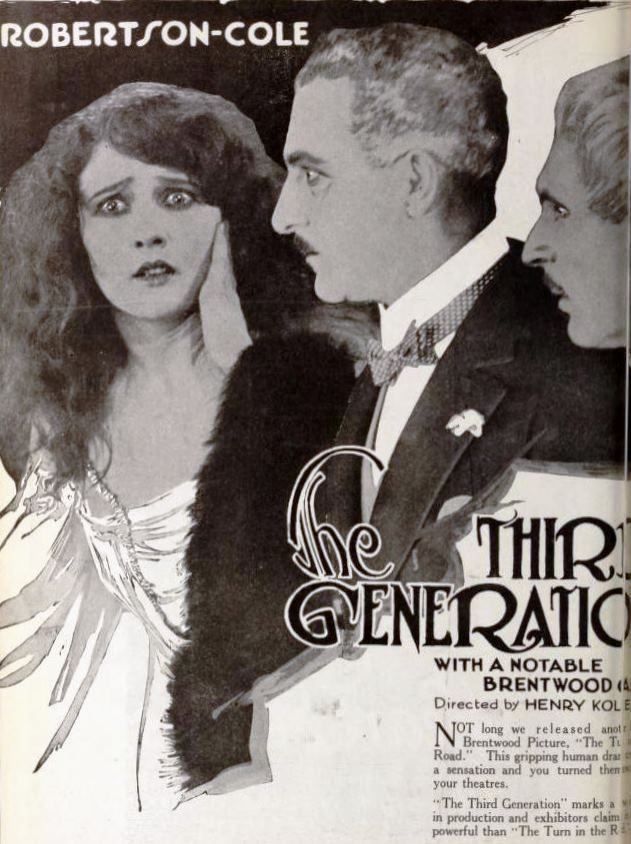
Imagine a film that opens with the metallic rasp of a Tiffany watch breaking water—its hands frozen at the moment a dynasty dies. The Third Generation is that film, and it is not content merely to chronicle the fall; it wants to watch the soul cannonball through limestone sub-basements of guilt before it will even consider resurrection.
The screenplay, stitched by Henry Kolker and Arthur Ripley with Expressionist thread, treats narrative like a reversible coat: inside-out reveals the same cloth, yet the pockets relocate. Alden’s river-and-knife pivot is less coincidence than cosmic audit; the dead thug—nameless, face soon Alden’s—functions like the blank carbon paper beneath a forged signature, permitting the living man to rewrite himself.
Westward, the desert does not merely mirror moral desolation; it exfoliates it. Copper ore, blood-red when first chipped, becomes coin, becomes solvency, becomes the very ligature reconnecting Alden to the wife he never divorced and the child he never met. The film’s midpoint is a time-lapse of rebirth: cactus blooming while shares rise, sweat turning into dividend. O, the Protestant ethic in 38 reels!
Director Henry Kolker—better known then as an actor—composes frames like a Wall Street balance sheet: assets (faces) centered, liabilities (shadows) pushed to the margin. Note the sequence where Alden, now calling himself "Tom Fielding," signs the payroll by lamplight. The flame bisects the shot: left side yellow with promise, right side swallowed in tungsten black. One mis-sign could unmask him; the camera lingers until ink glistens like fresh blood.
Contrast this with the New York interiors: mahogany parlors awash in somber navy, fireplaces yawning like bankrupt vaults. The crosscutting between coasts anticipates Griffith’s parallel syntax yet forgoes bombast; instead, geography becomes moral thermometer.
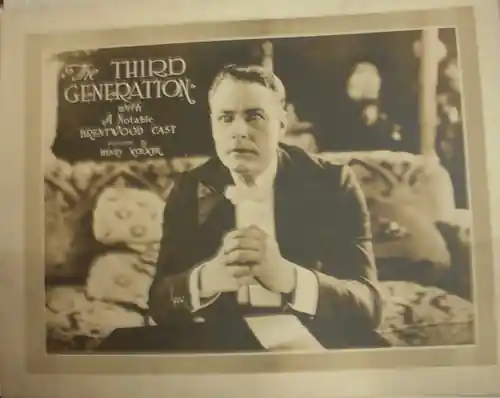
Herbert Jones plays Alden with a mouth that seems perpetually tasting iron. Watch the instant he trades signet ring for miner's kerchief: cheekbones loosen, eyes go feral, yet the actor never signals "look, a transformation!" The restraint makes the moment scalding.
Betty Blythe’s Helen has the porcelain stoicism of a woman whose grief has been notarized. She is given a magnificent silent close-up: informed by lawyer that remarriage is "economically prudent," she blinks once—an eagle feather could have dropped in that interval. Blythe lets a single tear varnish the lens, refusing to wipe it, turning spectator into voyeur of private bankruptcy.
In smaller roles, Josef Swickard supplies a Dickensian mine superintendent whose jowls quiver like undercooked custard whenever profits rise, while Mahlon Hamilton essays the corporate vulture with the silky menace of a ballroom panther.
Surviving prints carry the original cue sheets: "Chanson Triste" for river suicide, "La Golondrina" for desert treks, "Poet and Peasant" for the frenetic stock-ticker montage. Any accompanist worth their salt today should swap celesta for prepared piano during the identity-swap scene—striking strings rather than keys to evoke the snapping of familial ligaments.
Post-war viewers might bristle: Alden’s sin is paper fraud, his atonement is corporate success. Yet the film anticipates that critique. In the penultimate reel, Mexican laborers—faces indistinct, bodies bent—load ore in background while the boardroom congratulates itself foreground. Kolker refuses to cut away; the shot lingers until the celebratory champagne pops, echoing like dynamite. Capital absolution, the film whispers, is always underwritten by invisible others.
If you hunger for more moral shell-games, see The Woman in the Case (1916) where jurisprudence masquerades as virtue. Or sail to McVeagh of the South Seas for a more swashbuckling, yet equally penitent, parable. And fans of Blythe’s regal poise should catch her opulent turn in Cleopatra (1917).
The original 8-reel roadshow version perished in the 1937 Fox vault fire, but a 6-reel abridgement—struck for the hinterland circuit—survives in the Cinémathèque de Toulouse. A 4K scan circulated privately among archivists; streaming rights are tangled in the 1974 Van Dusen estate auction. Keep vigil on the-third-generation tag for legal drops; bootlegs exist but carry French intertitles, a surreal overlay to Manhattan aristocracy.
The Third Generation is less a relic than a dare. It dares modern viewers—addicted to algorithmic antiheroes—to watch a man weaponize remorse into productivity without a therapist in sight. It dares us to admit that redemption smells of sulfur, smelters, and stock options. And, most deliciously, it dares us to wonder whether the assailant in the river was not merely a mugger but the ghost of American conscience, paid in full with one copper bullet of fate.
Seek it out, if only to discover how 1923 already knew what 2023 keeps forgetting: identity is the most volatile commodity on any exchange.
IMDb 5.7
1929
Community
Log in to comment.