DbcultAccessing Vault...
6/10
Senior Film Conservator
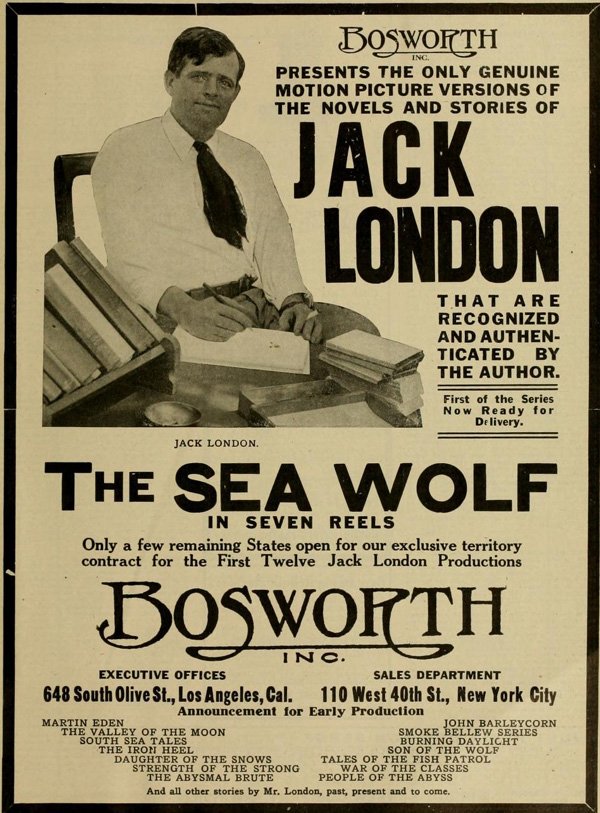
A definitive 6/10 rating for a film that redefined the boundaries of cult cinema. The Sea Wolf remains a cornerstone of transgressive art.
The first time you glimpse the Ghost, it feels less like a ship and more like a rust-slick predator whose backbone is a harpoon.
1913 audiences had never seen such a vessel on-screen: no romantic galleon, no jauntily-rigged yacht—just a low-slung killing machine that reeks of blubber, tar, and existential dread. Hobart Bosworth, triple-hatting as star, adaptor, and captain of the production, understood that London’s novel is not an adventure yarn but a scalpel laid against the underbelly of masculinity, power, and the terror of meaninglessness. The resulting one-reeler condenses a tempest of ideas into a brisk, bruising twenty-odd minutes that still feels like a punch to the solar plexus.
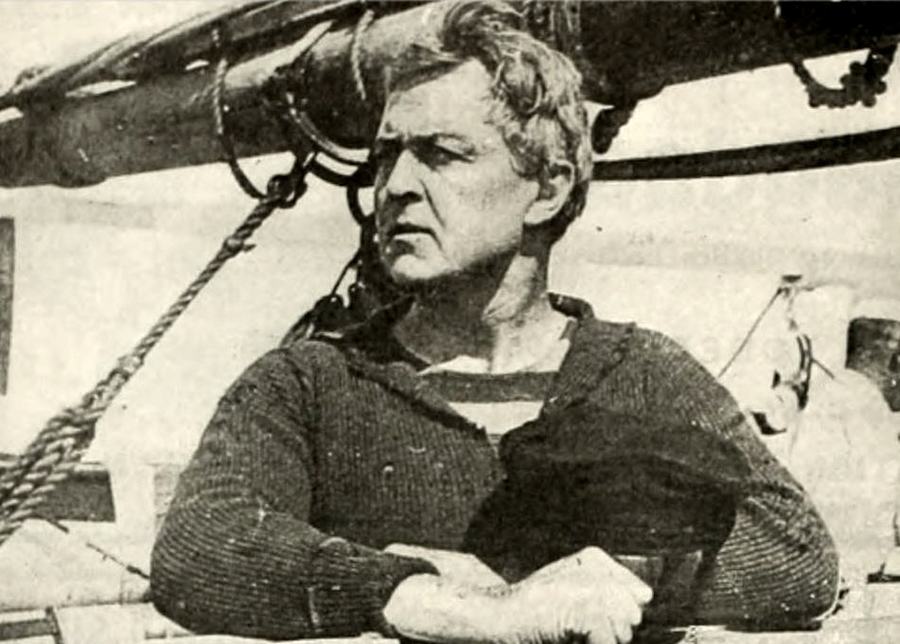
From the instant Wolf Larsen strides across the deck—oilskins flapping like raven wings—Viola Barry’s camera-conscious staging paints him as both monarch and malign god. Bosworth’s performance is calibrated at a register just shy of Grand Guignol: eyes glitter with Arctic amusement, voice never raised yet capable of freezing marrow. He is not merely cruel; cruelty is his philosophy, his daily vitamin. Notice how he recites scraps of Milton while a seaman is flogged below deck—literature and agony braided into one aesthetic experience.
Contrast this with Herbert Rawlinson’s Humphrey Van Weyden, the effete literary critic hurled from a ferry collision into this iron purgatory. Rawlinson’s body language is all evasive elbows and fluttering cuffs, a soft thing learning to armour itself in real time. The arc is silent-film shorthand—spectacles that gradually stay on longer, spine that gradually straightens—but it lands because every physical indignity registers on his angular face.
Viola Barry, as fellow castaway Maud Brewster, could have been the stock moral counterweight. Instead she weaponizes fragility. Watch the dinner-scene tableau: candle stubs guttering, sailors chewing like mastiffs, Larsen pontificating on the survival of the fittest. Barry lets Maud’s teacup clatter just a fraction too loudly—an aural graffiti tagging the captain’s sermon with feminine defiance. Her close-ups are flooded with sea-blue tinting, a chromatic reminder that water both imprisons and liberates.
Production designer J. Charles Haydon had almost no budget, so he leaned into claustrophobia: ceilings lowered between takes, hammocks strung like nooses, barrels placed to jut into walkways so every dolly shot becomes a stumble. The camera thus becomes another crew-member, colluding in oppression. When Larsen prowls, the lens follows at knee-height, turning viewers into sneaky cabin-boys afraid of discovery. The effect predates The Cheat’s chiaroscuro tyranny by two years and forecasts the looming shadows of German Expressionism.
Jack London’s original prose is a ferocious cocktail: one part Nietzsche, one part Melville, a dash of Kipling, served on the rocks of the North Pacific. The screenplay, of necessity, strips the dialogue to intertitles sharp enough to shave with. Yet the intellectual scaffolding remains. Larsen’s soliloquies on “the everlasting grind of matter and force” feel uncannily modern, a proto-existentialism that anticipates the post-war absurdist theatre. When the captain snarls, “The soul is a gland,” you hear echoes of a century wrestling with Freud and biochemical determinism.
Place The Sea Wolf beside The Corbett-Fitzsimmons Fight and you see two contrasting arenas where masculinity is stress-tested under public gaze—one in the squared circle of sport, the other in the crucible of the sea. Or stack it against Traffic in Souls: both films expose exploitation, but while the latter externalizes it in urban white-collar traffickers, Sea Wolf locates the villain inside the human heart, a predator who carries his hunting ground with him.
If you crave ecclesiastical power-plays, check The Life and Death of King Richard III; Larsen would surely swap his harpoon for a bishop’s crosier if it let him keep dominating souls. For maritime mythmaking of a gentler stripe, glance at The Last Days of Pompeii, where nature’s wrath is divine spectacle rather than philosophical laboratory.
Restoration prints reveal a surprisingly sophisticated palette: amber for interior lamplight, cobalt for open-seaweather, sickly green for below-deck rot. These tints aren’t mere ornament; they codify the ship’s caste system. Golden decks where officers strut; indigo holds where shanghaied men dream mutiny; verdigris forecastles where sickness festers. The absence of sound is itself a character—creaking masts left to your imagination, waves hammering the hull like a jury knocking at the door.
Silent acting risks melodrama, yet Bosworth underplays. His Larsen rarely gestures wider than a shrug, trusting the curl of a lip, the narrowing of eyes freighted with predatory mirth. Watch him toy with a penknife while discussing moral relativism—each flick of the wrist a silent metronome counting down to violence. Barry matches him with micro-gestures: a blink held half a second too long betrays terror she refuses to vocalize. Rawlinson’s Van Weyden undergoes the most visible transformation, shoulders squaring by gradations until, in the final lifeboat tableau, he looks capable of steering the craft himself.
Spoilers are a century old, yet the finale still polarizes. London’s book grants a quasi-redemption through Larsen’s cerebral tumor, a biological coup de grâce that feels like cosmic cheating. Bosworth’s film is more ambiguous: the captain, wounded in a skirmish, is left slumped against the mainmast, brain still buzzing with philosophy, while Van Weyden and Maud slip into a skiff and drift toward a fog-cloaked steamer. No tumor, no deus ex machina—only the possibility that cruelty may outlast its perpetrator, that the Ghost will keep sailing with a new tyrant at the helm. It’s an ending chillier than the Bering wind, and it refuses the viewer catharsis.
A century on, Larsen’s doctrines echo in tech-bro manifestos, hyper-masculine podcasters, and corporate cultures that equate kindness with weakness. The Sea Wolf forces us to ask: do we still worship the “strong man” if his strength devours conscience? In an era of gig-economy captains and algorithmic overseers, the ship has merely gone digital, its deckhands tethered by invisible contracts rather than iron shackles.
The budget constraints—cardboard bulkheads, painted backdrops for arctic ice—should sabotage realism, yet they heighten theatrical intensity. Like Expressionist sets that crook under emotional strain, these cheap surfaces remind us the story is allegory, not documentary. The sea is a mindscape, the Ghost a skull bobbing in black water.
The Sea Wolf is a compact masterclass in how early cinema could philosophize with a sledgehammer. It distills London’s 90,000-word treatise on power, fear, and the void into twenty minutes that bruise and illuminate in equal measure. Watch it for Bosworth’s hypnotic tyrant; watch it for Barry’s quietly subversive heroine; watch it because its questions—What is a soul worth? Does might make right?—still circle like sharks beneath our modern keel.
Stream it on a stormy night, volume low, windows rattling. Let the fog seep in. And when the final intertitle fades, ask yourself: who is the real Wolf—Larsen on the deck, or the beast we leash inside our own ribs?

IMDb 5.6
1917
Community
Log in to comment.