DbcultAccessing Vault...
5.7/10
Senior Film Conservator
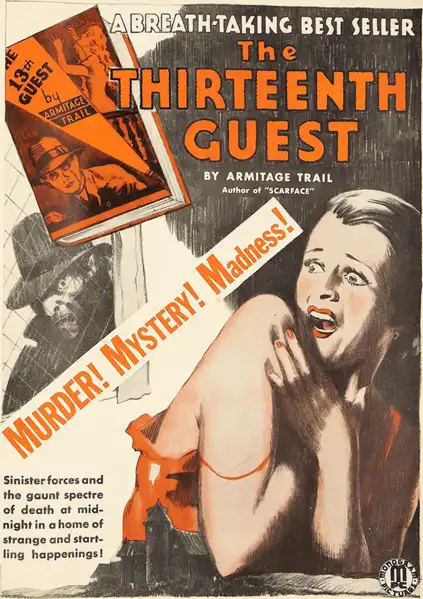
A definitive 5.7/10 rating for a film that redefined the boundaries of cult cinema. The Thirteenth Guest remains a cornerstone of transgressive art.
If you have a soft spot for creaky doors, thunderstorms that sound like someone shaking a sheet of tin, and actors who talk like they are trying to project to the back of a high school gym, The Thirteenth Guest is worth your evening. It is 1932 mystery cheese at its absolute finest.
Do not watch this if you need things like "logic" or "coherent plotting" to enjoy yourself. But if you want to see a very young Ginger Rogers look genuinely confused by a rotary telephone, you are in the right place.
The setup is classic old-dark-house stuff. A rich guy dies, leaves a highly weird will, and thirteen years later the remaining guests have to gather at his abandoned, dusty mansion to figure out who gets the cash.
Why wait exactly thirteen years? Because it sounds spooky, obviously. There is literally no other reason.
The movie gets going when people start getting murdered by a rigged phone. Blue sparks fly out of the receiver, the victim gasps, and they just collapse on the rug.
It is hilarious. I love how the characters keep going back to the same phone even after they know it is literally a murder weapon. 📞
Lyle Talbot plays our hero, a private investigator who has this incredibly smug grin the entire time. He smiles when he is looking at a dead body, and he smiles when he is insulting the police.
You just want to shake him. He acts like he is in a completely different movie, maybe a light romantic comedy, while people are getting zapped left and right.
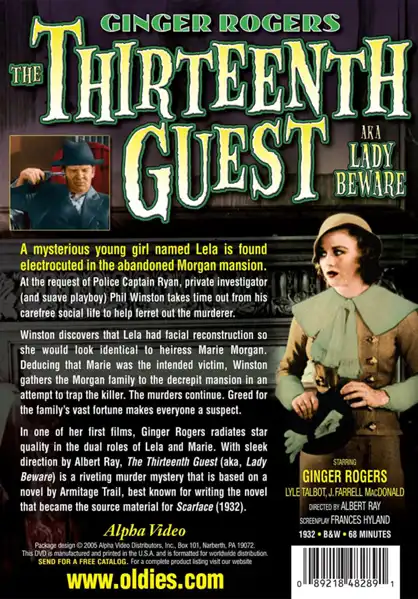
Ginger Rogers is the big draw here, right before she became a massive star. She does a lot of clutching her throat and looking terrified, which she is actually pretty great at doing.
Her character seems to exist mostly to get dragged into secret passages. The movie has a lot of those, though they all look like they were built out of cheap plywood.
Speaking of the house, you can tell this was a budget production. During the "lightning" flashes, you can actually see the shadow of the studio window frame shaking on the back wall.
It has that same hurried, slightly cheap feeling you find in other early talkies like The Thumb Print or even some of the silent era leftovers like The Girl Who Didn't Think. They just wanted to get the movie done and in theaters.
I love the random butler who keeps appearing out of the shadows. He has maybe three lines of dialogue, but he looks like he is constantly planning to eat everyone in the room.
The editing gets incredibly chaotic near the end. At one point, a character gets trapped in a secret room and the camera just... stays on a closed wooden door for about ten seconds while you hear muffled grunting.
It is beautiful. Nobody would edit a movie like that today.
Is it a masterpiece? Absolutely not.
But on a rainy Sunday afternoon, with a hot cup of tea, this is exactly the kind of dusty nonsense that makes you feel good. It does not try to be important, and that is why it works.

IMDb 8.3
1914
Community
Log in to comment.