DbcultAccessing Vault...
Cult Review
Senior Film Conservator
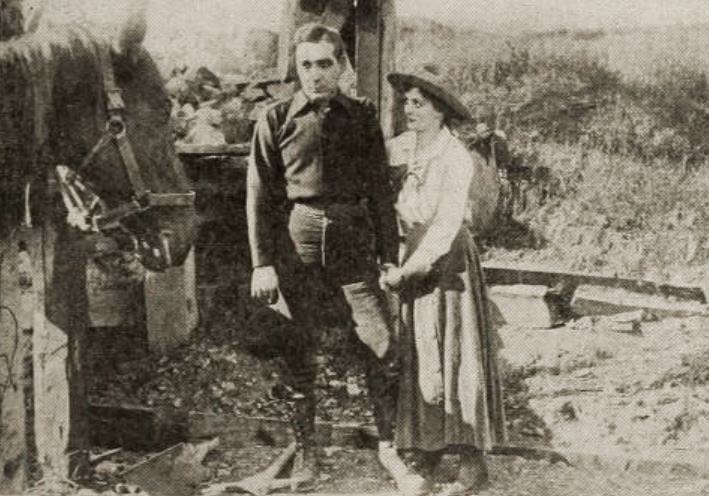
The Three of Us arrives like a frost-bitten letter from 1914, postmarked in a ghost town where the wind combs the sage and the piano is always slightly out of tune. Director Raymond B. West, armed with a scenario by Rachel Crothers, fractures the myth of the lone prospector and hands the deed to a woman whose spine is forged from quartzite.
There is no orchestral overture—only the clank of a stamp mill that has not crushed rock in half a decade. The first iris shot lands on Rhy MacGhesney’s boots, laced with rawhide instead of ribbon. Mabel Taliaferro plays her like a pocket watch that ticks off-beat: you cannot decide whether to have it repaired or simply listen to its stubborn music. She is twenty on the census, forty in the pupils, eternal in the way she squints at a sun that never quite clears the ridge.
Cinematographer Friend F. Baker shoots the settlement in depth: foreground shacks slump, middle-distance mule trails snake, and far-off peaks remain implacably snowy. The eye keeps traveling, searching for the vein of narrative ore that Crothers has buried. When we finally see the ore, it is not gleaming but rust-red—Crothers’ sly reminder that wealth starts as wound.
Irving Cummings’ Lewis Beresford is introduced via a dissolve that feels almost obscene: a poker hand fans across the screen, coins clink, and his face superimposes like a watermark on debauchery. Yet the performance never topples into melodrama villainy; Cummings lets a tremor of genuine loneliness ripple across his cheekbones when Rhy rejects him. You sense that he, too, is a victim of capital, just better tailored.
Harry Smith’s Steve Towney is the moral spine, but the film refuses to let him ossify into plaster sainthood. Watch the way his shoulders sag when he thinks the claim is lost—fatigue, not heroism, droops the brim of his hat. The moment he strikes mineral, Smith does not whoop; he runs a trembling thumb across the vein as though testing a lover’s pulse. It is silent cinema at its most erotic: intimacy rendered in gestures miners usually reserve for drills.
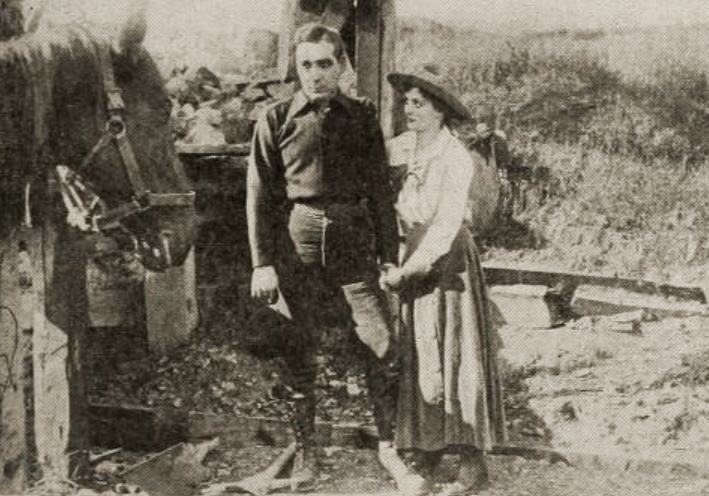
Mayme Kelso’s Maggie the servant is the picture’s contrapuntal conscience. She never stands akimbo dispensing folk wisdom; instead she folds laundry with the precision of a cartographer mapping heartbreak. In one insert, she cradles Rhy’s dead mother’s dress to her face, inhales, then exhales dust. The cut lasts maybe two seconds, yet it contains whole volumes on inheritance and unpaid labor.
The Hallowe’en dinner sequence is staged like a Brueghel miniature gone sepia. Pumpkins leer, fiddles scrape, and Creighton Hale’s Sonnie bobs for apples in a tin trough. The camera tilts slightly, as if the world itself has had one tot too many of corn liquor. Into this carnival barges Steve, shirt still streaked with ochre, clutching ore that glows under kerosene like a fistful of small suns. The tonal whiplash—from bucolic revelry to incandescent hope—anticipates the barn-raising / near-lynching pivots of later Ford Westerns.
Clem’s betrayal, orchestrated in a moonlit lean-to, is framed through a broken windowpane. The crack bisects his face, literalizing split loyalty. Crothers’ intertitle reads: “The East called with a velvet voice—yet the price was a sister’s trust.” Velvet, yes, but shot through with barbed wire.
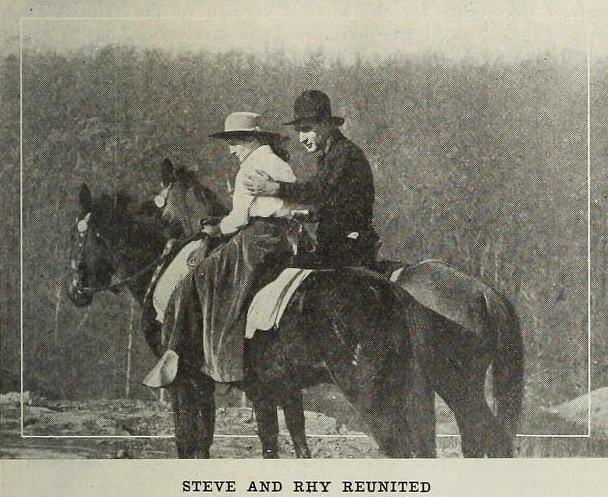
Then comes the ride—nine minutes of celluloid that feel like nine operas. Undercranking gives the mustang’s mane a comet tail; double-exposed clouds churn like Percherons across the sky. Rhy’s switchback shortcut is filmed on an actual scree slope; you can see Taliaferro’s knuckles whiten as she reins. The stakes are conveyed without title cards: each pebble dislodged is a second lost, each hawk-shadow that passes over the lens is a premonition of claim jumpers.
The office of the mining recorder is rendered in high-contrast chiaroscuro. Beresford’s silhouette arrives first, top-hat eclipsing the registrar’s lamp like a premature eclipse. When Rhy bursts in, wind-lashed, hat lost, hair unspooling, the registrar’s inkpot trembles—a metronome counting down to legal noon. She files the claim, presses the blotter, and for the first time the camera dollies in on her smile: crooked, exhausted, triumphant. It is the birth of a new American grin, one that will reappear on Rosie the Riveter’s poster three decades later.
The final blast is not mere spectacle; it is the community’s exhalation after years of hypoxic despair. West intercuts the explosion with reaction shots: Maggie clutching her crucifix, Sonnie covering his ears in delight, Clem finally smiling as debris drifts like black confetti. The smelter’s foundation is blessed by dynamite, a secular baptism for an industrial age.
Compare this to The Mystery of St. Martin’s Bridge, where the heroine’s agency is mostly reactive, or In the Python’s Den, whose colonial swagger ages like milk. The Three of Us grants its woman both desire and deed, and refuses to punish her for either.
Musically, contemporary exhibitors would have sent out cue sheets suggesting Grieg’s “In the Hall of the Mountain King” for the ride, but modern audiences might hear in it the embryonic chords of Copland—open intervals, prairie fourths, the ache of space.
Yet the film is not flawless. The Chinese laborer glimpsed shoveling tailings is unnamed, wordless, a stereotypical blur—Crothers’ screenplay may be feminist, but its racial horizon is still 1914. The omission stings more in retrospect because every other marginal figure is granted interiority.
Still, the aftertaste is one of scorched sage and metallic hope. When the lights come up you half-expect your palms to be dusted with fool’s gold. That alchemical sleight-of-hand—turning nitrate into lived experience—is why The Three of Us deserves restoration, not mere scholarly footnote. Let the current boom in Western revisionism (After Sundown, Dan Morgan) circle back to this silent progenitor. Its DNA contains the chromosomes for every later gunslinger with a conscience, every frontier heroine who refuses to be marital currency.
Seek it out in any form you can—16-mm at an archive, bootlegged MPEG, or the spectral whir of a museum hand-crank. Let Rhy MacGhesney gallop through your synapses at 2 a.m. when rent is due and options expire. She will remind you that claims are not just parcels of land but promises we file against the future, and that sometimes—if you ride hard enough—the mountain will yield its heart of ore.
IMDb 5.7
1927
Community
Log in to comment.