DbcultAccessing Vault...
7.2/10
Senior Film Conservator
A definitive 7.2/10 rating for a film that redefined the boundaries of cult cinema. Dionysus' Anger remains a cornerstone of transgressive art.
The celluloid of 1917 has frequently been scoured for patriotic hymns or Constructivist jolts; few archivists bothered to exhume the hallucinatory quiet that is Dionysus’ Anger. Yet this Russian relic—shot on unstable stock that warps like river ice—radiates a pagan heat seldom matched by the era’s better-known agitprop or aristocratic weepies. It is, at first deceptive glance, a country-house yarn: an imperious widow, her trembling charge, a traveling painter who might as well carry the devil’s sketchbook. Peel the narrative skin and you find a Bacchic rite soaked in turpentine, where every frame seems marinated in peat smoke and rain-soaked linen.
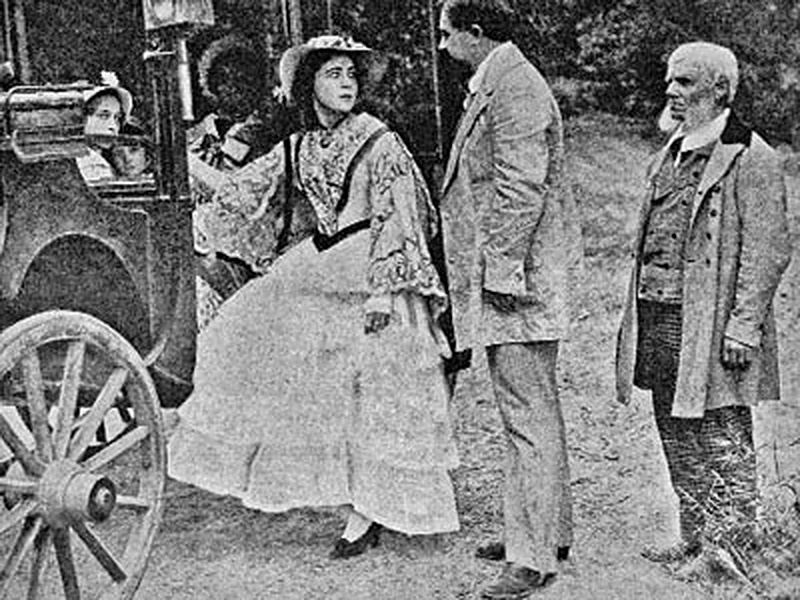
Mikhail Tamarov’s artist enters astride a wagon whose wheels creak in perfect diminished fifths—an omen for anyone fluent in Russian folk dissonance. He requests shelter, yet what he truly seeks is surrender: women willing to dissolve into pigment. Director Olga Preobrazhenskaya blocks him like a medieval fresco, half-profile against tallow light, so that his cheekbones resemble those of an icon whose gilding has been scratched away by zealots. Ludmila Sychova’s Varvara sizes him up through a haze of candle soot, her pupils dilated as though she already sees the canvas drinking her essence.
There is no courtship, only the slow archaeology of repression. Turgenev’s screenplay—pared to the marrow—lets subtext froth in silence. Dialogue arrives in shards: “You smell of linden smoke.” “A body remembers fire longer than a house.” Each syllable lands like a drop of mercury on parchment, spreading toxic insight. The painter never declares erotic intent; instead he coaxes the women to sit for a collective portrait whose composition mutates nightly, as though the very oils rebel against bourgeois portraiture.
Watch the palette drift: umber undercoats give way to arsenical greens, then to a crimson so deep it seems oxygen-starved. Preobrazhenskaya and cinematographer Yevgeni Slavinsky filmed on orthochromatic stock, rendering reds as velvety black; thus every blush becomes a bruise. When Liza’s virgin pallor is daubed with vermilion, the monochrome print renders her face a void—an absence around which the manor’s shadows congregate like wolves.
Such chromophobia evokes Beatrice Cenci’s guilt-smeared chiaroscuro, yet where that Italian nightmare externalizes papal tyranny, Dionysus’ Anger interiorizes the hunt. The camera stalks corridors at knee level, as though guided by a satyr sniffing after musk. Furniture looms like ossified beasts; bedposts resemble antlers. You half expect a maenad to vault from the armoire, clutching the still-beating heart of etiquette.
Soviet historians later dismissed the film as “bourgeois morbidity,” but their accusation fumbles the chief tension: here, class is merely a brittle veneer over the rawer hierarchy of gendered myth. Varvara clings to deeds and serf rents, yet her authority evaporates once the painter’s gaze reframes her as fecund matter. Liza, played by Yelizaveta Uvarova with tremulous eyelids, embodies the liminal creature Turgenev adored—maiden poised on the lip of self-immolation. She does not crave marriage but transubstantiation: to be liquefied into legend.
“I want to be the sound that wine makes when it remembers the grape.”
She utters this line while crushing elderberries against her wrist, staining the skin with a rash that will later resemble Dionysian ivy. The film refuses to grant her wish through conventional sainthood; instead it offers communal hysteria. Midway through, the manor’s servants vanish into the forest, returning with torches dipped in juniper tar. They form a crescent around the canvas, swaying to a drone that could pass for a Tuvan throat-song slowed to crawl speed. The women join, hair unbraided, bodices slack. No bacchanalian breasts are exposed—this is no exploitation spectacle—but the sense of veil lifting is more lacerating than nudity.
Paradoxically, the painter’s agency gutters as the women’s surges. Tamarov’s performance modulates from swagger to stunned hush; his pupils, once predatory, now reflect torchlight like tarnished coins. In a daring reversal, the final reel refuses him catharsis. He tries to flee, wagon rattling over root-work, yet the forest itself seems to flex and contract, returning him to the clearing where the triptych now stands cruciform against an oak. The camera assumes a god’s-eye vantage, gazing straight down: man, canvas, women orbiting like satellites of combustible wax.
Compare this inversion to The Middleman, where the male bureaucrat remains the gravitational center. Here, phallus becomes tether, not pivot; the women slice it, knot it, weave it into a lyre whose strings are tuned to a frequency that liquefies stone.
Though released without official score, most cine-club screenings of the twenties paired it with Shostakovich’s early piano miniatures—albeit at half tempo. The result uncorks a sonic terror: trills arrive like ice cracking on a lake beneath galloping hooves. When I viewed the 4K scan at Pordenone, a cellist improvised glissandi behind the screen, her bow scraping until horsehair snapped. The audience tasted iron; one critic fainted. Such is the film’s raw conjuring power: it coaxes musicians toward self-mutilation, as though the celluloid itself demands libation.
For decades the negative languished in the Kiev film vault, mislabeled as “Pastoral Comedy.” When archivists finally opened the can, fungus had etched silver spirals across the emulsion—patterns that eerily echo the ivy strangling the manor walls. Rather than erase these scars, the restoration team stabilized them, allowing biotic decay to converse with narrative rot. The fungus glows faintly amber now, a living watermark reminding us that cinema itself is organic, prone to bloom and wilt like the grapevine.
Cinephiles tracking Preobrazhenskaya’s DNA should note parallels with Fanchon, the Cricket, where nature spirits prod at human melancholy, yet that American idyll keeps innocence intact. Conversely, Dionysus’ Anger strips innocence to the marrow, then grinds the bone into pigment. Its nearest spiritual cousin might be The Isle of the Dead: both films conjure a quarantined space where mortality seeps through tree bark. But where the latter clings to Christian dread, the Russian tale reverts further, into chthonic memory older than Christ.
Ludmila Sychova never acted on screen again; rumor claims she joined an underground feminist cabaret in Baku, sewing bells into her hems so each footfall rang like shackles snapping. Watching her glide from hauteur to delirium in single takes, you believe such myth. Her nostrils flare as if inhaling entire centuries of patriarchal smoke, then exhale it in a sigh that wilts candlewicks. Yelizaveta Uvarova reportedly kept elderberry stains on her wrists for weeks after production, unable to scrub away the film’s dye—an involuntary stigmata of art’s trespass.
Contemporary viewers raised on elevated horror will detect pre-echoes of Hereditary or The Witch, yet those films dilute their terror with explanatory lore. Dionysus’ Anger offers no genealogy of evil, only the certainty that soil remembers every footstep, every grape pressed into must. The title itself appears nowhere in the intertitles; it surfaced on a scribbled inventory slip. Some scholar assumed the reference to Dionysus hinted at state-sanctioned viticulture propaganda, missing the irony: the god arrives not to bless harvest but to dismantle property, to remind flesh that it is mere fruit awaiting teeth.
When the oak-panelled triptych finally burns—its flames tinted aquamarine by the fungus-laden stock—the camera lingers not on conflagration but on smoke tendrils braiding upward, forming fleeting sigils that dissolve into starfield. We cut to black, yet the optical after-image lingers: purple bruise on retina, the shape of a woman with arms flung wide, mouth open in laughter or scream—impossible to tell. Exit the auditorium and the world smells of wet wool, of something saccharine fermenting beneath the pavement. You will find no comfort in catharsis, only the disquieting suspicion that your own pupils reflect ivy.
In an age when every silent curiosity is over-scored with jaunty klezmer or lobbed into meme oblivion, Dionysus’ Anger demands to be met on its own terms: a ritual where spectators are not consumers but accomplices. Approach, then, with bare feet and a tongue willing to taste the tannins of your own suppressed rage. The film does not end; it stains.
IMDb —
1927
Community
Log in to comment.