DbcultAccessing Vault...
Cult Review
Senior Film Conservator
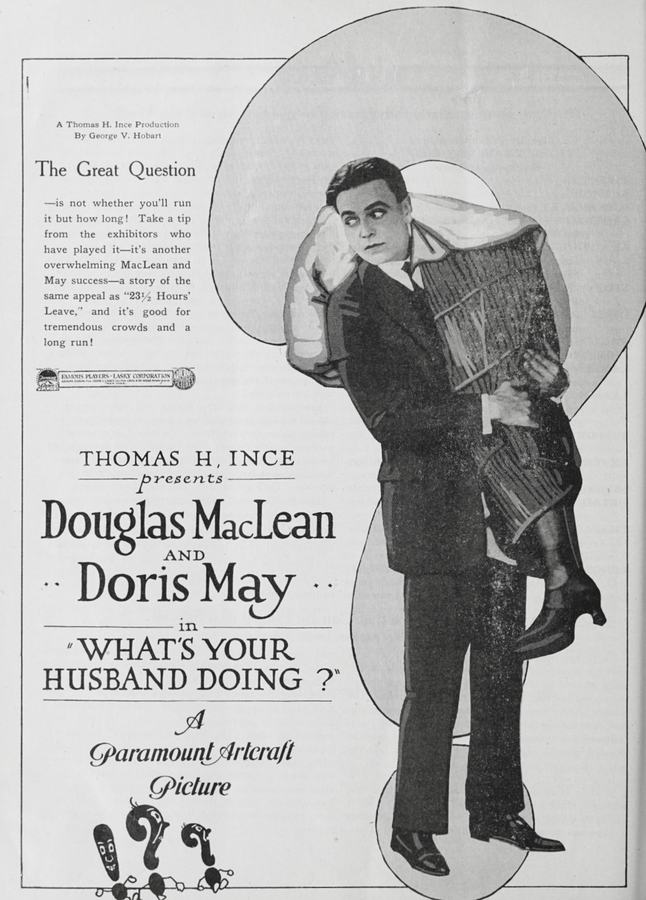
A champagne-cork of a film that ricochets from drawing-room to speakeasy to courthouse, What’s Your Husband Doing? (1923) survives as a brittle, breathless snapshot of post-Victorian marriage anxiety—yet unlike the moral scarlet-lettering of East Lynne, this picture prefers to tickle the scar rather than cauterize it.
Beatrice Ridley, incarnated by Alice Wilson with darting eyes that seem perpetually mid-blink, enters her honeymoon already haunted by ledgers of doubt; every creak of the dumbwaiter could be the gallows-swing of betrayal. Wilson plays her like a porcelain figurine convinced it hears hairline fractures multiplying. When she unfurls those incriminating envelopes—each sealed with a wax honeysuckle emblem that smacks of boudoir hubris—her fingers tremble at the frequency of a hummingbird, a gesture more eloquent than any title card.
Enter Douglas MacLean’s John P. Widgast, an attorney who wears cynicism like a boutonnière, all angular smirk and patent-leather hair. MacLean, a silent-era matinee fox better remembered for collegiate capers, here embodies the era’s new masculine commodity: the professional bachelor untethered by domestic dividends. His comic timing is a syncopated drum—he lands punchlines between beats, letting the audience supply the rim-shot.
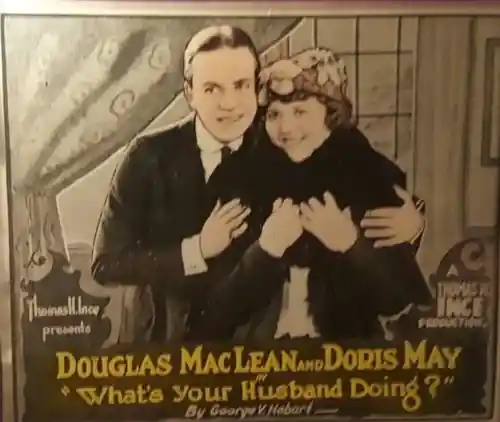
Opposite him, Charley Pidgeon—Walter Hiers in round spectacles that double as saucers for his perpetual look of startled greed—functions as both foil and fuel. Together they conjure a law office that feels less like jurisprudence than a matrimonial junkyard: typewriters clack like shrapnel, while case-files labeled “Ridiculous Cruelty” flutter like dying moths. The script, stitched by George V. Hobart and R. Cecil Smith from their Broadway farce, crackles with Roaring-Twenties nihilism: love is a commodity, divorce its futures market.
Yet beneath the cynicism lies a surprisingly feminist tremor. Margaret Livingston and Doris May, as the lawyers’ wives, weaponize their own domestic boredom, plotting a dinner ambush at the Honeysuckle Inn with the strategic glee of generals mapping Verdun. Their motivation? Not jealousy—ownership. They refuse to be relics traded in for newer models, and their rebellion prefigures the sexual-political awakenings later crystallized in Idle Wives.
The inn itself, rendered in Expressionist chiaroscuro by cinematographer George Webber, becomes a character: balconies lean like gossiping matrons, staircases coil like serpents digesting secrets. When the six principals converge—each believing they control the next breath of plot—the camera glides through cigar haze as though on tiptoe, eavesdropping on whispered ultimatums and clandestine contract signings. The visual grammar anticipates Lubitsch: doors slam in rhyming couplets, shadows copulate in corners.
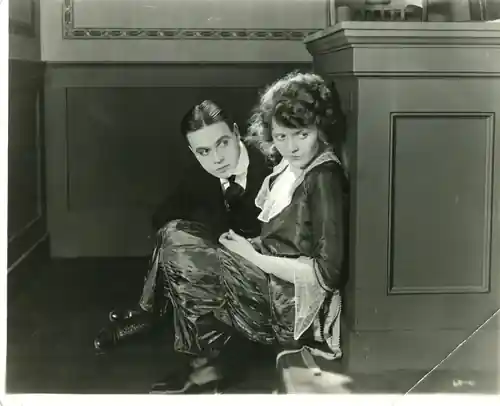
And then the raid: a cacophony of whistles, flapper shrieks, and saxophones flattened under police boots. Director Robert F. McGowan orchestrates the melee like a Keystone hurricane, yet tempers it with intimate close-ups—Beatrice’s mascara fracturing into snowflake patterns, Widgast’s smirk finally fracturing into something akin to shame. The jailhouse sequence, shot in cramped monochrome that borders on Caravaggio, forces the couples into a crucible of class: silk brushes against iron, entitlement against penance.
Come dawn, the courtroom erupts into a fugue of explanations—hidden partnerships revealed, misunderstandings untangled like kites freed from phone wires. The film’s genius lies not in resolution but in the residue: marriage remains a contract whose fine print is written in eraser. The final shot, a collective release of breath as the six exit the courthouse, feels less like closure than a collective gulp before the next scandal.
Comparative lens: where Pro Domo wallows in Teutonic sturm-und-drang and The Stolen Voice moralizes about artistic integrity, What’s Your Husband Doing? pirouettes on the knife-edge between marital dread and social slapstick. Its tempo is jazz, not dirge.
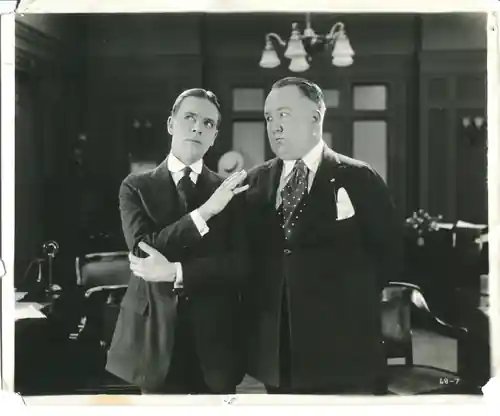
Performances oscillate between drawing-room crisp and slapstick elastic. Alice Wilson’s Beatrice matures from tremulous bride to sardonic conspirator, her final side-eye at the camera suggesting she’ll henceforth keep her own set of ledgers. MacLean, ever the lightweight, surprises with a third-act tremor of vulnerability when Widgast realizes his own cynicism has flecked him with acid. The real revelation is Margaret Livingston—pre-Silence siren—who weaponizes her kohl-lidded gaze, turning a supporting spouse into a puppet-mistress of chaos.
Technical flourishes abound. A double-exposure dream sequence—Beatrice imagining her husband’s letter as a swarm of honeysuckle vines strangling their marriage bed—feels avant-garde for 1923. Intertitles, rather than merely expository, adopt the idiomatic snap of tabloid headlines: “She followed the scent…straight to the slammer!” The tinting strategy—amber for domestic scenes, cerulean for nocturnal escapades—heightens tonal whiplash, though surviving prints often mute these hues to bruised sepia.
Yet the film’s cultural valence is its sharpest blade. It captures the moment when Victorian wedlock recoiled from modernity’s mirror, discovering lipstick smears and gin blossoms. The Honeysuckle Inn is no mere gin-joint; it’s the liminal space where the Jazz Age tests whether marriage can survive its own commodification. The answer, soaked in bathtub bourbon, is a hungover maybe.
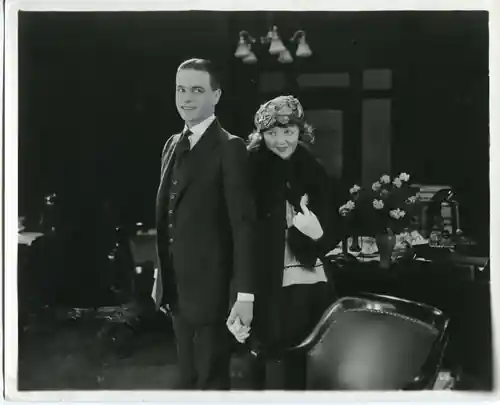
Unfortunately, like many Paramount silents, the picture survives only in 65-minute reconstructions cobbled from Czech and American archive fragments. The missing reels—rumored to contain a risqué hula-dance sequence excised by censors—linger as ghost tracks, their absence palpable in narrative ellipses. What remains, however, is a tart, tonic cocktail: effervescent yet leaving a bitter bloom at the back of the throat.
So, does What’s Your Husband Doing? merit resurrection beyond academic footnotes? Resoundingly. It prefigures the marital screwball DNA later perfected by Hawks and Cukor, yet retains the pre-Code tang of sexual brinkmanship. In an era when algorithmic dating commodifies affection more efficiently than any 1920s divorce attorney, the film’s central query—how do we surveil the human heart without fracturing it?—feels algorithmically evergreen.
Seek it out at repertory houses daring enough to project 16mm, or via streaming restorations whose flickers bear the honorable scars of time. Watch it beside cronies, preferably over negronis, and place bets on which marriage collapses first—the one onscreen or the one across your sofa. Either way, you’ll leave humming the film’s unsung refrain: trust is a currency that appreciates only in darkness, and the honeysuckle, for all its perfume, clings as it strangles.
Verdict: 8.7/10—a effervescent artifact whose laughter rings loudest in the key of existential dread.
IMDb 6.8
1933
Community
Log in to comment.