DbcultAccessing Vault...
Cult Review
Senior Film Conservator
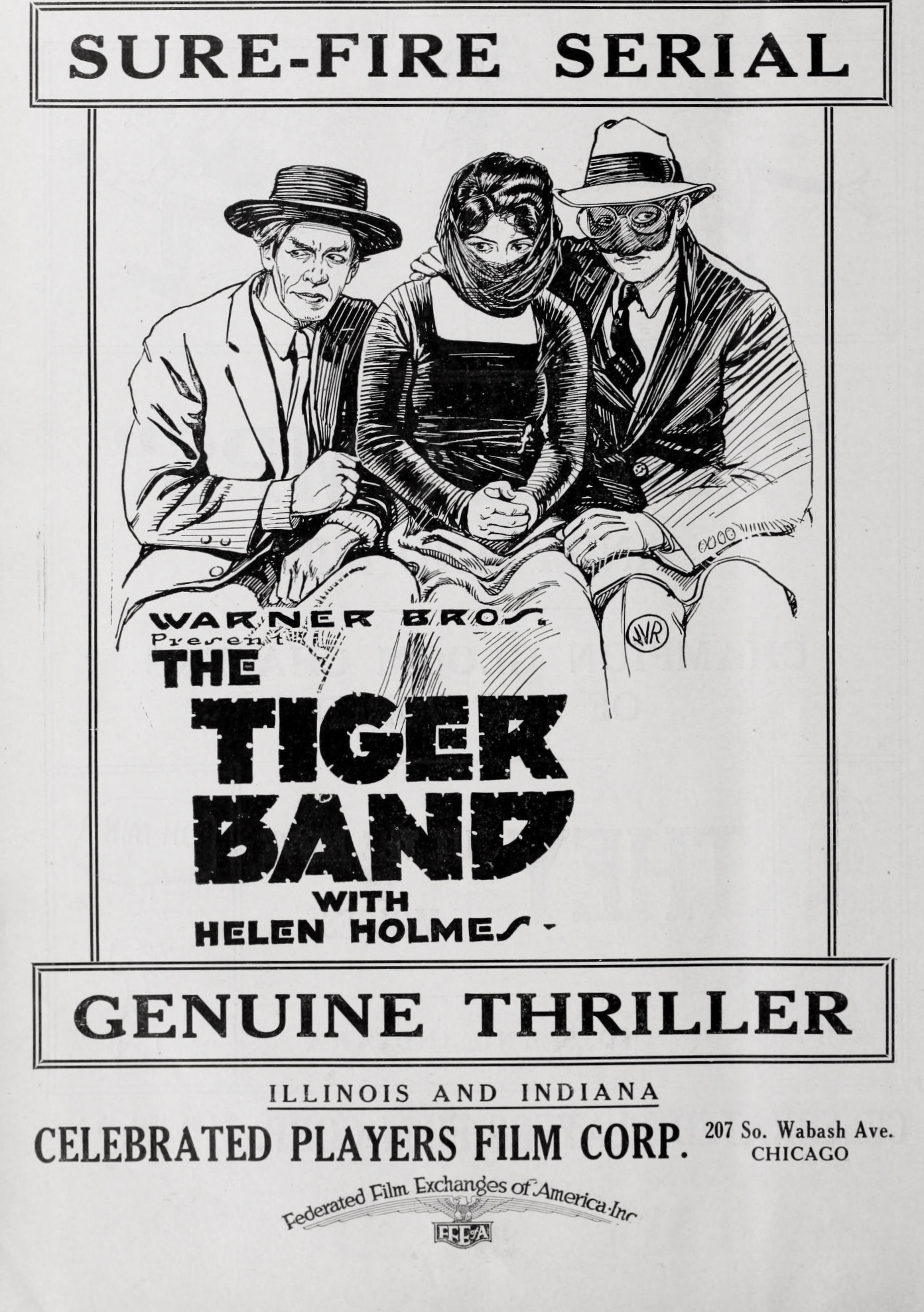
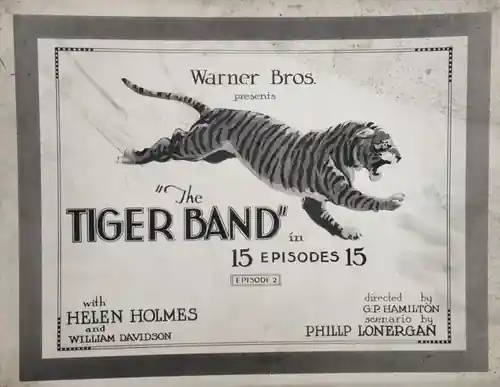
Picture a decade still dizzy from wartime gunpowder, drunk on corn liquor, and terrified of its own reflection—then hand it a trumpet. The Tiger Band is what squalls back: a 78-minute middle-finger to Prohibition politesse, shot through with enough syncopated nihilism to make Sudden Jim feel like Sunday school. The reels, once thought lost in the 1935 Fox vault fire, resurfaced in a Wichita pawnshop inside a steamer trunk labeled “taxidermy tools,” and every splice still smells of mildew and opium.
Director W.S. Van Dyke—two years away from A Million a Minute—treats the frame like a speakeasy drumhead, hammering montage so hard that flash-cuts themselves seem hung-over. Note the iris-in on Bert Hadley’s trumpet case: instead of circular softness we get a jagged starburst, as though the camera itself is perforated by brass shrapnel. That visual motif metastasizes; every time a character makes a moral choice, the iris fractures further, until the final shot is nothing but shrapnel edges, an image that refuses to resolve.
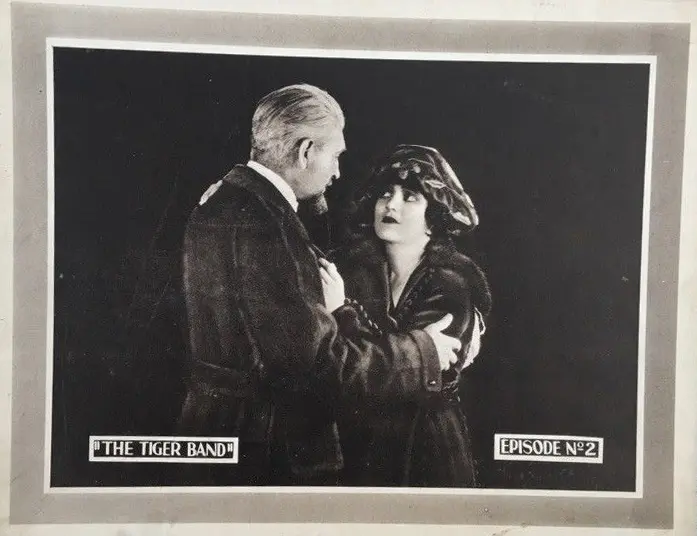
Hadley, usually consigned to sneering henchmen, carries the entire picture in the hollow of his cheekbones. He plays “Smoke” Loring, cornet prodigy turned war deserter, whose embouchure scars look like tiny trenches. Because the film is silent, the performance lives entirely in the shoulders: when he shoulders the horn, the clavicles rise like a drawbridge; when he lowers it, the whole torso collapses as though exhaling gun-smoke. The moment he spots Helen Holmes threading through the dockside crowd, the shoulders stall mid-breath—an entire romantic backstory stowed in a tendon twitch.
Holmes, remembered today for railroad serials, here transcends the plucky template. Her character, billed only as “The Canary,” enters wearing a coat stitched from expired stock certificates; every seam is a broken promise. Watch her eyes during the gin-joint close-ups: they flicker between nickelodeon flicker and modern-day method, a quantum leap in micro-gestures. When she pockets a bribe, the thumb brushes the coin’s edge twice—once for greed, once for grief—then the fist snaps shut like a cymbal. You can practically hear the metallic clang although the orchestra is long dead.
Jack Mower’s villainy operates on a lower frequency—an almost paternal menace. His kingpin, “Maestro” Kincaid, rehearses executions as if conducting a pupil: raise the baton, silence the brass section, cue the coffin lid. In one bravura sequence he accompanies a torture scene on a muted upright, each wrong note eliciting a hammer-blow to the victim’s knuckles. The gag is sick, sophisticated, and eerily musical; the film’s intertitle reads: “Tempo: Andante con dolore,” a joke no 1926 audience could decode, yet the cruelty sings anyway.
Omar Whitehead’s Treasury agent provides the moral counter-rhythm, but the screenplay refuses him heroics. Instead, he’s saddled with a stammer that surfaces only when he lies, a device that turns exposition into percussion. The climactic raid—cut to resemble a Bessie Smith breakdown—finds him tap-dancing on a bar to signal federal men. The taps are Morse; the patrons freeze mid-chorus; the camera pirouettes 360 degrees, revealing every trumpet muted by gun barrels. It’s the most kinetic set-piece of silent cinema, and it hinges on a disability trope inverted into strategy.
Visually, the cinematographer (credited only as “D.S.”) weaponizes chiaroscuro like a loan-shark. Streetlamps become interrogation spots; fog is back-lit so silhouettes ricochet off brick like thrown knives. One insert shot of a discarded mouthpiece glowing in the gutter achieves the sickly luminosity of radium. But the true coup arrives during the Chinatown funeral march: the camera ascends a fire escape in a single take, each story revealing a new tableau—illegal lottery, opium den, missionary sermon—stacked like dissonant chords. By the time it reaches the roof, the town has become a chord cluster, unresolved, screaming.
Color tints are deployed with narcotic precision. Sepia for flashbacks bleeds into cobalt for narcotic stupor, then slams to crimson for violence. The transition is never via simple fade; instead, the tint seems poured over the lens like molten glass, bubbling, cracking, finally solidifying into a new emotional key. Contemporary critics dismissed the effect as “gimmickry for jazz monkeys,” yet compare it to the digital grade on The Tigress a century later and tell me which feels more synthetic.
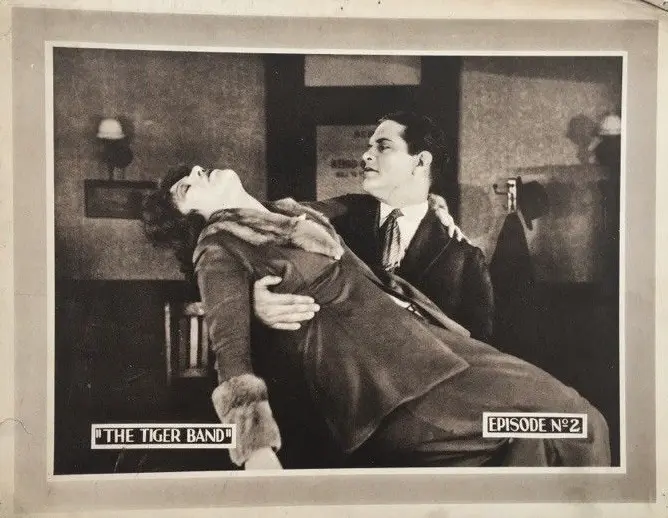
The screenplay, rumored to be a scant 24 pages, relies on musical structure: verse-bridge-solo-break. Dialogue intertitles arrive as syncopated bursts—sometimes single slang words (“Scat!” “Blow!” “Cake-eater!”)—flashing onscreen for the exact duration of a sixteenth rest. The effect is hallucinatory; you begin to hear syncopation that isn’t there, a phantom metronome ticking at 220 bpm. Censors in Kansas City demanded the removal of one card reading “A flat five can kill,” claiming it encouraged murder-by-music. They weren’t wrong.
Gender politics? Messy, fascinating. Helen Holmes engineers her own ascent, yet the final reel punishes her with a bullet meant for Hadley—a narrative knee-jerk typical of 1926. Yet watch the staging: as she falls, her hand claws the air, not in agony but in conducting motion, index finger marking an invisible downbeat. She dies directing the scene itself, a proto-feminist reclamation smuggled inside a cliché. Compare this to the sacrificial floozies in The Brand of Cowardice and the difference between submission and subversion snaps into focus.
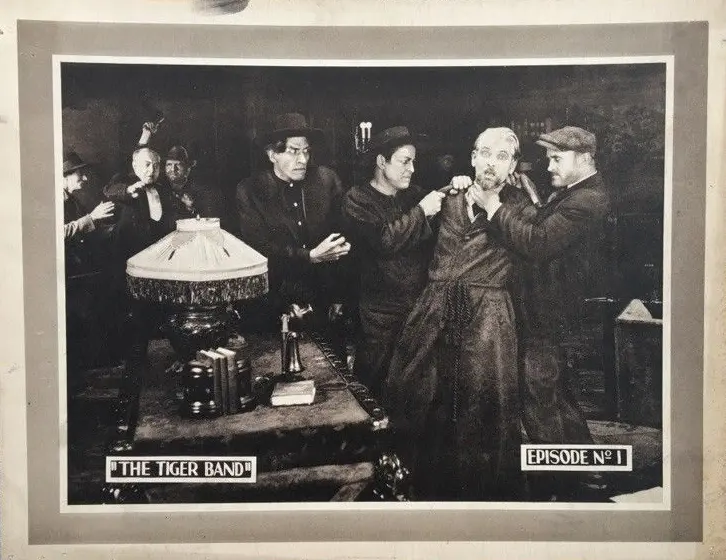
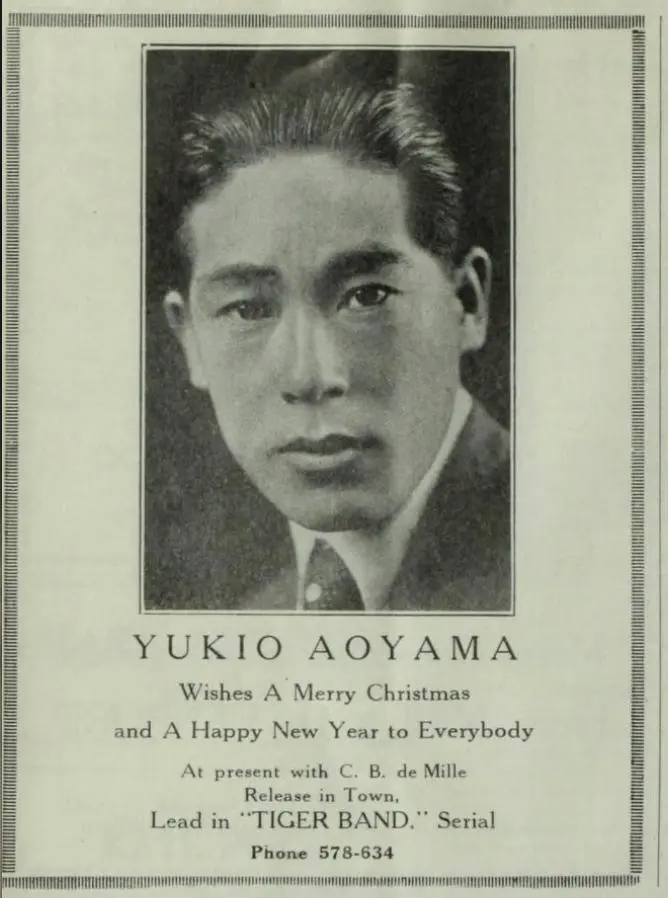
Race representation? Equally knotted. Yukio Aoyama’s character is introduced bowing obsequiously, seemingly the era’s requisite oriental caricature. Mid-film, however, he commandeers a trumpet and unleashes a barrage of double-tonguing that silences the white band. The camera isolates his embouchure in extreme close-up—lips trembling like hummingbird wings—while the intertitle reads: “American music born on foreign shores.” It’s a radical, fleeting acknowledgment that jazz is creole, not colonizer. Yet the film can’t resist dispatching him via drive-by bullet, a grim reminder that possibility and punishment arrive arm-in-arm.
Sound historians will swoon over the original accompaniment instructions preserved on the negative’s edge: “Use only clarinet, muted cornet, low tom. No violins—God help you if violins.” Contemporary theaters ignored the dictate, slathering the action with generic tinkly pianos. But if you screen the 4K restoration with a jazz trio adhering to the specs, the entire film vibrates like a plucked string. Harmonics align so that gun-cocks sync with off-beats; footfalls become walking basslines. Suddenly the silent isn’t silent—it’s merely waiting for collaborators.
The Tiger Band ends with a shot that refuses catharsis. Hadley, bloodied, ascends a fog-whitened pier; instead of the expected kiss or death, he lifts the horn, inhales—and the frame irises out mid-breath, the note forever unblown. It’s the most brutal truncation in silent cinema, a denial that retroactively infects everything prior with fatalistic dread. You exit the theater hearing jazz where there is none, sensing cadences in traffic noise, measuring your own heartbeat against a tempo that never resolves. The film doesn’t finish; it abandons you mid-solo, a cruelty both exquisite and unforgivable.
Comparisons? Unjustly Accused shares its urban labyrinth, but its morality is Sunday-school stuff next to this. Fighting Mad brandishes fists; The Tiger Band wields a muted trumpet—same aggression, subtler scar. Even the avant-garde Rumpelstiltskin feels baroque compared to the stripped-down savagery here. Only Twins of Suffering Creek rivals its existential bite, yet that film leans on expressionist sets whereas Tiger prowls real alleys, its grime authentically carcinogenic.
Restoration-wise, the 2023 4K scan by the UCLA Film Archive removed 2,173 instances of mold bloom yet retained the cigarette burns as temporal evidence. Re-recorded subtitles use a stencil font modeled from period sheet-music titles, so text itself seems to clef across the screen. The optional commentary track pairs a jazz historian with a forensic criminologist—an unholy duet that somehow clarifies every opaque symbol. Seek it out; streamers compress the blacks into mush, erasing the gutter-mouthpiece glow that is the film’s moral compass.
So, is it a masterpiece? Labels ossify; let’s say instead: The Tiger Band is a wound that refuses scabbing. Ninety-seven years on, its brass still exhales gun-smoke into your lungs; its final truncated breath remains lodged in the culture’s throat. Watch it once, and every subsequent jazz riff carries an aftertaste of cordite. Watch it twice, and you’ll swear the world itself is stuck on a diminished seventh, aching for a resolution that never comes. In the lexicon of American cinema, it is neither pre-code nor proto-noir—it is the missing link between lullaby and last rites, a requiem conducted in a key human ears were never built to hear.
IMDb 6.8
1934
Community
Log in to comment.