DbcultAccessing Vault...
2.9/10
Senior Film Conservator

A definitive 2.9/10 rating for a film that redefined the boundaries of cult cinema. Denny from Ireland remains a cornerstone of transgressive art.
In the annals of early cinema, few narratives capture the raw, unvarnished spirit of human endurance against a backdrop of systemic injustice quite like Denny from Ireland. This silent epic, penned by William H. Clifford, is more than just a moving picture; it's a stark, often brutal, mirror reflecting the socio-economic upheavals of its time, particularly the plight of the Irish diaspora. It’s a compelling journey through love, loss, vengeance, and an unexpected, convoluted path to redemption, demanding our attention not merely as a historical artifact, but as a powerfully resonant piece of storytelling that grapples with universal themes.
The film opens with a fleeting glimpse of domestic bliss, as Denny O'Hara (portrayed with earnest intensity by Andrew Arbuckle) weds his beloved Eileen O'Connor. This tender, hopeful beginning, however, is but a fragile blossom destined to be trampled underfoot by the relentless march of fate and the harsh realities of impoverished Ireland. The news that his elderly mother has been evicted from her humble abode acts as the precipitating event, a cruel awakening that shatters Denny's nascent happiness. His subsequent desperate search culminates in the heart-wrenching discovery of her lifeless body, a profound tragedy that speaks volumes about the brutal indifference of the landlord class and the precarious existence of the rural poor. It’s a moment that resonates with the stark realism found in other social dramas of the era, though perhaps with a more pronounced sense of personal devastation than one might find in, say, the more broadly allegorical Skazka mira. The immediate emotional impact is visceral, establishing a profound sense of injustice that fuels Denny’s subsequent actions.
Consumed by a righteous, burning desire for retribution, Denny sets out to confront, and presumably kill, the callous landlord responsible for his mother's death. This is where Clifford's narrative introduces a potent dose of dramatic irony: Denny arrives only to find the oppressor already dead. This twist is not merely a plot device; it's a profound commentary on the nature of justice and vengeance. Does it diminish Denny's moral culpability, or merely shift the burden of his thwarted intentions? The film cleverly leaves this ambiguity hanging in the air, forcing the audience to grapple with the implications. It’s a narrative choice that sets it apart from more straightforward morality plays like The Great Problem, which often present clearer lines between good and evil. Here, the world is far more complex, mirroring the chaotic realities of life.
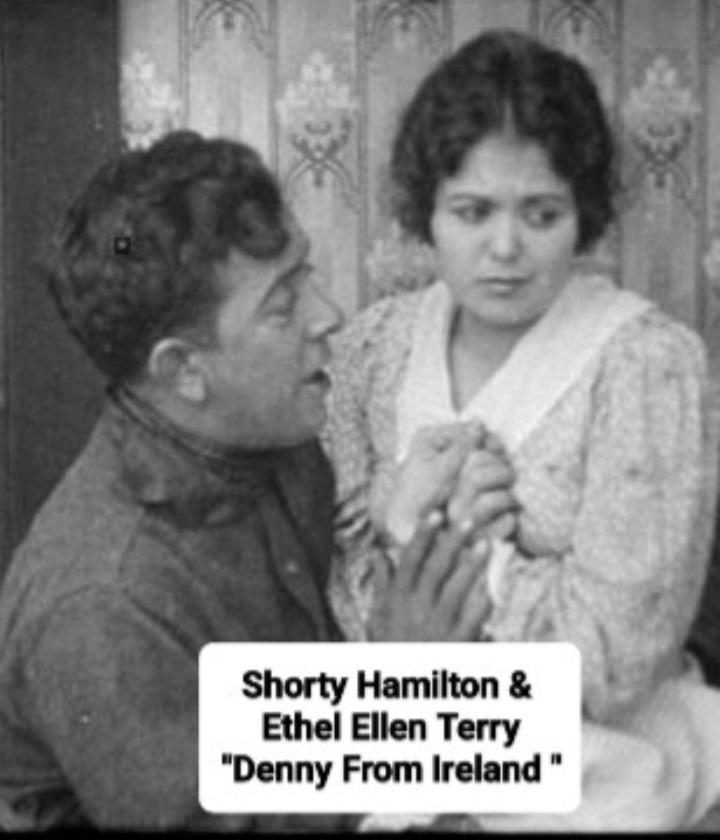
The moral quandary presented by the landlord's pre-emptive demise is a masterstroke, elevating the narrative beyond simple revenge to a deeper exploration of fate and human agency.
The sudden, unexplained death of the landlord casts a long shadow over Denny. Despite his innocence in the act, the circumstances are damning. A compassionate local priest, understanding the precariousness of justice for a man of Denny's standing, urges him to flee. America, the land of opportunity, becomes his reluctant refuge. This emigration arc is a poignant reflection of a historical reality for countless Irish individuals, seeking escape from poverty and political unrest. Denny's journey across the Atlantic is fraught with the universal immigrant experience: the struggle for survival, the relentless toil, and the persistent hope for a brighter future. He finds a measure of success, working tirelessly to build a new life, yet this prosperity proves insufficient to bridge the vast geographical and financial chasm separating him from Eileen. The yearning for his wife becomes a palpable, aching void, a testament to the enduring power of love across impossible distances, a theme that echoes the emotional core of films like Bondage or even the more abstract yearning in Embers, albeit with a more grounded, socio-economic motivation.
Driven to desperation by his inability to send for Eileen, Denny makes a fateful decision: to rob a shipment of money. This pivotal moment marks a significant shift in his character arc. No longer merely a victim of circumstance, he actively chooses a morally ambiguous path, driven by love and desperation. However, Clifford once again introduces a narrative complication that prevents Denny from becoming a straightforward villain. He arrives at the scene only to find that other robbers have already beaten him to the punch. This unexpected turn of events transforms Denny from a would-be criminal into a cunning opportunist. His resourcefulness shines as he tracks the original thieves, outmaneuvering them to reclaim the stolen funds. It’s a sequence that showcases his innate intelligence and adaptability, subtly positioning him not as a malicious lawbreaker, but as a man pushed to extraordinary lengths, demonstrating a moral compass that, while bent, is not entirely broken. This complex portrayal of character, navigating shades of grey, is a hallmark of compelling early narratives, allowing for a more nuanced psychological journey than often found in simpler fare like A Bunch of Keys.

Years pass, and Denny has carved out a respectable life for himself, ascending to the position of a deputy, a symbol of law and order in his new community. This transformation is a testament to his inherent good character, despite his past transgressions. The arrival of a tenacious detective, however, threatens to unravel his carefully constructed existence. The detective, pursuing the old robbery case, eventually locates Denny. Here, the narrative takes its most extraordinary and morally fascinating turn. Instead of exposing Denny's past, the local sheriff, perhaps swayed by Denny's evident upstanding character or a desire to maintain civic order, orchestrates a remarkable act of public exoneration. The sheriff claims Denny was responsible for catching the *other* robbers and recovering the money, thus clearing his name entirely. This narrative sleight of hand is audacious, a complete rewriting of history that grants Denny a clean slate and official recognition for an act he technically committed but ultimately rectified. It’s a powerful exploration of how narratives are constructed, how reputation can be salvaged, and the often-expedient nature of justice, reminiscent of the intricate moral compromises found in films like The House Built Upon Sand, where appearances and reality often diverge.
The success of Denny from Ireland rests heavily on the shoulders of its cast, particularly Andrew Arbuckle as the titular character. Arbuckle delivers a performance of remarkable depth and nuance, especially considering the constraints of silent cinema. His facial expressions and physicality convey a vast spectrum of emotions – from the joyful innocence of a newlywed, to the crushing despair of loss, the burning rage of vengeance, the quiet determination of an immigrant, and finally, the guarded dignity of a man seeking redemption. His portrayal avoids caricature, imbuing Denny with a believable humanity that allows the audience to empathize with his morally complex choices. Pomeroy Cannon, Ralph W. Bell, and Ellen Terry, along with Florence Drew, Shorty Hamilton, U.G. Calvin, and Louis Morrison, contribute compelling supporting roles, each adding texture to the film's rich tapestry. The silent era demanded a particular brand of theatricality, yet these actors manage to transcend mere melodrama, grounding their characters in a palpable reality. One might draw parallels to the expressive power seen in performances from The Raven, where non-verbal communication carried the entire dramatic weight.
William H. Clifford's screenplay is a marvel of intricate plotting and thematic ambition. He eschews simplistic good-versus-evil dichotomies, instead crafting a narrative rich with moral ambiguity and unexpected turns. The pacing is deliberate, allowing the audience to fully absorb the emotional weight of each event, yet it never drags. Clifford masterfully uses dramatic irony and coincidences not as contrivances, but as forces that shape character and destiny, propelling Denny through a series of trials that test his very soul. The film's ability to introduce such complex character motivations and societal critiques within the nascent language of cinema is truly remarkable. His work here stands as a testament to the potential of early screenwriting to explore profound human experiences, perhaps with a more intricate layering than some contemporary pieces like Come Robinet sposò Robinette, which often focused on lighter, more comedic fare.
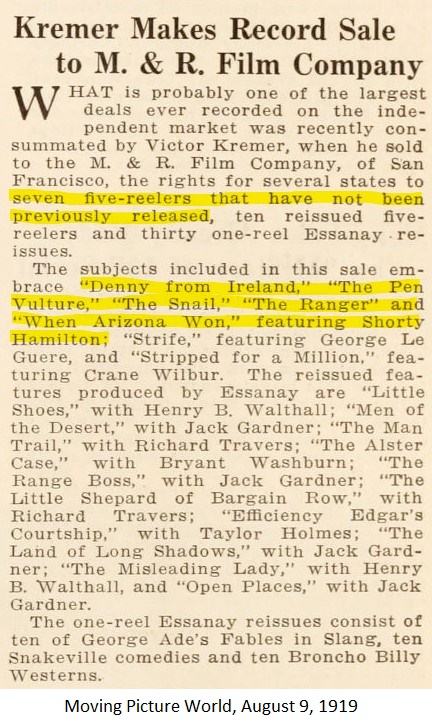
Beyond its powerful narrative, Denny from Ireland is a fascinating study in the visual language of silent film. The cinematography, while perhaps not as overtly experimental as later works, is highly effective in conveying mood and narrative. The use of intertitles is judicious, providing essential dialogue and exposition without overwhelming the visual storytelling. The director (uncredited in some records, but the visual coherence speaks to a clear guiding hand) employs wide shots to establish the bleakness of the Irish landscape and the bustling anonymity of American cities, contrasting these environments with intimate close-ups that emphasize the characters' emotional states. The blocking and staging of actors are meticulously choreographed to convey relationships and power dynamics, a crucial element in an art form devoid of spoken words. The visual cues, from costumes to set design, are carefully chosen to reflect the socio-economic status and internal struggles of the characters. This attention to visual detail, while rudimentary by modern standards, forms a robust framework for the narrative, allowing the emotional arc to unfold with compelling clarity, much like the evocative visual narratives found in films such as The Spotted Lily or The Cricket.
Denny from Ireland stands as a powerful testament to the early capabilities of cinema to tackle complex social issues and profound human dramas. Its exploration of themes like social injustice, the immigrant experience, the nature of vengeance, and the possibility of redemption remains remarkably potent. The film not only offers a window into the historical realities of the Irish diaspora but also speaks to universal struggles for dignity and belonging. It challenges simplistic notions of morality, presenting a protagonist who navigates a world of difficult choices and emergent circumstances, ultimately finding a form of peace through a series of morally ambiguous, yet ultimately redemptive, acts. Compared to more overtly moralistic tales or lighthearted romps, Denny from Ireland carves out its own distinct niche, offering a compelling blend of social commentary and personal odyssey. Its intricate plot, compelling performances, and sophisticated thematic exploration ensure its place as a significant, though perhaps lesser-known, gem of early cinematic history. It's a film that warrants rediscovery, offering rich layers of meaning for contemporary audiences interested in the roots of cinematic storytelling and the enduring power of human spirit against overwhelming odds, a spirit that might also be sensed, albeit in different contexts, in works like Bab's Diary or A Trip Through China, which similarly captured slices of life and broader cultural narratives of their time.
In its intricate dance between personal tragedy and societal forces, Denny from Ireland transcends its silent film origins to deliver a narrative that is both historically specific and universally resonant. It reminds us that the pursuit of a better life, the battle against injustice, and the complex journey towards redemption are timeless human endeavors. Clifford's vision, brought to life by a dedicated cast, ensures that Denny's odyssey remains a compelling and thought-provoking experience, a testament to the enduring power of early cinematic art. This film is a profound journey, one that challenges our perceptions of right and wrong, and ultimately, celebrates the resilience of the human spirit in the face of profound adversity.
IMDb 5.3
1930
Community
Log in to comment.