DbcultAccessing Vault...
6.1/10
Senior Film Conservator
A definitive 6.1/10 rating for a film that redefined the boundaries of cult cinema. The Trap remains a cornerstone of transgressive art.
There is a moment, about seventeen minutes into The Trap, when Lon Chaney’s Gaspard rakes his fingers across a wall of solid rock and the dust stays on his skin like guilt you can’t rinse off. In 1922 that image hit nickelodeon audiences with the force of a coal-cart derailment: here was a man literally erasing himself in order to rewrite the map of another’s fate.
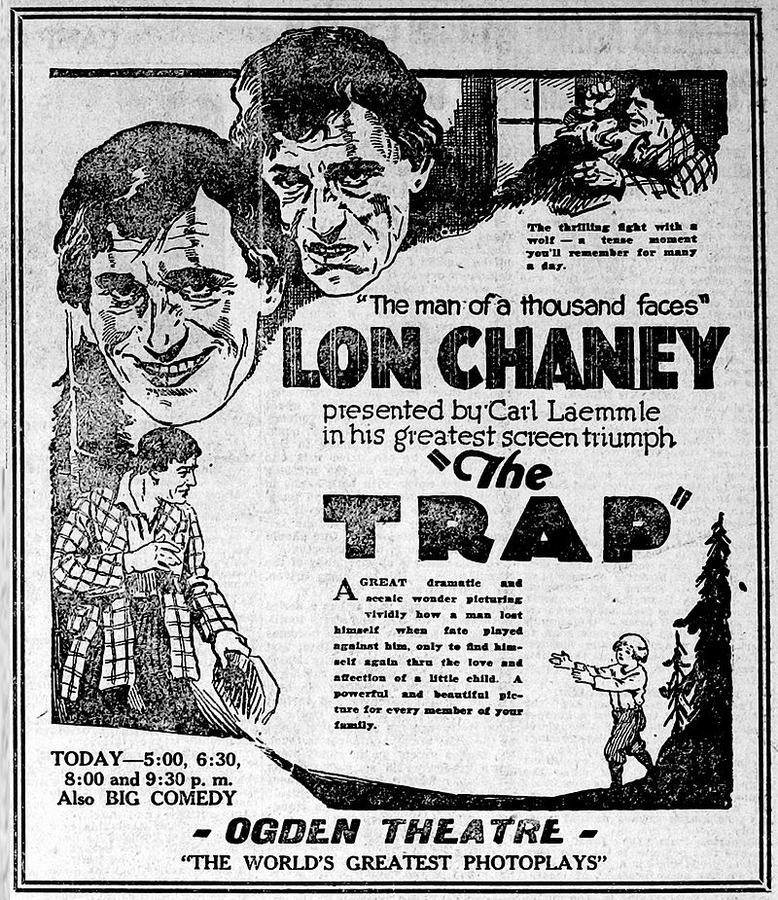
Director Robert Thornby, handed a scenario co-sculpted by Chaney and twenty-three-year-old Irving Thalberg, understood that silent cinema’s power lies in the geography of faces. He lets the camera loiter on Chaney’s cheekbones until the shadows themselves seem to file mining claims. Every frame feels carved rather than shot—wooden beams ooze resin, snowflakes hiss on contact with skin, and the tinting shifts from sulphur-yellow to bruise-blue as Gaspard’s soul curdles.
The plot’s vertebrae are primitive: claim-jumping, exile, return, revenge. Yet the flesh wrapped around them is sinewy with contradiction. Gaspard is not merely the wronged proletarian; he is also the artisan of his own damnation, forging a moral iron maiden whose spikes point inward as much as out. Chaney plays him like a man who has studied the Book of Exodus with a pickaxe in hand—every mercy shown to his enemy an insult to the cosmic ledger he insists on balancing.
Revenge thrillers of the era usually crescendo in a courtroom or a bullet-riddled saloon. The Trap instead stages its climax inside a half-built cabin perched over an abandoned mine shaft. The set itself becomes a breathing antagonist: rafters groan, ropes tighten like tendons, and the trapdoor—twelve square feet of splintered pine—waits with the patience of a cathedral gargoyle. When Vance (Alan Hale, all fox-grins and cigar oil) finally steps onto the fatal plank, Thornby cuts to a medium shot of Irene Rich as the bride, her pupils dilated in horror so pure it borders on rapture. The intertitle card, flashed for only two seconds, reads: “The abyss remembers every footprint.”
That line, ghost-written by Chaney himself, distills the film’s thesis: vengeance is not an act but an ecosystem. It pollutes groundwater, starves livestock, teaches children to count sins on their knuckles. In a thematic echo, compare Thornby’s treatment with The Mayor of Casterbridge, where the hero’s past also collapses into present catastrophe; yet Hardy’s story offers the possibility of civic redemption, whereas The Trap offers only the cold mercy of gravity.
Watch Gaspard’s hands: at first they are blunt instruments, calloused and soot-creased; by the third reel they have become the precision calipers of a man weighing souls. Chaney subtly lengthens his fingers, holds them as if each joint were hinged on broken promises. The deformity is psychological, but you swear you can hear bones grinding. This is the same actor who would later glue fishhooks to his cheeks for The Hunchback of Notre Dame; here he needs no prosthetics—the contortion is moral, and therefore more grotesque.
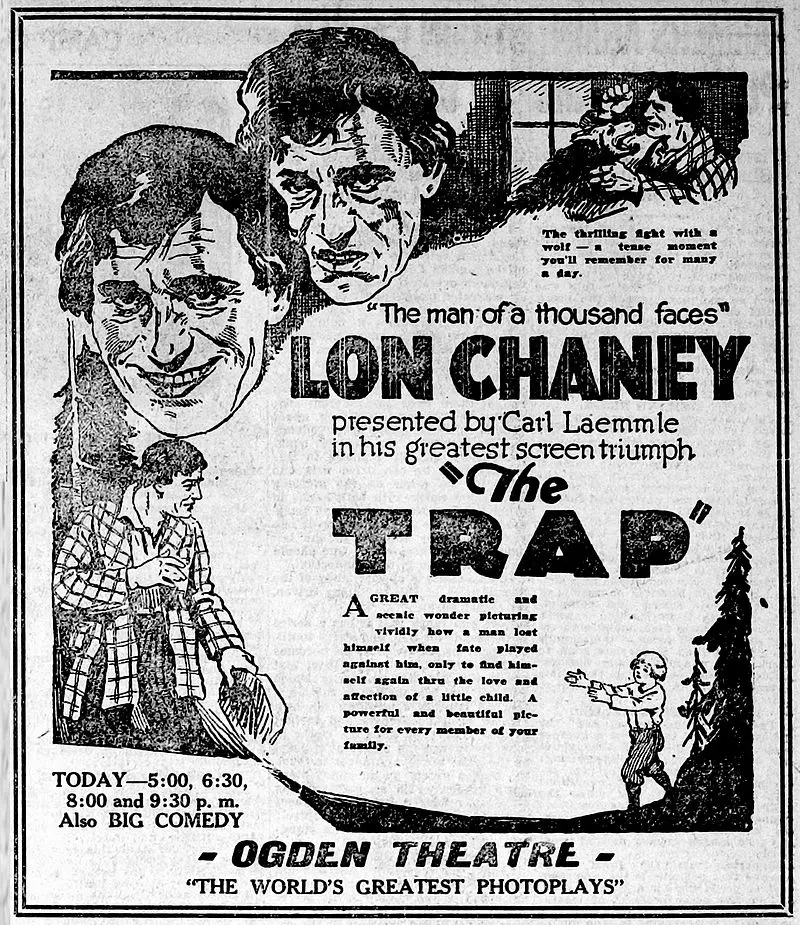
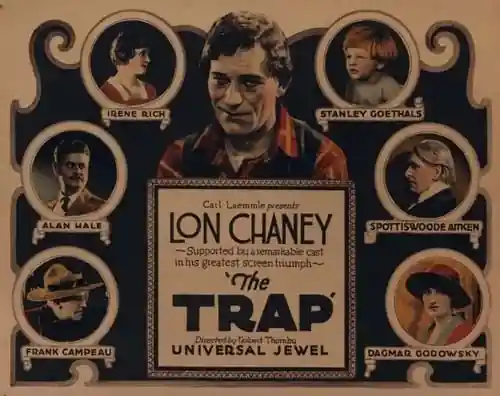
The rest of the cast orbit him like frostbitten moons. Alan Hale’s Vance is a swaggering harlequin whose laughter arrives a half-second too early, hinting at the insecurity that fuels his claim-jumping. Irene Rich, saddled with the thankless “girl” role common to 1922, manages to convey an entire novel of disillusionment with a single downward flutter of her fox-fur collar. Spottiswoode Aitken, as the crooked notary, speaks volumes by repeatedly polishing his spectacles with the same scrap of paper that once bore Gaspard’s deed.
Cinematographer Virgil Miller, later renowned for his fluid jungle work in Trader Horn, here embraces stasis. He lets the camera squat inside mine tunnels until the frame feels pressurized; only the flicker of a carbide lamp proves time has not crystallized. Interior scenes are lit with a single source—often a tallow candle cupped in Chaney’s palm—so faces emerge as half-finished marble busts. The tinting strategy is equally audacious: night exteriors are bathed in cyan, suggesting hypothermia, while daylight interiors glow amber, the color of fool’s gold.
Compare this palette with the pastoral golds of From the Manger to the Cross, where light sanctifies; in The Trap, it indicts. Even the snow is suspect—too pristine, too willing to hide bloodstains.
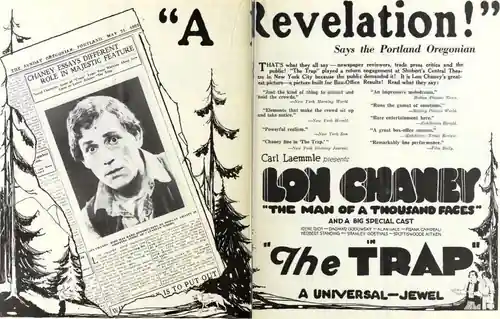
Few cinephiles realize that The Trap survives only in a 57-minute re-assembly from three disparate prints. The original eight-reel cut premiered at the Astor Theatre in New York on 12 March 1922, was withdrawn within weeks, and vanished into the same Rocky Mountain snowbanks that girdle its narrative. What we possess today—restored by the George Eastman House in 2018—relies on a 1926 Czech export print, an Australian censorship transcript, and a 16mm classroom digest. The reconstruction is like kintsugi for film: the cracks are visible, but the gold seams gleam with a beauty all their own.
One lost sequence, described in the 1922 pressbook, depicted Gaspard baptizing his pickaxe in a mountain stream, renouncing water’s cleansing properties and dedicating the tool to Nemesis. Its absence haunts the extant cut, creating a narrative jump scholars politely term “elliptical.” Yet absence is thematically apt: revenge narratives are themselves acts of negative space, lives defined by what has been gouged out.
Because The Trap arrived mere months before the talkie tsunami, exhibitors were encouraged to hire live ensembles. The 2018 restoration commissioned a score by avant-cellist Zoë Keating, whose looping motifs echo the iterative tightening of Gaspard’s machinations. Bass notes are bowed so slowly you feel them in the sternum; treble harmonics imitate the creak of pine planks. During the trapdoor release, Keating allows a 28-second silence—an auditory void more terrifying than any stab of music. Silence becomes the final revenge, swallowing even echo.
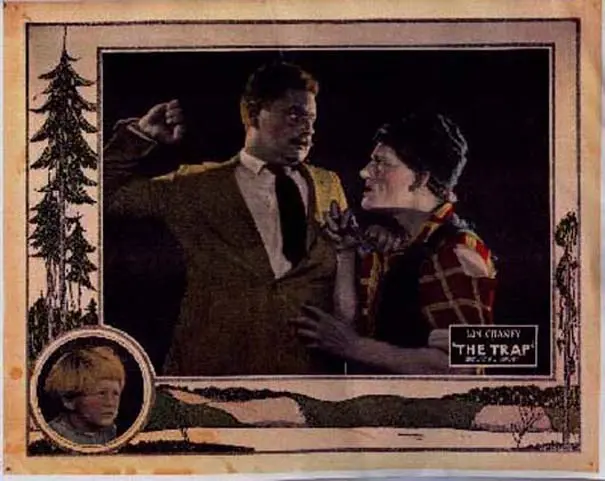
The film’s women function as tectonic plates whose unseen grind produces the earthquake men interpret as fate. Dagmar Godowsky plays Vance’s sister—barely three minutes of screen time—but her sidelong glance at Gaspard implies a history of unwanted transactions, perhaps the true reason Vance fled the territory. Irene Rich’s bride is not merely a pawn; she is the mirror in which both rivals see their monstrosity reflected. When she finally kneels on the cabin’s threshold, pleading for a mercy she cannot name, the camera frames her against the trapdoor’s hinge so that her body becomes the fulcrum on which two male egos pivot toward death.
This anticipates the gendered fatalism of Rose di sangue, yet The Trap refuses to aestheticize female suffering; it indicts the machinery that produces it.
Read as allegory, the stolen silver vein is surplus value siphoned from labor; Gaspard’s trap is the vengeful return of repressed class rage. The cabin-cum-deathtrap is a cathedral where the gospel of property is literally inverted: ownership plummets through the earth’s crust. When the floor gives way, the film does not cut to a coffin or a eulogy; it cuts to the mine shaft’s black throat, suggesting that capital’s grave is bottomless.
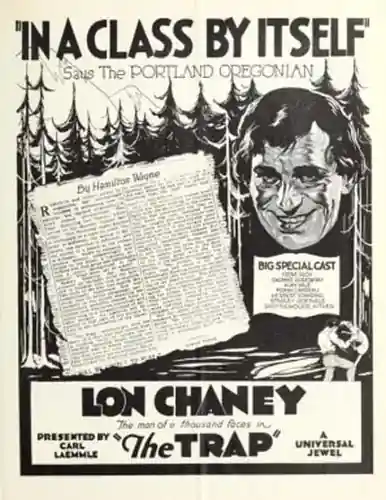
As of 2024, the Eastman House 4K restoration streams on Criterion Channel during their semi-annual “Silent Tuesdays” spotlight, and a 1080p Blu-ray is available through Kino Lorber with the Keating score and an audio commentary by Chaney biographer Michael F. Blake. Avoid the Alpha Video bargain-bin disc; its transfer resembles a potato stamped with ink.
For purists, several cinematheques still tour a 35mm print with live accompaniment. If you hear of one within a three-state radius, clear your calendar—the film demands the communal darkness of a theatre, the communal gasp when the trapdoor yawns.
Great silent cinema does not merely prefigure sound; it haunts it. The Trap is a negative image of American optimism, a daguerreotype of Manifest Destiny gone gangrenous. It reminds us that revenge is not a dish best served cold but a mine best dug deep—so deep that the digger finally plummets into his own abyss, clutching the stolen deed like a love letter never meant for him.
Go watch it, preferably at 2 a.m. when your own floorboards start to sound like pine planks under stress. Listen for the moment when Zoë Keating’s cello drops out and the silence of 1922 rushes in. That silence has teeth.
IMDb 4.4
1923
Community
Log in to comment.