DbcultAccessing Vault...
Cult Review
Senior Film Conservator
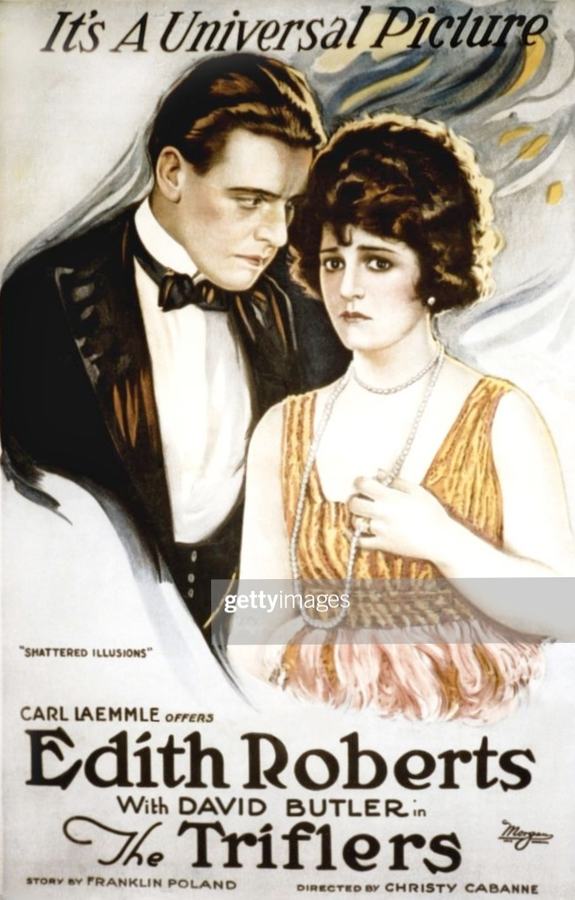
The Triflers arrives like a frostbitten valentine from 1924, its nitrate heart still beating under a brittle ribbon of society gossip. You can almost smell the face powder and bootleg gin through the flicker—director David Butler and scenarists Hal Hoadley & Joseph F. Poland translate a shop-girl’s daydream into a moral X-ray: what happens when you mortgage identity for admittance into the ballroom, only to discover the orchestra is a player-piano and the champagne flat?
Janet Randall’s arc is less a rise-and-fall than a rise-and-face-plant. The first act luxuriates in retail drudgery—price tags flutter like fallen leaves around her ankles—while her gaze drifts to fashion magazines promising chiffon immortality. The camera, enamored with reflections, frames her between display windows so we see two Janets: the flesh-and-blood clerk and the mannequin ideal. Once she reaches the resort, the film’s tempo quickens; intertitles shed their wit like sequins. Monte’s proposition—“Pretend to be Mrs. Moreville and I’ll pick up your tab”—is delivered with the offhand cruelty of a man buying a necktie.
The masquerade sequence is where Butler flips the screwball switch: cross-cutting between Janet rehearsing aristocratic languor in a cracked mirror and Monte watching like a cat counting canary calories. The farce peaks at a moonlit charade party where everyone wears domino masks; identities blur, yet the class divide glows phosphorescent. When Janet finally signs the hotel ledger as “Mrs. Monte Moreville,” the ink bleeds like a wound.
But the comeuppance is swift: Monte’s creditors close in, the scorned would-be bride brandishes letters, and Janet learns the bill she evaded was never monetary—it’s the cost of self-betrayal. The return to Dan isn’t a swoon-worthy clinch; it’s a chastened trudge across a rain-slick street, filmed in a single take that lets us feel every soggy hem. Love here is not salvation; it’s the default setting after the illusion batteries die.
Magda Lane plays Janet with a translucent yearning—eyes that register each micro-aggression of wealth, a smile that fractures when no one’s watching. Watch her hands: they start the film drumming on a countertop, end it folded like contrite sparrows. Opposite her, Colin Kenny’s Monte is all dental work and dead soul; he swaggers in yachting whites, yet his shadow on the wall looks shrunken, a visual premonition of his hollowness.
In the thankless “good man” slot, David Butler (pulling double duty) underplays Dan Cassidy, gifting him a stooped kindness that feels earned rather than saintly. When he offers Janet a cracked cup of coffee in the stockroom, the steam fogs the lens—an accidental poetry that beats most studio effects.
Cinematographer Robert Kurrle (un-credited but identifiable by his honeyed chiaroscuro) bathes the resort in champagne flares—highlights blown out until the marble corridors resemble iced cake. Notice the repeated motif of gates and grilles: department-store gates that cage Janet at work, wrought-iron hotel grilles that cage her in luxury. When she finally exits, the camera cranes up to reveal the hotel’s façade, an art-deco honeycomb swallowing light.
Intertitles deserve their own curtain call. Rather than bland exposition, they crack wise: “She wanted champagne—life handed her the cork.” The typography alternates between flapper curlicues and staccato sans-serif, mirroring Janet’s oscillation between whimsy and panic.
Surviving prints carry the original cue sheets—foxtrots for ballroom scenes, a solo violin for Janet’s lonely epiphany. Contemporary restorations often substitute a new score; seek the version with Mont Alto Motion Picture Orchestra if possible. Their waltz for the final street scene lands like snowfall on bruised skin.
Released months before America’s first Vogue “It Girl” issue, The Triflers anticipates the exhaustion behind the flapper myth. Janet’s bobbed hair isn’t liberation; it’s a helmet for combat in a rigged marketplace where women barter appearance for dinner. The film’s sneaky feminism lies in refusing to punish her for ambition—only for mortgaging authenticity. Compare it with When Men Desire where the heroine is flayed for similar yearnings, or I Want to Forget that buries its working girl under maudlin repentance.
Gosfilmofond holds a 35 mm element riddled with nitrate bloom; MoMA’s 16 mm show-at-home print is more complete but contrasty. The 2022 2K restoration composites both, digitally reigning in the blown whites so champagne bubbles now glisten without obliterating detail. Be wary of YouTube rips—they flatten grayscale into mush and lose the delicate gate-flicker that once signaled film’s living breath.
Modern viewers, marinated on reality-TV wealth voyeurism, may find The Triflers eerily prescient. Janet’s Instagram-worthy fantasies—minus the app—predict influencer culture where curation trumps cash. Yet the film’s moral sting feels almost radical in 2024: no brand partnership, no subscriber tier, just the sober reckoning that debt collects in daylight.
For devotees of silent-era social satire, The Triflers is a fizzy cocktail with ground glass at the bottom—sharp, sparkly, and capable of drawing blood if you gulp instead of sip. It lacks the formal bravura of Sahara or the proto-feminist ferocity of The Bride, yet its brittle humanism lingers longer than many grander epics. Approach expecting champagne, leave tasting the cork, and you’ll understand why Janet’s bruised education still feels like our own.
IMDb 7.5
1934
Community
Log in to comment.