DbcultAccessing Vault...
Cult Review
Senior Film Conservator
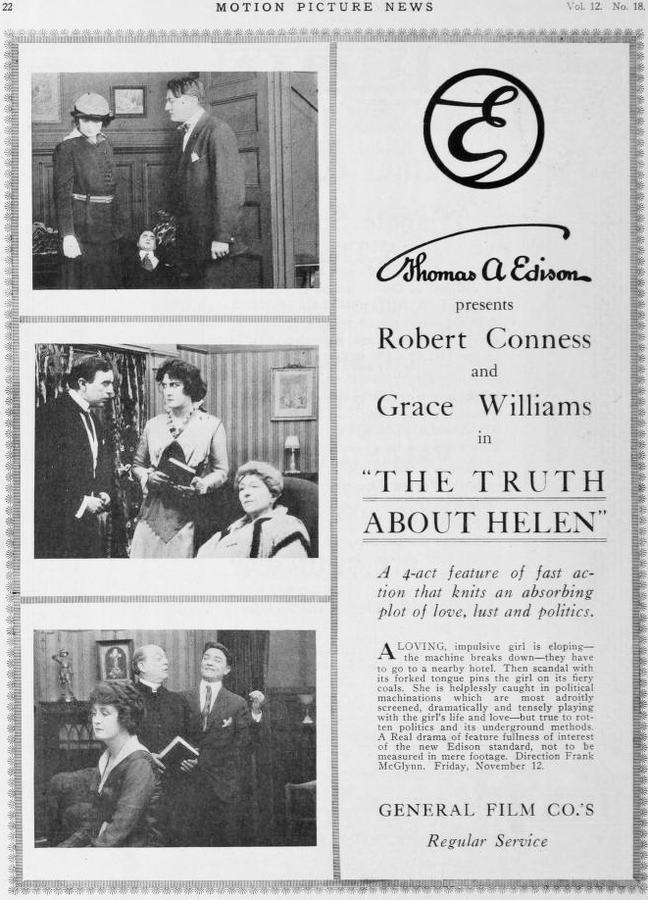
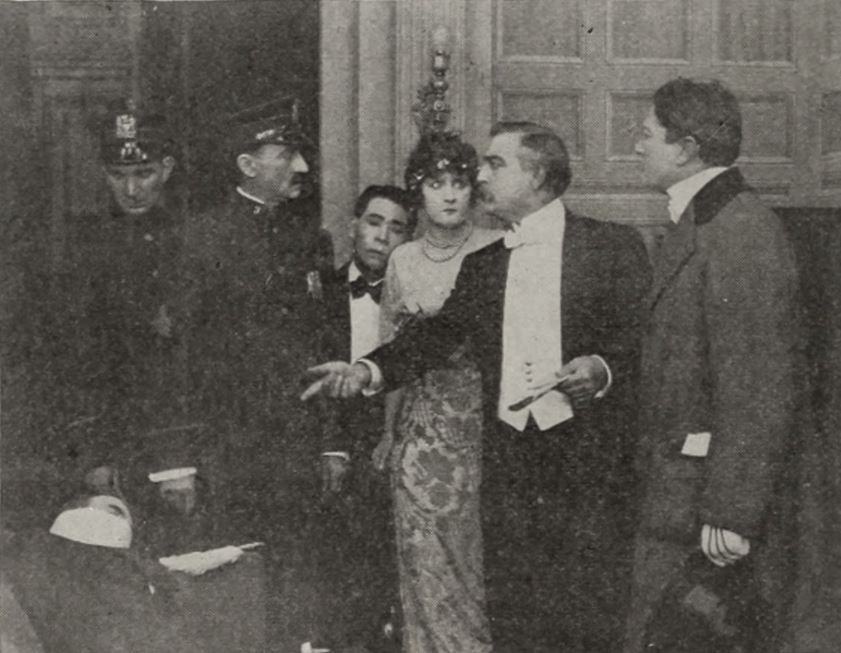
A 1918 one-reel whirlwind that feels like a Victorian triple-decker hurled through a fan blade—The Truth About Helen crams elopement, political skulduggery, near-rape, blackmail, burglary, murder, and a last-minute marriage into a scant twenty-minute sprint. Yet, miraculously, it breathes; its characters sweat, tremble, and carry bruises that outlast the intertitles.
Director William Addison Lathrop, better known for society dramas than cliff-hangers, here weds vamp tropes to the reformist zeal of early Wilson-era Washington. The result is a film that preaches purity while luxuriating in sin—like a temperance pamphlet printed on scarlet tissue.
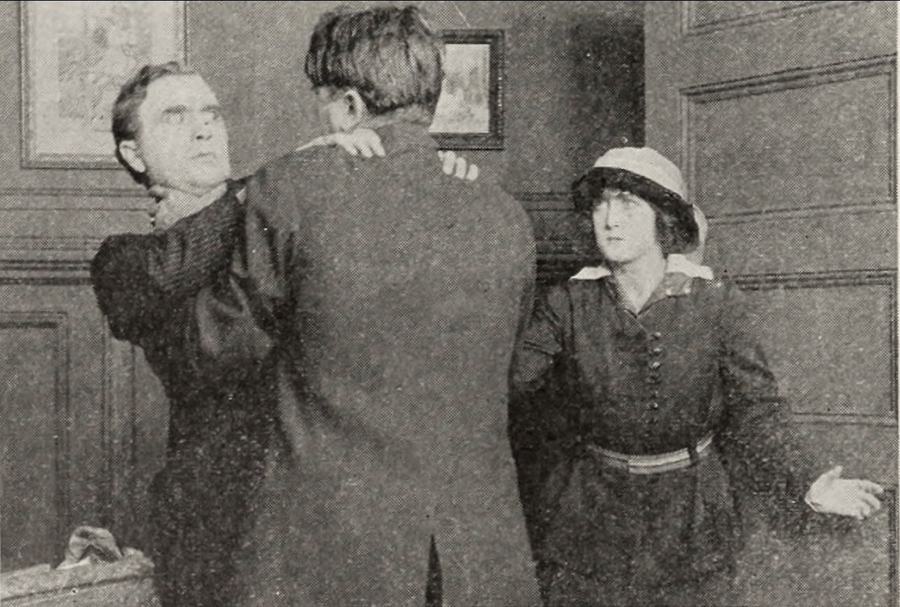
Cinematographer Carlton S. King (doubling as the wounded Hugh) bathes the hotel corridor in pools of tungsten amber that flatten into cadaverous blue once the camera enters Helen’s parlor. The shift is not mere mood; it is theology—virtue glows, vice corrodes. When Hugh bursts through the door, the screen blooms with over-exposure: his white shirt becomes a flaming standard, Raoul’s dinner-jacket a sinkhole. Critics who dismiss silent lighting as utilitarian should freeze this frame; it is a morality play told entirely in lumens.
Margery Bonney Erskine’s Helen never arcs from damsel to vixen and back—she is both, simultaneously. Watch the moment she hears Raoul’s engine die: her lower lip quivers like a struck tuning fork, yet her eyes calculate mileage to the nearest railway junction. Later, in Washington, draped in a Worth gown the color of Senate marble, she descends a staircase with the languor of a woman who has learned that survival requires ornamentation. One glance at her gloved hand clutching the banister—knuckles white beneath kidskin—and you know the bruises have migrated inward.
Harry Linson’s Raoul is less a cad than a entropy sprite: hair slicked with the same axle-grease that dooms his automobile, smile always half-cocked as though anticipating his eventual tumble from the window ledge. He never twirls a mustache; he doesn’t need to—the parted lips, the glint of canine when he whispers “no one will believe you,” are villainy distilled.
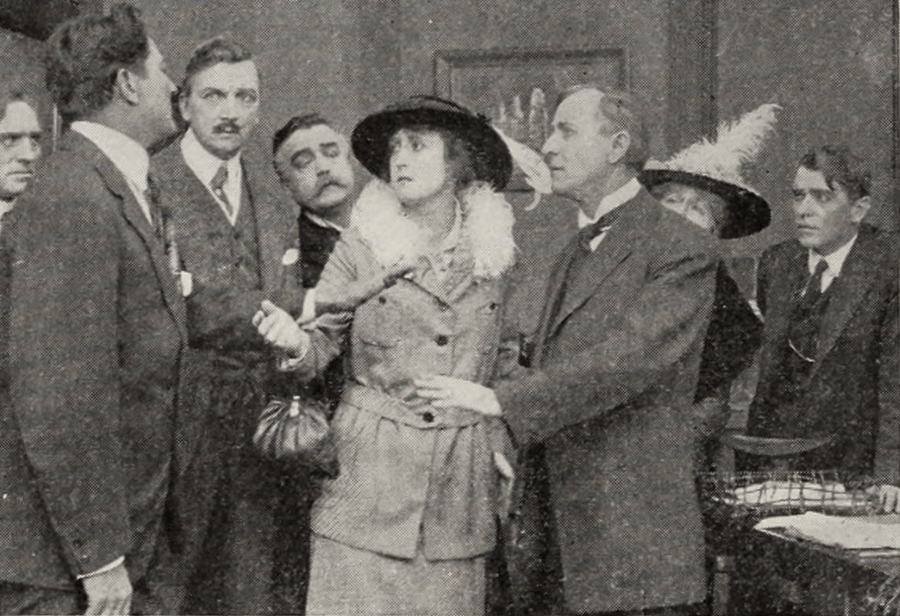
The Boss’s smoke-filled conference room—cigar stubs balanced on crystal ashtrays like ballots waiting to be counted—mirrors the adjoining parlor where Helen’s future is bartered without her consent. Women, in this universe, are either currency or collateral. Yet the film slyly subverts its own thesis: every document Raoul attempts to steal is ultimately worthless, while Helen’s testimony, once spoken, rewrites the ballot. Lathrop may frame her as fragile, but the narrative cannot proceed without her recall; the body politic literally convulses until her voice enters the record.
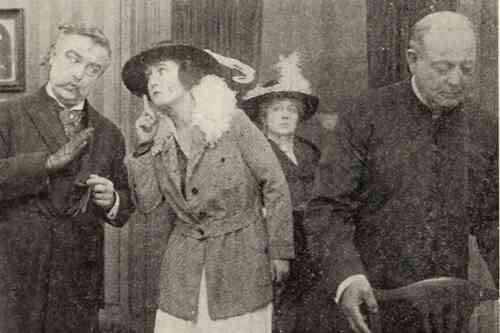
A single year collapses into a smash cut: Helen’s shipboard trunk thuds shut—title card reads “Washington”—and suddenly she is swirling in a U-shoulder gown. No montage of seasons, no calendar leaves. The elision feels brutal because it is; trauma compresses time, and the film trusts the audience to feel the disorientation rather than see it explained. Compare this to the languid cross-fades in Rebecca the Jewess, where suffering is ornamental; here it is amputational.
Surviving cue sheets suggest a spiraling motif: D-minor waltz for the lovers’ flight, shifting to a staccato military march when Hugh enters the Boss’s corridor. The final reel reportedly instructed orchestras to vamp a unresolved diminished chord during the death scuffle, then resolve to F-major the instant Helen’s name is cleared. Modern accompanists who ignore these prescriptions flatten the film’s pulse; the story beats live in harmonic tension.
Unlike Spider Gang’s serial cliff-hangers or Strangler’s Grip’s urban Gothic, Helen is domestic horror: the monster wears patent-leather shoes and bears Senate credentials. Its closest cousin is A Woman’s Triumph, yet where Triumph lets its heroine ride literal horses across the Mojave, Helen’s battlefield is drawing-room lampshades and the wavering loyalties of men who draft legislation before breakfast.
Trade papers of 1918 praised the film’s “moral backbone” while warning exhibitors that the hotel assault “may require delicate handling.” One Ohio house was fined five dollars for “exhibiting an unapproved embrace,” though the embrace in question is Hugh restraining Helen during a panic attack—no lips meet. Today’s viewers, accustomed to the candor of post-#MeToo cinema, will flinch less at the implied violence than at the film’s need to marry Helen to her rescuer as narrative absolution. Yet even that rings truer than the punitive endings of Phantom or Mistress Nell, where death is the only wage of sin.
No complete 35 mm print is known; what circulates is a 9.5 mm Pathéscope abridgement (British home-market) with French intertitles, housed at Eye Filmmuseum. A 4K scan surfaced briefly on a European streaming service in 2021 but was pulled after rights quarrel between two heirs claiming Lathrop’s literary estate. The Museum of Modern Art possesses a 16 mm duplication struck from a 1923 Kodascope, itself missing the penultimate reel; the murder aftermath arrives via a salvaged shot-on-film newsreel of the 1918 midterm elections, eerily spliced in as metatextual commentary.
To watch The Truth About Helen is to witness American melodrama in the instant it learns the cost of gaslight and the currency of testimony. It is imperfect, yes—its politics remain paternal, its pacing obeys the nickelodeon’s nickel-clock—but its images lodge like splinters: Helen’s tremor as she buttons her gloves the morning after assault; Hugh’s knuckles grazing the Senate railing, skin split from an old wound that never quite closed; the editor’s lamp flickering while he sets type that will either damn or deliver. In those fragments, the film transcends its era and whispers a truth we still fumble to speak: survival is not the same as justice, yet sometimes it is enough to survive long enough to tell the story yourself.
Verdict: 8.5/10 — a bruised pearl of pre-Hays Code candor, demanding restoration and a modern score that honors its dissonant heart.
IMDb —
1918
Community
Log in to comment.