DbcultAccessing Vault...
4.8/10
Senior Film Conservator
A definitive 4.8/10 rating for a film that redefined the boundaries of cult cinema. La reina joven remains a cornerstone of transgressive art.
From the hushed grandeur of a royal court to the fervent whispers of republican dissent, La Reina Joven (The Young Queen) emerges as a cinematic tapestry woven with threads of love, duty, and an unyielding ideological struggle. This isn't merely a period drama; it’s a profound dissection of human will pitted against the relentless currents of political destiny, a narrative that resonates with an almost timeless poignancy. Directed with an acute understanding of its characters' internal landscapes and penned by the formidable Àngel Guimerà and Magín Murià, the film plunges us into a world where personal affections are irrevocably entangled with the fate of a nation, crafting a tragedy of grand proportions.
At its core, La Reina Joven masterfully explores the irreconcilable chasm between individual desire and the onerous demands of public life, particularly when a crown weighs heavily upon a young monarch's brow. The film's narrative begins with a dramatic flourish: the near-fatal accident of the young Queen Alexia, an incident that, far from being a mere plot device, acts as a crucible for her awakening. This event not only throws her into the path of Rolando, the stoic and principled head of the Republican party, but also forces her to confront the fragile nature of her own existence and, by extension, her reign. Margarita Xirgu, in a performance that can only be described as incandescent, embodies Alexia with a breathtaking blend of youthful vulnerability and burgeoning regal fortitude. Her Alexia is not a static figurehead but a dynamic force, evolving from a somewhat sheltered sovereign into a woman keenly aware of her power, her limitations, and the profound sacrifices demanded by her station. Xirgu’s nuanced portrayal allows us to witness the queen’s interiority, the quiet torment of a heart torn between personal yearning and the immense weight of her inherited responsibility. Her eyes, often shimmering with an unspoken anguish, communicate more eloquently than any dialogue could, painting a vivid portrait of a monarch grappling with a world in flux.
On the opposing side of this emotional and political divide stands Rolando, portrayed with an impressive, almost austere gravitas by José Rivero. Rolando is a man hewn from the granite of unwavering conviction, a republican whose principles are not merely political stances but the very bedrock of his being. His initial act of heroism—saving Alexia—is one born of innate human decency, yet it ignites a spark of affection that immediately complicates his rigidly defined world. Rivero’s performance is a study in controlled intensity; his Rolando is a man of few words but immense internal struggle. We observe the subtle shifts in his demeanor, the fleeting glimpses of tenderness that betray his true feelings, even as he steadfastly refuses to compromise his republican ideals. The love that blossoms between him and Alexia is a forbidden fruit, tantalizingly close yet utterly out of reach, precisely because Rolando’s commitment to a government by the people, for the people, is absolute. He cannot, and will not, reconcile his vision of a republic with the continuation of a monarchy, no matter how profound his personal feelings for its queen. This unyielding stance, while tragic for the lovers, speaks volumes about the film's thematic depth, highlighting the often-brutal cost of ideological purity.
The romantic and political tension is further exacerbated by the insidious machinations of the Grand Duke, brought to life with chilling precision by Ricardo Puga. The Grand Duke is not merely an antagonist; he is the very embodiment of the old order, a symbol of conservative power desperately clinging to its fading influence. His plot to marry his son to Alexia is a calculated maneuver, a cynical attempt to consolidate dynastic power and quash the rising tide of republicanism. Puga infuses the Grand Duke with a quiet menace, a veneer of courtly charm that barely conceals a ruthless ambition. His actions underscore the pervasive corruption that can fester within entrenched power structures, revealing how personal gain often masquerades as national interest. The Grand Duke's presence casts a long, ominous shadow over the narrative, reminding us that the stakes are not merely Alexia's heart or Rolando's principles, but the very soul of the kingdom.
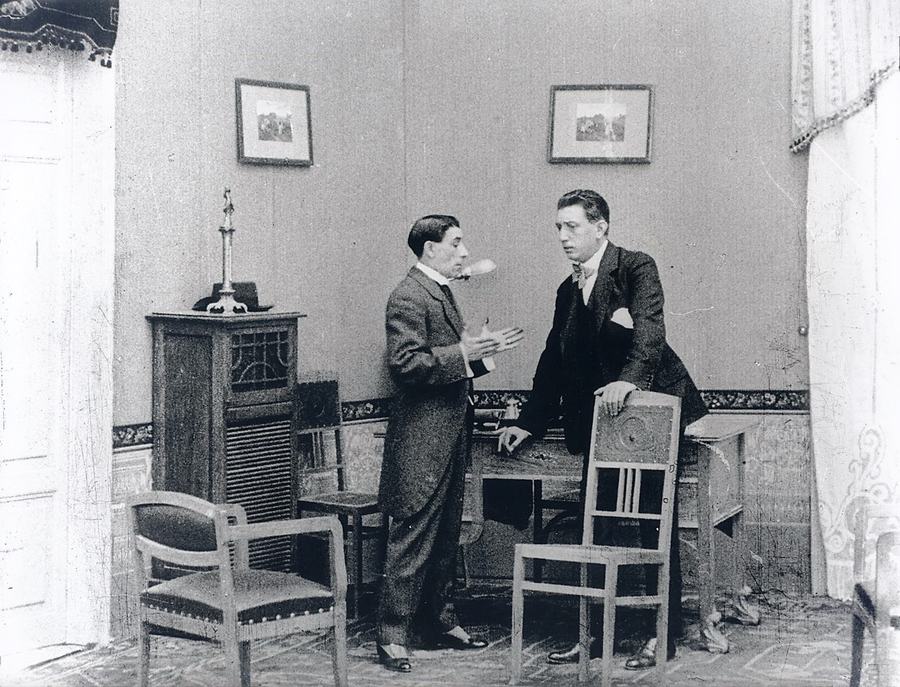
The film’s brilliance lies in its unflinching examination of the central conflict: love versus ideology. Alexia, in a desperate bid to bridge this chasm, offers Rolando a ministerial position, a chance to govern alongside her, hoping to forge a path where monarchy and republican ideals might coexist. This pivotal moment is a testament to her evolving political acumen and her profound love. Yet, Rolando's refusal, while heartbreaking, is entirely consistent with his character. His principles are not negotiable; to accept a role under a monarchical system would be to betray everything he stands for. This creates a powerful, almost unbearable sense of dramatic irony: the very qualities that draw Alexia to him – his integrity, his unwavering conviction – are precisely what prevent their union and, by extension, a potential political compromise. The film doesn't offer easy answers; instead, it forces us to grapple with the tragic beauty of unwavering commitment, even when it leads to personal devastation. This is a narrative that understands the profound burden of leadership, the isolating weight of the crown, and the immense personal cost of adhering to one's beliefs in the face of overwhelming emotion.
Stylistically, La Reina Joven excels in its visual storytelling. The cinematography, rich and evocative, deftly captures the opulent yet stifling atmosphere of the court, contrasting it with the perceived austerity of the republican movement. The use of light and shadow often mirrors the characters' internal states, with Alexia frequently bathed in a soft, almost ethereal glow that highlights her vulnerability, while Rolando is often framed in more stark, unyielding compositions. The pacing is deliberate, allowing the emotional weight of each scene to fully unfold, building a palpable sense of tension and inevitable tragedy. The writers, Guimerà and Murià, demonstrate a masterful understanding of dramatic structure, crafting a narrative that feels both sweeping in its scope and intimately personal in its focus. Their ability to imbue each character with such depth ensures that the political machinations never overshadow the human element, making the ultimate sacrifices feel genuinely earned and deeply felt.
When considering La Reina Joven in the broader cinematic landscape, one can draw compelling parallels with other works that explore the intersection of personal fate and grander political or societal structures. Much like The Typhoon, this film delves into the intricate web of political maneuverings and the often-harsh personal sacrifices demanded by the machinations of power. In both narratives, characters find themselves ensnared in circumstances far grander than their individual desires, battling external pressures and internal moral quandaries that test the very limits of their resolve. The underlying tension between personal loyalty and ideological conviction forms a potent undercurrent. One might also observe a shared intensity of emotional struggle with a film like Redeeming Love, where protagonists are pushed to their absolute limits by the dictates of their hearts and the harsh realities of their world. While the specific contexts diverge significantly, the sheer weight of personal conviction clashing with overwhelming affection is a shared, potent through-line that defines the emotional landscape of La Reina Joven. These comparisons highlight the film's enduring capacity to explore universal themes of conflict and devotion within a specific, compelling historical setting.
Ultimately, La Reina Joven stands as a testament to the enduring power of classic cinema to explore complex human dilemmas. It is a film that asks profound questions about the nature of leadership, the sanctity of principles, and the often-impossible choices demanded by love and duty. Margarita Xirgu and José Rivero deliver performances that etch their characters into the viewer's memory, making their tragic romance feel both epic and intimately heartbreaking. The contributions of Ricardo Puga and Celia Ortiz (whose role, though perhaps smaller, adds another layer to the courtly intrigue) further enrich this intricate narrative. It is a work that transcends its historical setting, offering a timeless reflection on the human condition, the sacrifices we make, and the ideals we cling to, even when they tear us asunder. A truly masterful piece of cinematic art that continues to provoke thought and stir the soul.
IMDb 6
1927
Community
Log in to comment.