DbcultAccessing Vault...
Cult Review
Senior Film Conservator
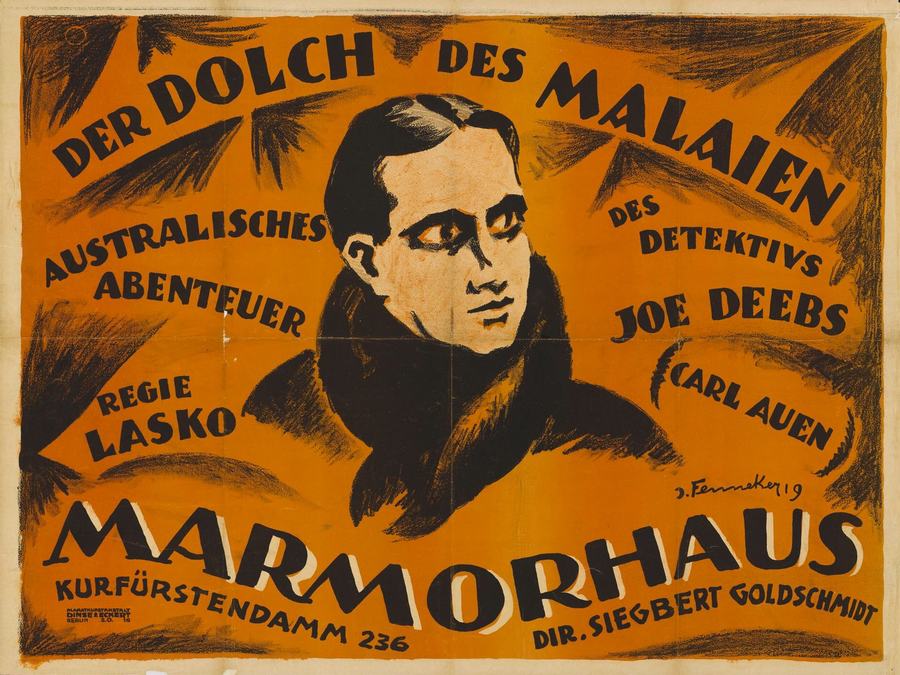
The silent era, often romanticized through the sepia-toned lens of nostalgia, was a fertile ground for cinematic experimentation, a period where narrative ambition often outstripped technological prowess, yet somehow, transcended it. Among the myriad forgotten gems and well-trodden classics, a film like 'Der Dolch des Malayen' (The Dagger of the Malay) emerges from the archives as a fascinating artifact, a testament to the era's enduring fascination with exotic locales, arcane mysticism, and the eternal struggle between good and a more nuanced, often compelling, evil. This 1920 German production, helmed by an unknown director but featuring a robust cast including Victor Janson, Bernhard Goetzke, and Flockina von Platen, plunges viewers into a world of high adventure and perilous intrigue, a cinematic journey that, even a century later, retains a certain magnetic pull.
At its core, 'Der Dolch des Malayen' is a quintessential adventure yarn, a narrative construct that found immense popularity in early cinema, much like the serialized thrills of The New Exploits of Elaine. However, where Elaine's exploits were largely urban and domestic, 'Der Dolch des Malayen' casts its net wider, embracing the allure of the 'Other' – a common trope of the period that, while problematic by today's standards, fueled countless escapist fantasies. The film’s central MacGuffin, the eponymous Malay dagger, is not merely a weapon but a legendary artifact, rumored to bestow unimaginable power upon its wielder. This narrative device immediately elevates the stakes, transforming a simple treasure hunt into a metaphysical quest, echoing the grandeur and mythical undertones found in epics like The Last Days of Pompeii, albeit on a more personal, localized scale.
The performances in silent cinema are a unique art form, relying entirely on exaggerated gesture, facial nuance, and the power of the gaze to convey complex emotions and motivations. Bernhard Goetzke, a familiar face in German expressionist cinema, embodies Captain Erik Thorne with a compelling blend of world-weariness and resolute determination. Goetzke's tall, gaunt frame and intense eyes lend themselves perfectly to the role of a man driven by a singular, consuming purpose. His portrayal avoids the pitfalls of two-dimensional heroism, hinting at a troubled past and an almost obsessive pursuit of the dagger, suggesting that his quest is as much about personal redemption as it is about discovery. This depth of characterization distinguishes Thorne from the more straightforward protagonists often seen in contemporaneous adventure serials like Perils of Our Girl Reporters, where character arcs were typically simpler and more archetypal.
Opposing Goetzke's brooding hero is Victor Janson's Baron von Harten, a character steeped in avarice and colonial entitlement. Janson, known for his versatility, crafts a villain who is both menacing and subtly charming, a dangerous combination that makes his machinations all the more insidious. His Baron is not merely a mustache-twirling caricature; there's a calculating intelligence behind his eyes, a ruthless pragmatism that makes him a formidable adversary. The dynamic between Goetzke and Janson forms the narrative's central antagonistic force, a clash of wills that propels the plot forward with relentless tension. Their scenes together are charged with an unspoken animosity, a masterclass in non-verbal communication that defines the best of silent dramatic performances.
Flockina von Platen, as the enigmatic Lysandra, is the film's beating heart of mystery and allure. Her character embodies the 'femme fatale' archetype, a common figure in silent thrillers such as Bella Donna, but with a unique twist. Lysandra's allegiances are constantly in flux, her motives shrouded in a veil of ambiguity that keeps both Thorne and the audience guessing. Von Platen’s performance is a delicate balance of vulnerability and cunning, her expressive eyes conveying a multitude of unspoken thoughts. She is not merely a plot device but a complex individual navigating a dangerous world, her survival dependent on her adaptability and her ability to play all sides. This complexity adds significant texture to the film, preventing it from devolving into a simplistic good-versus-evil narrative.
The supporting cast, particularly Louis Brody as Sultan Kandar, brings a vital authenticity to the proceedings. Brody, a pioneering Afro-German actor, often found himself typecast in roles representing 'exotic' or 'othered' characters, but his presence invariably brought a dignity and commanding presence to his roles. As Kandar, he is regal and formidable, a sovereign whose authority is absolute, yet whose wisdom is challenged by the encroaching Western influence. His portrayal, while constrained by the racial stereotypes of the era, still manages to convey a powerful sense of leadership and cultural pride. Blandine Ebinger and Carl Auen round out the ensemble, each contributing to the rich tapestry of characters who populate this intricate world, their smaller roles serving to flesh out the narrative's peripheral complexities.
The visual language of 'Der Dolch des Malayen' is a captivating study in early cinematic technique. While specific details about its director of photography are scarce, the film evidently benefited from a keen understanding of composition and atmosphere. The exotic settings, whether meticulously constructed studio sets or cleverly utilized natural landscapes, transport the audience to a world far removed from their own. The use of shadow and light, a hallmark of German silent cinema, is particularly effective in building suspense and conveying mood. Dark, cavernous interiors contrast sharply with sun-drenched exteriors, creating a visual rhythm that mirrors the narrative's ebb and flow between danger and momentary respite. The cinematography, though perhaps not as overtly experimental as some of the more avant-garde German films of the period, is nonetheless artful and serves the story with admirable precision.
The editing, crucial for pacing in silent films, is surprisingly dynamic, eschewing the static, theatrical blocking of earlier cinema for a more fluid, cinematic approach. Action sequences, such as daring escapes or tense confrontations, are cut with an energy that keeps the audience engaged, preventing the narrative from dragging. There are moments of genuine exhilaration and suspense, demonstrating a nascent understanding of how to manipulate visual rhythm to heighten emotional impact. This proactive editing style sets it apart from more languid contemporary productions and aligns it more with the rapidly evolving narrative techniques seen in films like The Woman Under Cover, which also prioritized a gripping, fast-paced plot.
'Der Dolch des Malayen' is more than just an adventure story; it is a product of its time, steeped in the prevailing attitudes and anxieties of early 20th-century Europe. The film implicitly explores themes of colonialism and the Western gaze upon the 'Orient.' The quest for the dagger, an artifact of immense cultural and spiritual significance to the Malay people, is driven by European characters, highlighting the appropriation of indigenous heritage for personal gain or glory. Baron von Harten epitomizes this predatory aspect, viewing the local populace and their sacred objects as mere tools or prizes to be conquered. Even Thorne, the protagonist, while perhaps more honorable in his intentions, is still an outsider venturing into a foreign land, seeking to claim something not inherently his.
The film’s portrayal of the local culture, while visually rich, oscillates between respectful representation and exoticized caricature. Sultan Kandar, despite Brody's dignified performance, is still framed within a Western narrative of the inscrutable Eastern potentate. This tension between fascination and misrepresentation is a recurring motif in films of this era, a complex legacy that demands critical examination. It's a lens through which we can also view the cultural assumptions embedded in other historical dramas like The Pride of Jennico, which, while set in a fictional European principality, still grappled with notions of power, heritage, and identity in a romanticized past.
The dagger itself serves as a potent symbol of power – its acquisition promising control and destiny. This pursuit of an ultimate, transformative object is a timeless narrative, resonating with stories of legendary artifacts across cultures. The film delves into the moral quandaries associated with such power, questioning whether its pursuit ultimately corrupts or redeems. The underlying message, subtle yet persistent, seems to suggest that true power lies not in external objects but in the character and choices of individuals. This philosophical undercurrent elevates 'Der Dolch des Malayen' beyond a simple genre piece, offering a glimpse into the deeper societal and psychological concerns of its time.
'Der Dolch des Malayen' may not possess the widespread recognition of some of its more famous silent contemporaries, but its rediscovery offers a rewarding experience for enthusiasts of early cinema. It's a film that showcases the robust storytelling capabilities of the era, demonstrating how compelling narratives could be crafted without the aid of spoken dialogue or synchronized sound. The film's ambitious scope, from its exotic locales to its intricate plot, speaks to the burgeoning artistry of a medium still in its relative infancy. Its blend of adventure, mystery, and romantic intrigue makes it a compelling watch, particularly for those interested in the evolution of genre cinema.
Comparing it to other silent films, 'Der Dolch des Malayen' holds its own. While it lacks the groundbreaking aesthetic of true expressionist masterpieces, it compensates with a strong narrative drive and memorable performances. It's more akin to the popular adventure serials or romantic dramas of its time, such as Castles in the Air or The Virtuous Thief, in its entertainment value and accessibility, yet it injects an additional layer of exoticism and high-stakes peril that gives it a distinct flavor. The film’s exploration of moral ambiguity and the seductive nature of power also brings to mind the more dramatic and psychological elements found in films like The Lady of Lyons; or, Love and Pride, where personal desires often lead to intricate webs of deceit and consequence.
Ultimately, 'Der Dolch des Malayen' stands as a valuable piece of cinematic heritage, a window into a past era's entertainment and cultural preoccupations. It reminds us of the universal appeal of a well-told story, regardless of the technological limitations of its creation. The film’s ability to transport its audience to a far-off land, to immerse them in a quest for a legendary artifact, and to engage them with compelling characters, is a testament to the timeless power of cinema. It’s a silent film that speaks volumes, not just through its intertitles, but through the evocative performances, the atmospheric visuals, and the enduring human dramas it so artfully portrays. For those willing to delve into the rich tapestry of early film, this particular dagger still gleams with a captivating, if sometimes unsettling, light. Its influence, while perhaps not overtly transformative like some of the era's more experimental works such as Nabat, certainly contributed to the evolving language of cinematic narrative, particularly in the realm of adventure and mystery.
The film's exploration of betrayal and shifting loyalties, particularly personified by Lysandra, is a narrative thread that remains perennially engaging. It mirrors the intricate personal dramas found in films like Cheating Herself or The Unveiling Hand, where characters navigate moral compromises and hidden agendas. However, 'Der Dolch des Malayen' elevates these personal stakes to an international level, intertwining individual desires with colonial ambitions and ancient prophecies. The film's capacity to weave these disparate elements into a cohesive, thrilling experience is a credit to its writers, W. Böllinghoff and Richard Hutter, who crafted a narrative that, despite its age, still manages to resonate with a sense of high adventure and dramatic urgency. While it may not directly comment on geopolitical conflicts like War Is Hell, its undertones of power struggles and territorial claims certainly echo the broader anxieties of the post-World War I era.
The enduring appeal of artifacts and quests, a central theme here, is a powerful draw. Much like the allure of the wilderness and discovery in American Game Trails, 'Der Dolch des Malayen' taps into a primal human desire for exploration and the uncovering of secrets. The legendary dagger isn't just a prop; it's a character in itself, driving the plot and influencing the destinies of all who seek it. Its mystical properties, though never fully explained, contribute to the film's fantastical elements, allowing for a suspension of disbelief that is crucial for such an adventure. The film's ability to create a sense of wonder and danger simultaneously, often through its evocative set designs and the actors' expressive performances, ensures that its journey into the heart of an imagined Malay world remains an engaging experience.
Ultimately, 'Der Dolch des Malayen' is a vibrant example of early German cinema's capacity for grand storytelling and exotic escapism. Its exploration of adventure, intrigue, and the human desire for power, set against a richly imagined backdrop, ensures its place as a fascinating, if lesser-known, entry in the annals of silent film history. It's a film that rewards careful viewing, offering layers of meaning and a testament to the enduring craft of its creators. The journey it takes us on, fraught with danger and ethical dilemmas, leaves an indelible mark, proving that even a century later, the glint of a legendary dagger can still captivate the imagination.
IMDb —
1936
Community
Log in to comment.