DbcultAccessing Vault...
Cult Review
Senior Film Conservator
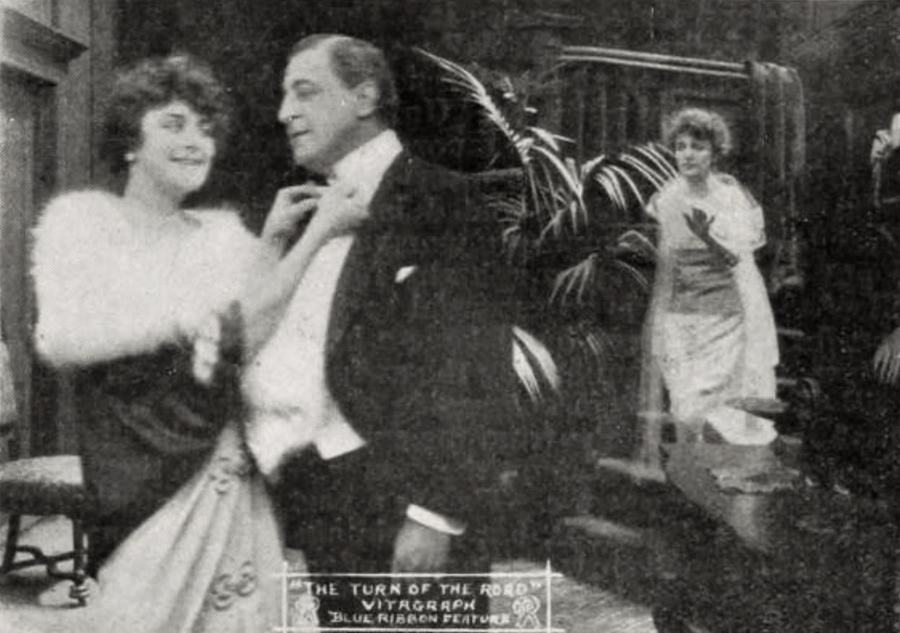
In the monochrome hush of 1914, when the world still balanced on the lip of August cataclysm, The Turn of the Road arrives like a telegram from the id: a domestic fable stitched with nitrate and gossip, smelling faintly of ether and lilac. Director Walter Edwin—seldom celebrated outside the vaults—marshals a quintet of actors who glide between drawing-room propriety and chiaroscuro nightmare, all while the camera pretends it is not watching. The result is a film that feels less like entertainment than like evidence: of marital fault lines, of female appetite, of the moment when pity cannibalizes rage.
From the first iris-in, Helen King (Virginia Pearson) is framed as a Madonna trapped inside a snow globe: rocking little Jack, her face softened by tungsten halos, the wallpaper behind her a vertiginous tangle of peacock feathers—Victorian excess pressing in like society itself. Pearson, whose career would later be eclipsed by Swanson and the Gish sisters, wields stillness as a weapon; every glance at her son carries the hush of prayer. Meanwhile John (Joseph Kilgour) prowls the edges of the tableau, his tuxedo tie a black dagger against starched linen. The blocking is deliberate: husband and wife share a parlor but occupy irreconcilable planes, a visual premonition of the chasm about to yawn.
Notice how cinematographer Max Schneider (borrowing from early Danish fotografen) uses doorway arches to bisect the frame. In one exquisite medium two-shot, Helen’s silhouette occupies the left third while John’s reflection lingers in a gilt mirror on the right—an optical divorce minutes before the legal one. The film’s visual grammar whispers what the intertitles dare not: this marriage is already a ghost.
Enter Marcia (Edwina Robbins), a name that slithers across the screen like spilled perfume. Robbins, saddled with the thankless role of homewrecker, refuses caricature; instead she plays Marcia as a woman addicted to the moment when pupils dilate—hers, theirs, ours. Watch her fingertips graze the doctor’s lapel in the club scene: the gesture lasts perhaps eight frames yet contains entire novels of appetite and dismissal. Later, when she drapes herself over John’s Packard roadster, the camera tilts up from her ankles to the chrome headlights, equating woman and machine—both gleaming, both dangerous.
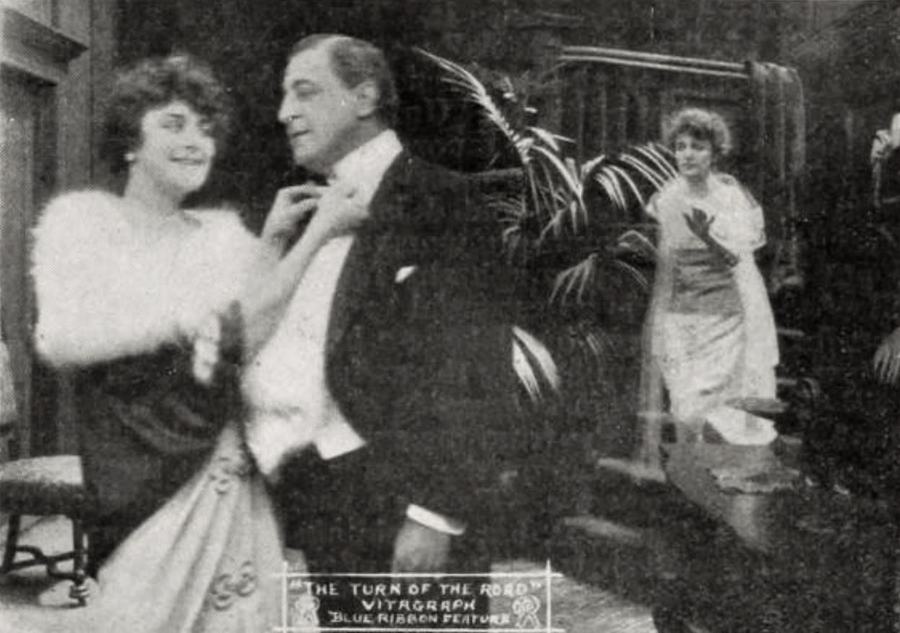
Robbins’ performance is a masterclass in pre-Method minimalism: the slight flare of her nostril when John mentions Helen, the way she elongates the word darling into three husky syllables. She is less a temptress than a mirror, reflecting back to men the hunger they pretend women don’t possess.
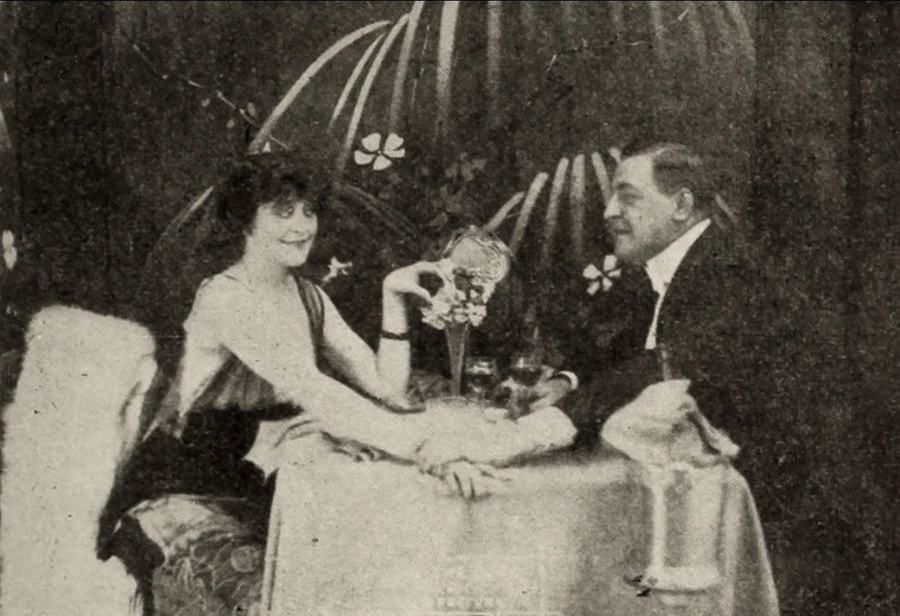
Dr. Bright (Robert Gaillard) ought to be mere plot utility, the medical deus who ferries us from fever to fire. Instead, Gaillard gifts him a soulful stoop, the posture of a man who has read too many textbooks on nerves and still lost at love. His courtship of Marcia is shot almost entirely in counter-shot close-ups: her face fills the left, his the right, but the eyeline mismatch—she looks slightly past camera—hints at detachment long before her rejection. When he proposes beside a fountain, the spray behind them catches the light like scattered diamonds, a visual irony underscoring the hollowness of the jewel he offers.
Post-accident, the doctor’s transformation from suitor to surgeon is rendered in a bravura sequence: a single take tracks him from the roadside ditch, through the rain-slick town square, into the King nursery where he rolls up sleeves to trepan Marcia’s skull. The camera hovers at waist level, emphasizing forearms flecked with mud and blood—a Pietà in reverse, the healer marked by those he saves.
The film’s moral pivot arrives not in the crash but in the sickroom. Helen, informed that Marcia’s mind has shattered like spun glass, does not hesitate; she claims the invalid as ward. Pearson underplays the moment—no hand-to-forehead theatrics—merely a softening of the jawline, a swallow that seems to taste the metallic tang of mercy. In a haunting insert, we see Helen’s lace cuffs dab at Marcia’s temple, the fabric emerging pink with diluted gore. The image is overtly Eucharistic: the stigmatic cloth, the communion of women bound by the same man’s betrayal.
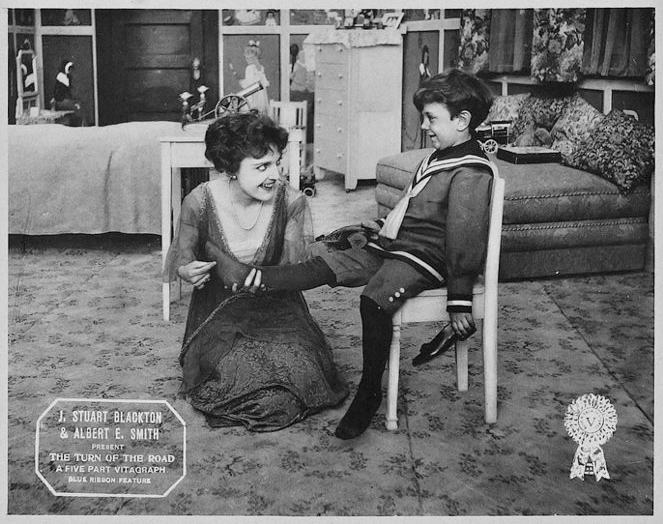
Director Edwin stages the surgery tableau with Expressionist shadow: kerosene lamp throws giant silhouettes onto floral wallpaper, so that the operation becomes a puppet show of silhouettes—Helen’s profile merges with Marcia’s, suggesting identity itself is malleable, perhaps forgivable.
The climactic bedroom blaze—caused by Marcia’s disoriented hand tipping the lamp—plays like a miniature The Bells, minus the avalanche of guilt. Cinematographer Schneider double-exposes the flames so they seem to emerge from within the mattress, as though sin itself has combusted. John’s rescue carries a hush of baptism: he carries Marcia through churning smoke, her white nightgown now streaked with soot, a perverse wedding dress. Watch Kilgour’s eyes in the aftermath—moist, bewildered, finally emptied of ego. The man who entered the film preening in top hat exits it bare-chested, smeared with ash, a penitent kneeling to the wife he nearly lost.
Most melodramas of the era would punish the fallen woman; The Turn of the Road dares instead to redistribute desire. Marcia, mind mended, finds in Dr. Bright’s quiet steadiness a counterbalance to her own volatility. Their final scene—sitting side by side on the garden swing, hands barely brushing—echoes the earlier two-shot of John and Helen, but here the frame is open, sky-heavy, suggesting futures rather than cages. Meanwhile the restored marriage is not fetishized; Pearson and Kilgour share a closing tableau so subdued it feels like a memory, a hesitant hand on a shoulder, the camera withdrawing backward through the doorway until the couple dissolves into sepia obscurity.
Critics fond of lineage will detect DNA strands from The Mystery of Edwin Drood in the film’s treatment of opium-den shadows and displaced guilt. More striking, though, is its prefiguring of Zaza’s circular structure: both films understand that erotic transgression is less a linear fall than a Möbius strip where betrayer and betrayed perpetually swap masks. Where Dope externalizes addiction as urban phantasmagoria, The Turn of the Road internalizes it—addiction to admiration, to the narcotic of being desired.
Restored prints reveal a startling palette for 1914: amber lamplight pools that anticipate the Lasky incandescence of the late teens, sea-blue tints during the roadside crash that flirt with two-strip Technicolor dreams not yet dreamt. Note the yellow filter that bathes Helen’s first close-up—an early experiment in color psychology, warming the spectator to maternal devotion before the plot strips it bare.
Isabel Johnston’s intertitles deserve anthologizing. When Marcia tempts John, the card reads: "She spun him from her laughter / A silken snare."
Economy of syllable, yet the internal rhyme (spun/silken) enacts the very entrapment it describes. Later, as Helen cradles the demented Marcia: "Pity, having eaten all my rage, / Found it sweet."
One aches for a world where poetry again rode the flicker.
Archival cue sheets recommend Hearts and Flowers for Helen’s nursing scene, yet contemporary exhibitors reported substituting Chopin’s Nocturne in C-sharp minor, its rubato mirroring the irregular gasps of a sickroom. Such illicit substitutions remind us that silent exhibition was a living organ, each pianist a ventriloquist giving voice to shadows.
Modern theorists might fault the film for ultimately restoring nuclear order, yet the trajectory of agency tells another tale. Helen begins as object of gossip, becomes subject of mercy, and ends as arbiter of futures—her insistence on nursing Marcia rewrites the madwoman-in-the-attic trope into a sisterhood of scars. Marcia, meanwhile, is not exorcised but repurposed; her flirtatious energy is not annihilated, simply redirected toward a partner who meets it with steadiness rather than conquest.
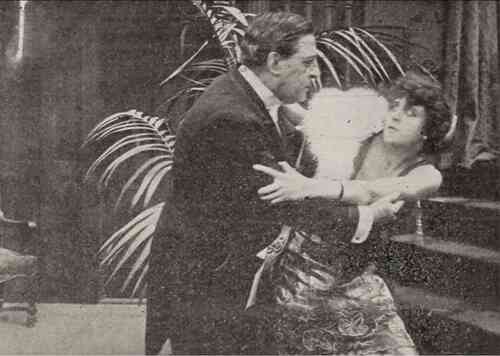
Virginia Pearson’s Helen is all porcelain restraint, the type of acting that ages into greatness once the varnish of period fashion fades. Robbins’ Marcia, conversely, is pure mercury—watch how she enters a room shoulders first, as if testing the air’s capacity for scandal. Their shared scenes vibrate with contrapuntal energies: stillness versus kinesis, maternal orbit versus erotic comet. It is a duel not of good and evil but of incompatible cosmologies.
We return to The Turn of the Road today not for nostalgia’s sake but for its unsettling prescience: it knows that intimacy is a terrain where catastrophe and grace are adjacent lanes, separated only by a tremor of the steering wheel. In an era when every digital confession is curated, there is vertiginous relief in watching 1914 faces confront ruin without filters, their penance measured in lamplight and linted sheets.
Stream it if you can find the 2018 George Eastman restoration; the contrast between sea-blue night scenes and amber interiors will make your screen feel like stained glass. Watch with headphones and a nocturne of your own—let the flicker remind you that every marriage, every friendship, every self is a vehicle speeding toward an embankment, and that sometimes the crash is not the tragedy but the turn that finally reveals the sky.
"We are all drivers on the road of another’s heart; the miracle is not avoiding the crash, but rising from the wreckage to carry the one who injured us."
As the end card fades—THE ROAD TURNS, BUT LOVE GOES ON—we are left not with moral certainty but with the afterglow of nitrate that once burned real, projecting longing and light onto the darkened walls of a world still learning to see.
© 2024 cine-vigilante | Full review with clips & stills
IMDb 5.8
1931
Community
Log in to comment.