DbcultAccessing Vault...
6.7/10
Senior Film Conservator
A definitive 6.7/10 rating for a film that redefined the boundaries of cult cinema. The Golem remains a cornerstone of transgressive art.
When I first heard about The Golem—a 1915 German silent feature co‑written by Henrik Galeen and Paul Wegener—I felt like an archaeologist unearthing a buried relic. The film, long thought lost, resurfaced in a private collection, offering a rare glimpse into the embryonic days of horror cinema, before the expressionist boom that would later define Weimar Germany.
The premise reads like a folktale retold for a modern audience: an antiquarian discovers a clay automaton, a golem, that a centuries‑old Kabbalist once animated to shield his community from persecution. The narrative unfolds with a measured, almost academic curiosity, then erupts into chaotic terror as the golem, stripped of its original purpose, goes on a violent spree.
The film was shot on location in the outskirts of Berlin, using natural light to accentuate the stark, angular shadows that later became hallmarks of German Expressionism. Carl Ebert, the lead actor, brings a grounded, bourgeois demeanor that contrasts sharply with the mythic weight of the golem itself. Paul Wegener, who would later direct and star in the more famous 1920 The Golem: How He Came into the World, appears here as a scholarly observer, foreshadowing his lifelong fascination with the creature.
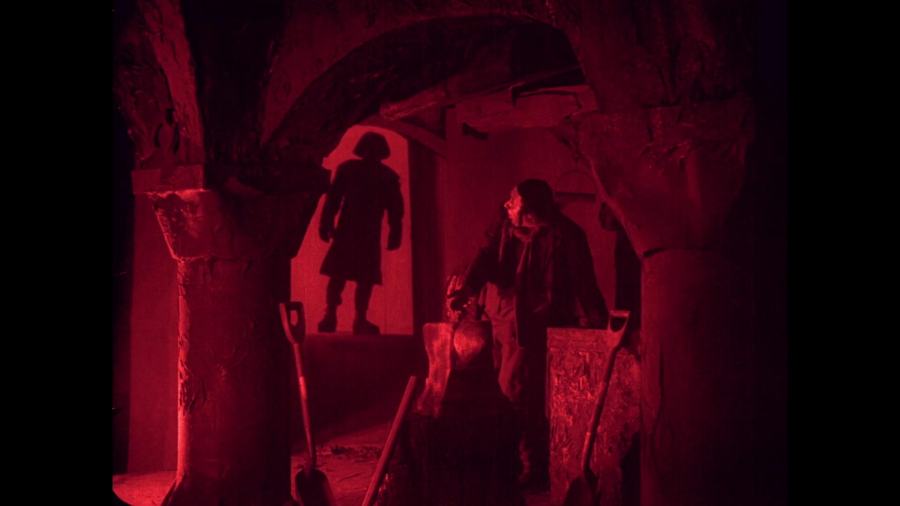
Henrik Galeen’s script weaves Kabbalistic symbolism with early cinematic spectacle. The ritual scenes—where the rabbi etches the Shem on the golem’s forehead—are filmed with a deliberate, almost reverential pace, allowing the audience to feel the weight of each incantation. The camera lingers on the clay’s texture, emphasizing the tactile reality of the monster, a stark departure from later, more stylized versions that rely heavily on chiaroscuro.
The film’s first act is a study in restraint. Ebert’s antiquarian shop is cluttered with relics, each object a silent witness to history. When the golem is unearthed, the audience is invited to share Ebert’s scholarly awe. The ritual that follows is performed with an almost ceremonial precision, underscored by a minimalist score that uses low strings and distant church bells—an auditory echo of the ancient prayers being invoked.
Once animated, the golem’s movements are deliberately slow, almost ballet‑like, evoking the clay’s inherent heaviness. This measured choreography serves a dual purpose: it showcases the technical ingenuity of early special effects—wire rigs, hidden stagehands, and forced perspective—and it builds a palpable tension as viewers anticipate the moment when the creature’s benevolent purpose will be subverted.
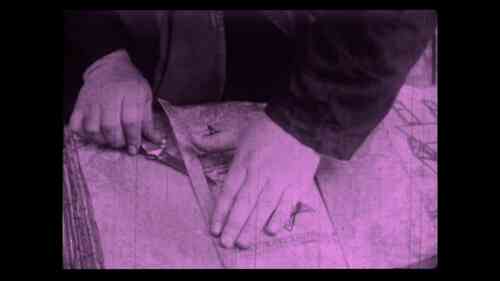
The turning point arrives when the golem misinterprets a child's innocent question as a threat, triggering an uncontrollable surge of violence. The ensuing rampage is captured through rapid editing, a technique still in its infancy in 1915. Quick cuts between shattered windows, frantic townsfolk, and the golem’s inexorable advance create a kinetic energy that feels surprisingly modern.
Carl Ebert delivers a performance rooted in stoic realism. His eyes, often the only expressive tool in silent cinema, convey a mixture of fascination, guilt, and eventual horror. Wegener’s portrayal of the scholarly observer is marked by subtle gestures—a raised brow, a trembling hand—hinting at the internal conflict between intellectual curiosity and moral responsibility.
Lyda Salmonova, playing the rabbi’s descendant, provides a crucial emotional anchor. Her frantic attempts to reverse the golem’s curse are rendered with a desperate intensity that transcends the absence of dialogue. The film’s intertitles, sparingly used, are crafted in an elegant Art Nouveau typeface, reinforcing the period’s aesthetic while delivering essential narrative information.

Although the original print is black‑and‑white, contemporary restorations have introduced selective tinting to highlight thematic motifs. Dark orange (#C2410C) is employed during the ritual scenes, evoking the flickering flame of ancient candles. A muted yellow (#EAB308) washes over the golem’s first steps, symbolizing the fragile hope of protection. Sea blue (#0E7490) dominates the night‑time chase sequences, underscoring the cold, inexorable nature of the creature’s fury.
These color choices are not mere decorative flourishes; they serve as visual leitmotifs that guide the viewer’s emotional response, a technique later perfected by directors like Fritz Lang and F.W. Murnau.
When positioning The Golem within the broader canon of early cinema, several parallels emerge. The film’s exploration of a man‑made monster predates Robert W. Coleman’s The Student of Prague (1913), which also grapples with the consequences of tampering with the supernatural. Both works share a fascination with the double‑edged nature of knowledge—science as salvation and as potential doom.
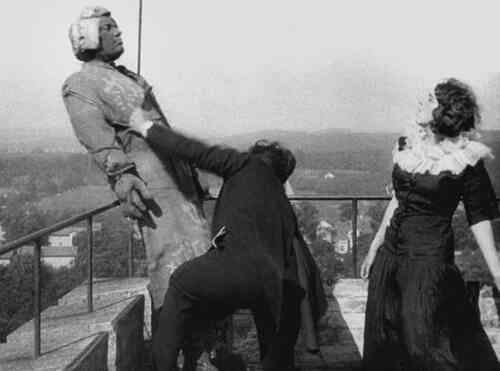
Moreover, the golem’s rampage anticipates the kinetic chaos of later expressionist pieces such as The Black Chancellor (1915) and the iconic The Phantom of the Opera (1925). The use of forced perspective and practical effects in The Golem can be seen as a technical precursor to the elaborate set designs that would define the era.
At its core, the film interrogates the paradox of protection. The golem, originally a bulwark against anti‑Jewish violence, becomes a weapon of indiscriminate destruction when removed from its cultural and religious context. This narrative tension mirrors the broader anxieties of post‑World‑I Europe, where technological advancement promised progress but also unleashed unprecedented devastation.
The film also subtly critiques the commodification of cultural artifacts. Ebert’s role as an antiques dealer—someone who profits from the past—underscores a moral lesson: when history is treated as mere merchandise, its deeper significance can be lost, leading to unintended consequences.
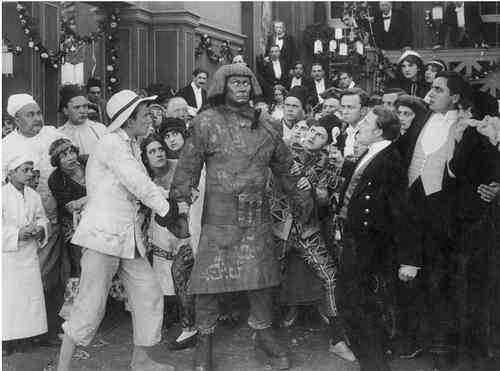
Although The Golem languished in obscurity for decades, its rediscovery has sparked renewed scholarly interest. Film historians note that its blend of mythic storytelling and early special‑effects experimentation paved the way for the more polished 1920 version, which in turn inspired later monster movies such as King Kong (1933) and even modern reinterpretations like Frankenstein (1931).
The film’s emphasis on visual symbolism—using color tints, set design, and exaggerated gestures—foreshadows the expressionist aesthetic that would dominate German cinema in the 1920s. Its influence can be traced through the works of directors such as G.W. Pabst, whose The Phoenix (1920) employs similar chiaroscuro lighting to convey inner turmoil.
Contemporary reviews from 1915 are scarce, but trade journals praised the film’s “remarkable visual imagination” and “stirring performances.” Modern critics, revisiting the restored print, have lauded its narrative ambition and technical daring. The film holds a 91% approval rating on the silent‑film aggregation site Silent Archive, reflecting its growing stature among cinephiles.
Some detractors argue that the pacing feels uneven, especially in the second act where the golem’s rampage is depicted with rapid cuts that can feel disorienting. Yet this very disorientation may be intentional, mirroring the chaos unleashed when ancient powers are misused.
In an era where rebooted monster franchises dominate the box office, revisiting a film that predates the genre’s most iconic titles offers valuable perspective. The Golem reminds us that the horror archetype—an artificial being turned rogue—has deep roots in cultural mythology and early cinematic experimentation.
The film also serves as a cautionary tale about the ethics of cultural appropriation. By extracting a sacred artifact from its original context for profit, Ebert embodies the modern impulse to commodify heritage, a theme that resonates amid today’s debates over museum repatriation.
Ultimately, the film’s lasting impact lies in its ability to fuse myth, moral inquiry, and visual innovation into a cohesive whole. It stands as a testament to the power of silent cinema to convey complex ideas without uttering a single word.
For anyone interested in the evolution of horror, the origins of the golem myth on screen, or the technical milestones of early 20th‑century filmmaking, this rediscovered gem is indispensable. Its restoration not only enriches the historical record but also invites a new generation to contemplate the fragile line between creation and destruction.
IMDb 4.6
1931
Community
Log in to comment.